


.jpg)




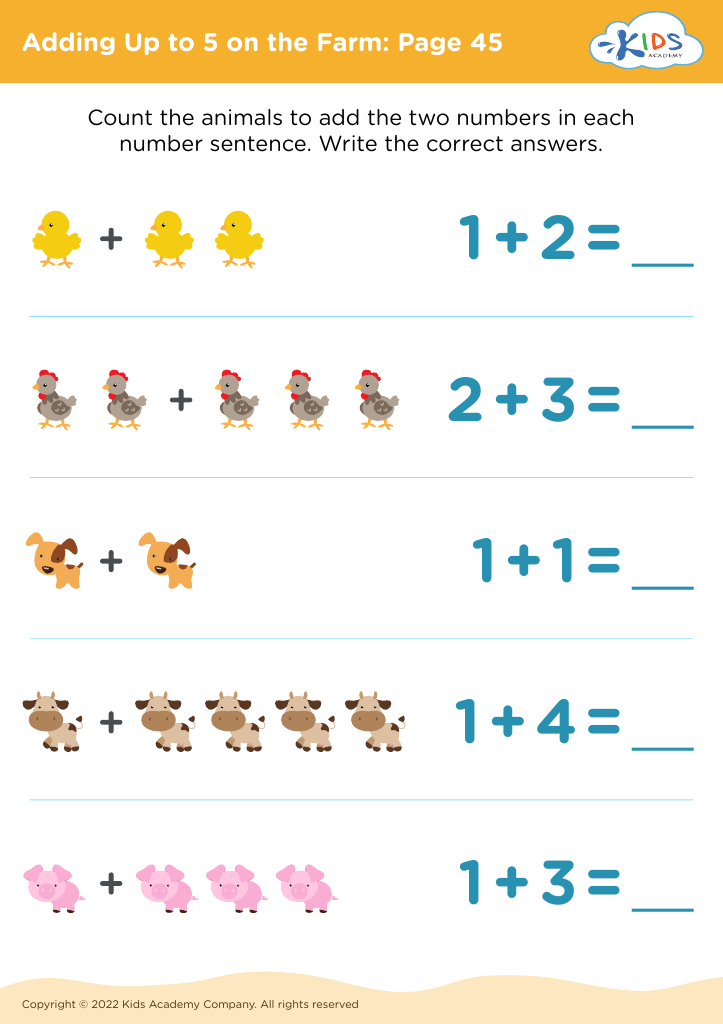
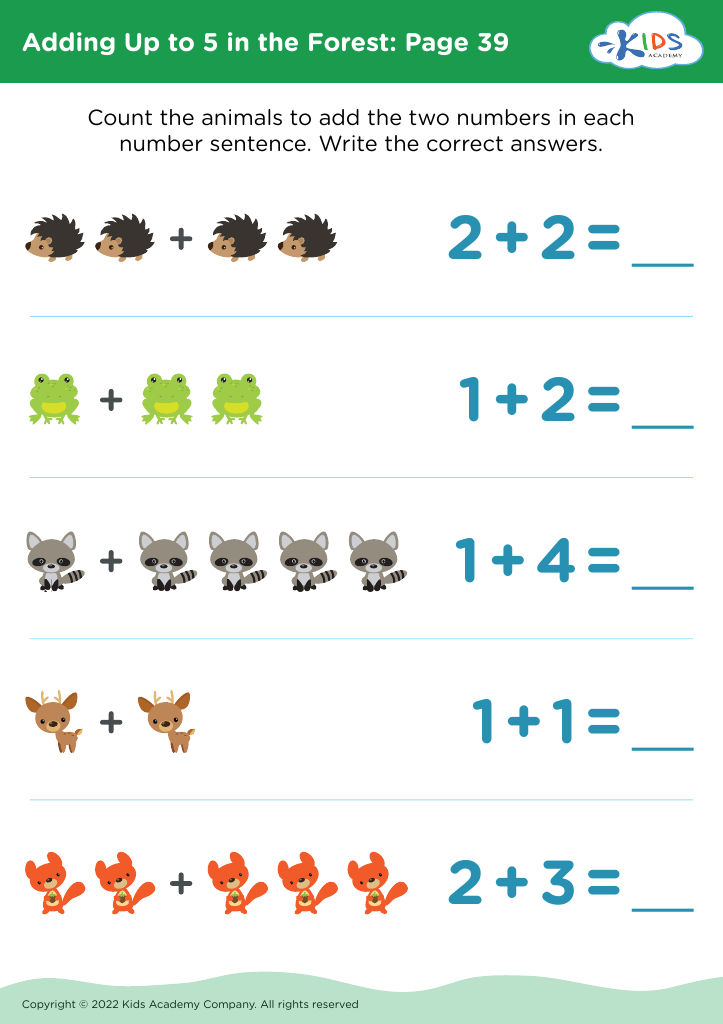
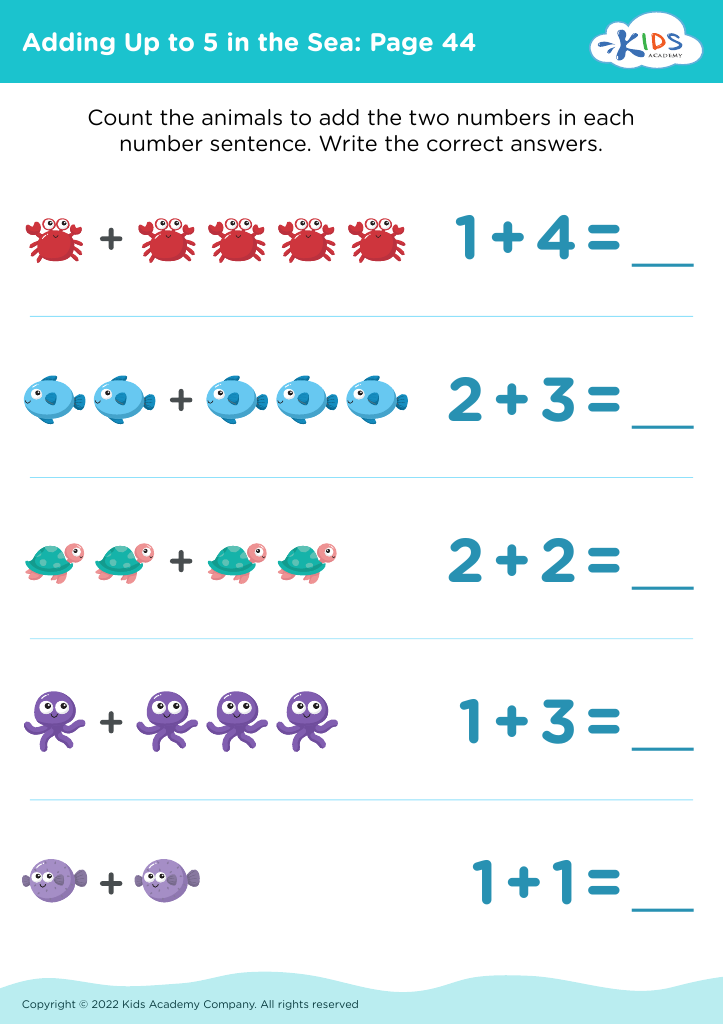
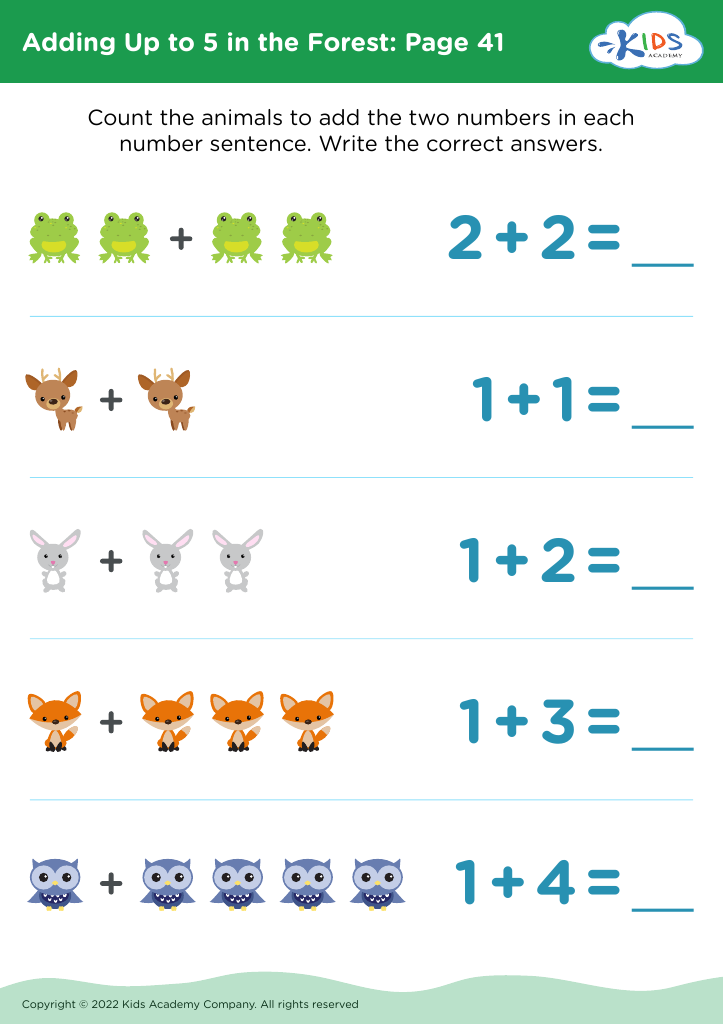
Fine motor skills are crucial for children aged 3-7 as they play a fundamental role in early development, directly impacting their ability to perform essential daily tasks such as writing, buttoning clothes, and using utensils. Activities that involve adding up to 5 offer an excellent opportunity to enhance these skills in a fun and educational manner. By working on math-related tasks, such as counting small objects or writing numbers, children engage in precise hand movements that strengthen the tiny muscles in their fingers and hands, ultimately improving their dexterity and hand-eye coordination.
Moreover, developing fine motor skills through numerical activities lays a foundation for academic success. Mastering basic calculations not only builds early mathematical understanding but also boosts confidence, concentration, and problem-solving abilities. Parents and teachers should care about this development, as these skills are integrally linked to a child’s ability to manage more complex mathematical tasks and other academic challenges as they grow older.
In addition, enhancing fine motor skills has deeper implications for social and emotional development. Children who struggle with fine motor tasks may feel frustrated or fall behind their peers, potentially impacting their self-esteem. By promoting these skills early on, parents and teachers can support a child’s holistic growth, emotional well-being, and educational foundation.








