
Following instructions Adding Up to 5 Worksheets for Ages 3-7
3 filtered results
Difficulty Level
Grade
Age
-
From - To
Subject
Activity
Standards
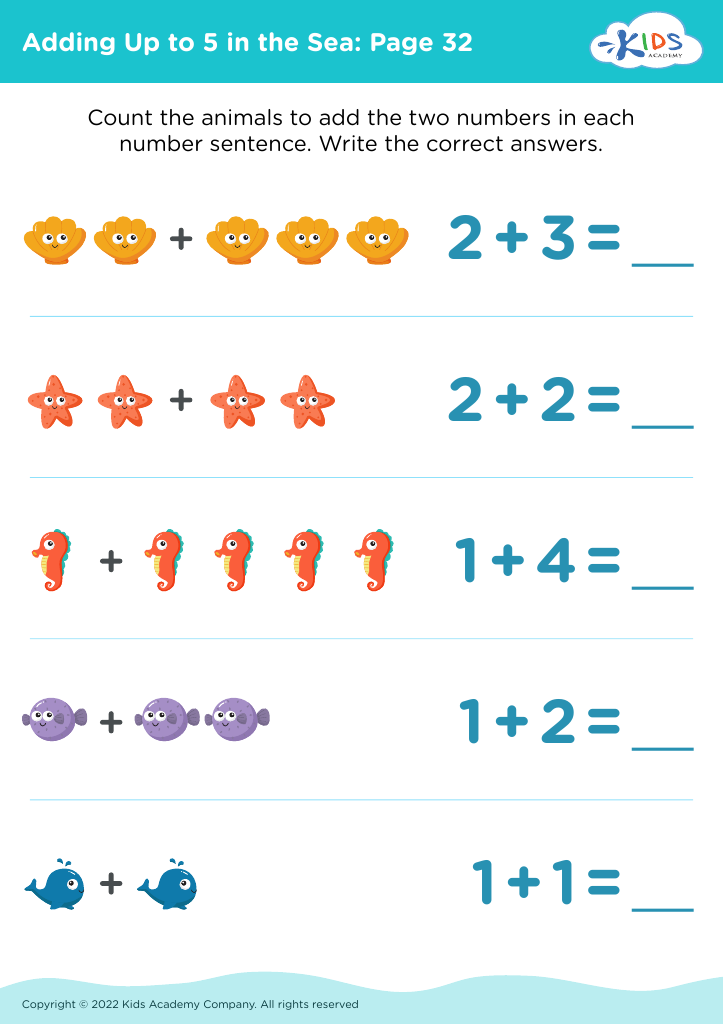
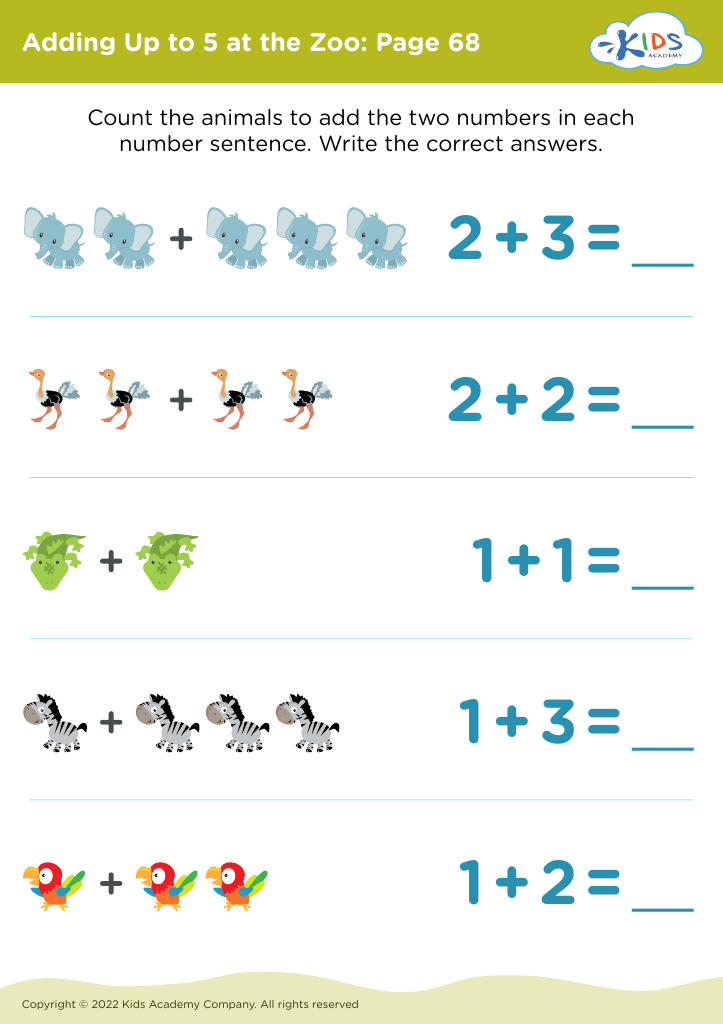
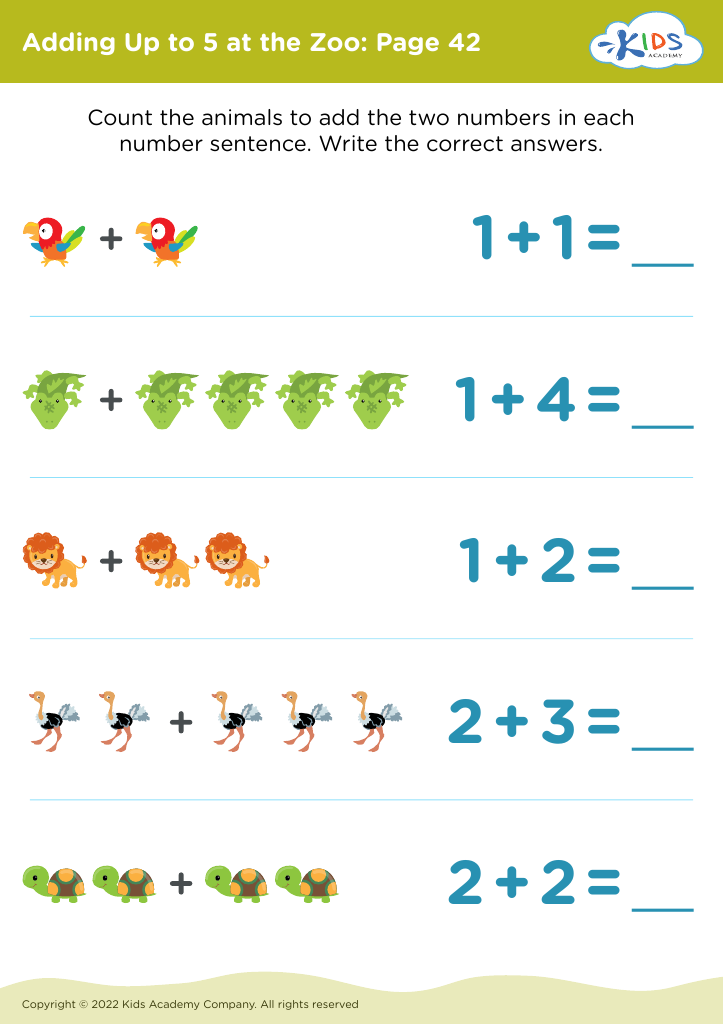
Introduce young learners to basic math and essential life skills with our "Following Instructions Adding Up to 5 Worksheets for Ages 3-7." Specially designed for preschool to early elementary students, these engaging worksheets not only teach addition up to 5 but also enhance their ability to follow instructions carefully. Hands-on activities and colorful graphics make learning fun and interactive. Perfect for building a strong math foundation and improving listening skills, our worksheets support both classroom and at-home practice. Prepare your child for academic success while making math enjoyable with these thoughtfully crafted resources.
Favorites
With answer key
Interactive
Join Kids Academy for Free
Who is primarily going to use this learning content?




%20(1).jpg)



Following instructions and adding up to 5 are foundational skills vital for children aged 3-7, both for academic success and daily life competence. During early childhood, clear and consistent instruction-following is crucial for cognitive development. This ability helps children to learn structured routines, enhances their listening skills, and increases their capability to focus, all of which are essential for a smooth transition to more complex activities and schooling systems.
Additionally, adding up to 5 introduces kindergarteners to fundamental mathematical concepts. Understanding simple addition lays the groundwork for future math proficiency, promoting numerical literacy and logical thinking. These early math skills correlate strongly with later academic achievement, not just in mathematics but across various subjects. For example, learning to add fosters problem-solving abilities and an appreciation for patterns and sequence, all vital for scientific reasoning and language arts.
On a practical level, these skills are equally important. Young children equipped with ability to follow instructions and perform basic arithmetic can more easily navigate day-to-day tasks, such as sharing toys or time management during play. By nurturing these abilities, parents and teachers ensure that children build confidence and independence, creating a strong educational and developmental foundation.








