Nature appreciation Adding Up to 5 Worksheets for Ages 3-7
5 filtered results
-
From - To
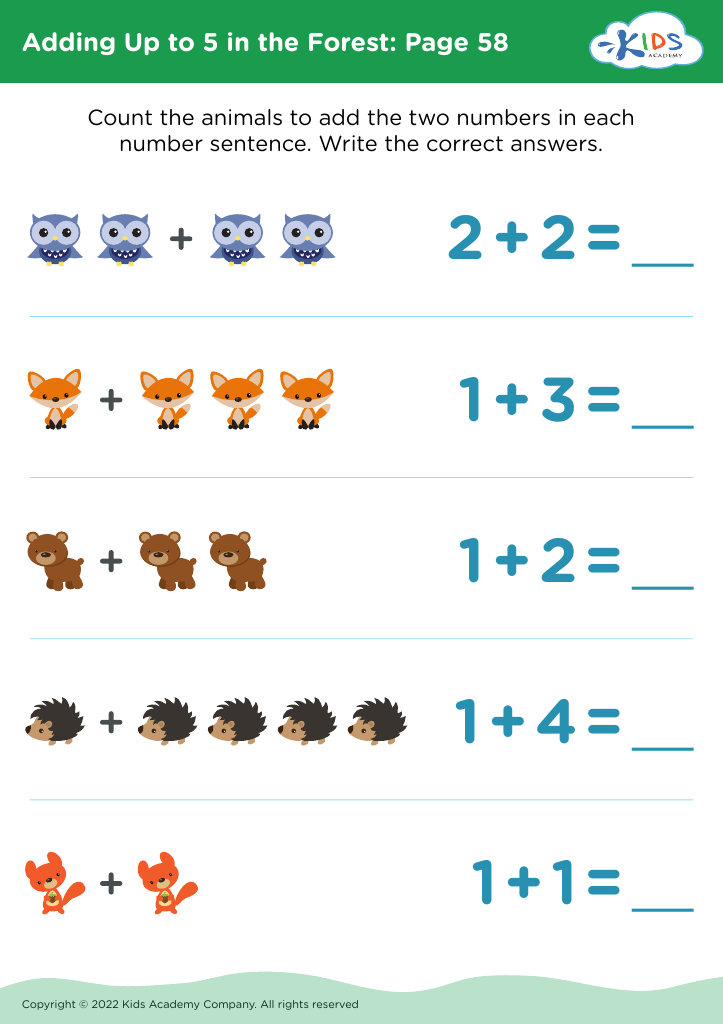
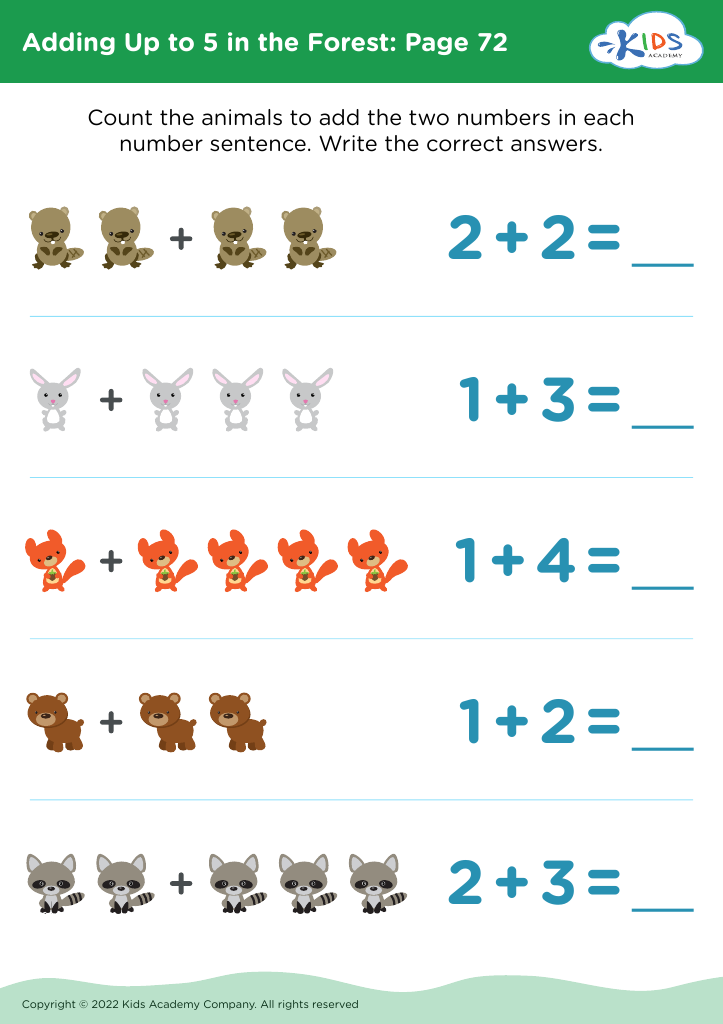
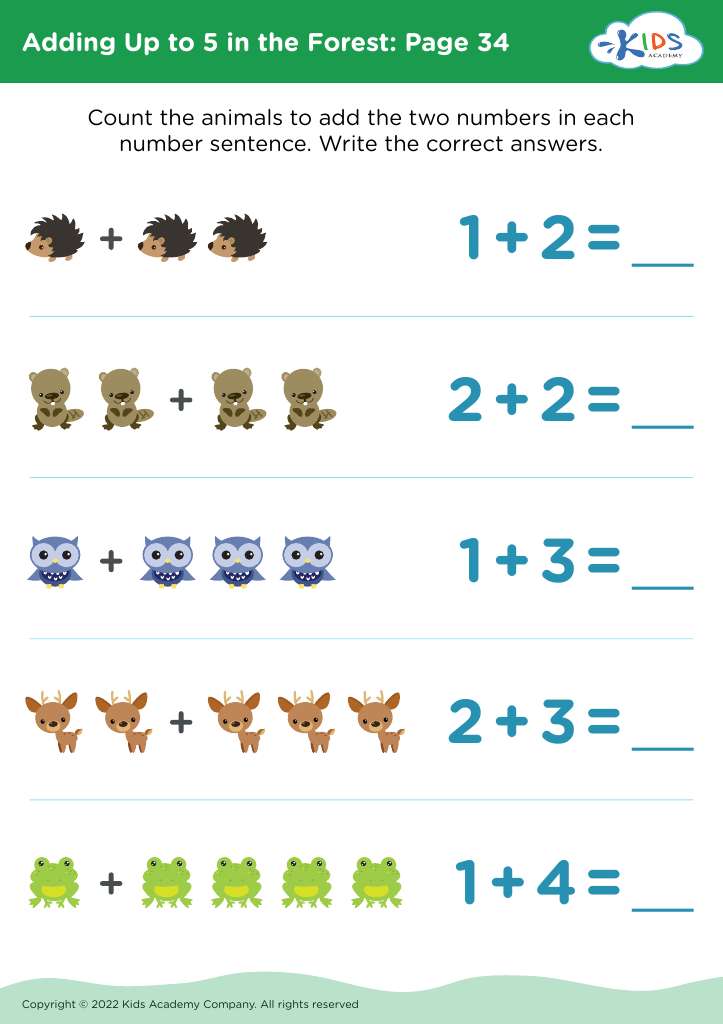
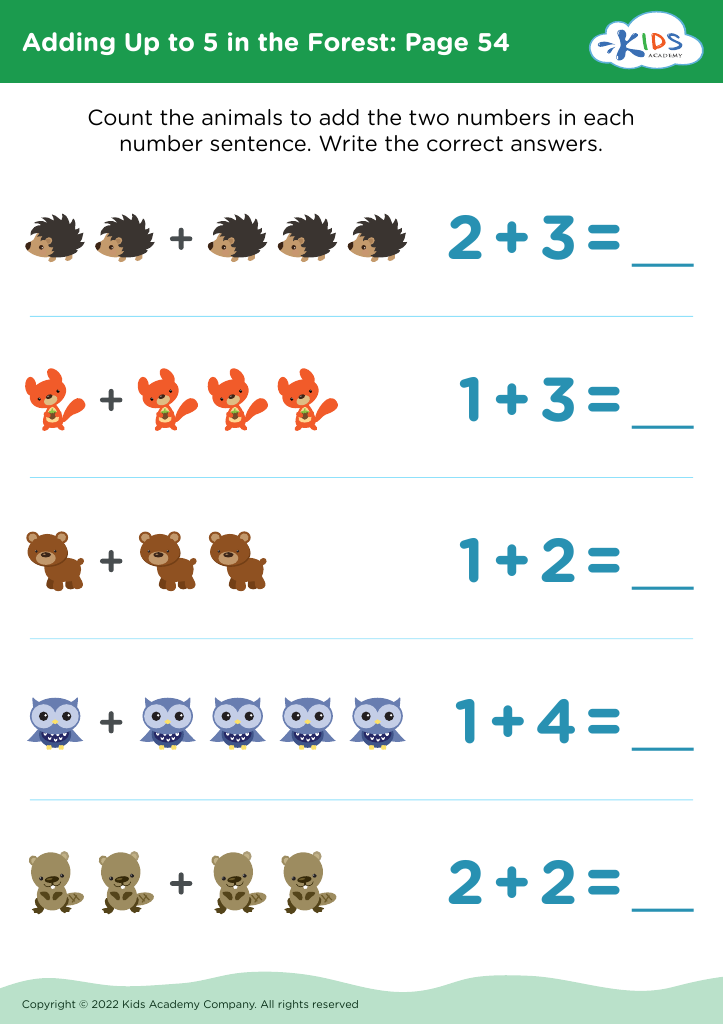
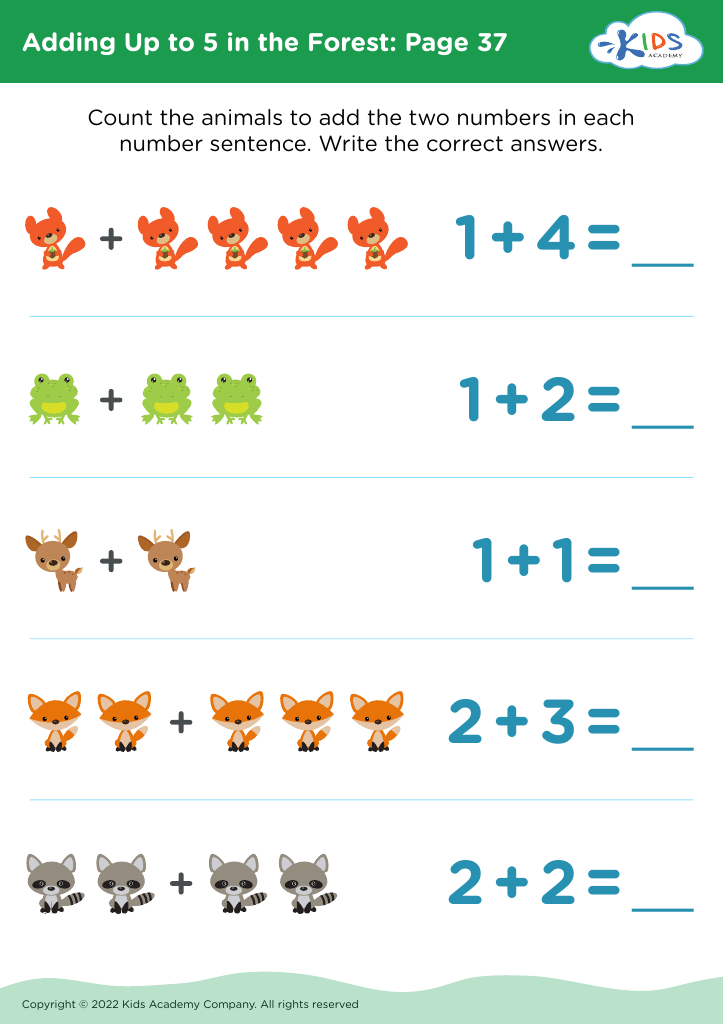
Discover the joy of learning math with our "Nature Appreciation Adding Up to 5 Worksheets" designed for children ages 3-7. These engaging and educational worksheets seamlessly blend basic math skills with the beauty of nature. Young learners will develop their counting and addition abilities while exploring plants, animals, and other natural elements. Each worksheet features delightful illustrations and simple exercises that keep kids entertained and motivated. Perfect for parents and teachers looking to enhance early math skills and cultivate a love for the outdoors. Unlock the wonders of nature and make math exciting for your little ones!







%20(1).jpg)
Cultivating nature appreciation in young children while teaching basic math skills, such as adding up to 5, holds immense value in fostering well-rounded development. For ages 3-7, introducing natural environments into learning can captivate their curiosity and imagination, promoting both cognitive and emotional growth.
Nature provides concrete, tactile experiences that make abstract concepts more comprehensible. For instance, counting leaves or pebbles can make basic arithmetic tangible and engaging. This hands-on method not only enhances number sense but also kindles a sense of wonder about the world. Children learn best through play and real-life context, and nature offers a boundless, dynamic classroom.
Moreover, early exposure to nature instills environmental stewardship. Children who engage with natural settings develop empathy for living things, leading them to value and care for their environment as they grow older. This dual focus on academics and environmental ethics prepares them to become responsible, informed citizens.
Similarly, time spent in nature has been linked to decreased stress and improved concentration, aiding in better learning outcomes. For teachers and parents, blending nature and learning makes education holistic, nurturing children’s academic abilities while fostering an enduring love and respect for the natural world. This combined approach cultivates not just smarter kids, but happier, more conscientious individuals.








