Visual Perception Skills Adding Up to 5 Worksheets for Ages 3-7
4 filtered results
-
From - To
Enhance your child’s visual perception skills with our engaging "Adding Up to 5" worksheets, specially designed for ages 3-7. These fun and interactive activities focus on helping young learners identify numbers, recognize patterns, and develop counting skills—all while improving their visual processing abilities. Each worksheet presents colorful visuals that capture children's attention and encourage exploration. By combining visual perception with basic math concepts, our resources provide a comprehensive learning experience that supports early childhood development. Perfect for parents and educators alike, these worksheets will foster a love for learning while building essential skills for future academic success. Download and start learning today!
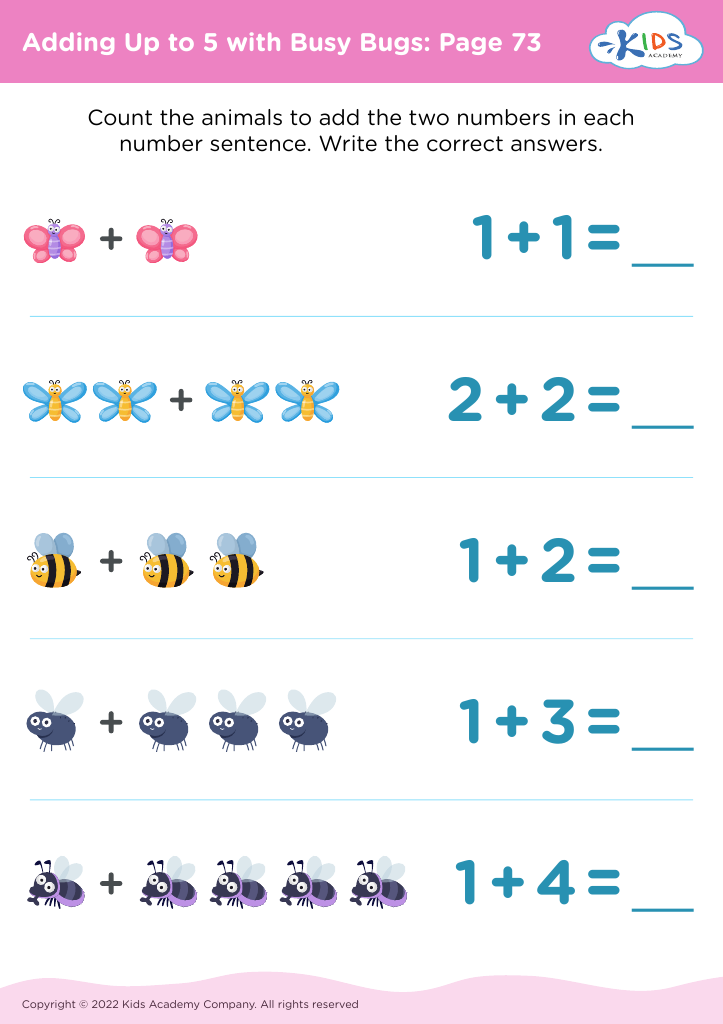
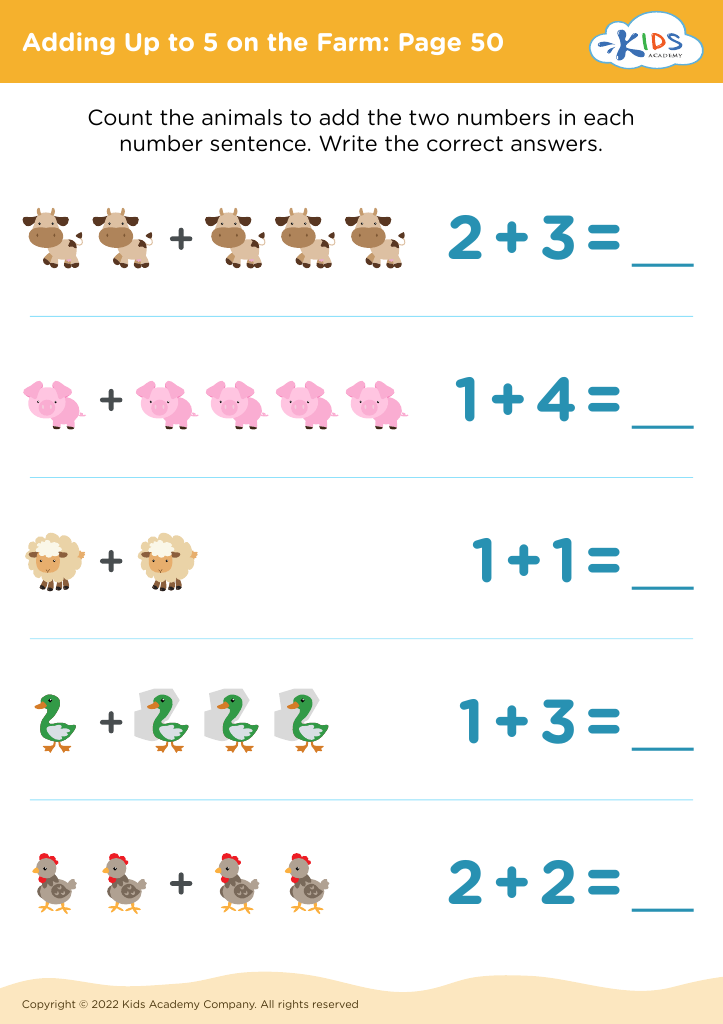
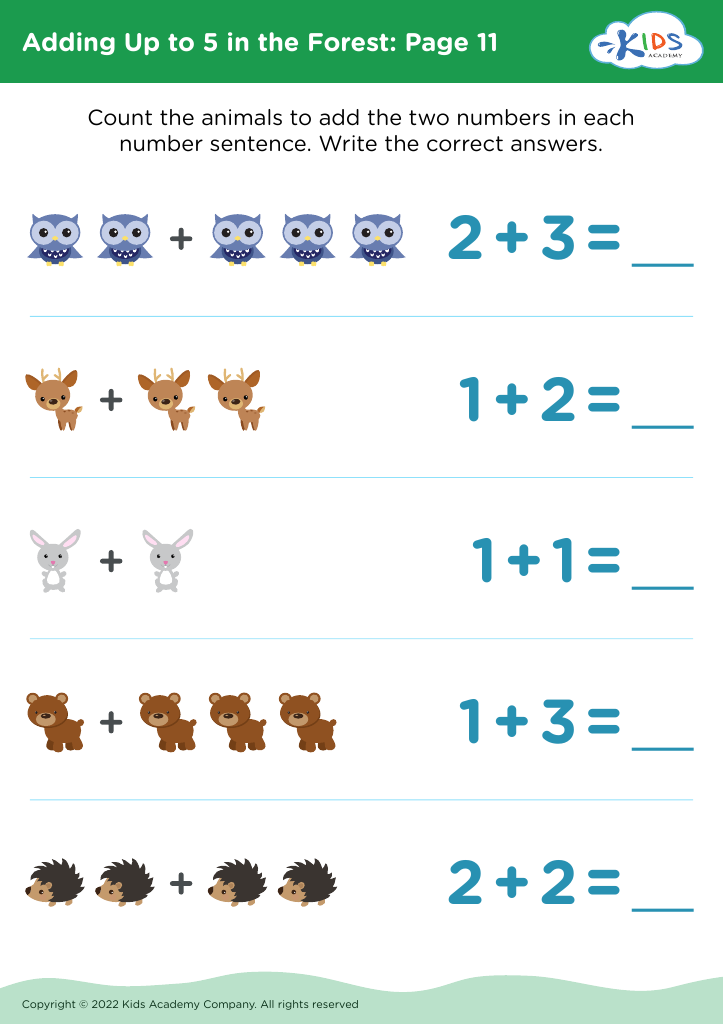
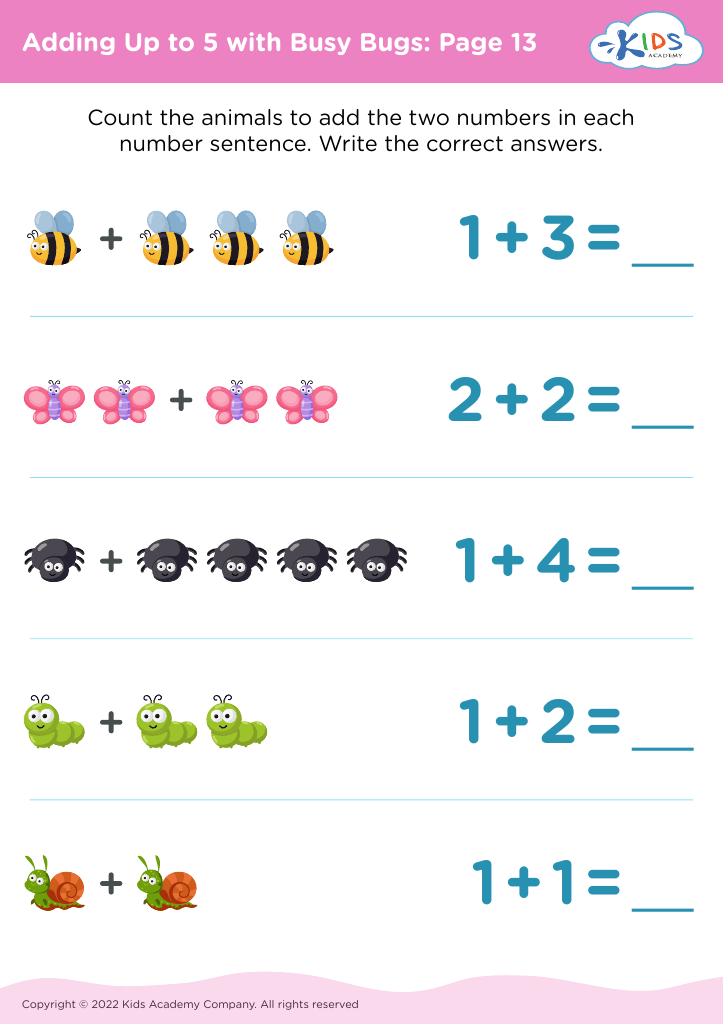








Parents and teachers should prioritize visual perception skills in young children because these abilities are foundational for learning and everyday functioning. At ages 3 to 7, children are developing critical cognitive skills that influence their problem-solving, reading, and math abilities. Visual perception refers to the ability to interpret and make sense of what we see, which is vital for recognizing shapes, spatial relationships, and numbers.
Adding up to 5 involves not just mathematical skills but also visual attention, pattern recognition, and memory. Mastering this skill helps children comprehend basic arithmetic concepts and sets the stage for more complex mathematics. Additionally, strong visual perception aids in areas such as literacy, where recognizing letters and words relies on visual skills.
Engaging in activities that enhance visual perception, like puzzles, sorting games, or drawing, not only supports math skills but also fosters fine motor development and concentration. Early intervention is key; if children struggle with these skills, they may face challenges in school, leading to frustration and decreased motivation. By recognizing the importance of visual perception skills, parents and teachers can better support children’s overall academic success and emotional well-being as they develop essential life skills.








