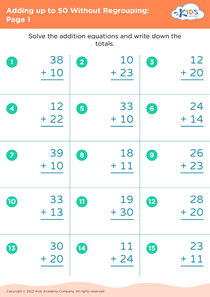
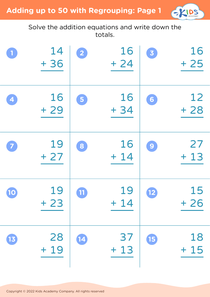
Addition Practice Adding up to 50 Misc Worksheets for Ages 3-7
5 filtered results
-
From - To
Welcome to our "Addition Practice: Adding Up to 50" worksheet collection, tailored for children ages 3-7! Designed to make learning fun, these engaging worksheets help young learners develop foundational addition skills. With colorful illustrations and varied activities, children will enjoy practicing sums up to 50 while enhancing their problem-solving abilities. Our resources are perfectly crafted to support early math comprehension, ensuring a strong grasp of addition concepts. Whether at home or in the classroom, these materials provide an excellent opportunity for children to build confidence in their arithmetic skills. Start your child's math journey today with our fun and comprehensive worksheets!
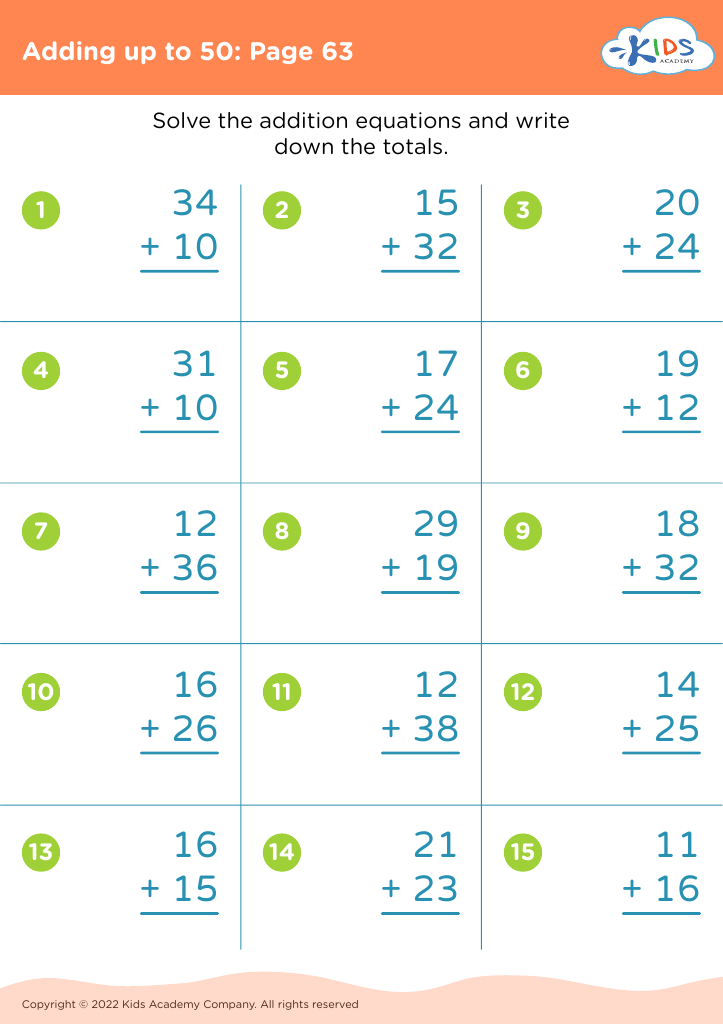
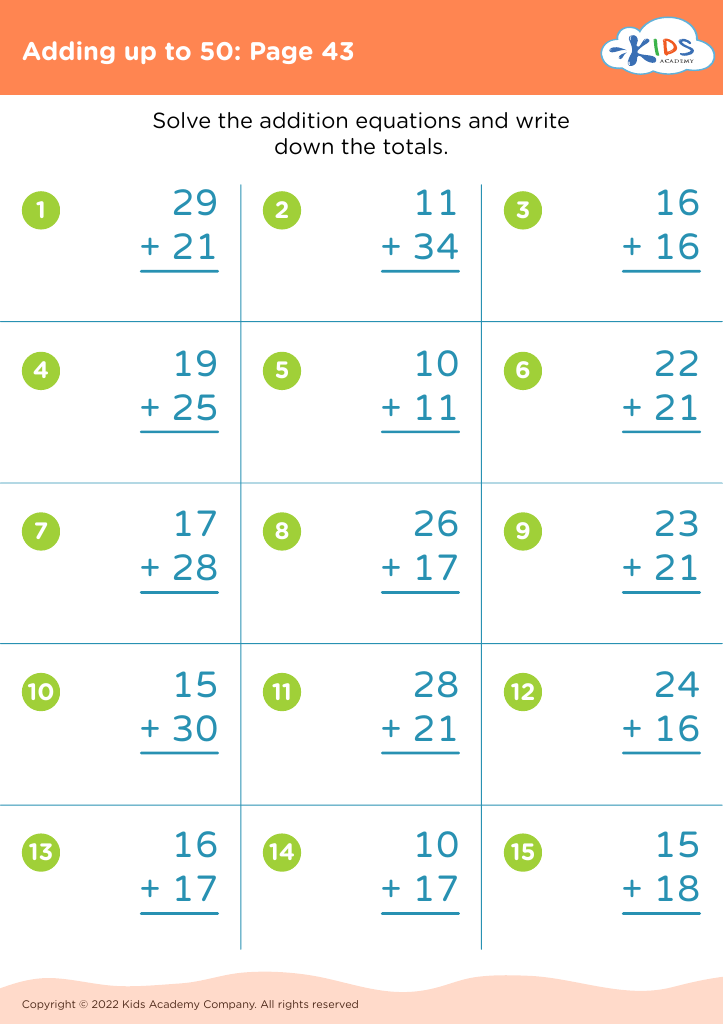
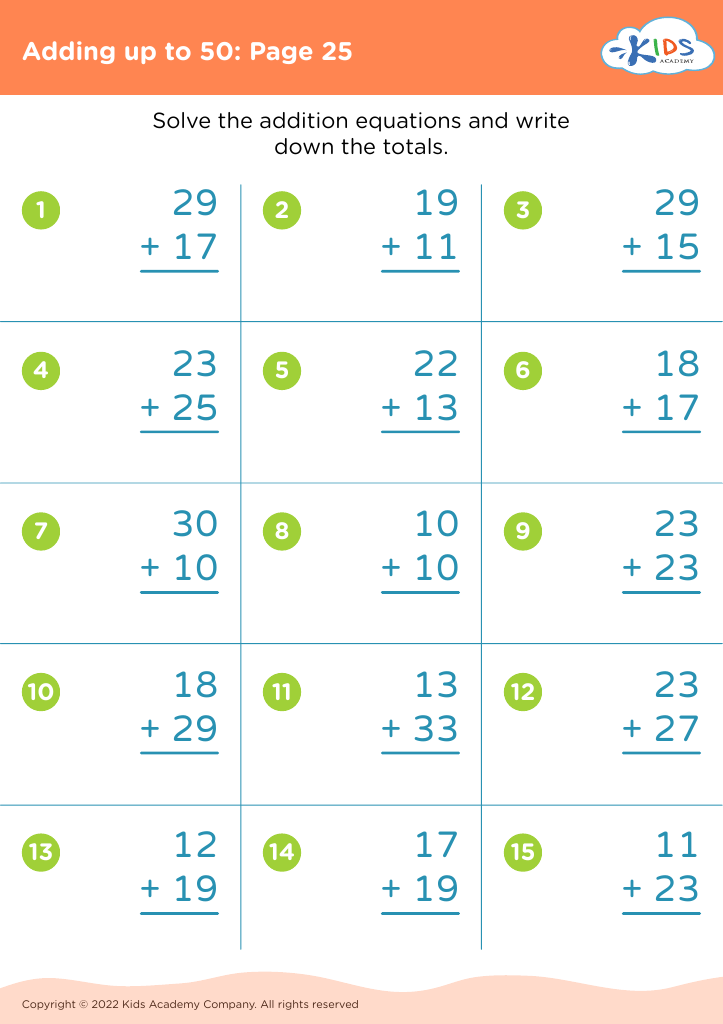
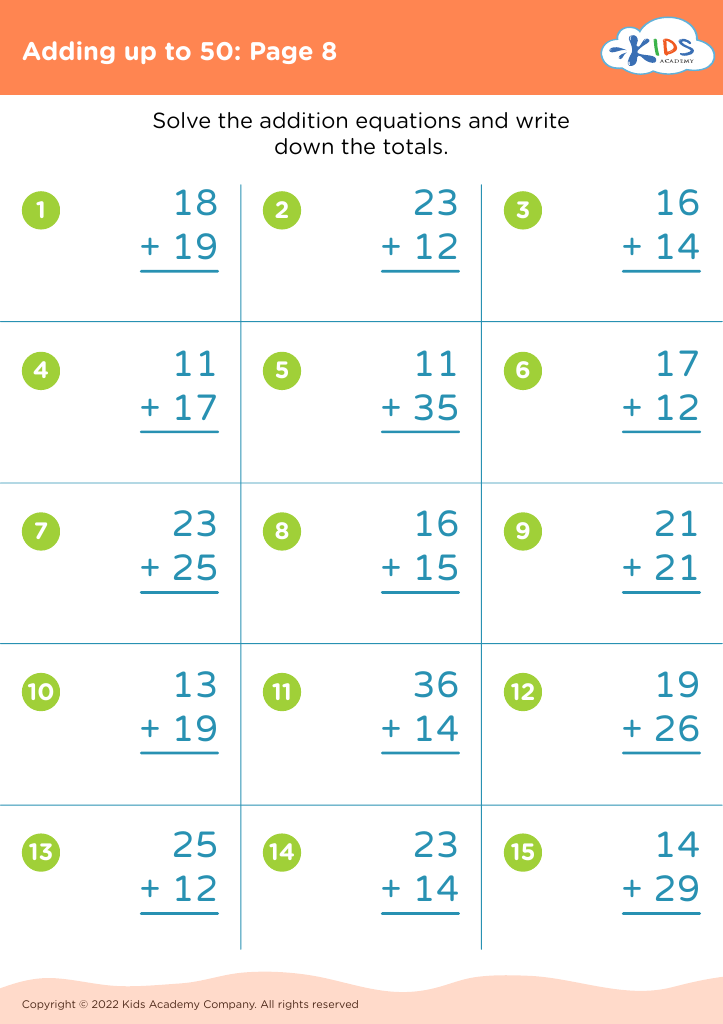
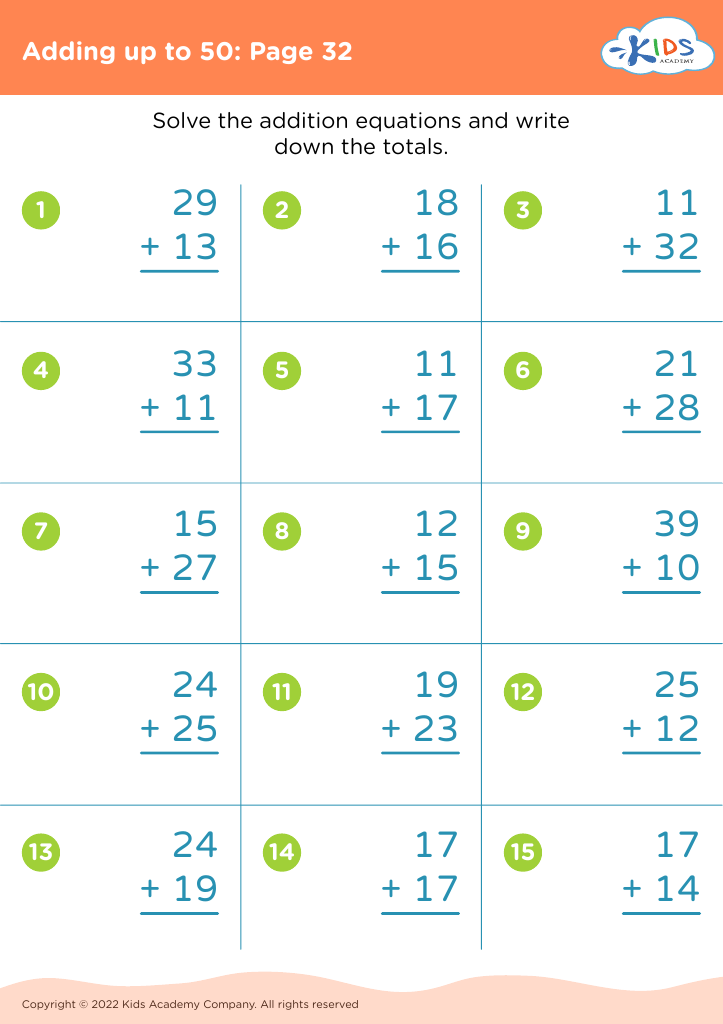


Addition practice for children ages 3-7 is crucial for several reasons. First and foremost, early math skills lay the foundation for future learning. By introducing addition concepts, such as adding numbers up to 50, we cultivate a child's mathematical curiosity and confidence. Mastery of basic addition helps kids develop important problem-solving skills and cognitive abilities that are essential for everyday tasks.
Additionally, practicing addition enhances a child's understanding of quantity and relationship concepts. This is not just about numbers; it teaches them how to think logically, recognize patterns, and understand the world around them. For parents and teachers, focusing on these skills can also foster positive attitudes towards math, turning potential anxiety into enjoyment through engaging techniques like games and manipulatives.
Furthermore, reinforcing addition practice at such young ages supports the development of perseverance and patience, as students learn the importance of practice and that mistakes can lead to growth. Dedicating time to support these foundational skills enriches the learning experience, promotes classroom engagement, and ultimately leads to greater academic success in later years. Thus, parents and teachers should prioritize addition practice as an integral part of a child’s early education.