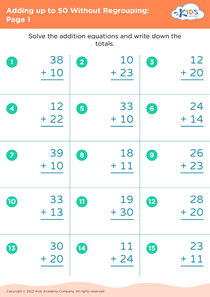
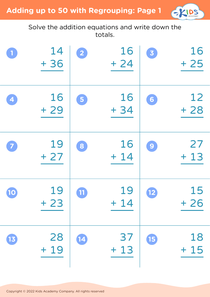
Addition skills Adding up to 50 Misc Worksheets for Ages 3-7
3 filtered results
-
From - To
Welcome to our "Addition Skills: Adding Up to 50 Misc Worksheets for Ages 3-7"! This resource is perfect for young learners eager to develop their addition abilities. Our printable worksheets offer a variety of engaging activities designed to make math fun and interactive. Children will practice adding numbers up to 50 through colorful exercises, including visual aids, puzzles, and word problems. Whether at home or in the classroom, these worksheets cultivate essential math skills, boost confidence, and encourage a love for learning. Begin this exciting math journey today, and watch your child's subtraction skills thrive!
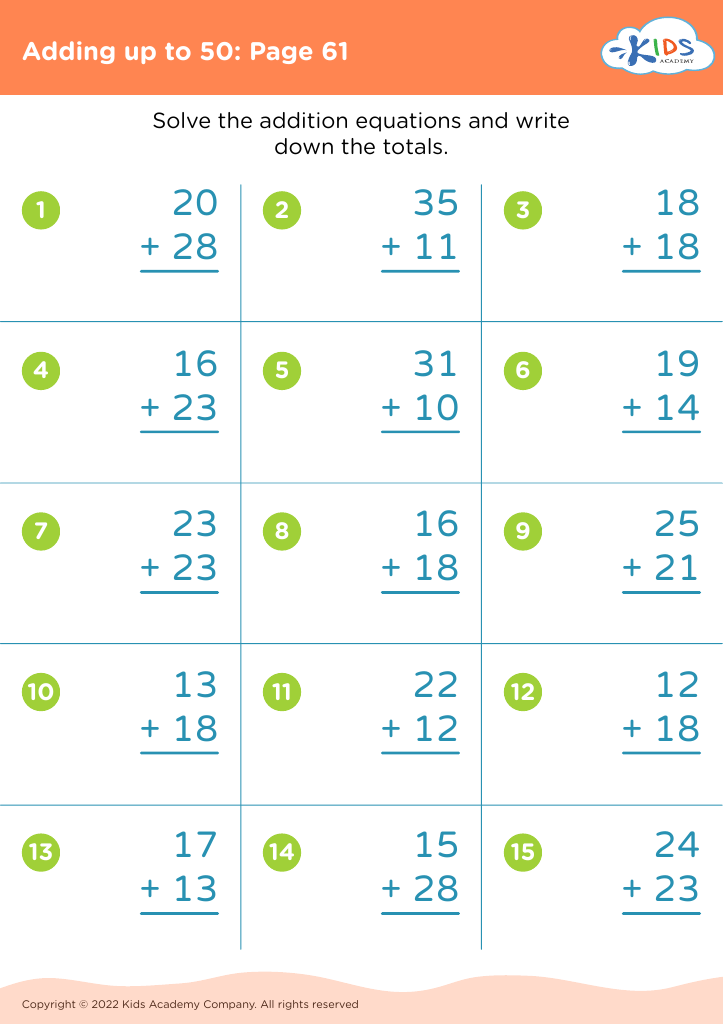
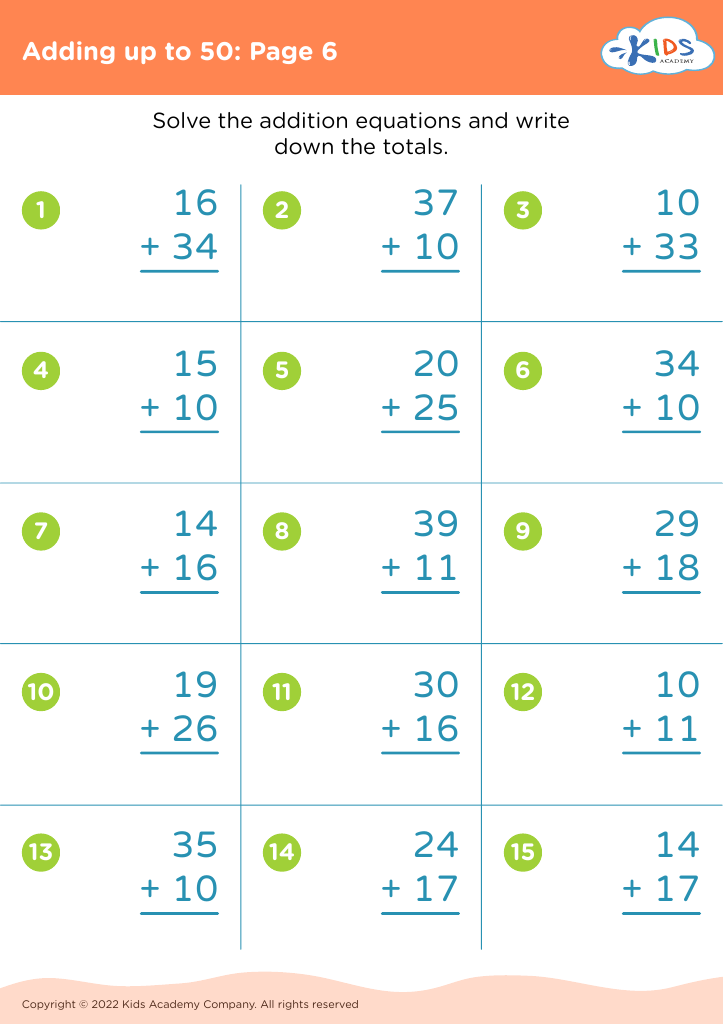
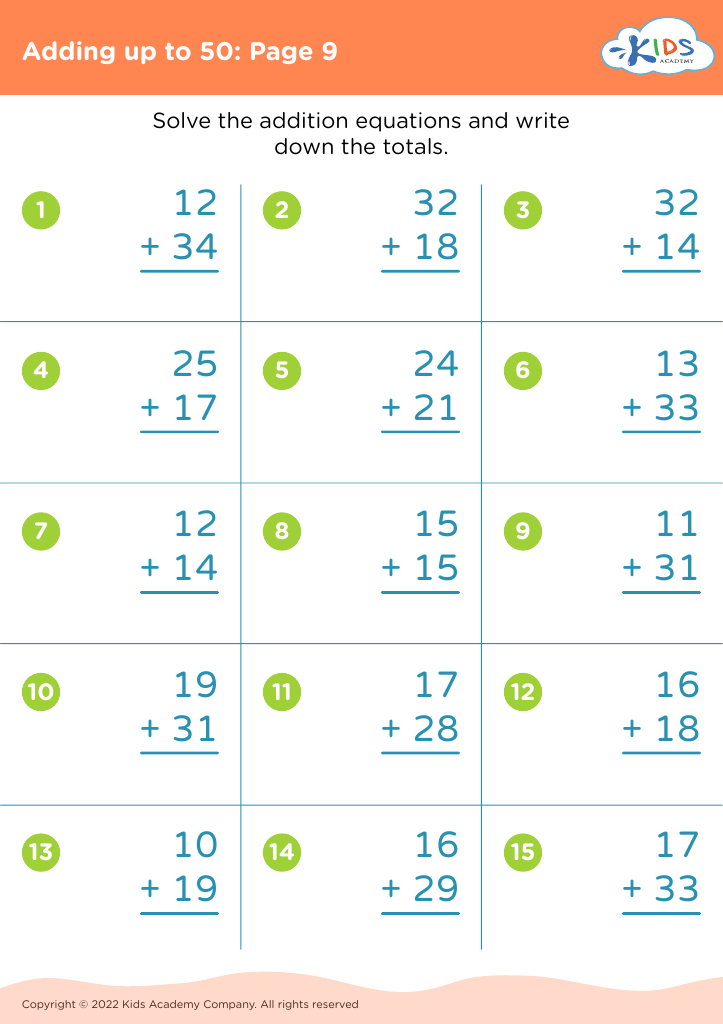


Addition skills, especially the foundational concept of adding up to 50, are crucial for young children aged 3-7, as they serve as building blocks for more complex mathematical understanding. Early mastery of addition fosters confidence and independence in students, setting the stage for their future academic success.
Parents and teachers should consider the development of these skills paramount because arithmetic forms the core of everyday decision-making and problem-solving. By mastering addition, children can better manage tasks like counting their playtime, comparing quantities during play, and even recognizing patterns in their environment.
Understanding addition enhances cognitive development and logical thinking. It encourages curiosity and exploration, paving the way for a positive relationship with math. Engaging in these skills at a young age makes math relatable and accessible, counteracting potential anxiety surrounding the subject later in life.
Moreover, addition skills weave into essential social interactions, such as sharing and turn-taking with peers, which are vital for holistic development. Ultimately, when parents and teachers prioritize addition skills, they equip children with the tools necessary for not just academic achievement, but also for navigating the world around them with confidence and ease.