Comparing Fractions Adding up to 50 Misc Worksheets for Ages 3-7
11 filtered results
-
From - To
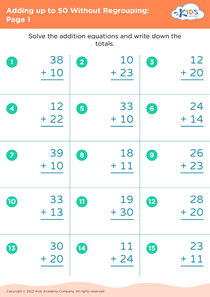
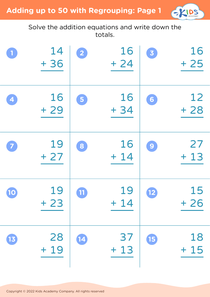
Explore our collection of "Comparing Fractions Adding up to 50 Misc Worksheets" perfect for ages 3-7. These engaging, educational worksheets are designed to build foundational math skills in young learners. Kids will practice comparing fractions in diverse scenarios while enhancing their understanding of numbers adding up to 50. Our colorful, interactive activities make learning fun and interactive, capturing children's attention and fostering a love for mathematics. Download now and watch your child develop crucial problem-solving skills through play and exploration! Foster a strong math foundation with our expertly crafted tools from Kids Academy.
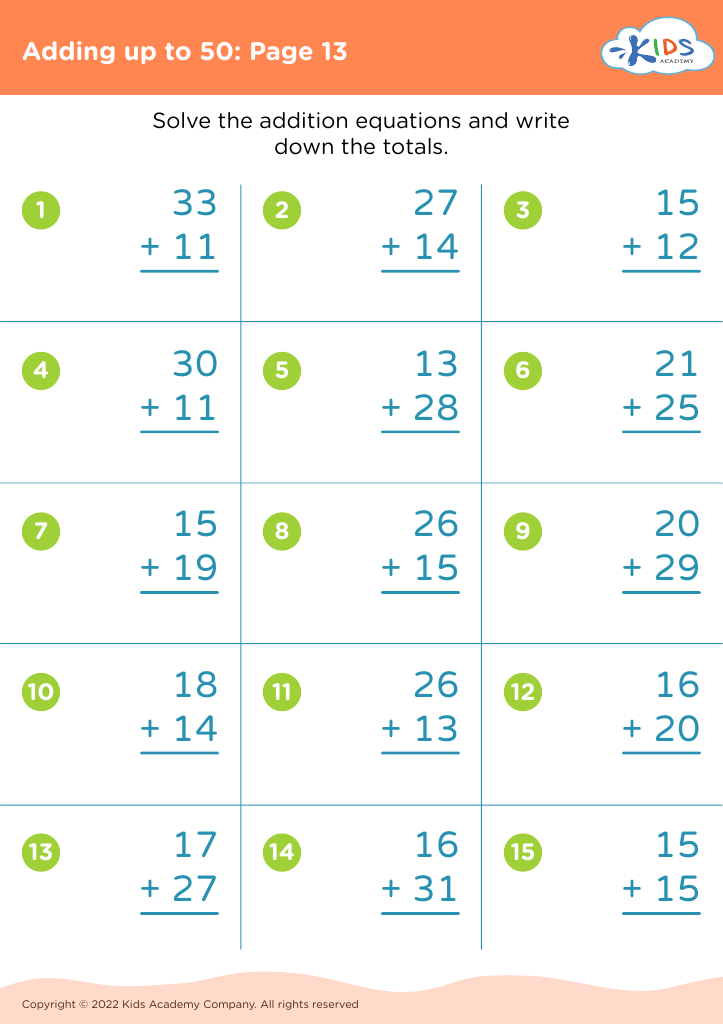
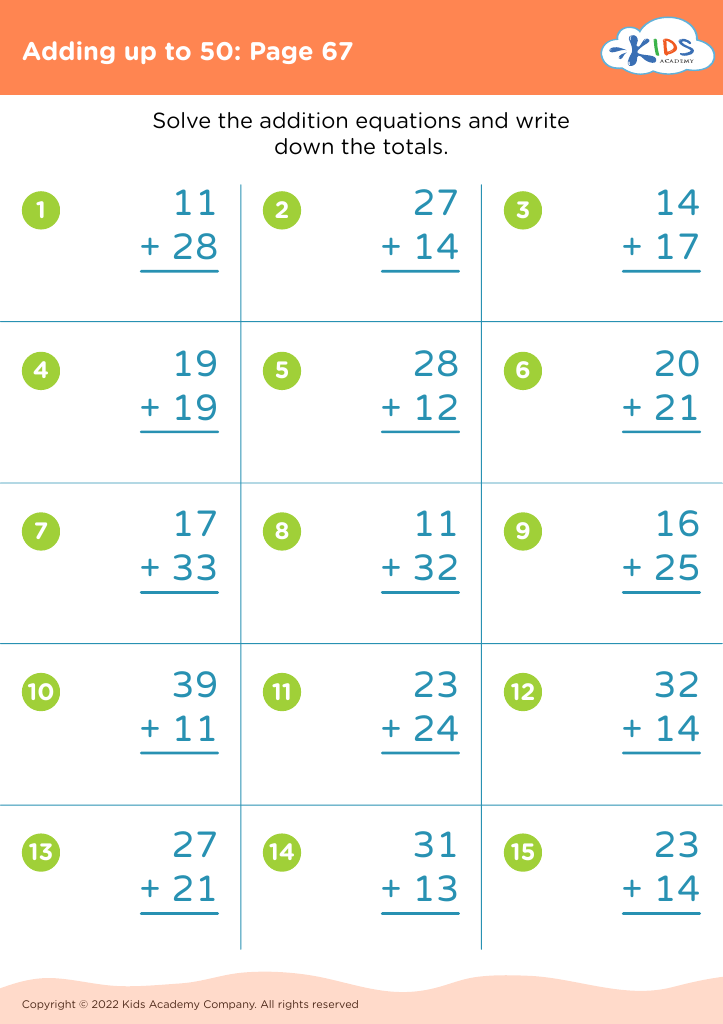
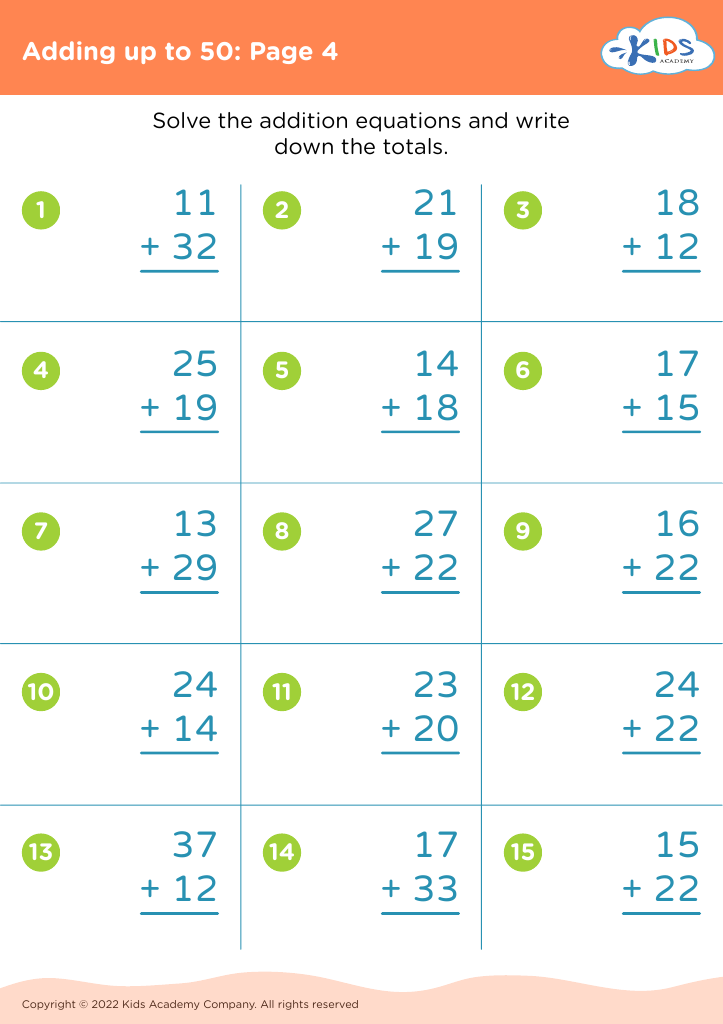
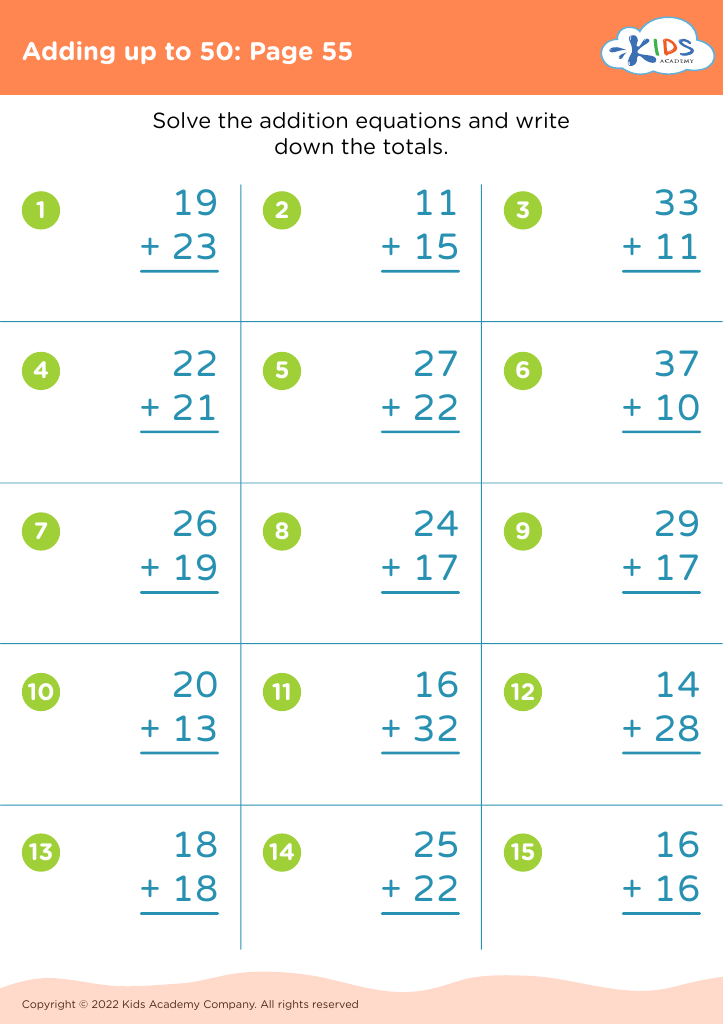
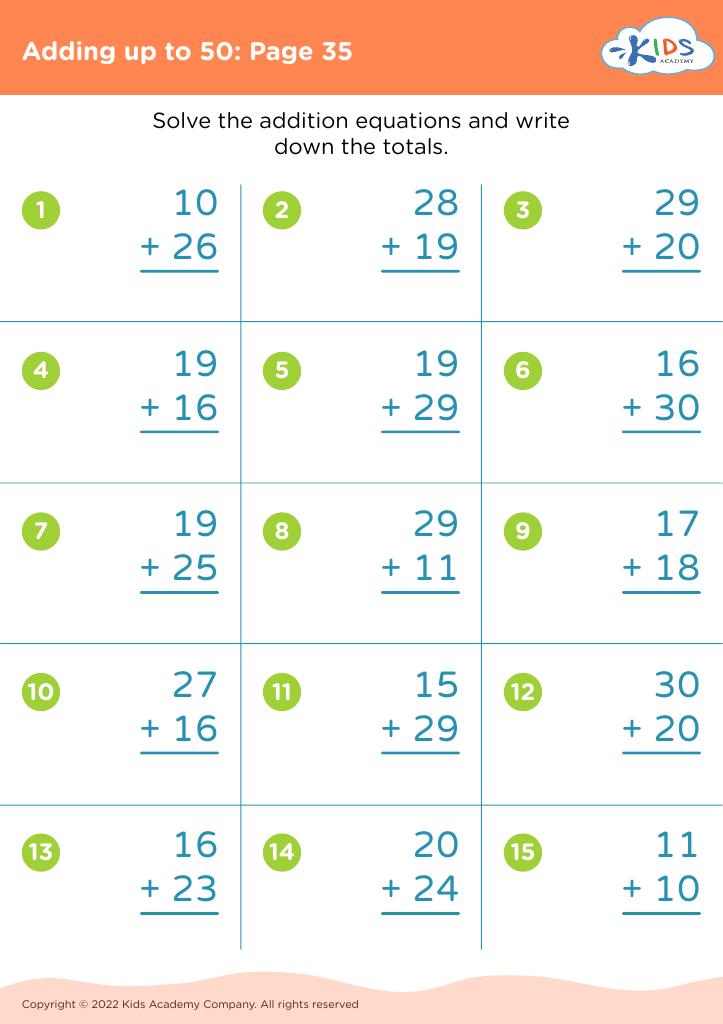
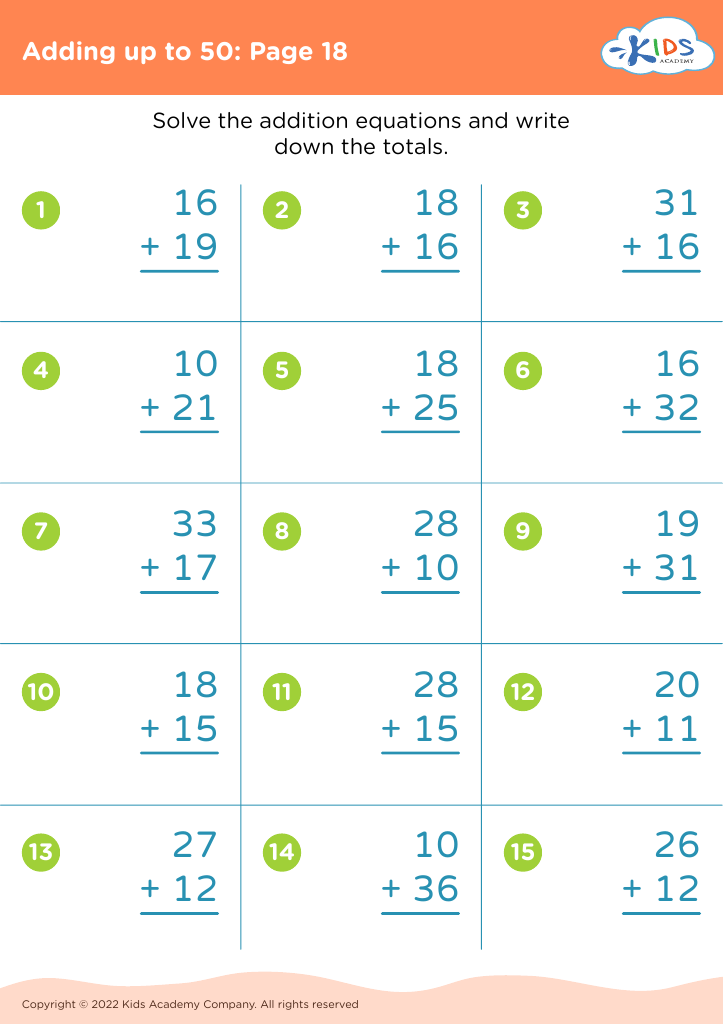
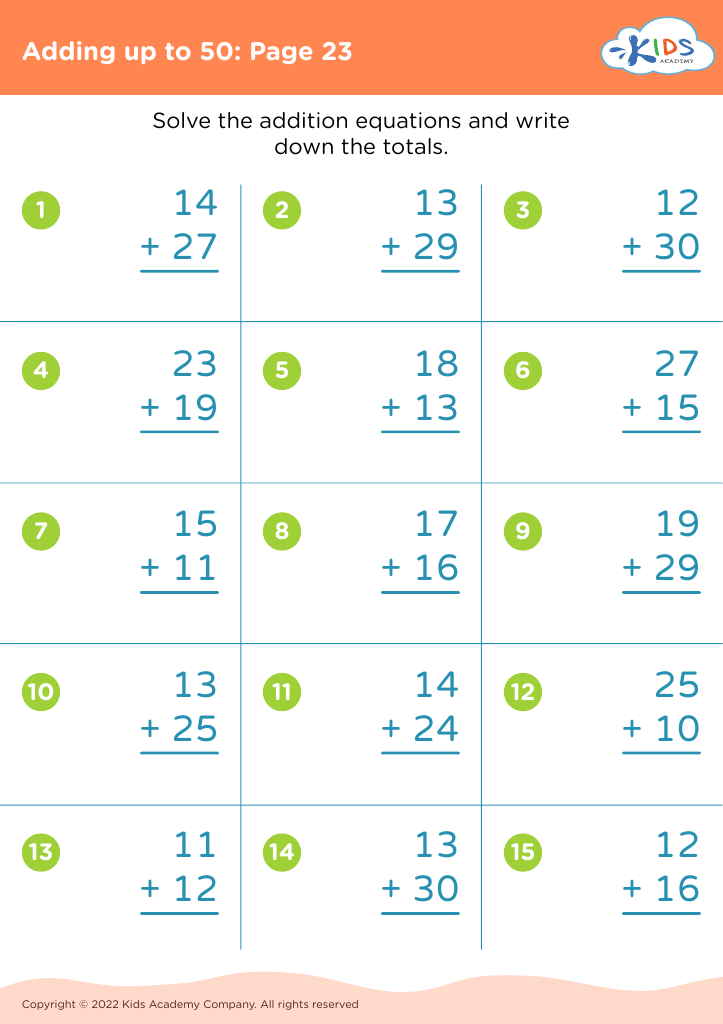
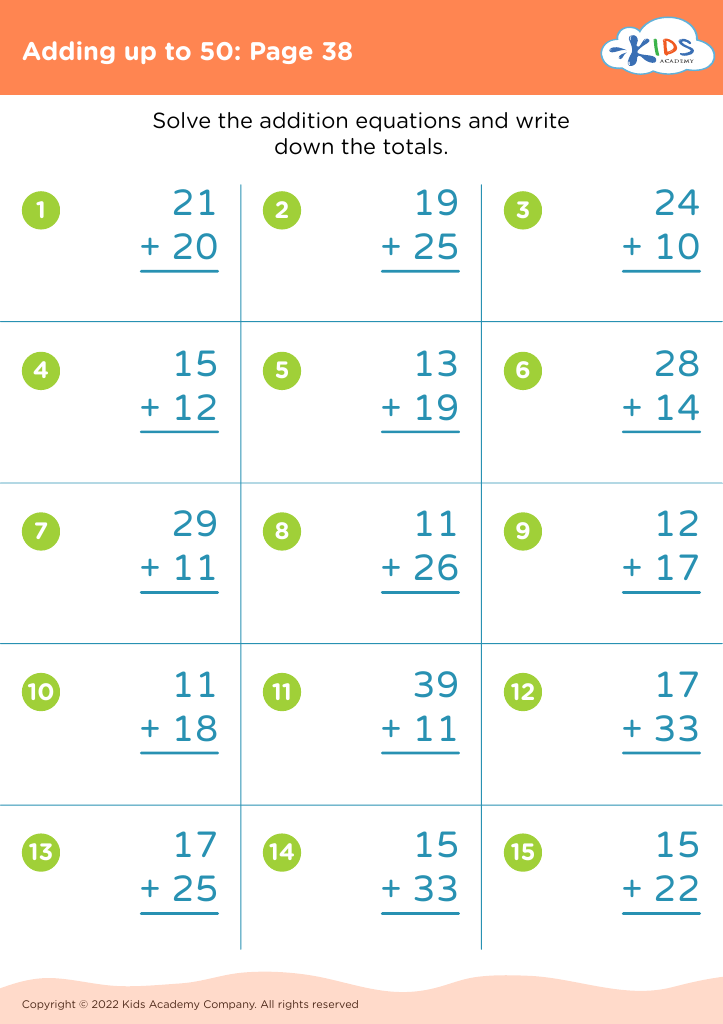
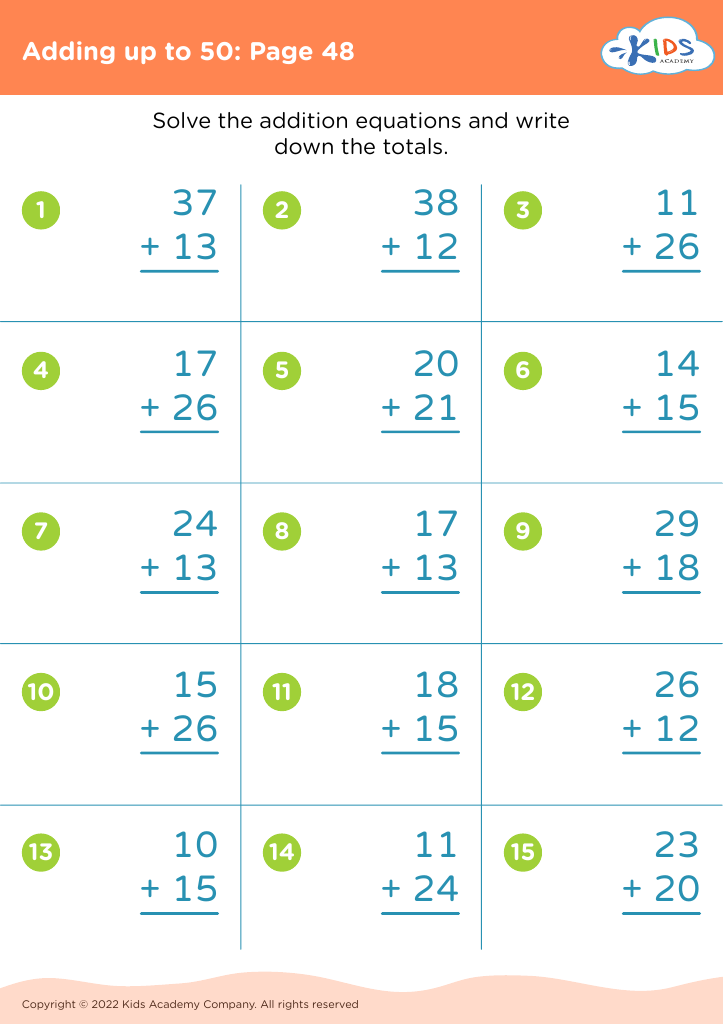
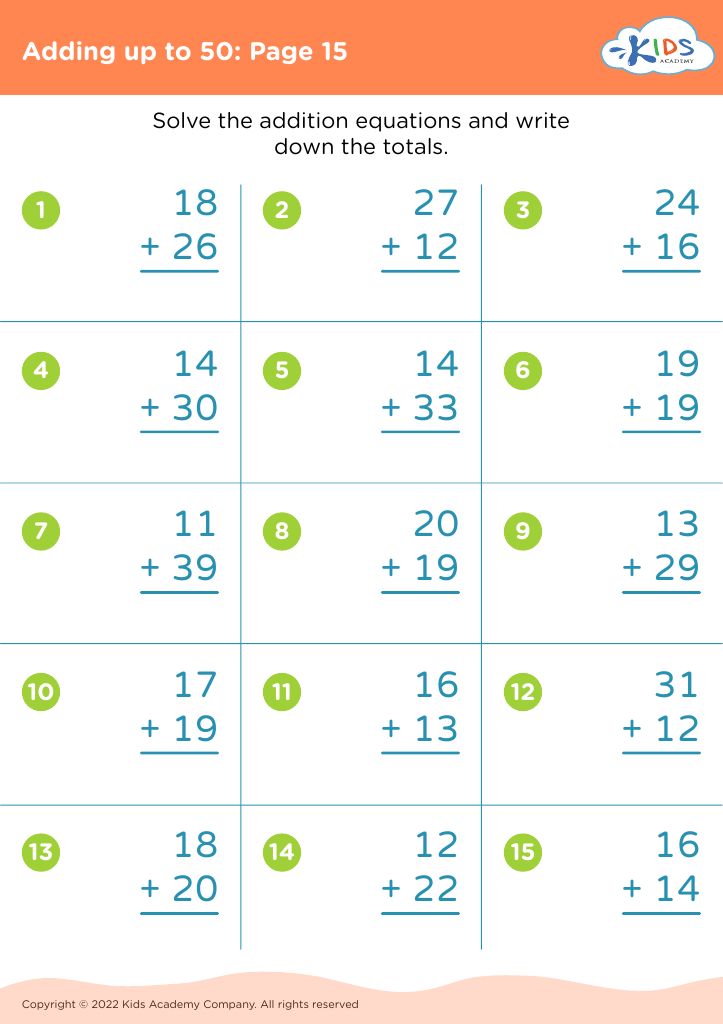
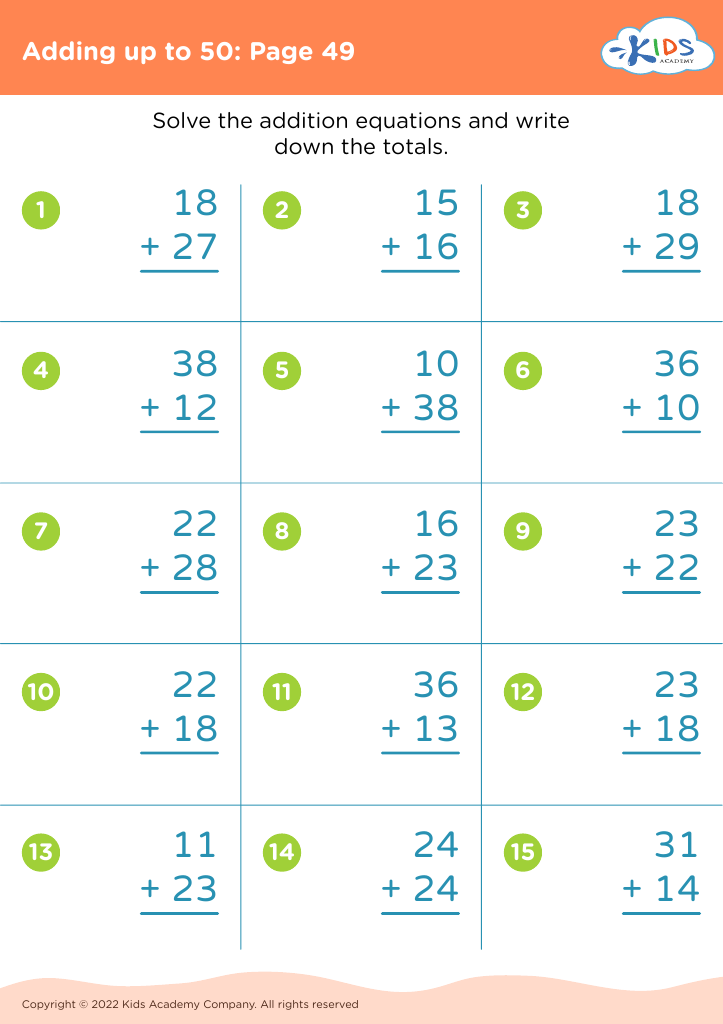


Parents and teachers play pivotal roles in shaping early education, particularly when it comes to foundational concepts like comparing fractions. For children ages 3-7, being introduced to basic math skills such as comparing fractions or simple addition can lay a crucial groundwork for future academic success. Engaging young minds with activities like "Comparing Fractions Adding up to 50" serves multiple developmental purposes.
First, these early math exercises foster cognitive development. They introduce children to the concept of parts of a whole, which can improve problem-solving skills and logical thinking. Second, such activities can enhance problem-solving skills by teaching them to analyze and determine relationships between different amounts.
Moreover, early engagement in comparing fractions can improve children's number sense. Understanding fractions is essential for tackling more advanced math topics they will encounter later in their education. For children aged 3-7, incorporating an element of play and real-world examples into learning makes the process enjoyable, motivating, and effective.
This approach also supports the child's attention span, patience, and ability to concentrate—skills that are universally beneficial. By showing an interest in these activities, parents and teachers can also cultivate a positive attitude towards math in young children, reinforcing the idea that learning can be fun and rewarding.