Improving math skills Adding up to 50 Misc Worksheets for Ages 3-7
5 filtered results
-
From - To
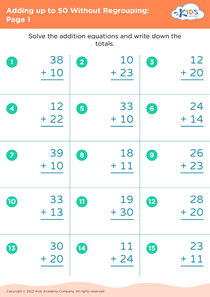
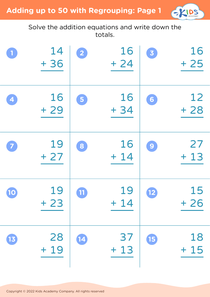
Unlock your child's potential with our "Improving Math Skills: Adding Up to 50 Miscellaneous Worksheets" designed for ages 3-7. These engaging printables focus on enhancing essential math skills through fun, interactive exercises that make learning enjoyable! Graduating from basic addition to summing numbers up to 50, these worksheets foster critical thinking and problem-solving abilities, essential for early education. Each task encourages children to practice arithmetic in a playful way, improving their confidence and foundational skills in mathematics. Perfect for at-home use or classroom activities, our resources ensure that your little ones develop a solid grasp of math in a supportive environment.
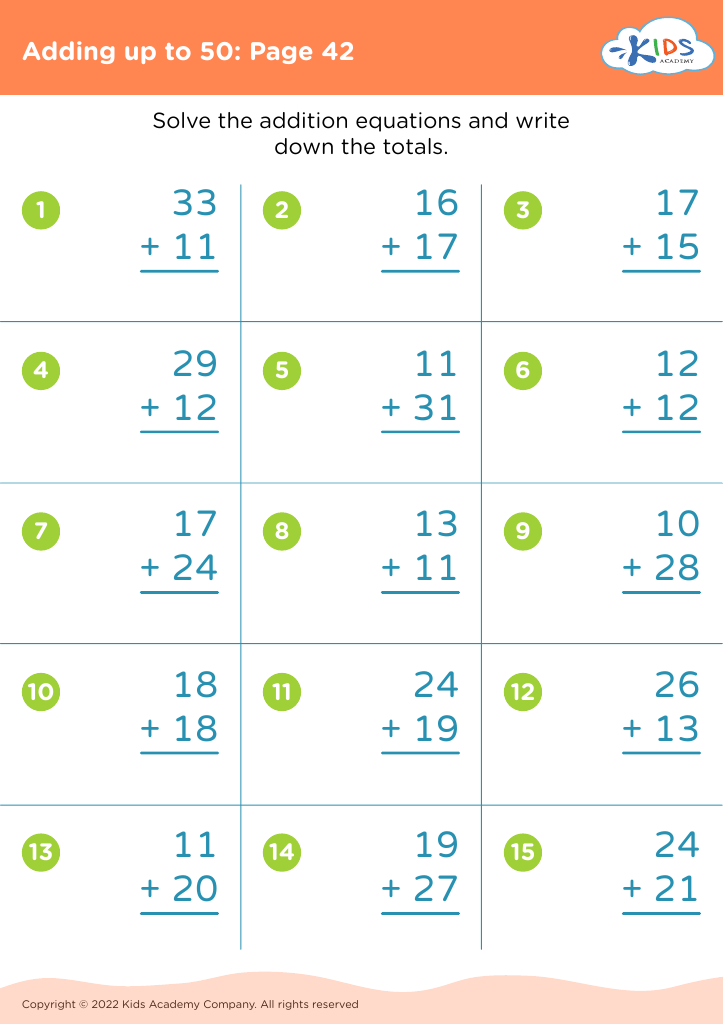
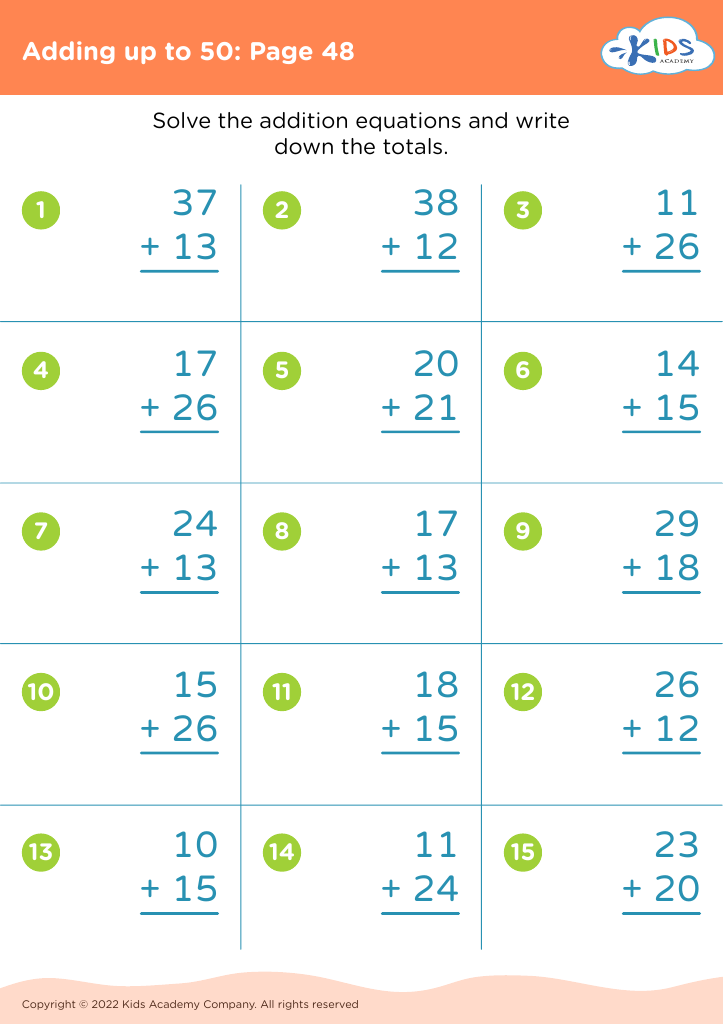
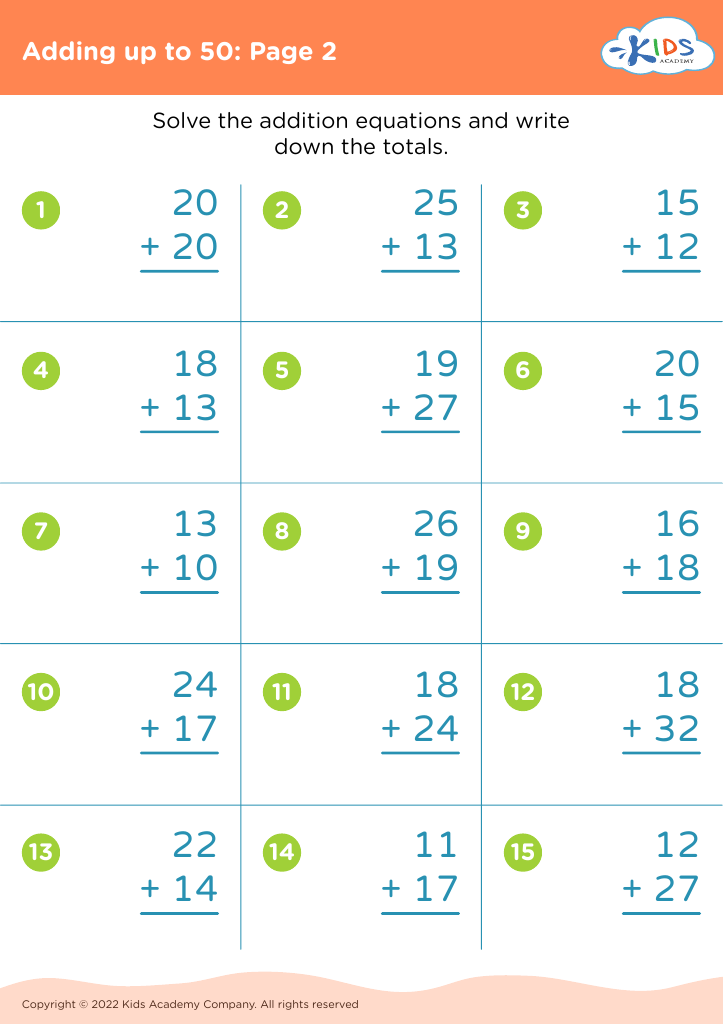
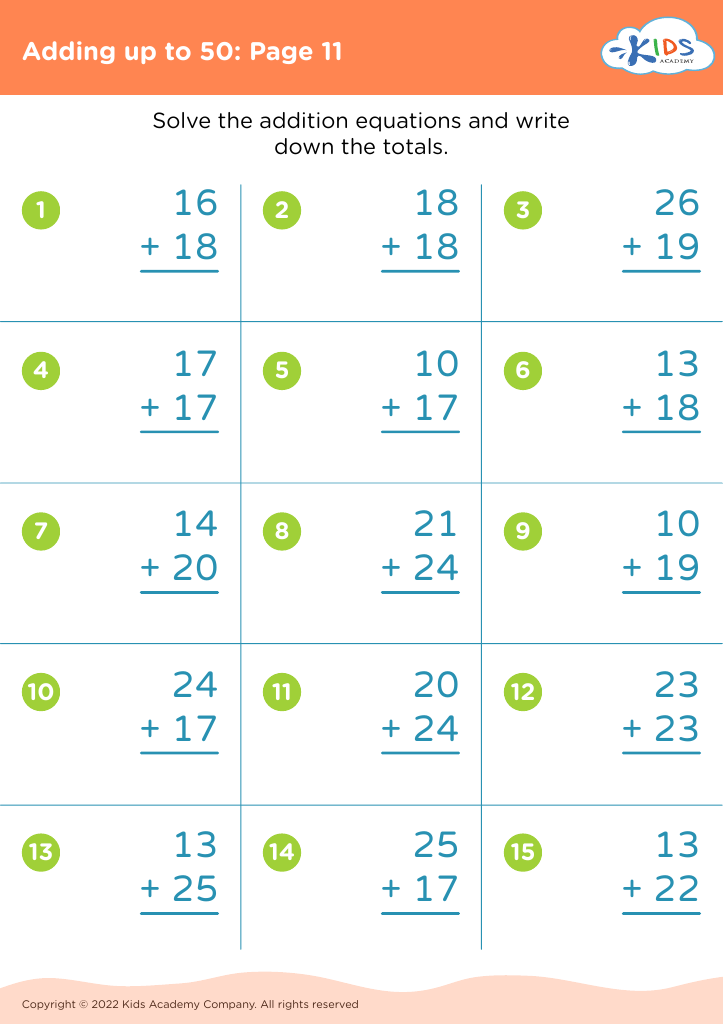
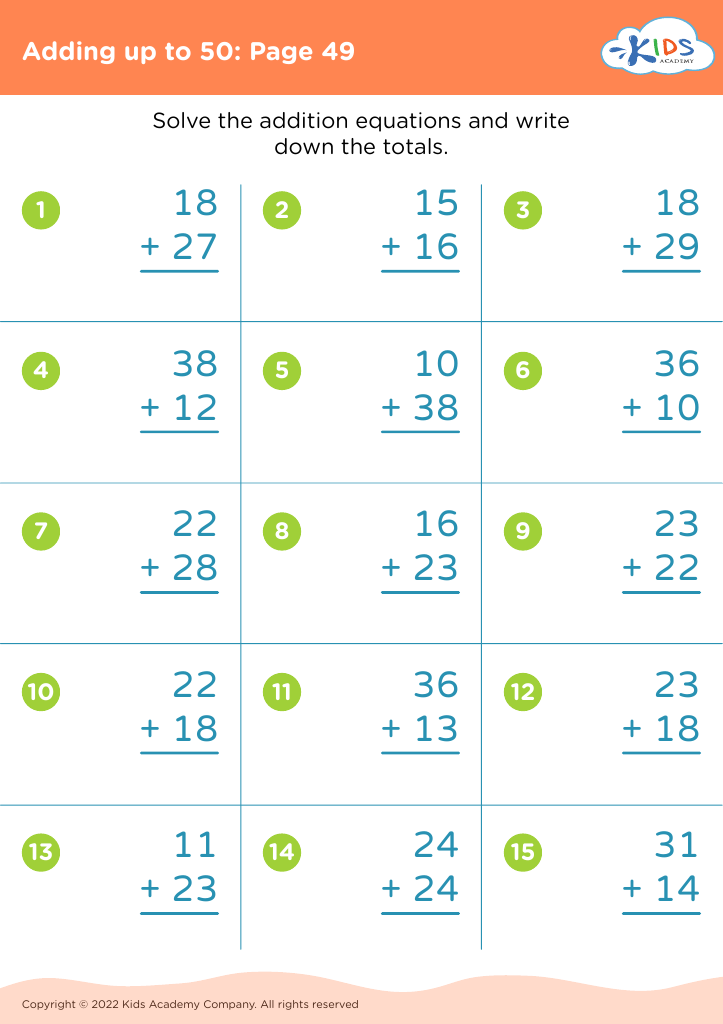


Improving math skills, especially foundational concepts like adding up to 50, is crucial for children aged 3-7. This developmental stage is a critical time when young learners build essential cognitive and analytical abilities that will serve them throughout their lives. Mastering basic addition fosters confidence in their mathematical understanding, which can lead to a positive attitude toward math-related subjects as they progress in school.
For parents and teachers, prioritizing these skills promotes problem-solving proficiency and enhances logical thinking. Early exposure to math in engaging ways—through games, visual aids, and hands-on activities—can make learning fun and interactive, helping children retain concepts better. Additionally, improving math skills at this age can reduce future learning gaps, preparing children for more complex operations as they advance in school.
Encouraging math skills also supports essential life skills such as budgeting, time management, and spatial awareness. When children can effortlessly add and comprehend numbers up to 50, they develop the groundwork necessary for higher-level mathematics and daily tasks. Therefore, investing time and resources in developing these skills will benefit both the children and society as they grow into competent adults capable of contributing to their communities.