Understanding adjectives Adding up to 50 Misc Worksheets for Ages 3-7
4 filtered results
-
From - To
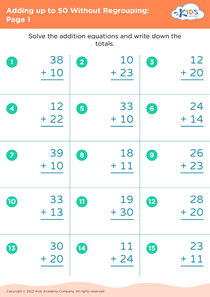
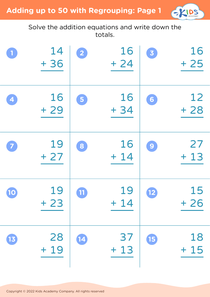
Welcome to our “Understanding Adjectives Adding up to 50 Misc Worksheets” for children ages 3-7! This engaging resource combines math and language skills through a series of fun activities. Designed to enhance understanding of adjectives—descriptive words that enhance sentences—these worksheets will keep young learners excited while they explore quantity and comparison. Each page includes vibrant visuals and clear instructions, making learning enjoyable and effective. As children practice addition while recognizing adjectives, they develop critical thinking and vocabulary skills. Perfect for classroom or at-home use, these worksheets will facilitate your child’s growth in both language and math proficiency!
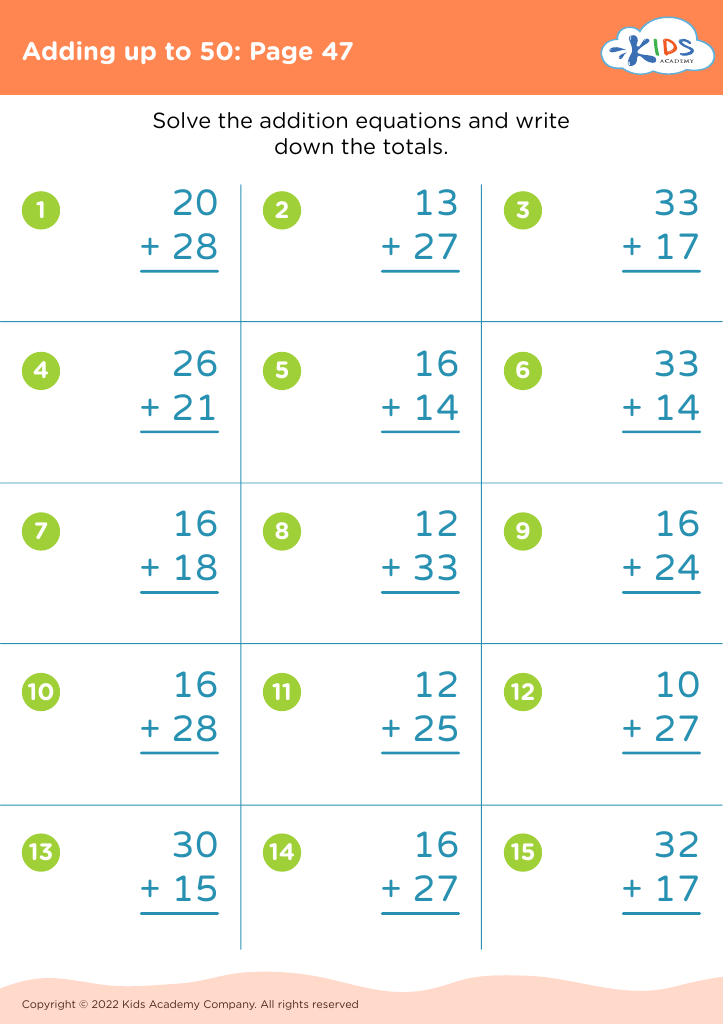
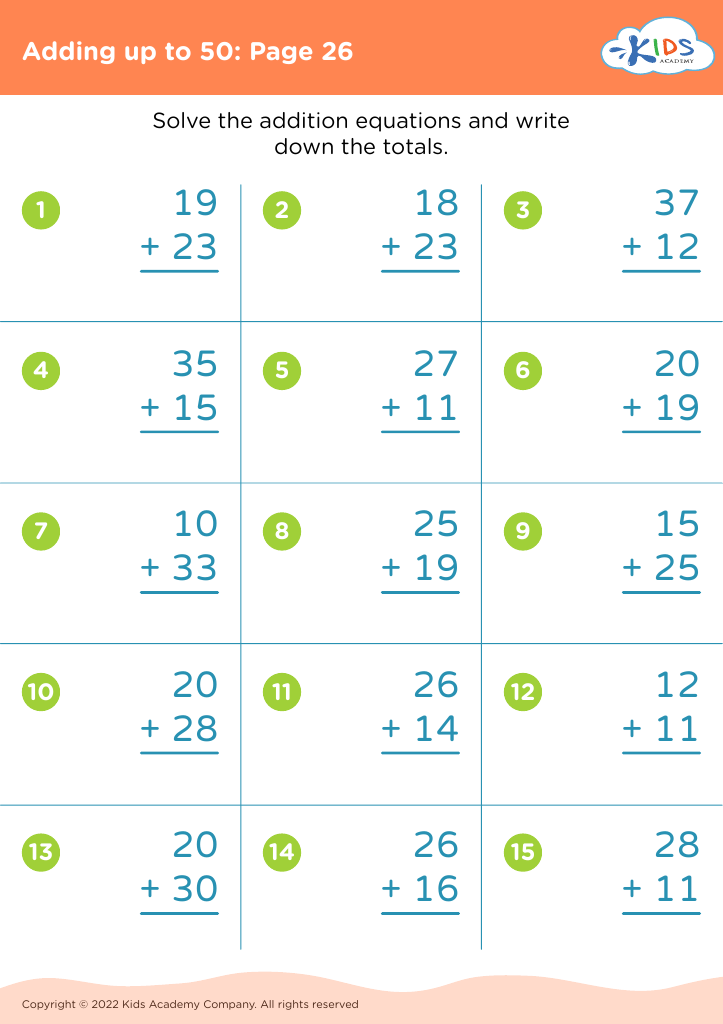
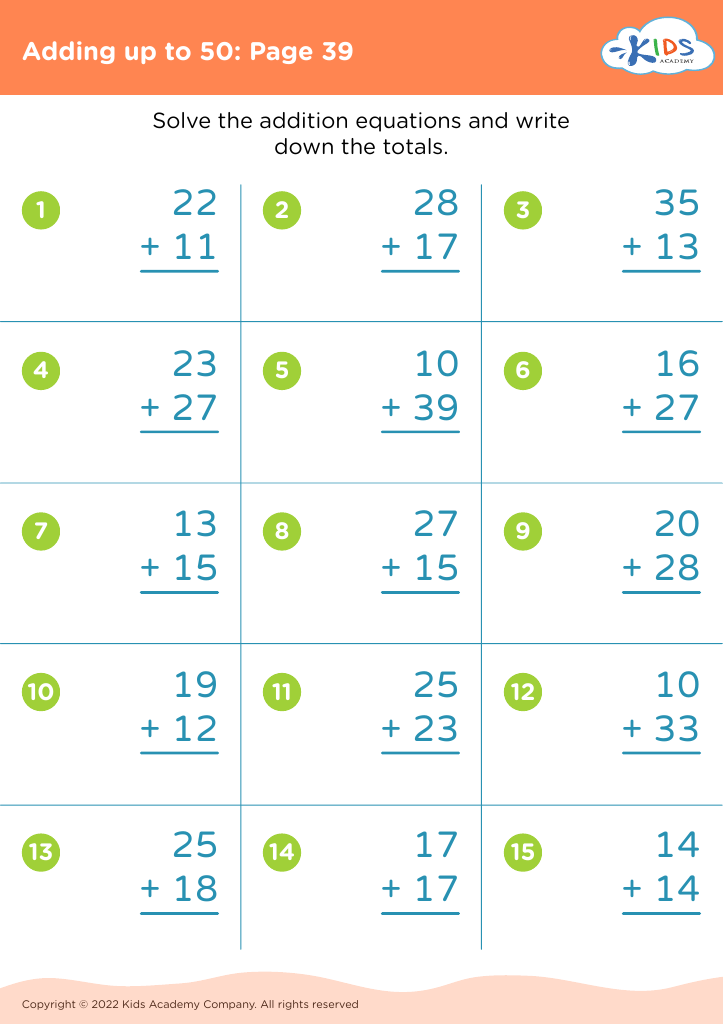
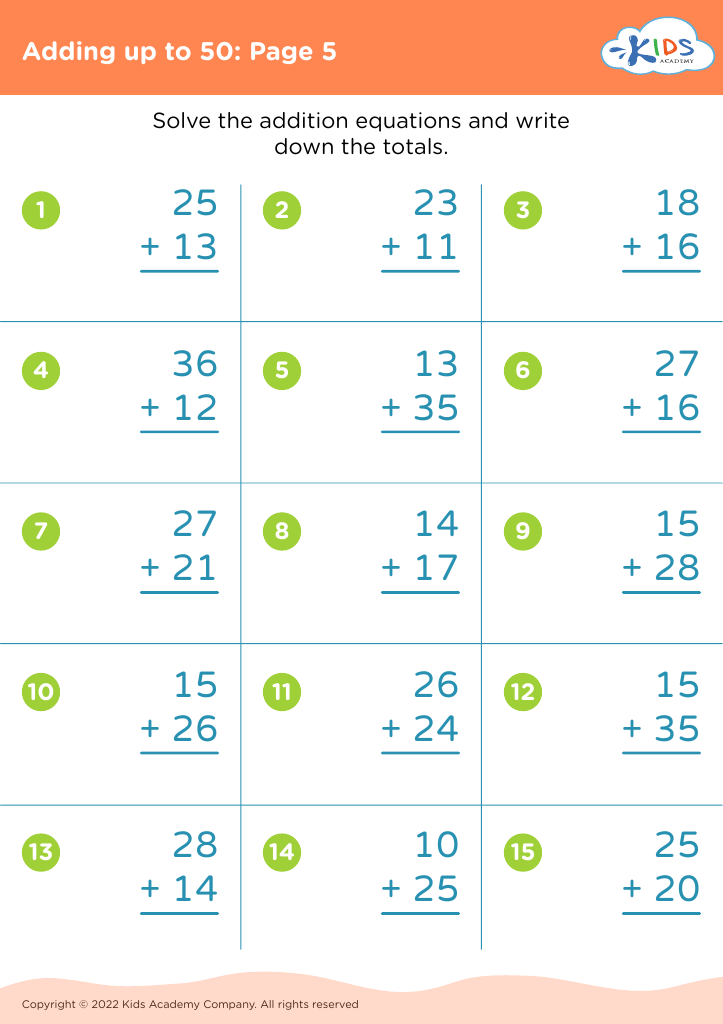


Understanding adjectives and basic math concepts, such as adding up to 50, are foundational skills for young learners aged 3-7, which parents and teachers should prioritize.
Adjectives enrich language development, enabling children to describe the world around them. By learning to use descriptive words, children enhance their vocabulary, improve their communication skills, and express their thoughts more clearly. For instance, using adjectives to describe colors, shapes, and feelings can make storytelling more engaging and relatable, fostering a love for reading and writing.
On the other hand, grasping basic math concepts, like adding up to 50, lays the groundwork for future mathematical understanding. At this age, kids are developing number sense, and learning to perform simple addition encourages critical thinking and problem-solving skills. Understanding numerical relationships and practicing addition boosts confidence in math, setting the stage for more complex concepts later on.
Both language and math skills are interlinked in cognitive development. Together, they inspire creativity, enhance reasoning abilities, and foster an enthusiasm for learning. Parents and teachers should take an active role in encouraging these skills, as they are essential to a child’s holistic development in early childhood education.