Understanding fractions Adding up to 50 Misc Worksheets for Ages 3-7
17 filtered results
-
From - To
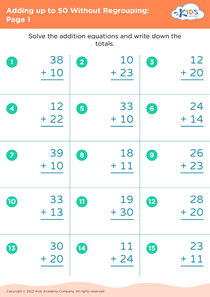
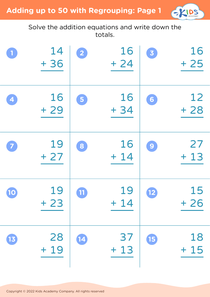
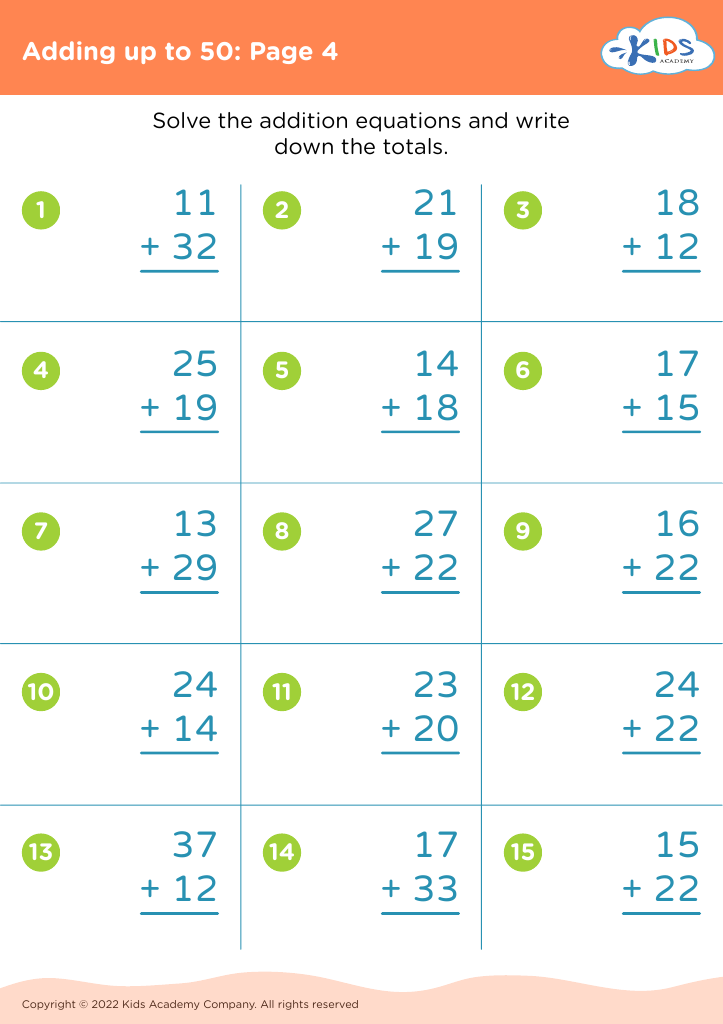
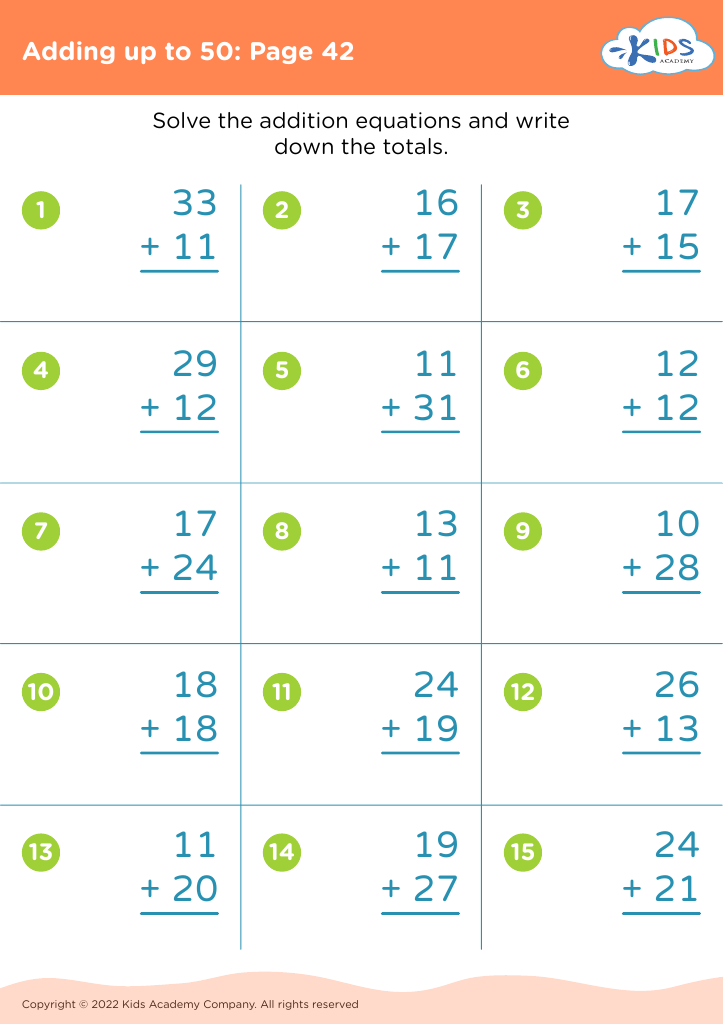
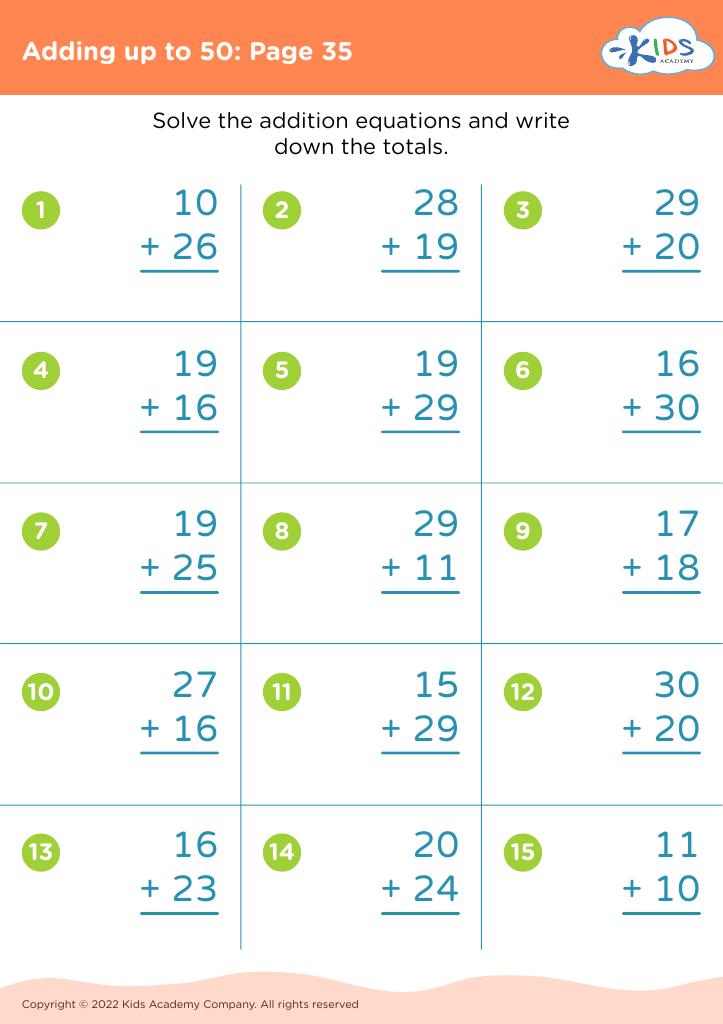
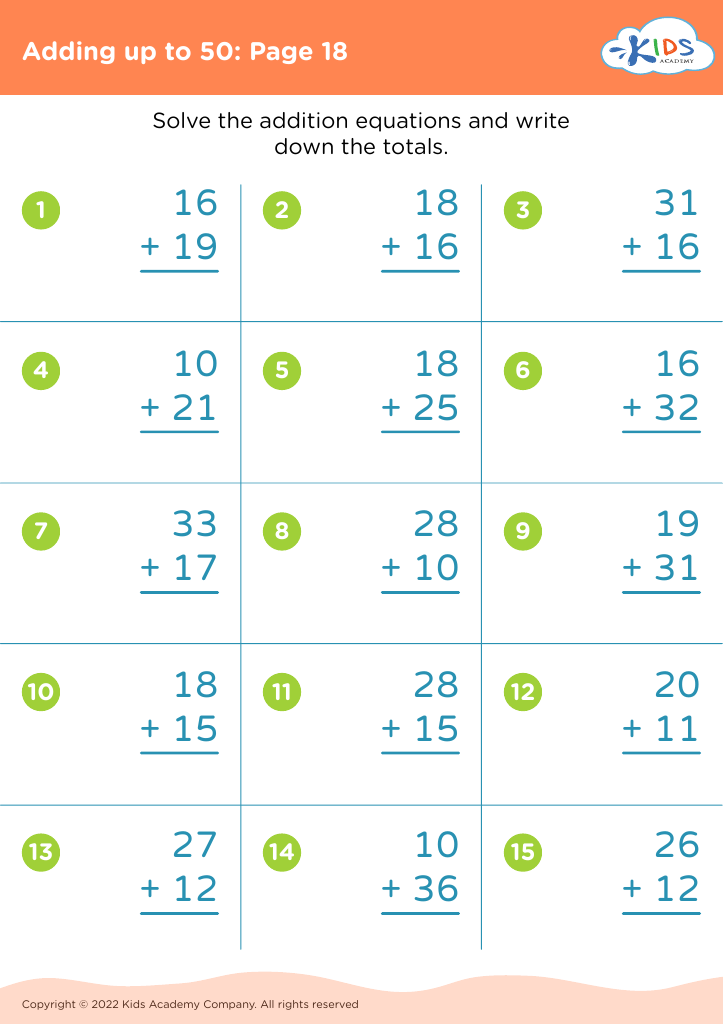
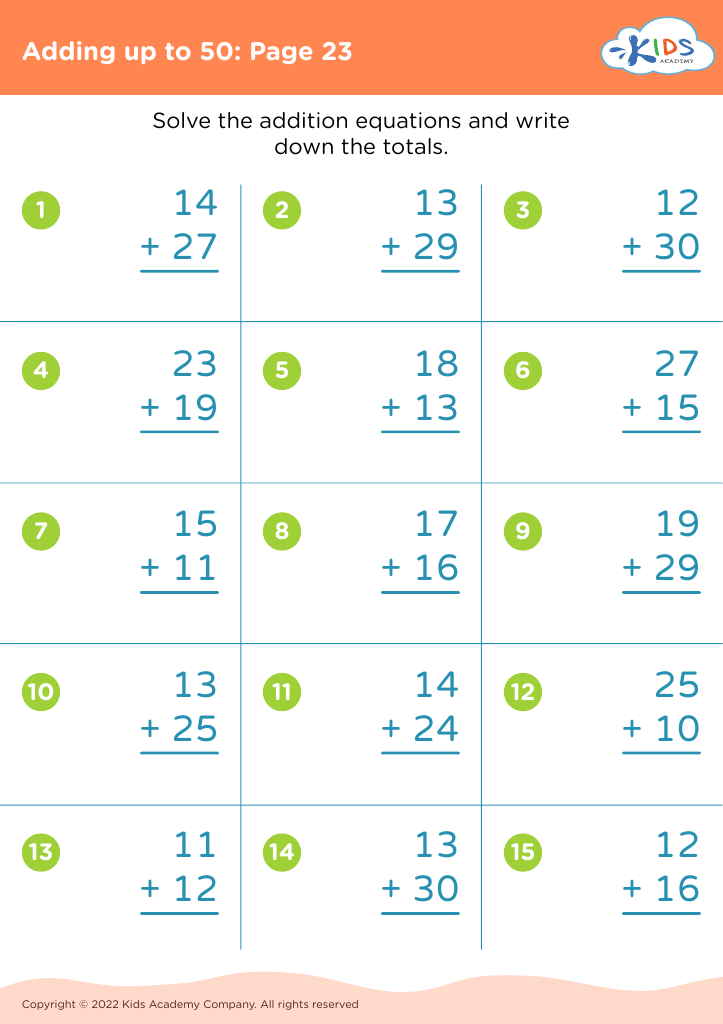
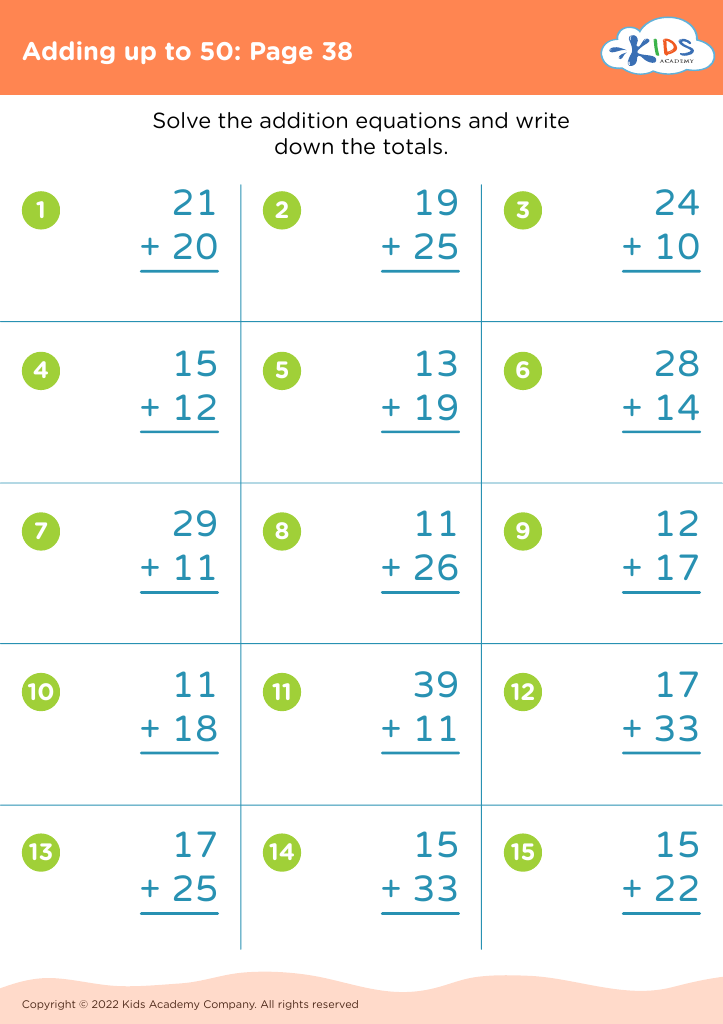
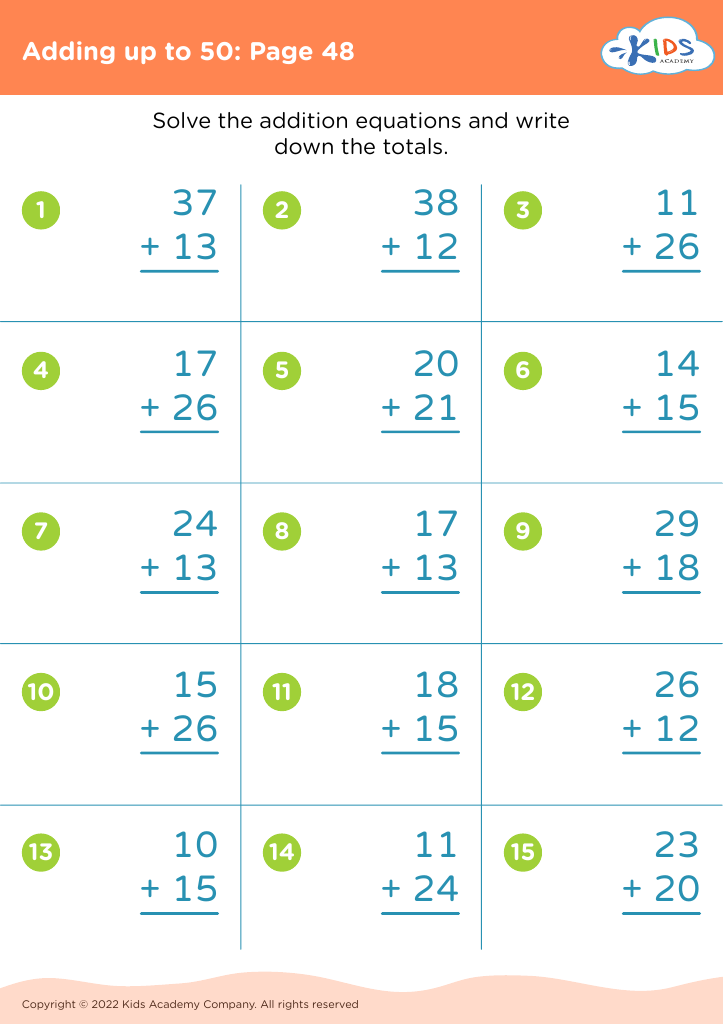
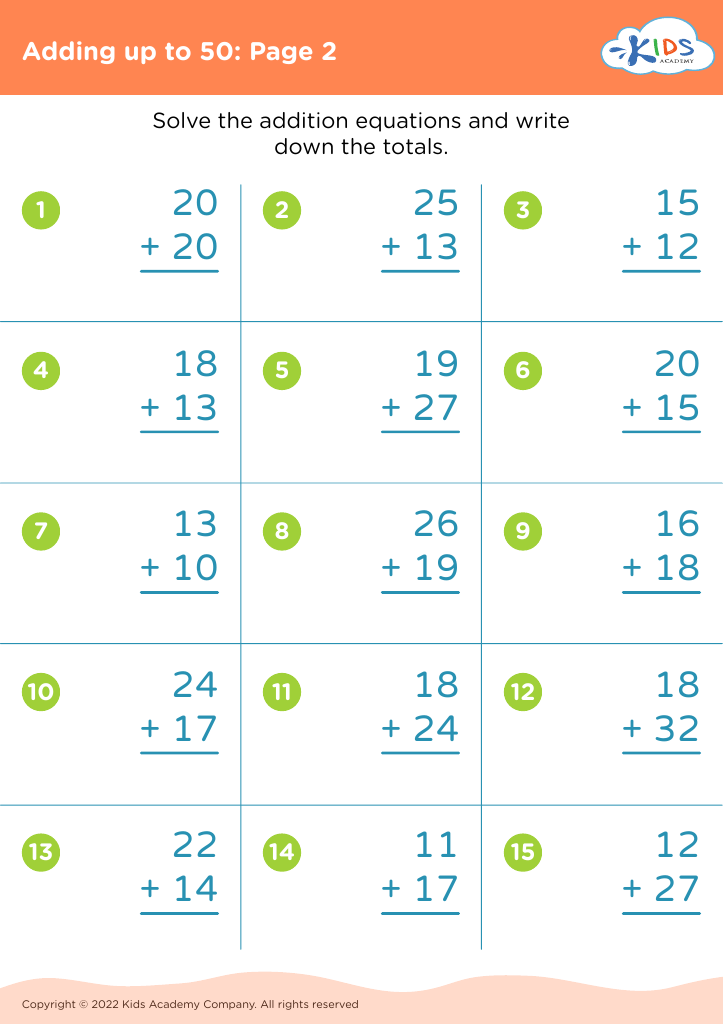
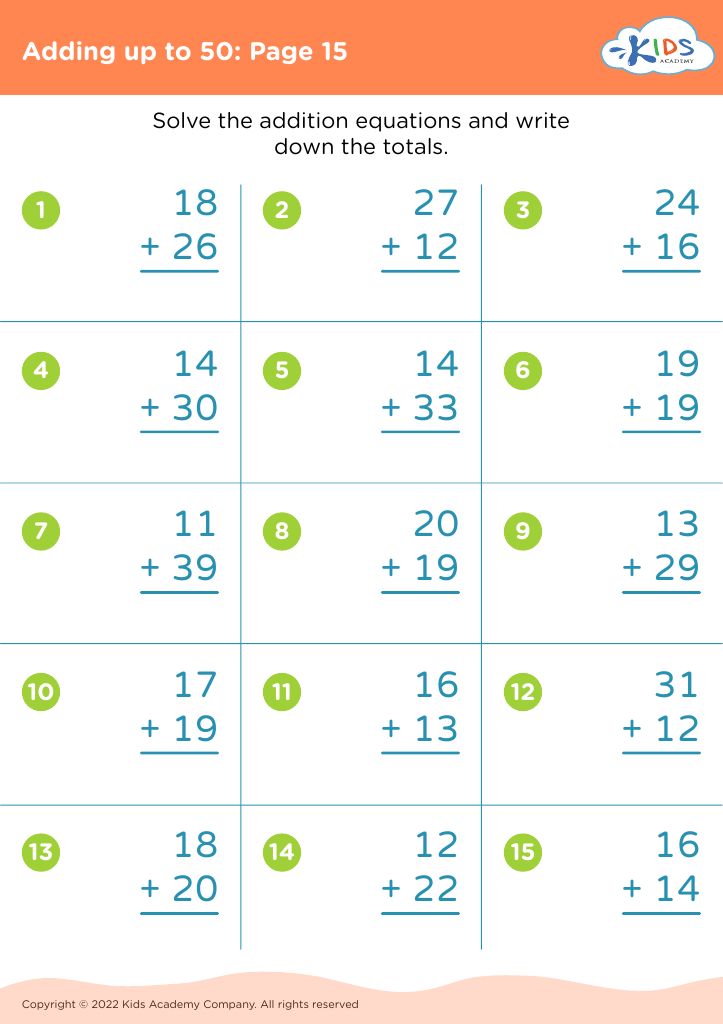
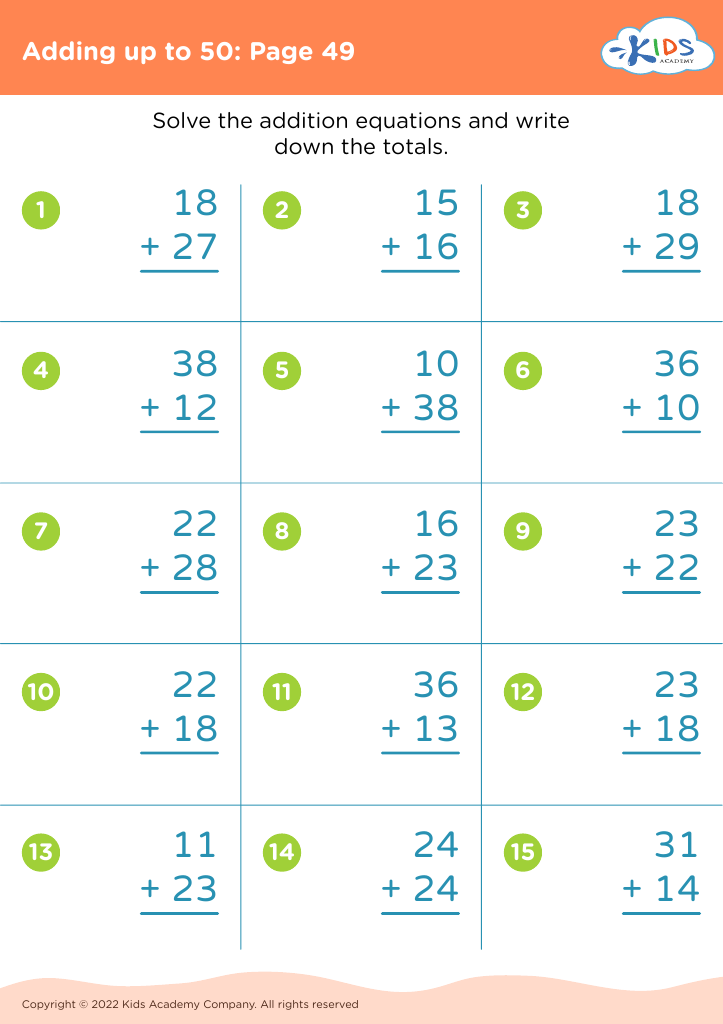
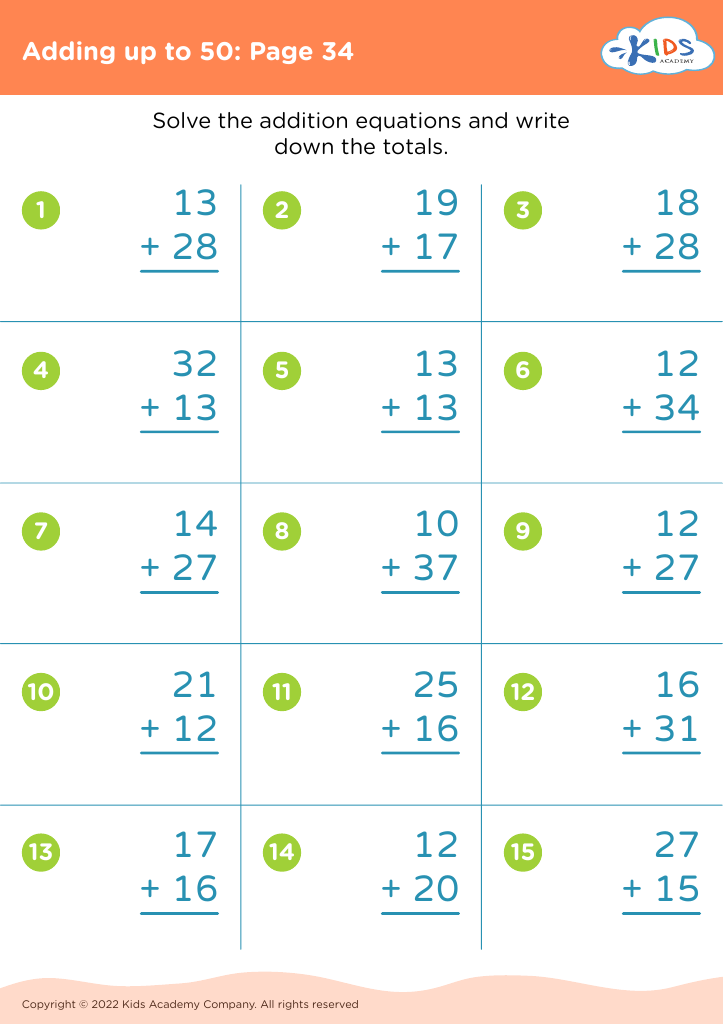
Unlock the world of fractions and addition for young learners with our "Understanding Fractions Adding up to 50 Misc Worksheets" designed for ages 3-7. These engaging, colorful printables help children master foundational math skills, combining fraction concepts with adding numbers up to 50. Perfect for both classroom settings and at-home practice, each worksheet encourages interactive learning through fun activities, puzzles, and visual aids. Watch your child's confidence grow as they grasp essential mathematical principles, setting a strong foundation for future success. Easily downloadable, our worksheets are the perfect educational tools for curious young minds.
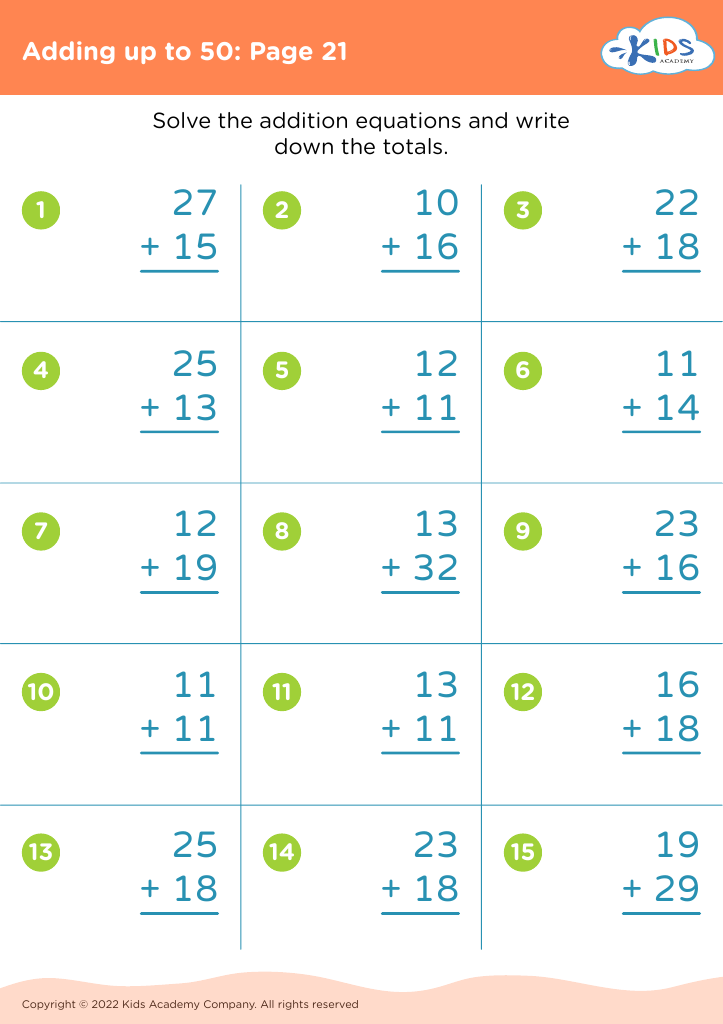
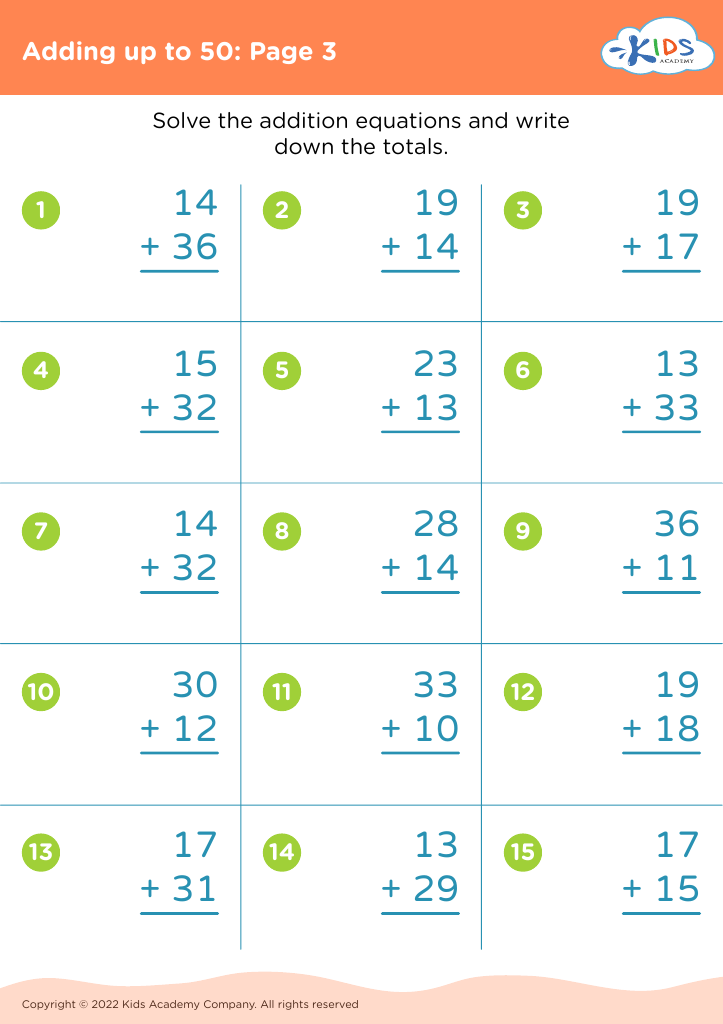
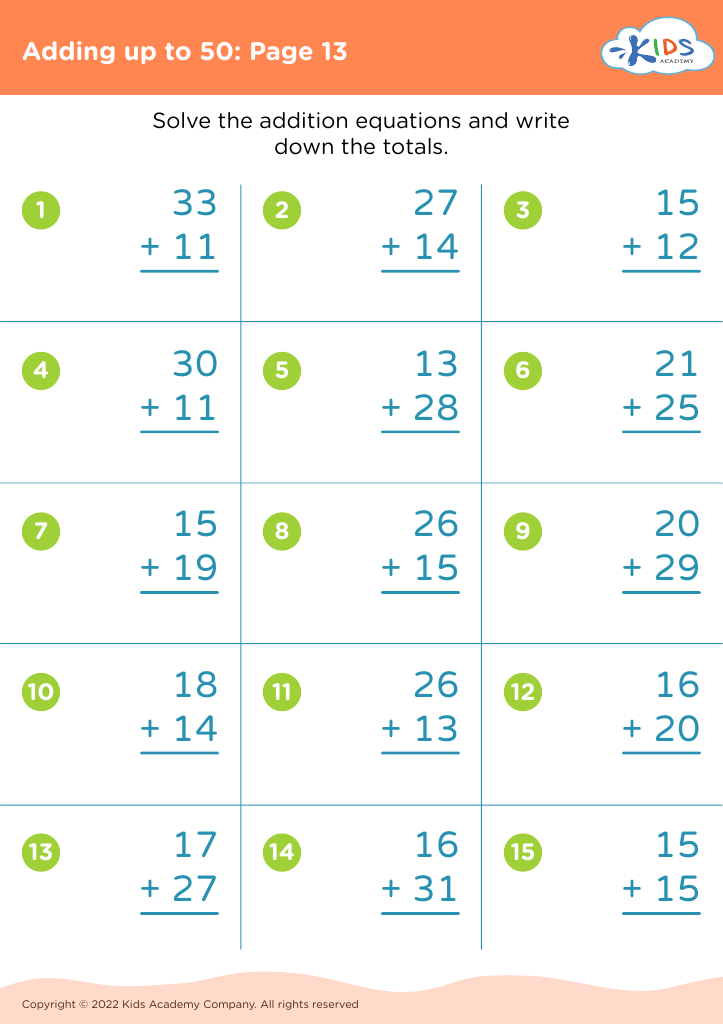
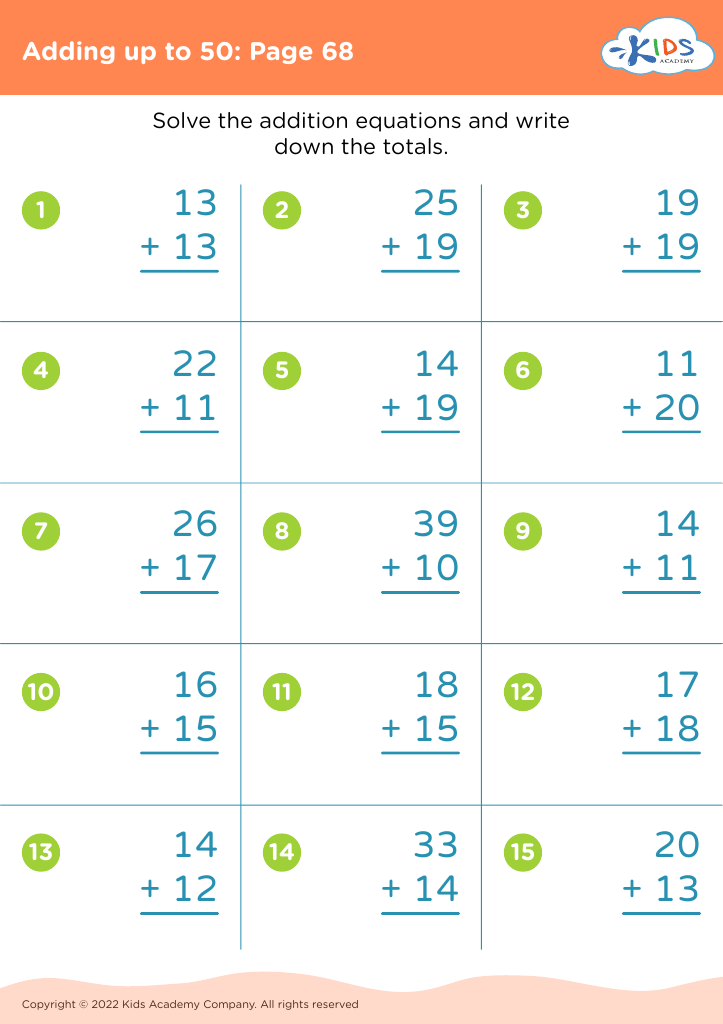
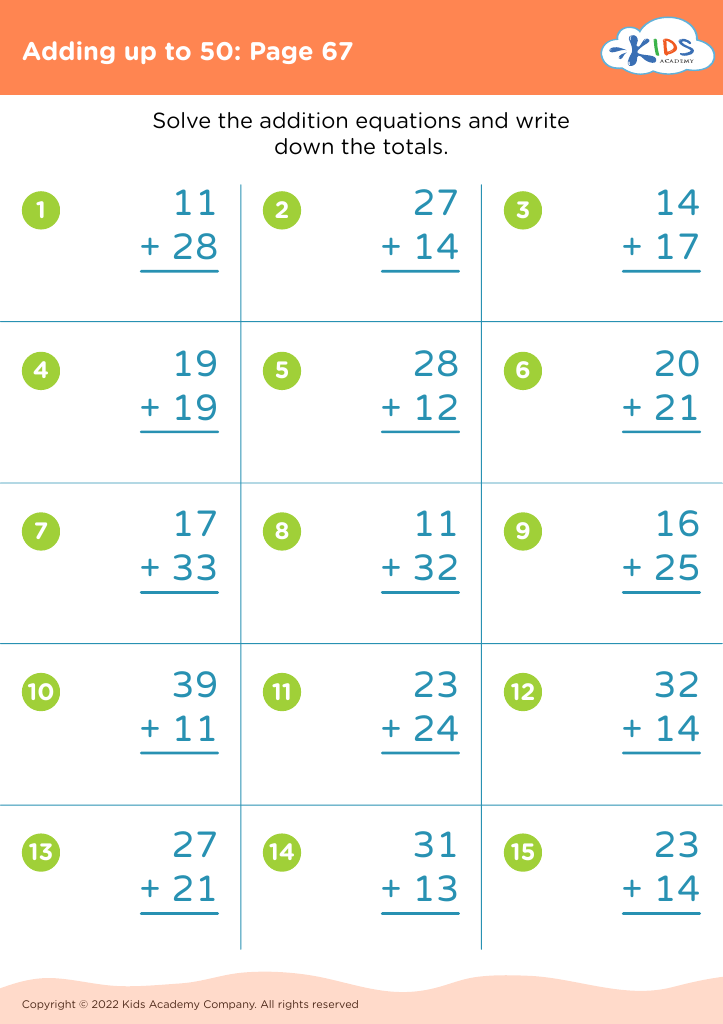
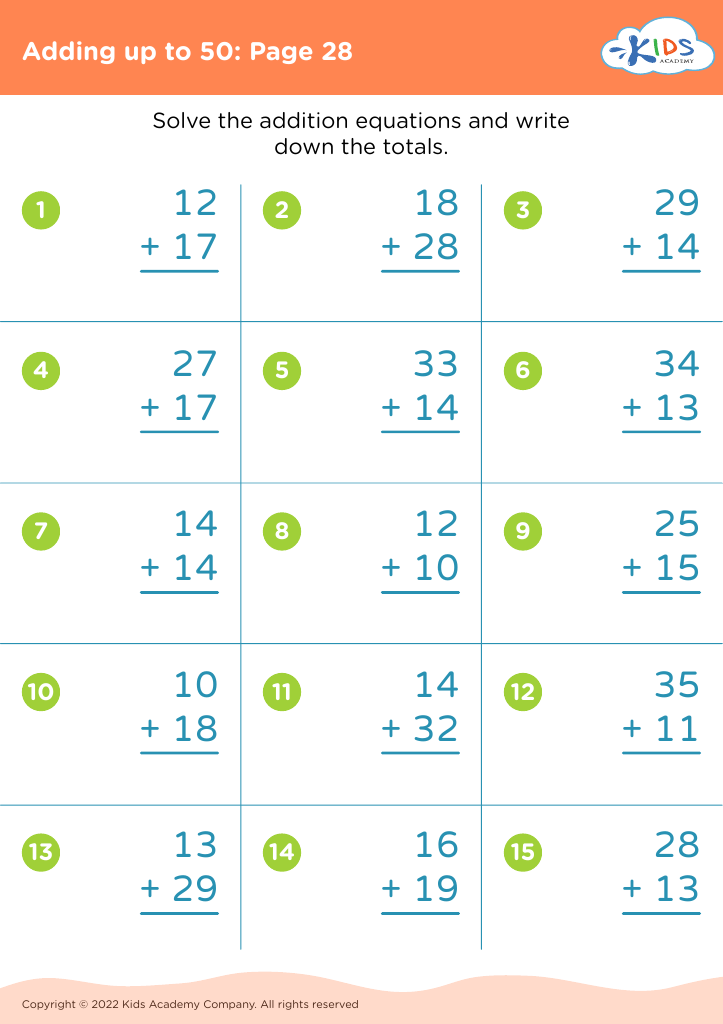


Understanding fractions is essential even for young learners aged 3-7 as it lays the groundwork for future math skills. Parents and teachers should emphasize these concepts early, as they develop critical thinking and problem-solving abilities. When children grasp fractions, they learn to comprehend parts of a whole, which not only applies to math but also to real-world scenarios like sharing and dividing.
Adding up to 50 is another crucial skill at this age. Early proficiency in addition builds a solid foundation for more complex arithmetic and helps children develop number sense. Knowing how to add up numbers accurately boosts confidence and encourages a positive attitude towards math, promoting academic success.
Additionally, engaging children in various miscellaneous topics, from basic geometry to simple word problems, stimulates curiosity and versatility in learning. This not only keeps them interested but also makes them adaptable and robust learners.
Parents and teachers nurturing these skills from an early age ensure children achieve a comprehensive understanding of fundamental mathematics. By doing so, they set them up for future educational success and everyday competencies. This holistic approach enriches children's cognitive development, making them better problem-solvers and analytical thinkers as they grow.