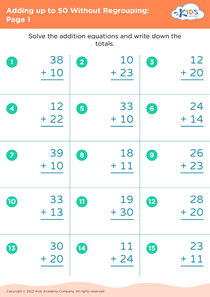
Basic Addition Adding up to 50 with Regrouping Worksheets for Ages 3-7
3 filtered results
-
From - To
Discover our Basic Addition Adding up to 50 with Regrouping Worksheets, specially designed for children ages 3-7. These engaging worksheets help young learners develop essential math skills through fun activities and colorful exercises. By tackling problems that involve adding numbers up to 50, children will build a strong foundation in basic addition and learn important regrouping techniques. Perfect for both classroom settings and home practice, our worksheets aim to boost confidence and computational skills. Get your child started on their math journey with these thoughtfully crafted resources available now at Kids Academy.
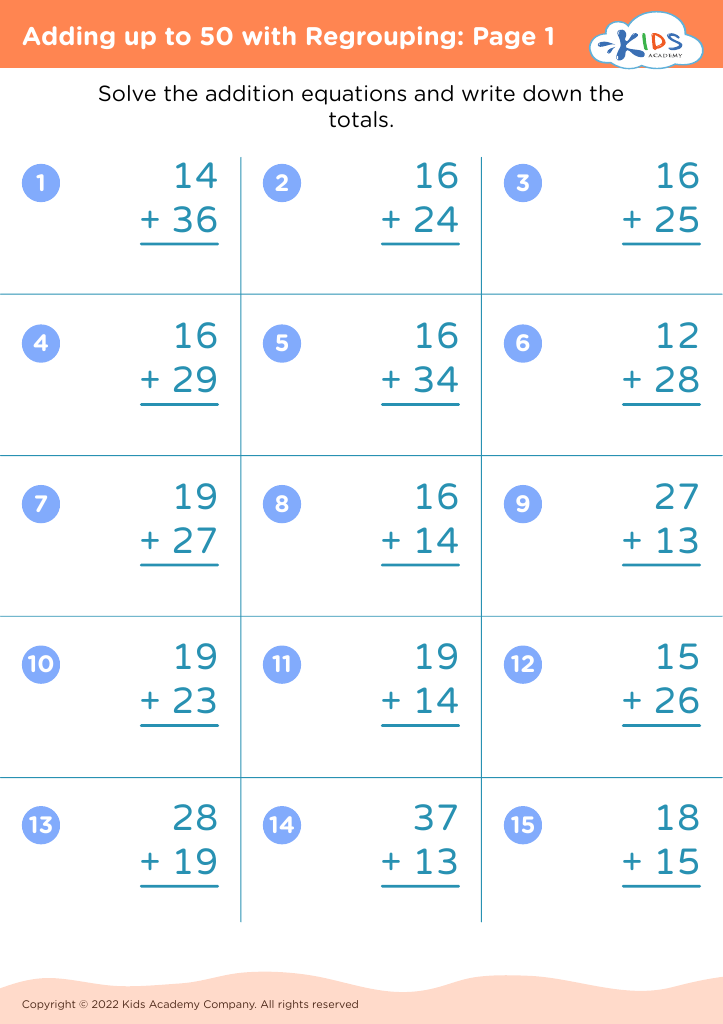
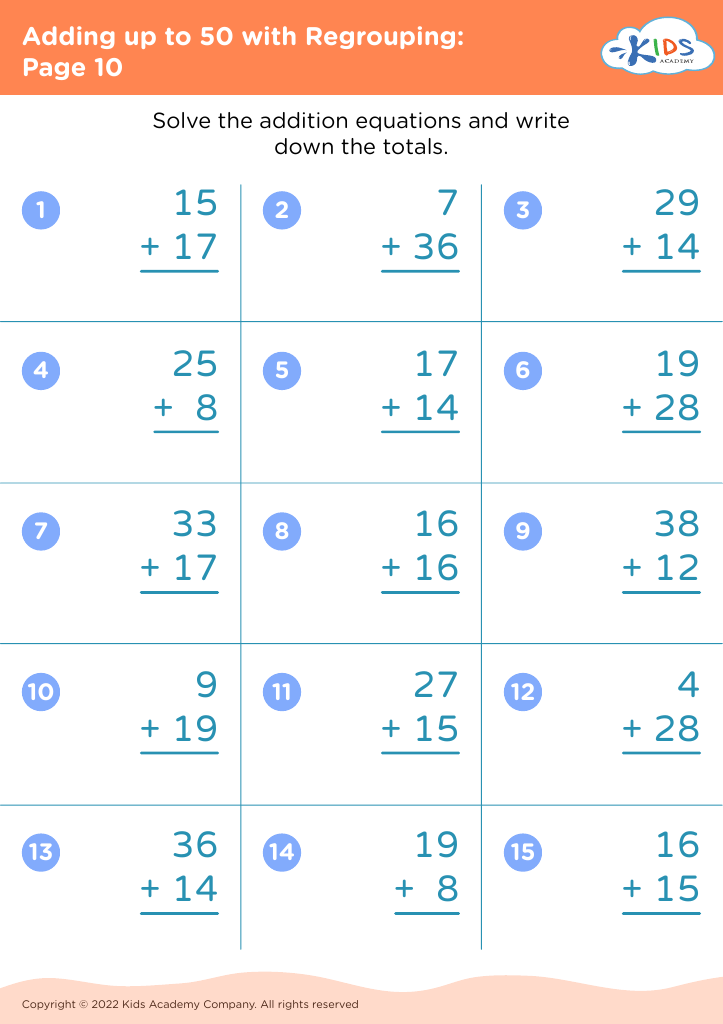
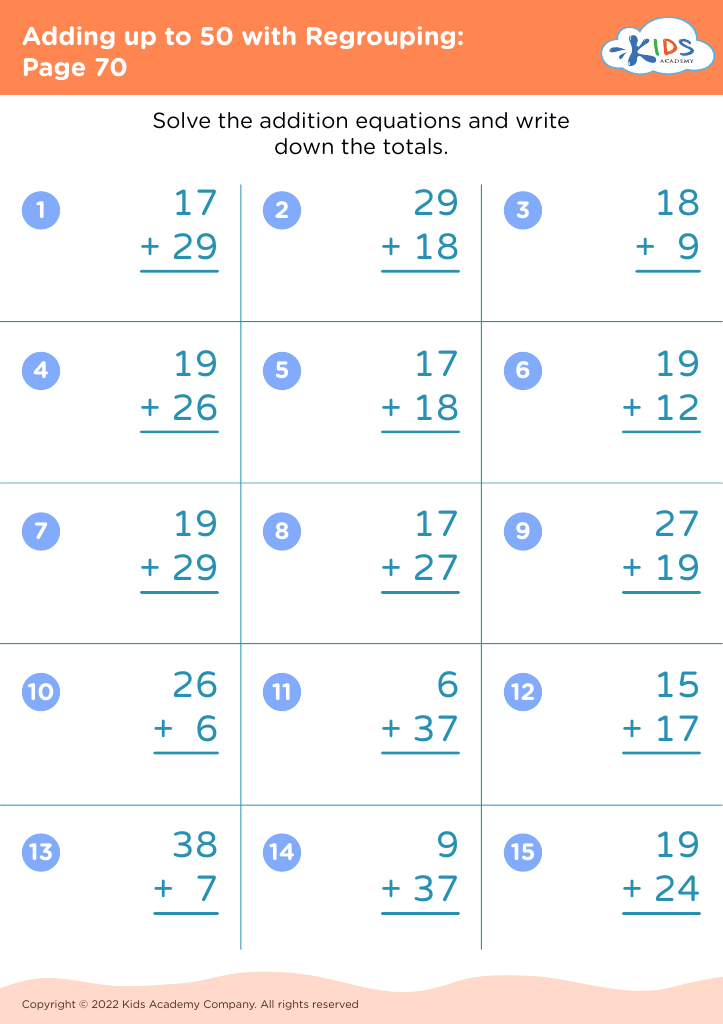


Basic addition skills, including adding up to 50 with regrouping, are critical for young children (ages 3-7) as foundational math competencies shape their future learning and cognitive development. During these formative years, children’s brains are rapidly developing, and grasping basic math concepts lays the groundwork for more complex problem-solving in later grades.
Regrouping, often known as ‘carrying over’ in addition, introduces an essential math concept that helps children understand place value, a cornerstone of the numerical system. Mastery of place values helps them easily transition to more extensive calculations like subtraction, multiplication, and division. Additionally, competency in basic addition fosters confidence and a positive attitude toward math, counteracting math anxiety which can impair learning and performance.
Moreover, incorporating math into daily routines improves children's critical thinking, logical reasoning skills, and their ability to recognize patterns, which are applicable in various aspects of life beyond academics. Parents and teachers who prioritize math education, using engaging and developmentally appropriate methods, help children cultivate an early love for math, motivating lifelong curiosity and learning. Hence, caring about basic addition with regrouping ensures children build a solid academic foundation and practical life skills needed for their future success.