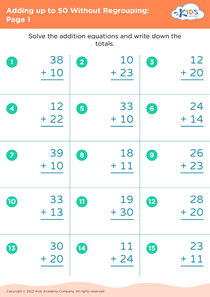
Basic Math Skills Adding up to 50 with Regrouping Worksheets for Ages 3-7
5 filtered results
-
From - To
Strengthen your child's mathematical foundation with our "Basic Math Skills: Adding up to 50 with Regrouping Worksheets" designed for ages 3-7. Our engaging and colorful worksheets introduce young learners to the essential skill of addition with regrouping, helping them build confidence and enhance their numerical proficiency. Each worksheet is crafted with age-appropriate problems aimed at developing critical thinking and problem-solving abilities. Perfect for both classroom use and at-home practice, these resources will ensure your child effortlessly masters addition while having fun. Visit Kids Academy to kickstart your child's math journey today and set the stage for future academic success!
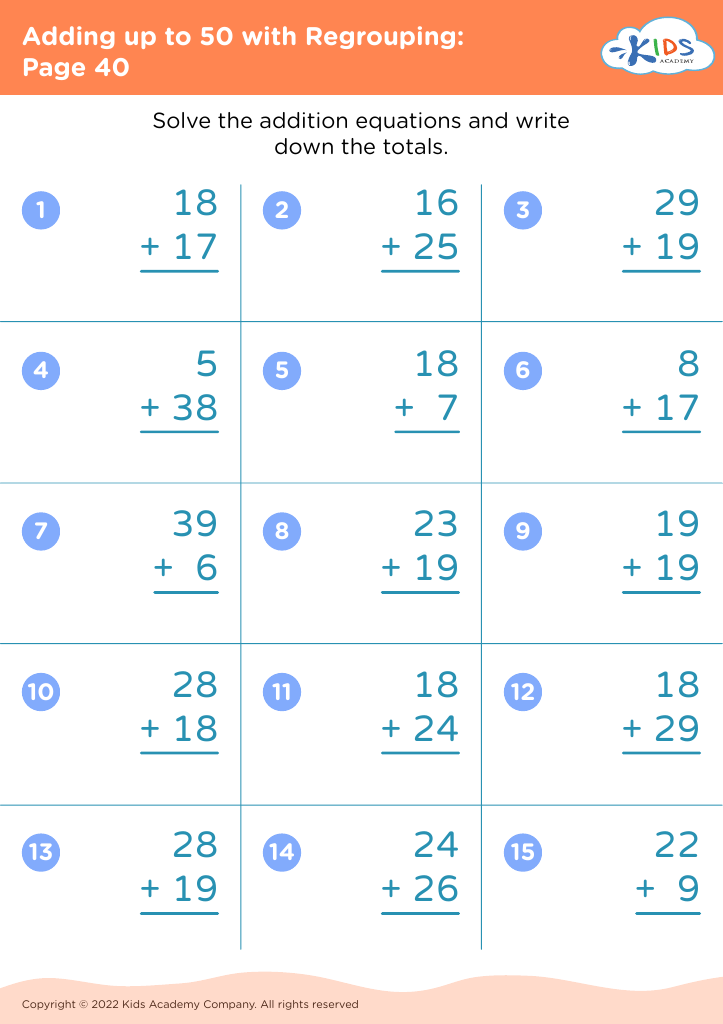
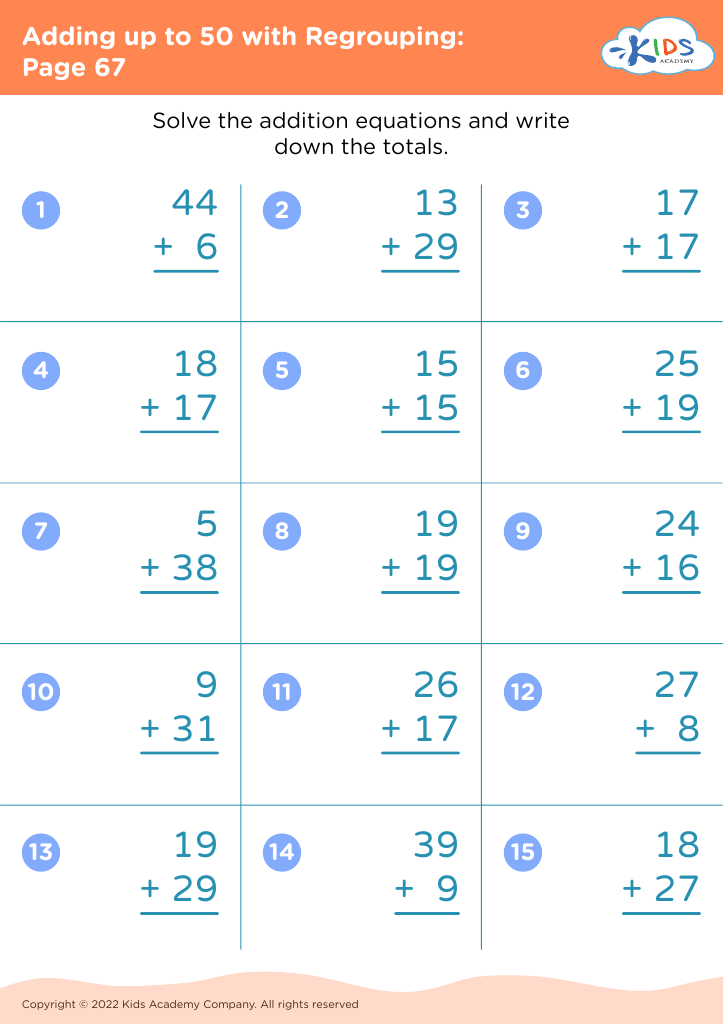
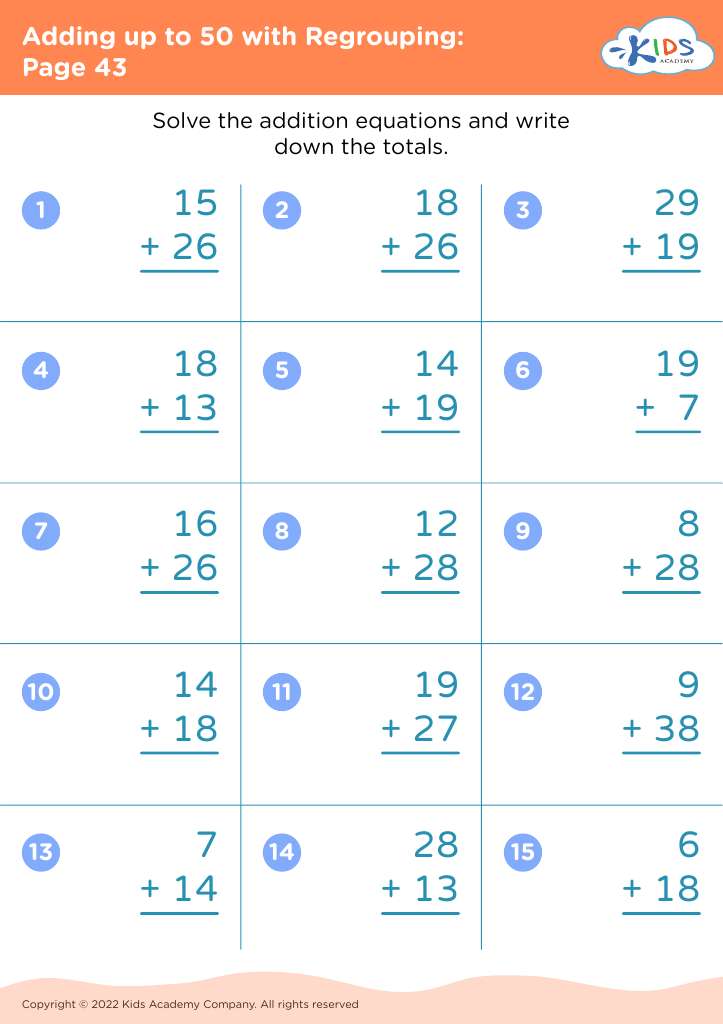
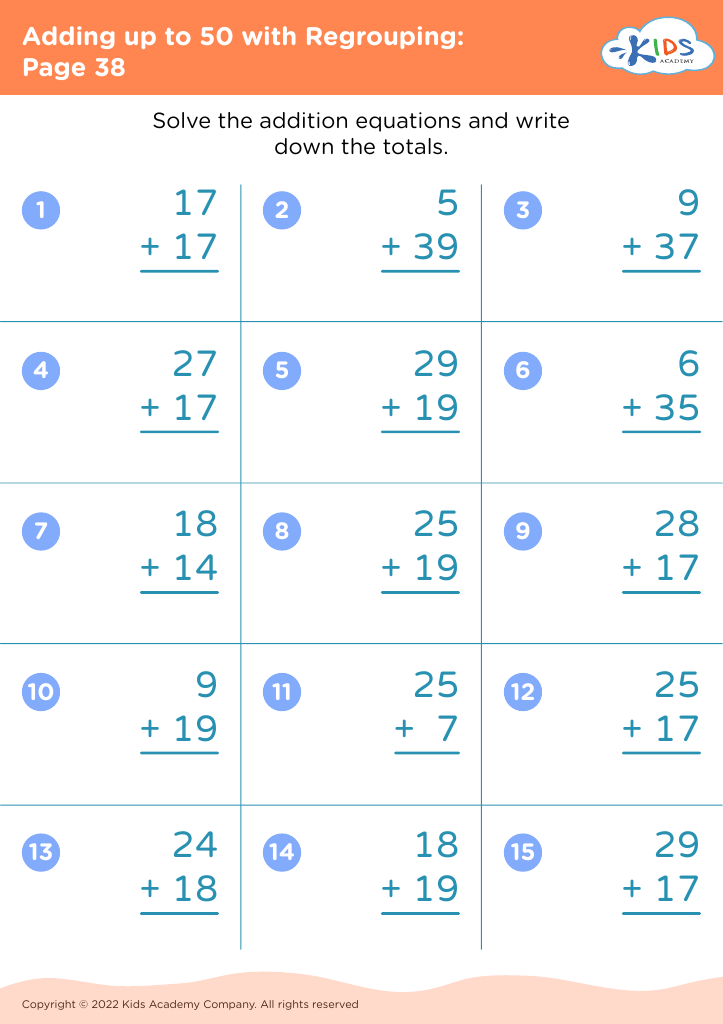
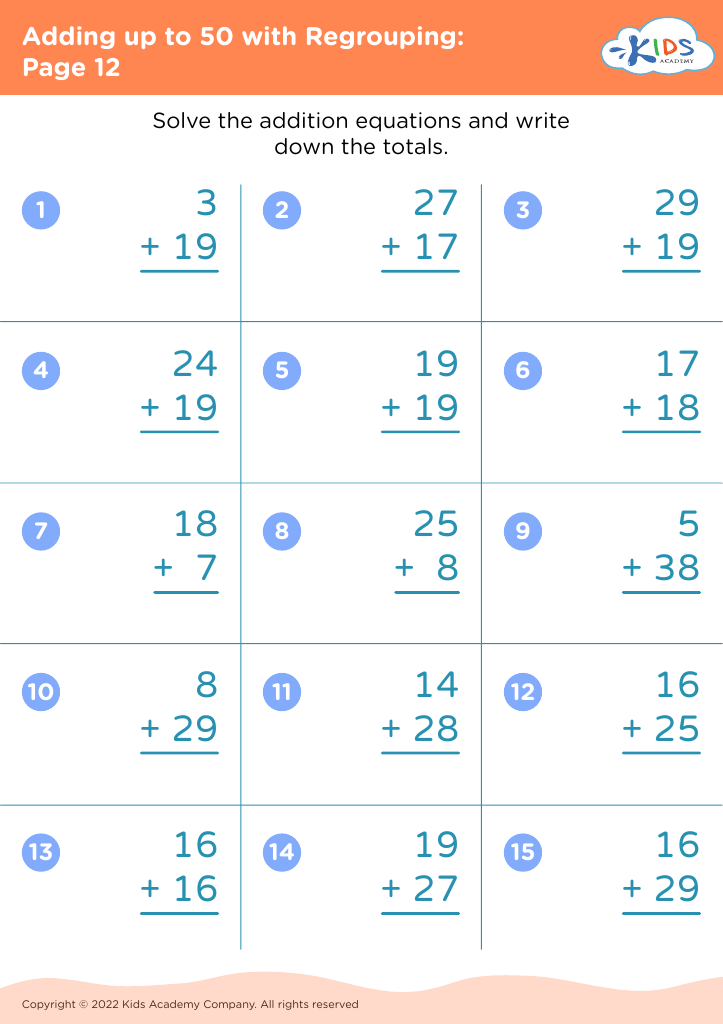


Developing basic math skills, including addition up to 50 with regrouping, is crucial for children aged 3-7 for several reasons. At this age, children's brains are highly malleable, and early math experiences can create foundational neural connections that support future learning. Learning to regroup, or carry over, when their sums exceed 10 enhances their understanding of place value, which is a core concept in mathematics.
First, mastering these skills builds children’s confidence and promotes a positive attitude toward math. When children see their progress and understand key concepts, they are more likely to enjoy math and feel competent. This positivity can carry over into other subjects and general learning enthusiasm.
Second, these skills are essential for everyday problem-solving. Math is not confined to the classroom; it plays a role in daily activities such as shopping, cooking, and time management. Early proficiency ease this aspect of life, fostering independence and practical life skills.
Additionally, early math skills are strongly correlated with academic success in later years. By third grade, children who are not proficient in basic math might start to lag in more advanced subjects. Therefore, both parents and teachers should actively support children’s learning through engaging activities, games, and practices that make math fun and relatable, ensuring foundational stability and setting the stage for a lifetime of educational benefits.