Color Identification Adding up to 50 with Regrouping Worksheets for Ages 3-7
5 filtered results
-
From - To
Discover our engaging "Color Identification Adding up to 50 with Regrouping Worksheets" designed for children ages 3-7! These educational resources seamlessly blend math skills with color recognition. As young learners practice adding numbers up to 50, they will also identify and match vibrant colors, enhancing their cognitive development and fine motor skills. Our worksheets incorporate playful illustrations to keep kids motivated while they build a solid foundation in math concepts and strategic thinking. Perfect for both classroom and home learning, these worksheets promote fun and interactive learning experiences. Help your child enjoy the journey of mastering math and colors today!
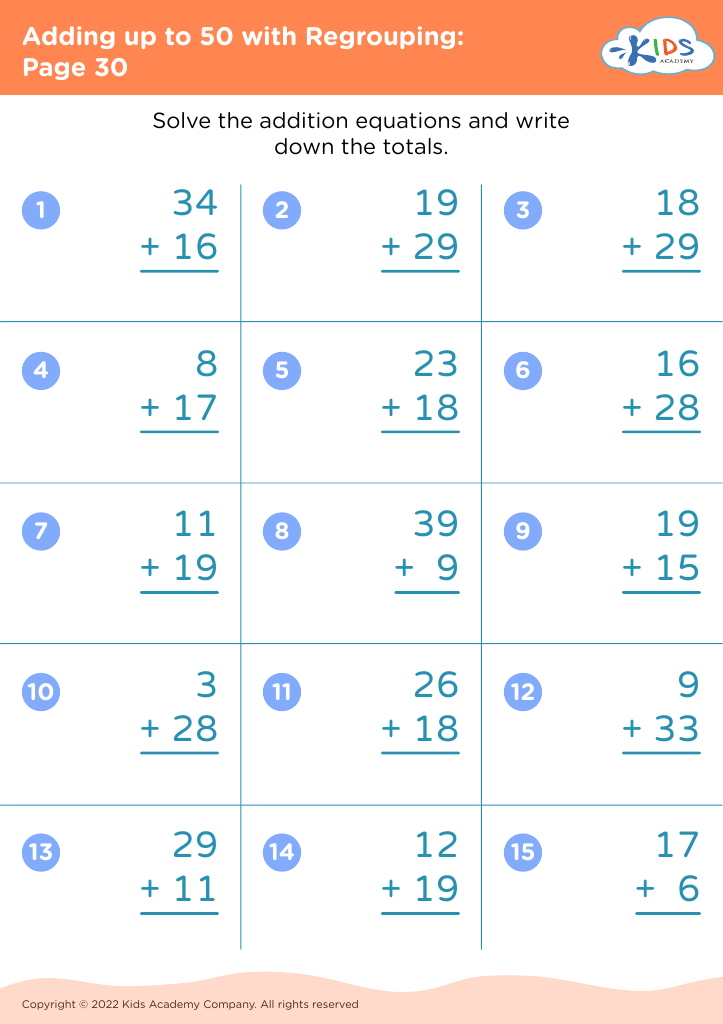
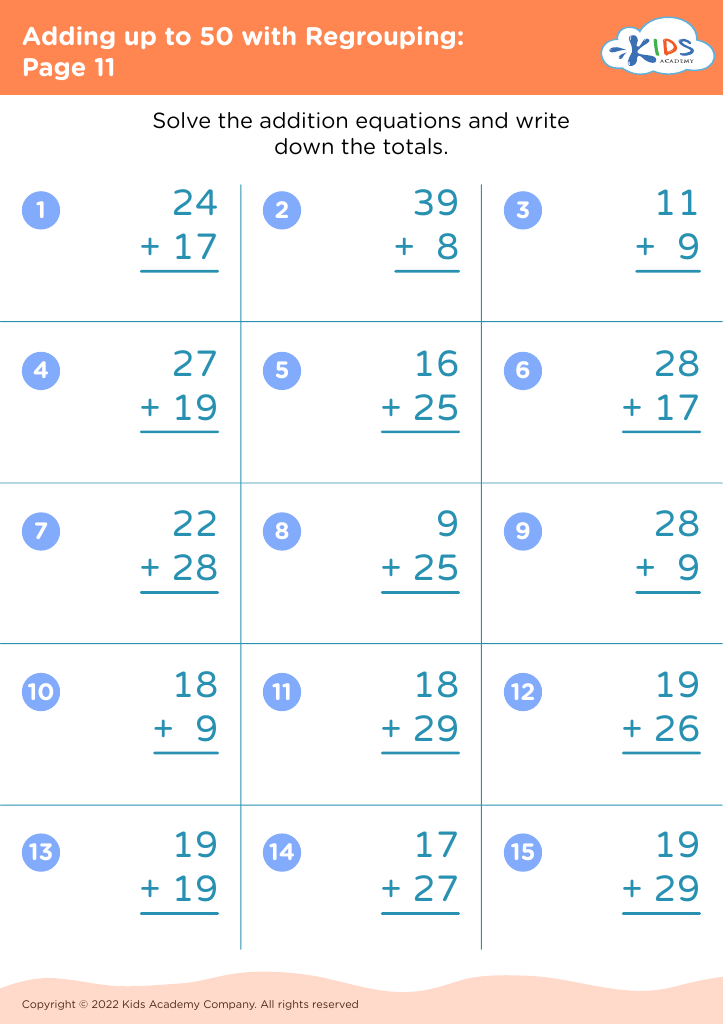
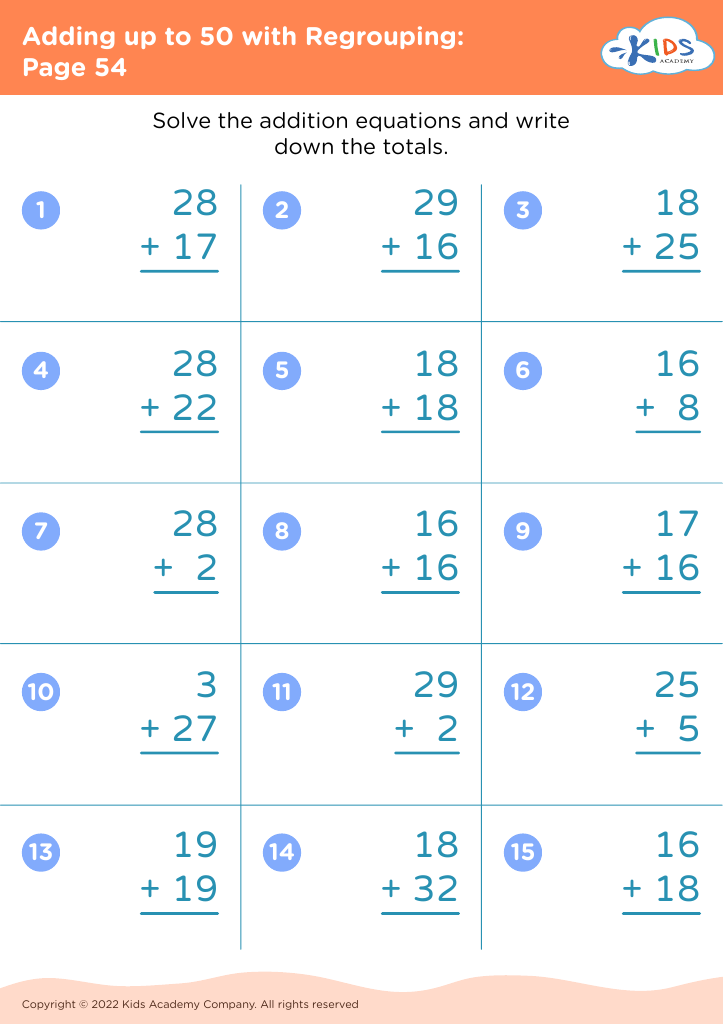
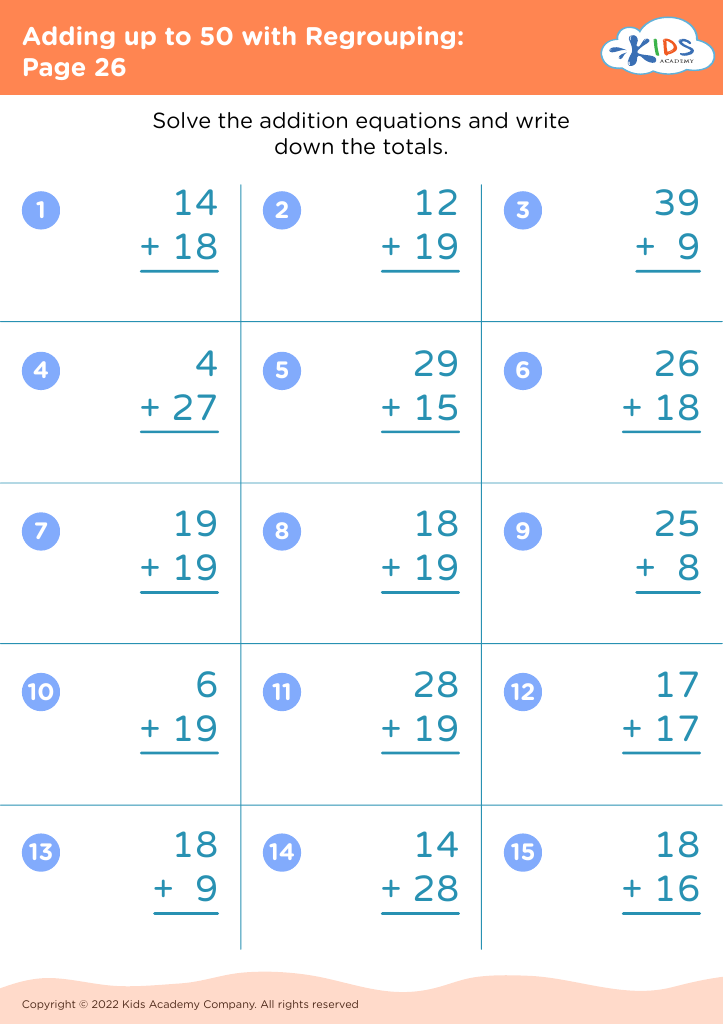
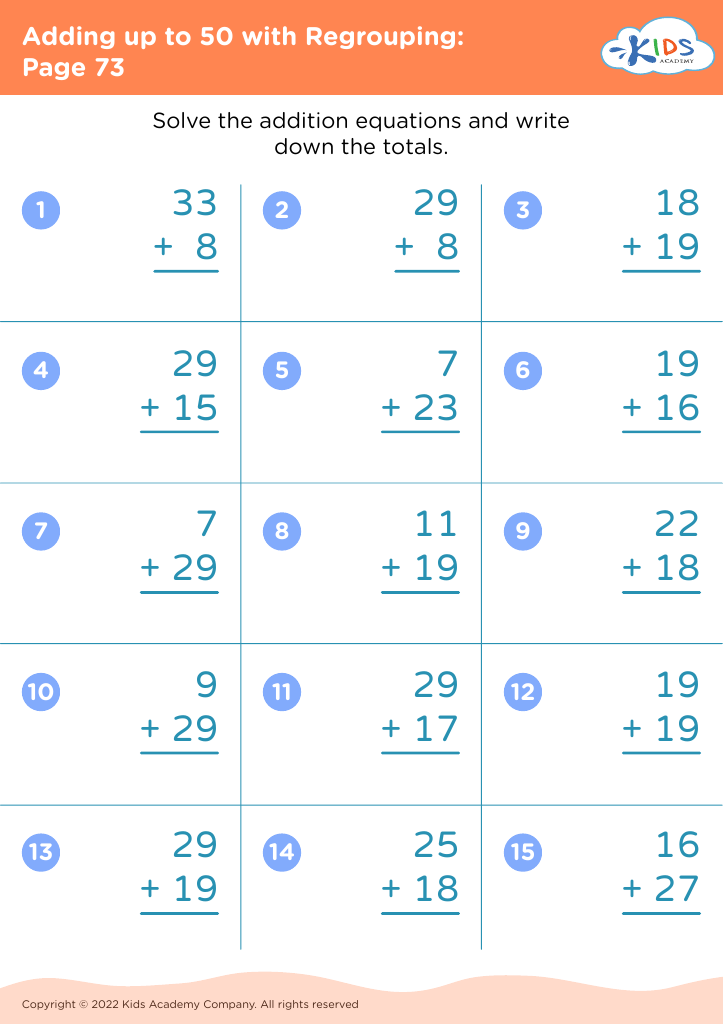


Color identification and math skills like adding up to 50 with regrouping are crucial for young children aged 3-7 for several reasons. Firstly, color identification assists in developing cognitive skills and boosts creativity. When children learn to recognize and name colors, they enhance their observational skills and begin to categorize the world around them, paving the way for critical thinking.
Moreover, early math skills, such as adding using regrouping, lay the foundation for future mathematics success. Regrouping teaches children about place value, enhances problem-solving skills, and builds a strong numerical understanding necessary for advanced concepts they will encounter later in school.
Encouraging these skills in tandem can significantly enhance a child’s learning experience. For instance, integrating color with math can make lessons more engaging and enjoyable. Activities like counting colored blocks or play items not only solidify color recognition but also facilitate addition skills in a practical, hands-on way.
Ultimately, parents and teachers should prioritize these skills as they foster essential cognitive development, boost creativity, and establish a solid academic foundation. This dual focus prepares children for future learning and contributes to their overall growth and success in school and beyond.