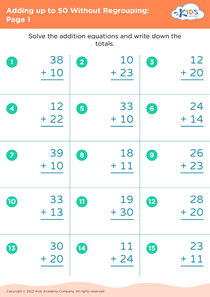
Counting practice Adding up to 50 with Regrouping Worksheets for Ages 3-7
6 filtered results
-
From - To
Enhance your child's counting skills with our "Counting Practice: Adding Up to 50 with Regrouping Worksheets," designed for ages 3-7. These engaging worksheets promote essential math concepts through fun and interactive exercises, making learning enjoyable and effective. Tailored to help young learners master addition through regrouping, each worksheet encourages critical thinking and problem-solving. With colorful illustrations and intuitive layouts, children will stay engaged as they work on various math problems aimed at building their confidence in addition. Foster a strong math foundation in your child based on solid counting principles—an essential skill for future academic success! Perfect for home or classroom use.
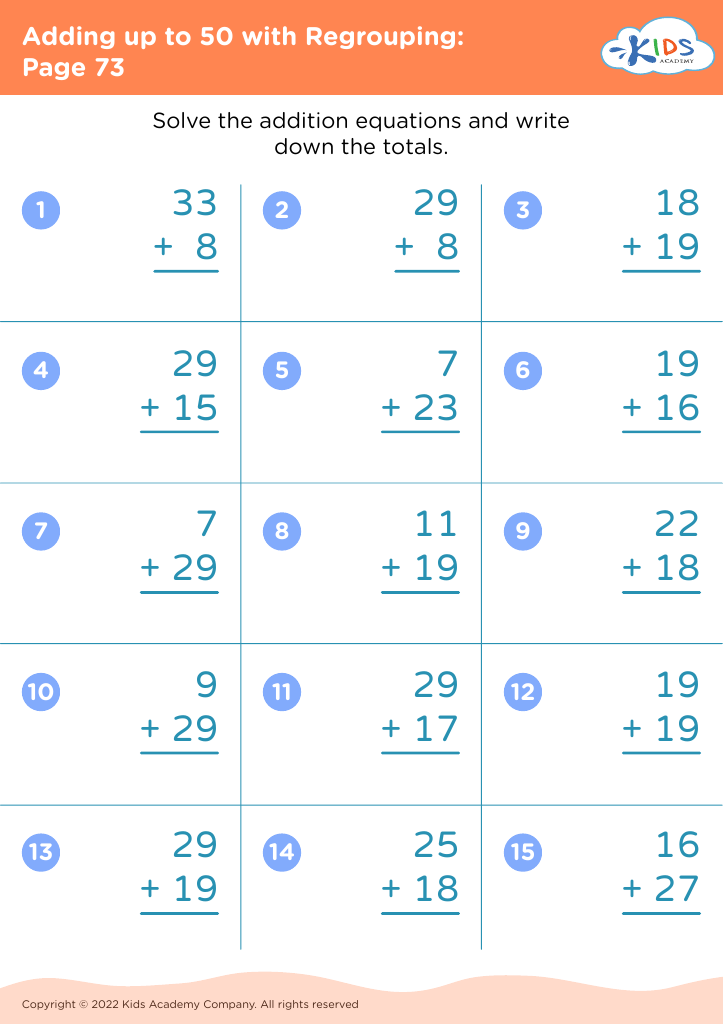
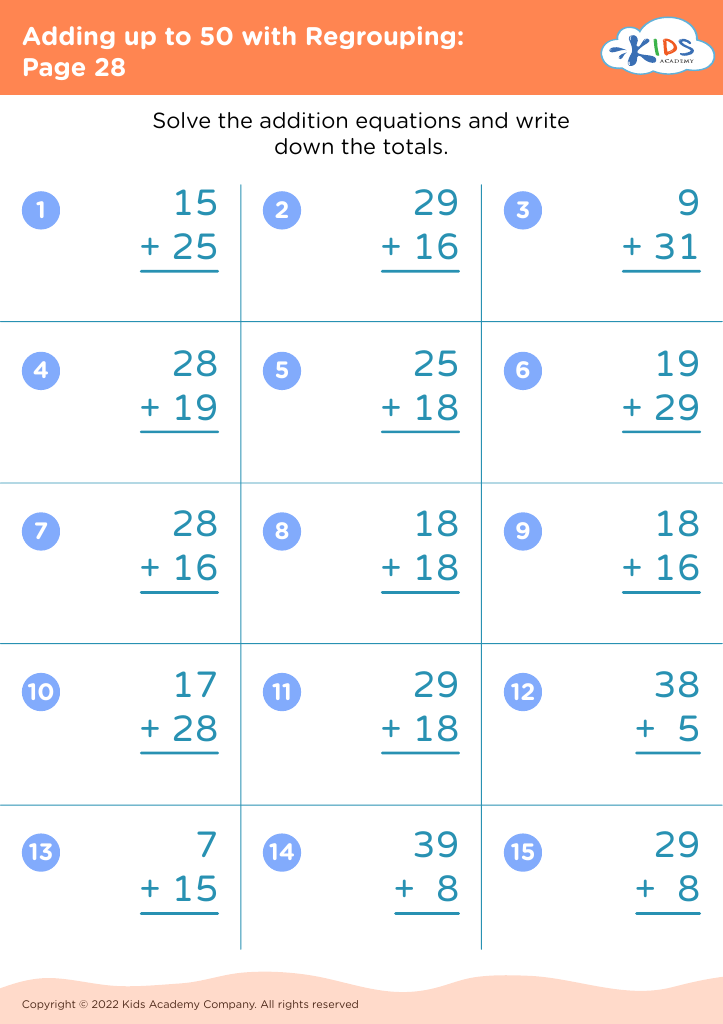
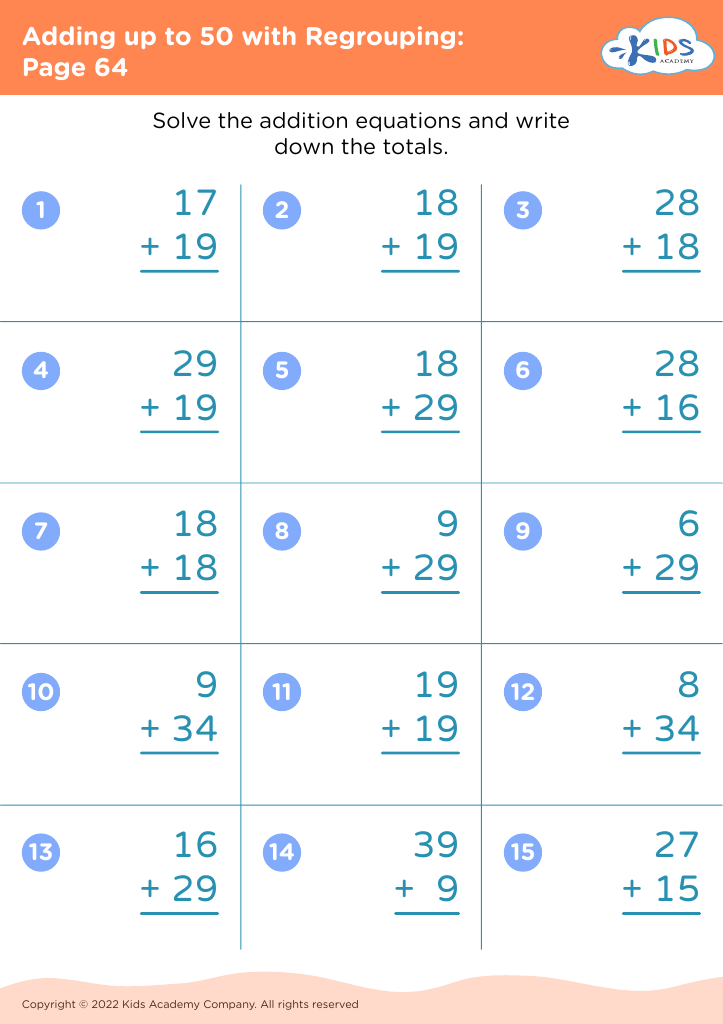
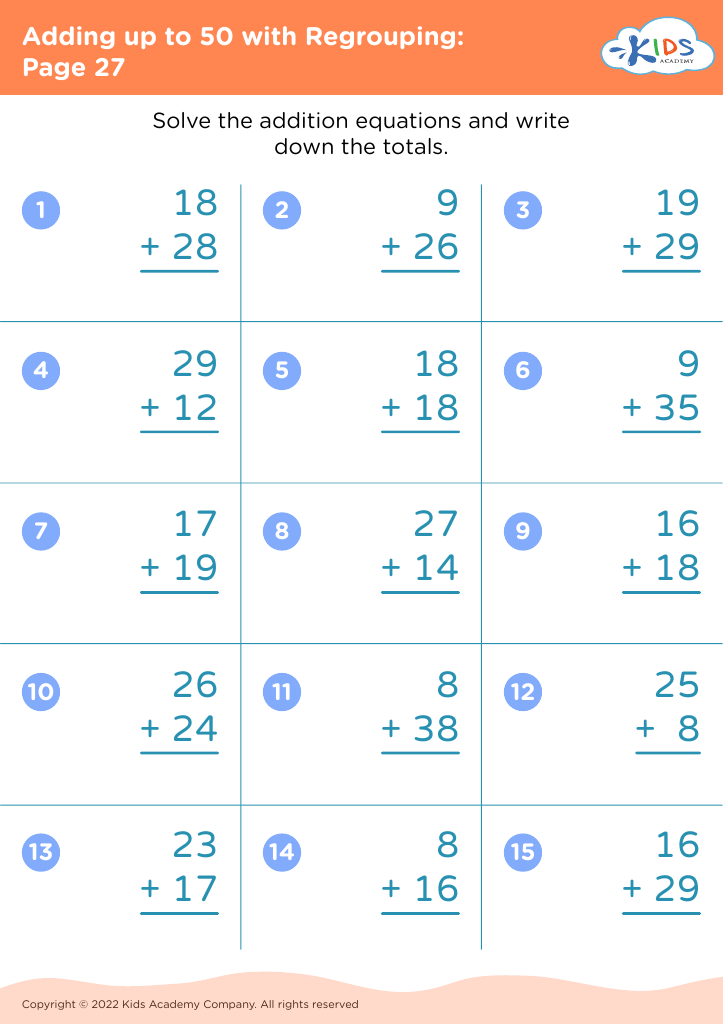
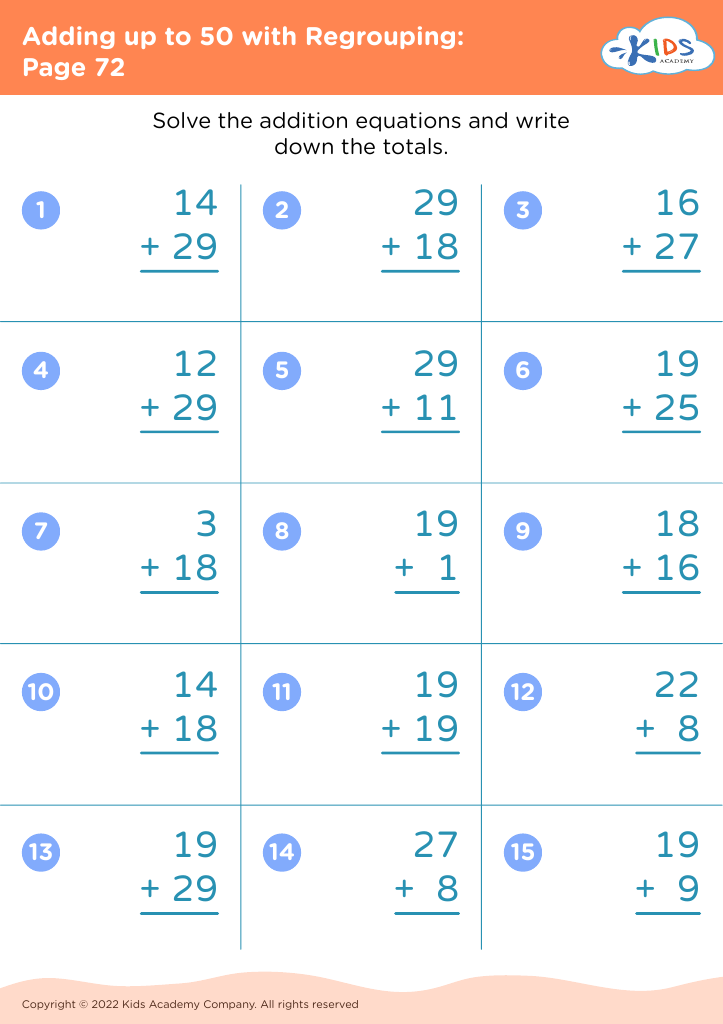
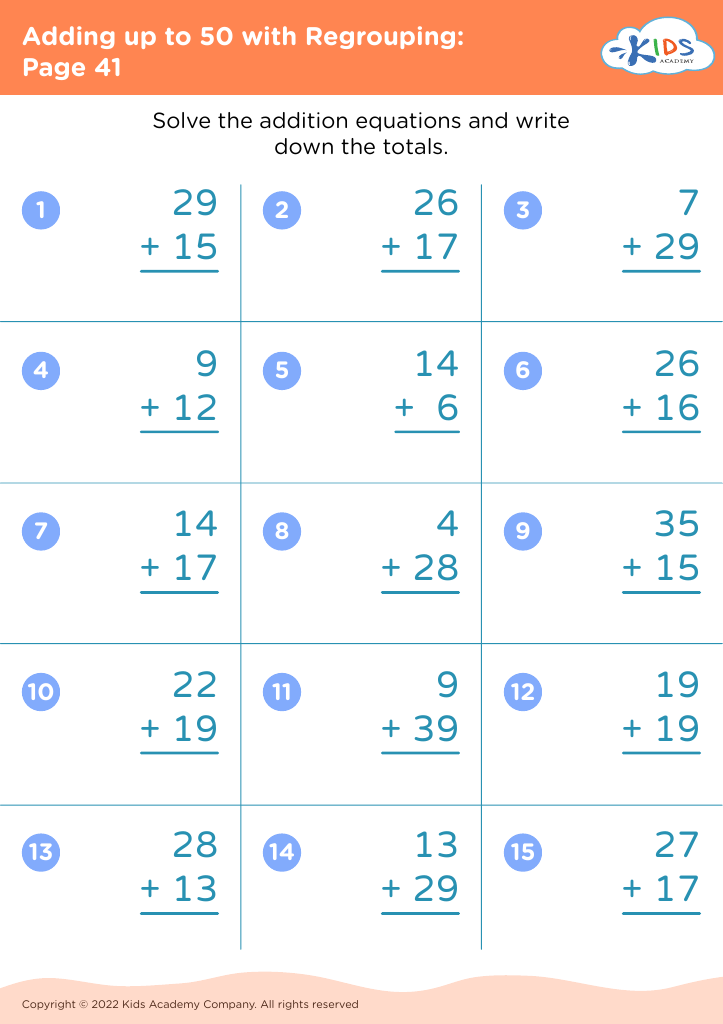


Counting practice, particularly adding up to 50 with regrouping, is important for children ages 3-7 as it forms the foundation of mathematical understanding. During these formative years, children develop essential cognitive skills that facilitate problem-solving and logical reasoning. Engaging in counting and addition activities helps them develop number sense, which is crucial for future math concepts.
Through counting and regrouping, children learn how to manipulate numbers, understand place value, and discover how numbers relate to one another. This skill is not only vital for math but also promotes critical thinking and persistence in overcoming challenges. Regrouping, or carrying over, introduces the concepts of remainders and enhances their ability to handle more complex problems later on, creating a smoother transition into advanced mathematics.
Moreover, these activities encourage social interaction when children work in groups or pairs, fostering cooperative learning. Parents and teachers should care about this practice because it empowers children with confidence and competence in their math abilities, laying the groundwork for academic success. Early math skills correlate with overall academic achievement, making counting and adding practice an essential focus in early childhood education. By nurturing these skills, adults help children develop a positive attitude towards learning and mathematics.