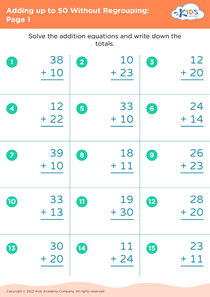
Fraction comparison Adding up to 50 with Regrouping Worksheets for Ages 3-7
3 filtered results
-
From - To
Introducing our engaging "Fraction Comparison Adding up to 50 with Regrouping Worksheets," designed specifically for young learners aged 3-7. These vibrant and interactive worksheets offer a fun way for kids to grasp key math concepts, building a solid foundation in both addition and fractions. Focusing on adding numbers up to 50 and understanding fractions, each worksheet combines clear instructions with attractive visuals. Ideal for early graders, our worksheets foster essential math skills through a playful yet structured approach. Empower your child’s learning journey with tools that make math enjoyable and conquer the basics with confidence!
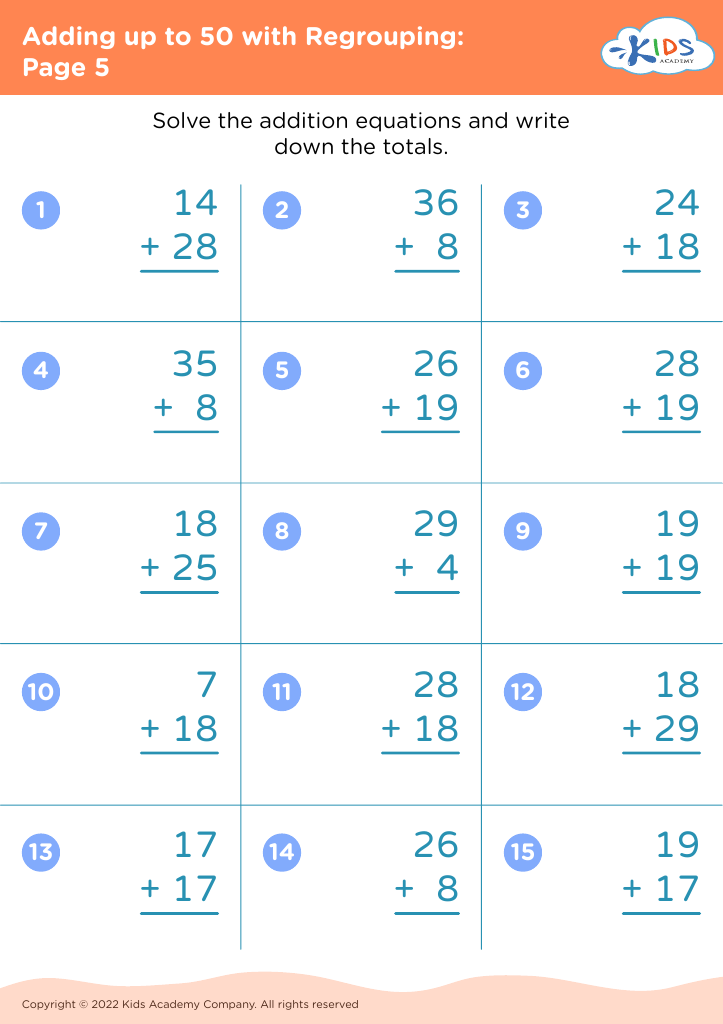
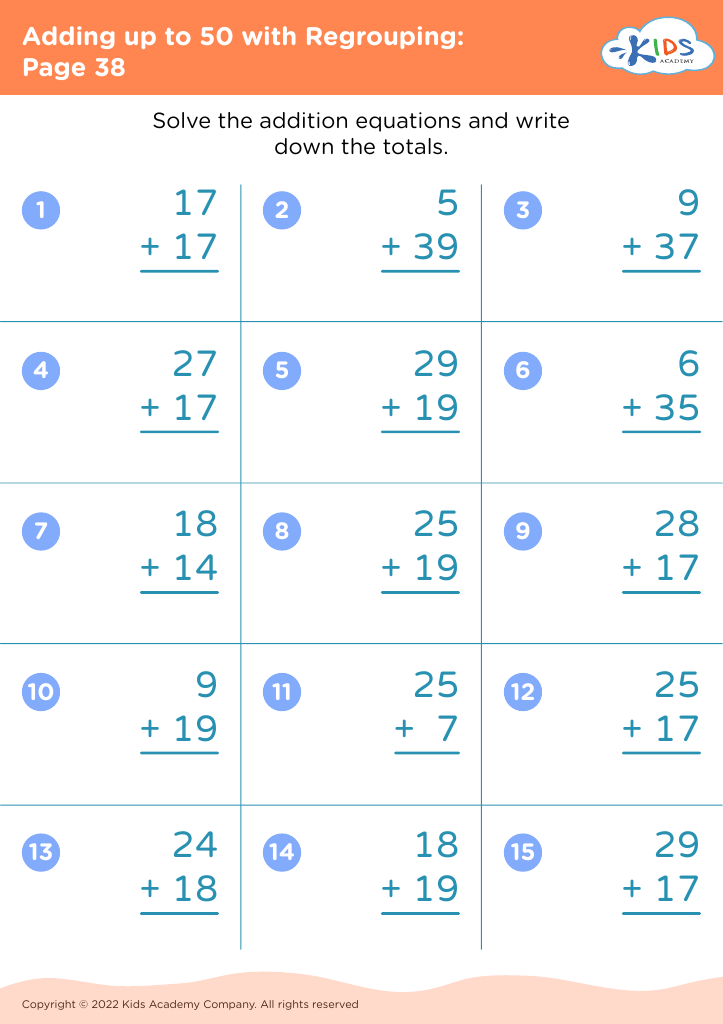
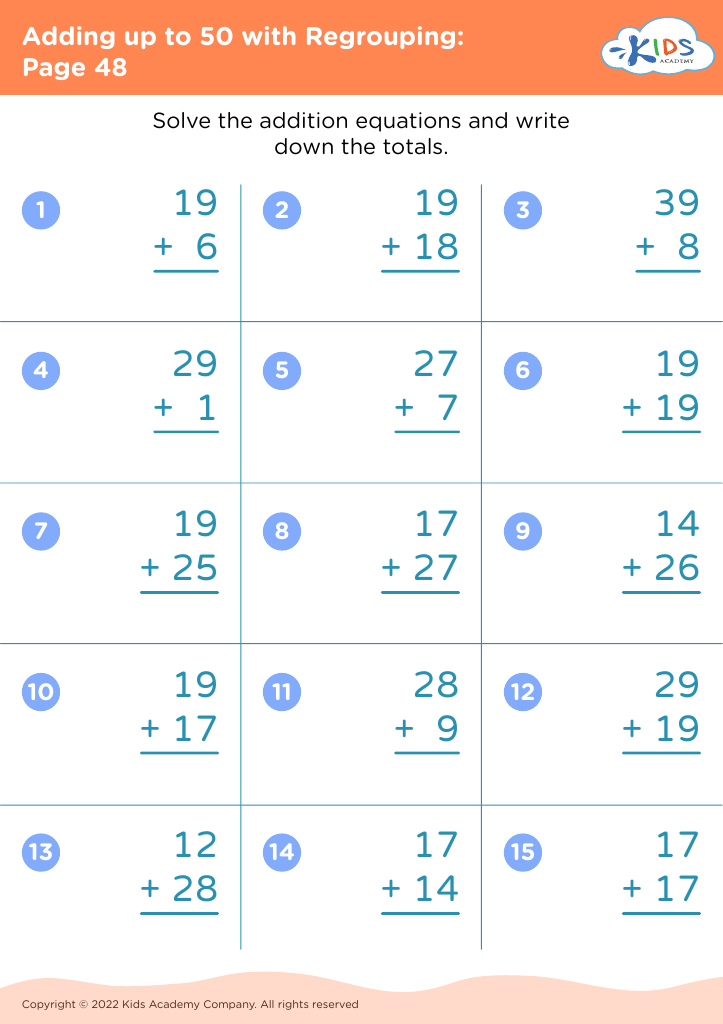


Understanding basic mathematical concepts early in life sets the foundation for a child's academic success. Teaching fraction comparison and addition up to 50 with regrouping to children ages 3-7 is crucial for several reasons:
First, these concepts cultivate numeracy skills. Learning fractions helps kids understand parts of a whole, paving the way for more advanced topics in mathematics like ratios and percentages. Comparing fractions strengthens their grasp on proportional thinking, crucial for everyday activities such as cooking or sharing.
Second, addition with regrouping teaches logical problem-solving skills. It requires students to understand place value and apply techniques to adjust and solve multi-digit problems. This mental exercise improves their cognitive brain functions, enhancing memory and critical thinking.
Moreover, introducing these concepts at an early age provides repeated practice and reinforcement, making future learning experiences less intimidating. Children become more confident in their abilities, fostering a love for math rather than a fear.
Lastly, these skills are practical and applicable in real life. Whether measuring ingredients for a recipe, dividing pizza slices, or counting money, these everyday tasks become easier when children have a solid comprehension of basic math principles. Parents and teachers, therefore, invest in a child's smoother transition into more complex mathematical and real-life problem solving by caring about these foundational concepts.