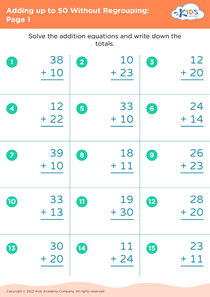
Shape Recognition Adding up to 50 with Regrouping Worksheets for Ages 3-7
6 filtered results
-
From - To
Enhance your child's learning journey with our "Shape Recognition Adding up to 50 with Regrouping Worksheets," designed for ages 3-7. These engaging resources combine math and shape identification, helping young learners master addition skills up to 50 through exciting games and activities. By integrating shape recognition into math practice, children develop critical cognitive skills while enjoying hands-on learning experiences. Our worksheets encourage creativity and problem-solving, making math fun! Perfect for parents and educators, these printable activities seamlessly support early math education in a playful yet informative way. Download now to spark your child's curiosity and boost their confidence in math!
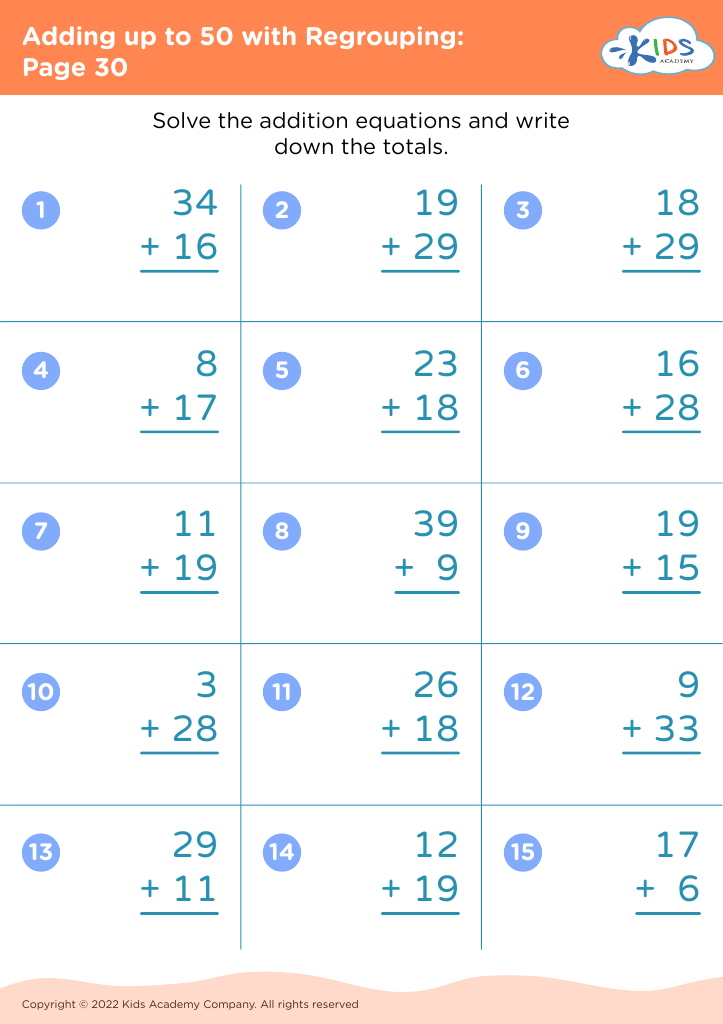
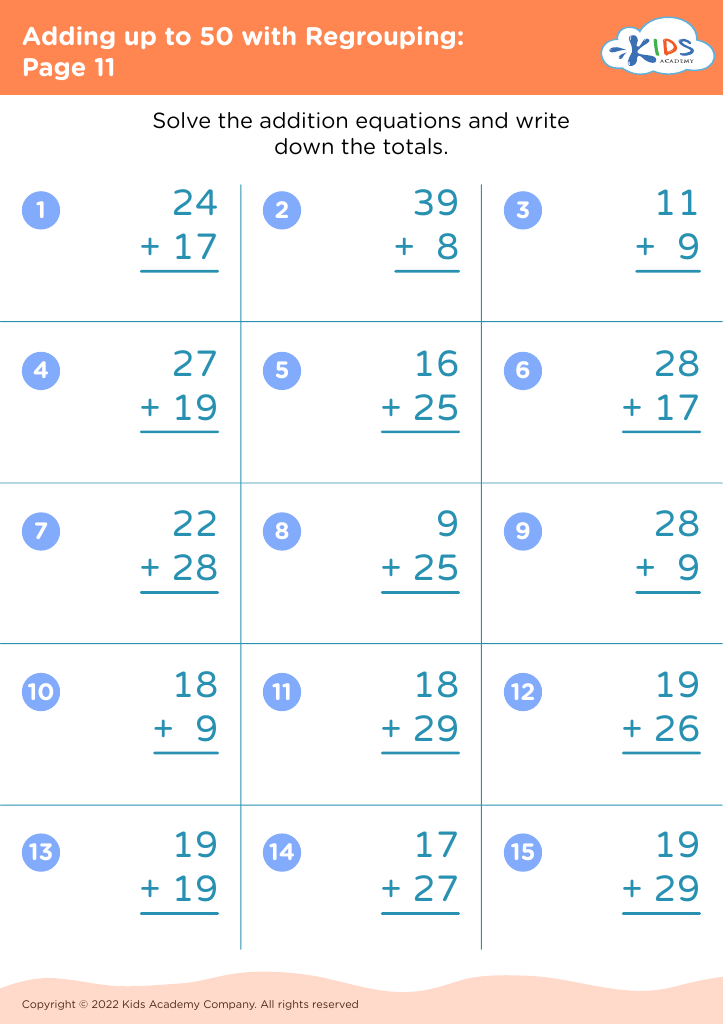
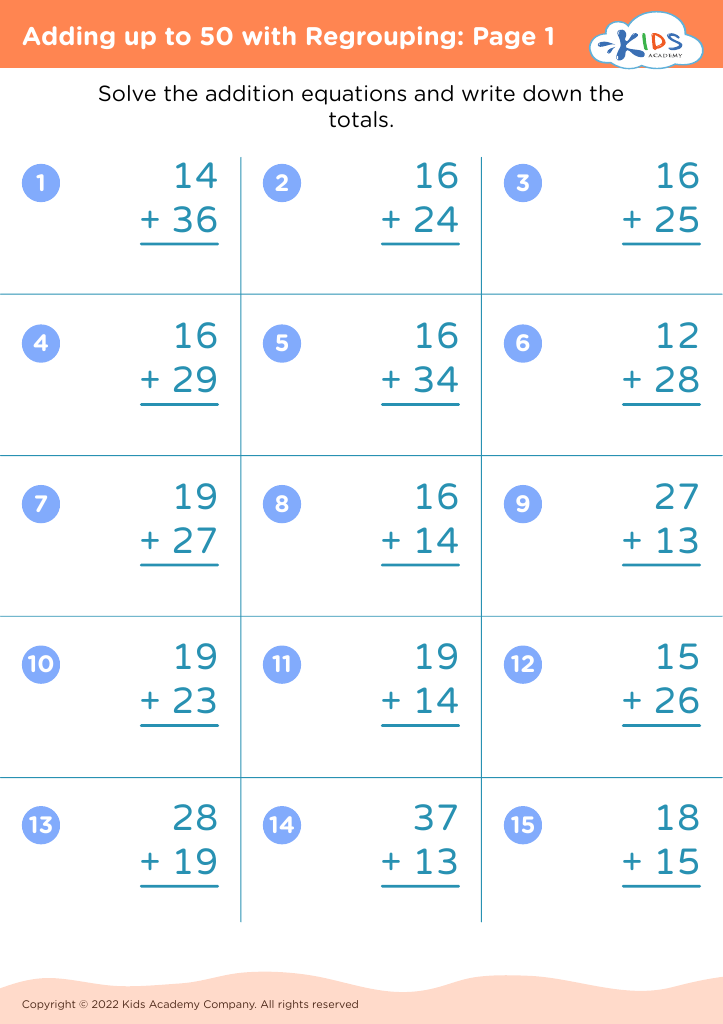
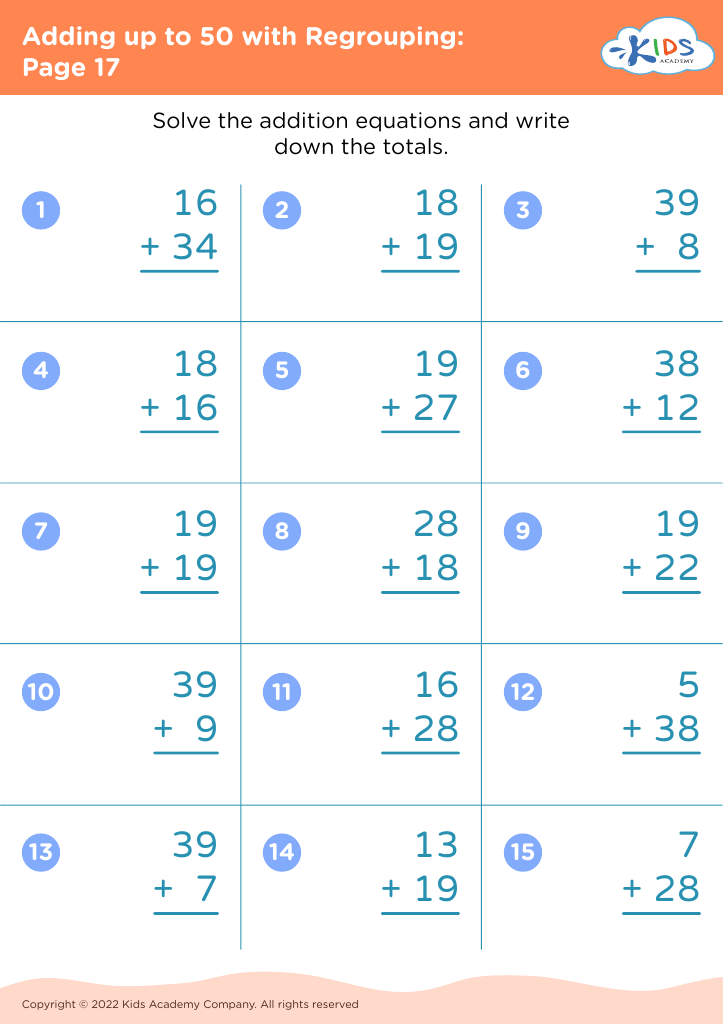
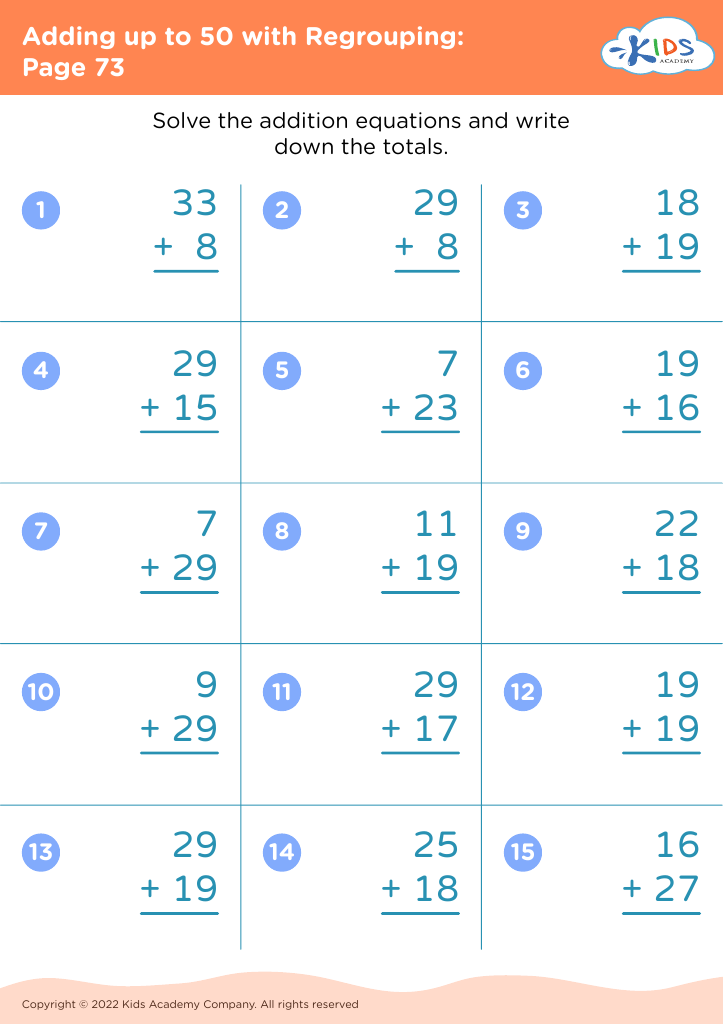
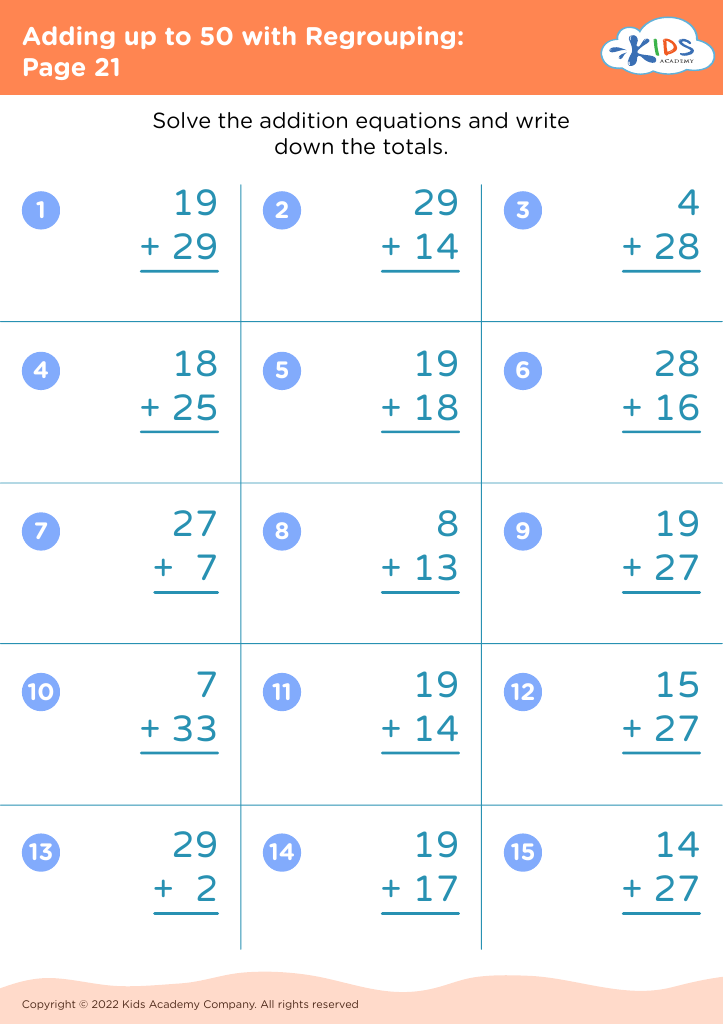


Shape recognition and addition with regrouping are foundational skills in early childhood education that build the groundwork for more complex math and cognitive abilities. For children aged 3-7, recognizing shapes helps in developing spatial awareness and critical thinking, as it lays the foundation for understanding geometry and patterns. When kids can identify and categorize shapes in their environment, they enhance their observation and classification skills, preparing them for future mathematical applications.
Furthermore, addition up to 50 with regrouping introduces children to vital mathematical concepts like place value and the idea of carrying in computation. These skills nurture a strong numerical sense, fostering logical thinking and problem-solving abilities. At this age, children are naturally curious, and incorporating these concepts through games, hands-on activities, and real-world applications engages their interest and enhances retention.
By focusing on these two areas, parents and teachers can ensure that children not only achieve basic math skills but also develop confidence and a positive attitude toward learning. This early investment in critical thinking and math literacy contributes significantly to their success in more advanced mathematics and academics as they progress. Therefore, it's crucial for adults to prioritize and actively engage children in these learning experiences.