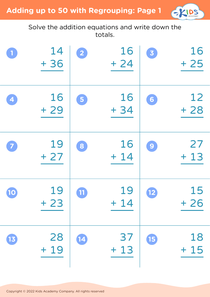
Addition Practice Adding up to 50 Without Regrouping Worksheets for Ages 3-7
6 filtered results
-
From - To
Boost your child's math skills with our "Addition Practice: Adding up to 50 Without Regrouping" worksheets, designed for kids aged 3-7. These worksheets provide engaging, age-appropriate exercises that introduce fundamental addition concepts in a fun and interactive way. With clear instructions and colorful visuals, children will practice simple addition problems without the complexity of regrouping, building their confidence in math. Ideal for homeschooling or classroom settings, our resource supports early learners in mastering addition basics, laying a strong foundation for future mathematics. Download your worksheets today and watch your child shine as they tackle exciting addition challenges!
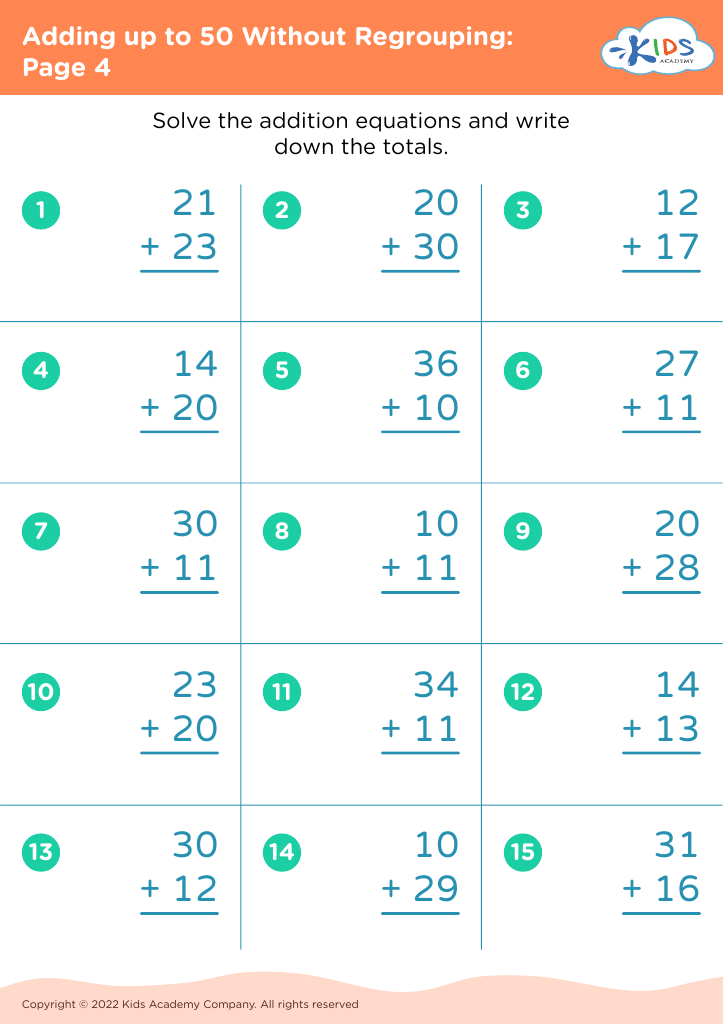
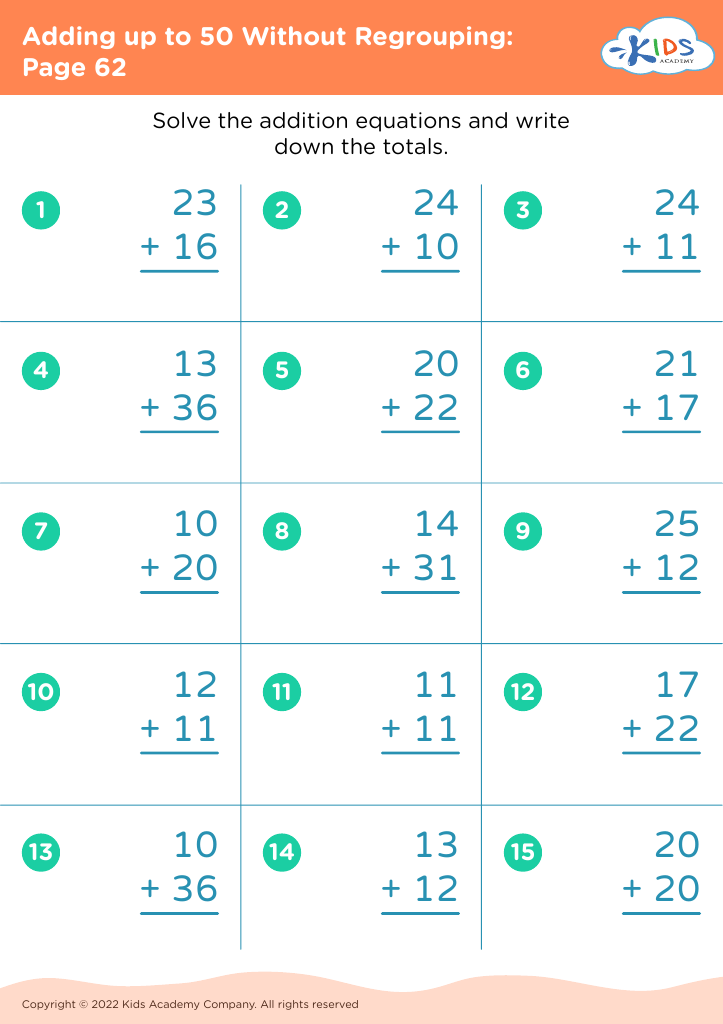
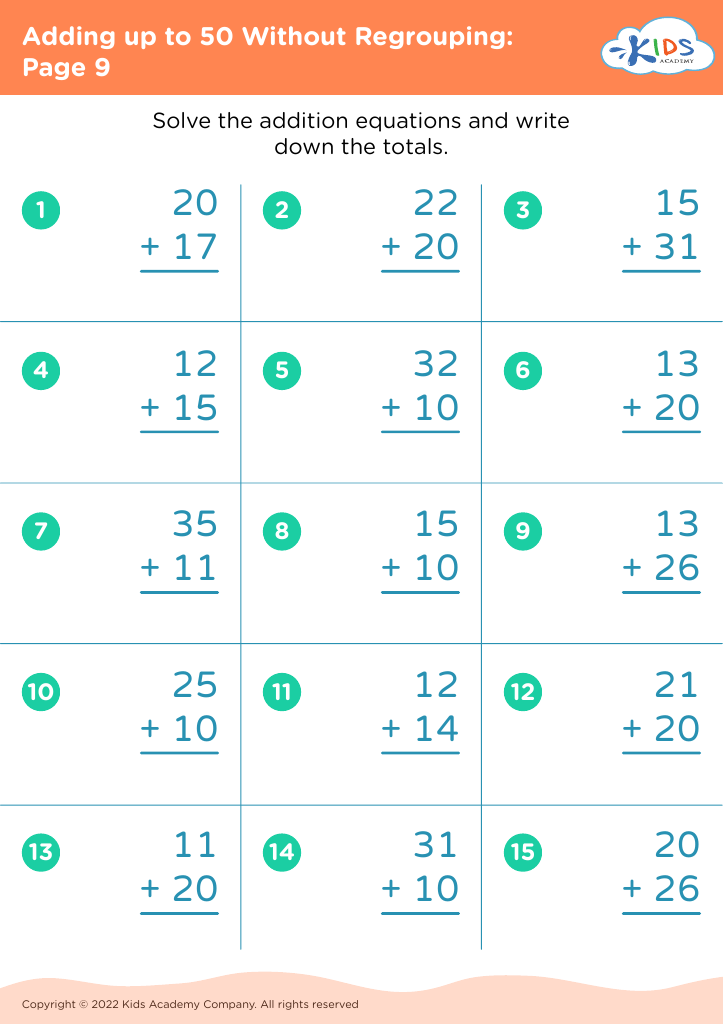
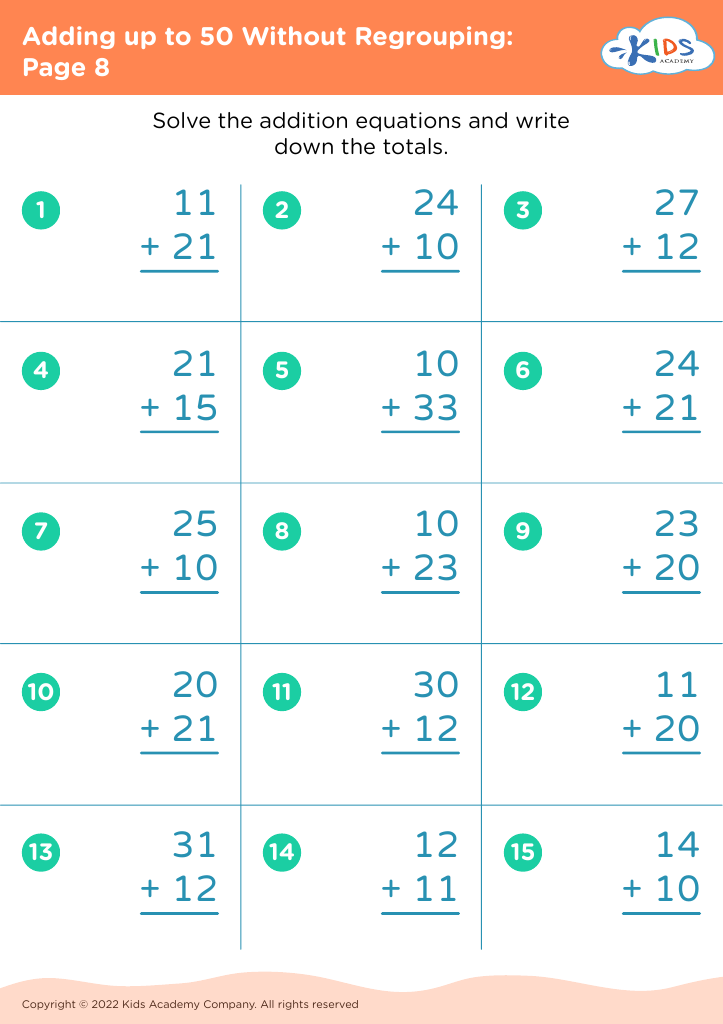
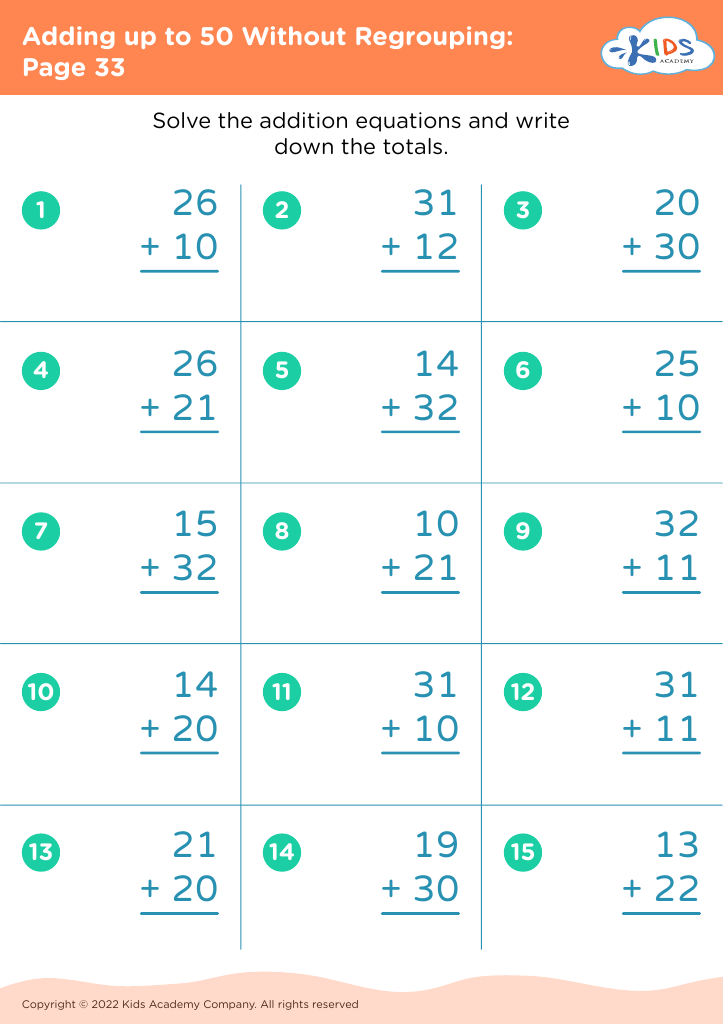
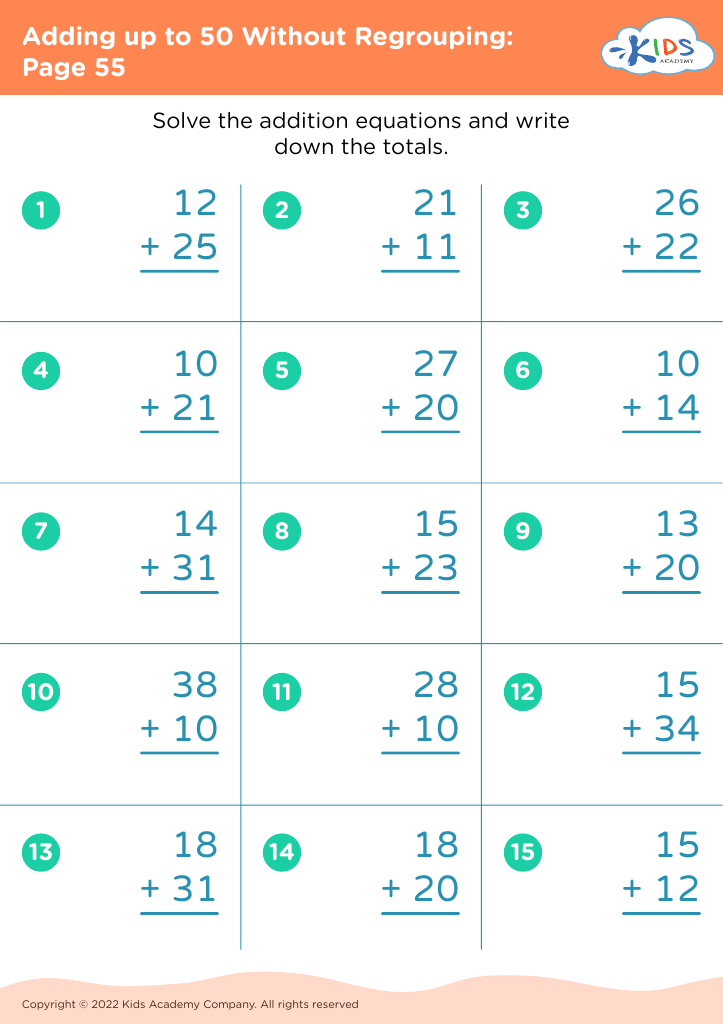


Parents and teachers should prioritize addition practice up to 50 without regrouping for children aged 3-7 due to its foundational role in developing mathematical skills. At this age, children are at a critical stage of cognitive development; learning to add numbers within 50 helps them build confidence and a positive attitude towards math. This skill reinforces their number sense, aiding their ability to understand how numbers work together.
Without regrouping, addition becomes more straightforward, allowing young learners to focus on the logic behind addition rather than complex computations. Additionally, practice in this area fosters mental math abilities, encourages critical thinking, and enhances concentration. Engaging in addition exercises also promotes social skills and communication when practiced in group settings.
Moreover, mastering basic addition lays the groundwork for future math concepts, such as subtraction, multiplication, and eventually, higher-level math. It cultivates perseverance and problem-solving skills as children learn to tackle challenges through repetition and practice. Ultimately, consistent addition practice can enhance overall academic performance and a child's enthusiasm for learning, shaping a well-rounded educational experience. Encouragement from parents and educators during this stage can turn math into a fun and engaging journey.