Comparing Fractions Adding up to 50 Without Regrouping Worksheets for Ages 3-7
7 filtered results
-
From - To
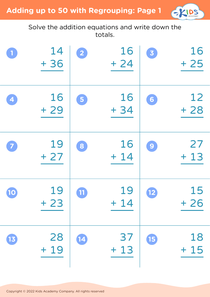
Introducing our specialized worksheets designed for young learners aged 3-7, "Comparing Fractions Adding up to 50 Without Regrouping." These engaging, age-appropriate printables help kids master the fundamentals of fraction comparison while strengthening their addition skills. Each worksheet offers clear, simple problems that allow children to practice comparing fractions in an enjoyable and stress-free manner. Focusing on developing critical math skills early on, these resources are perfect for both classroom settings and home practice. Set the foundation for your child’s math success with these expertly crafted worksheets, available now at Kids Academy!
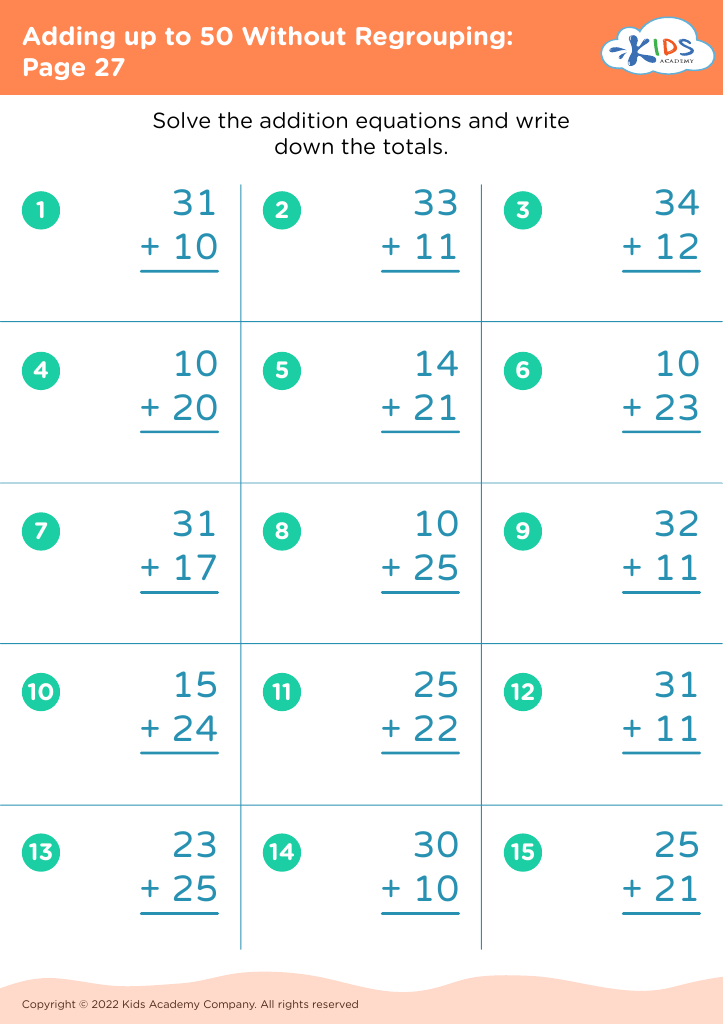
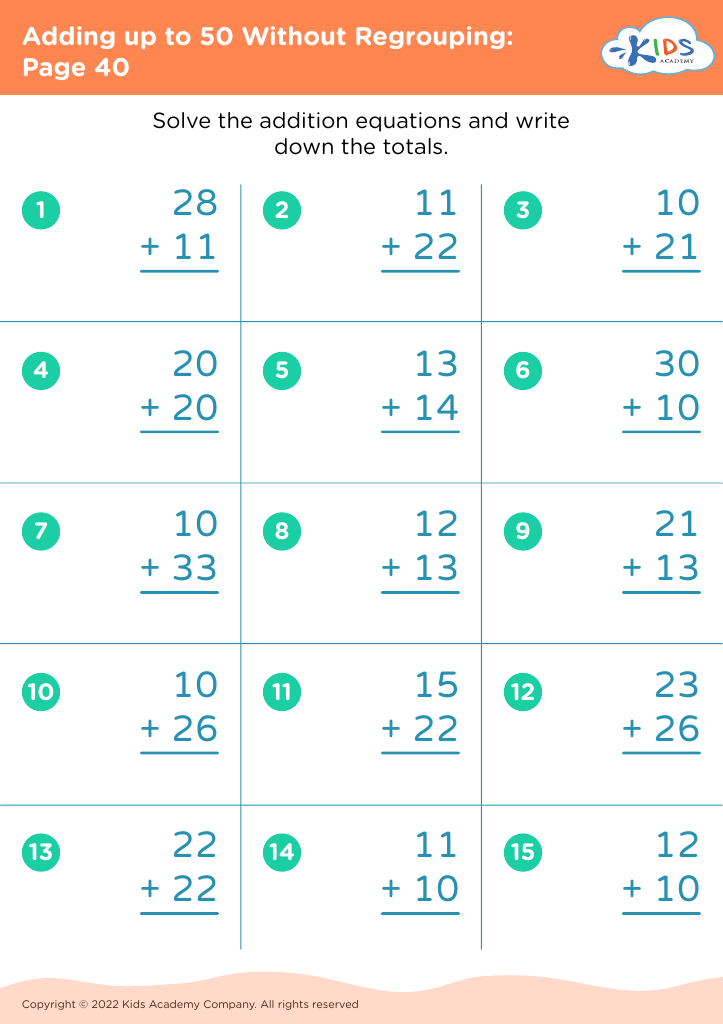
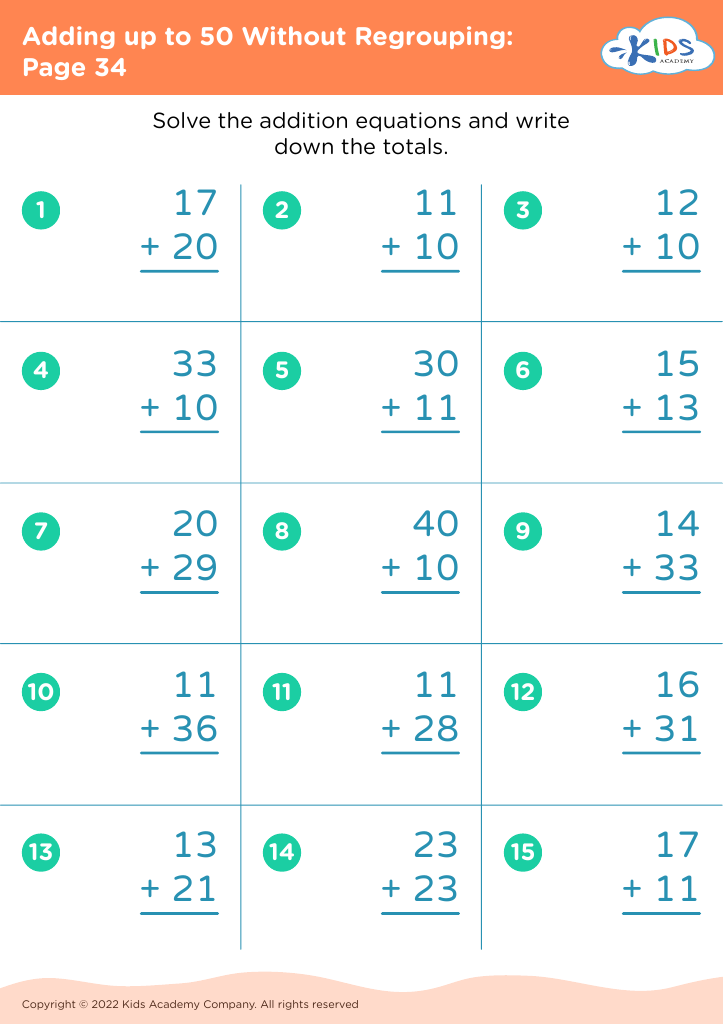
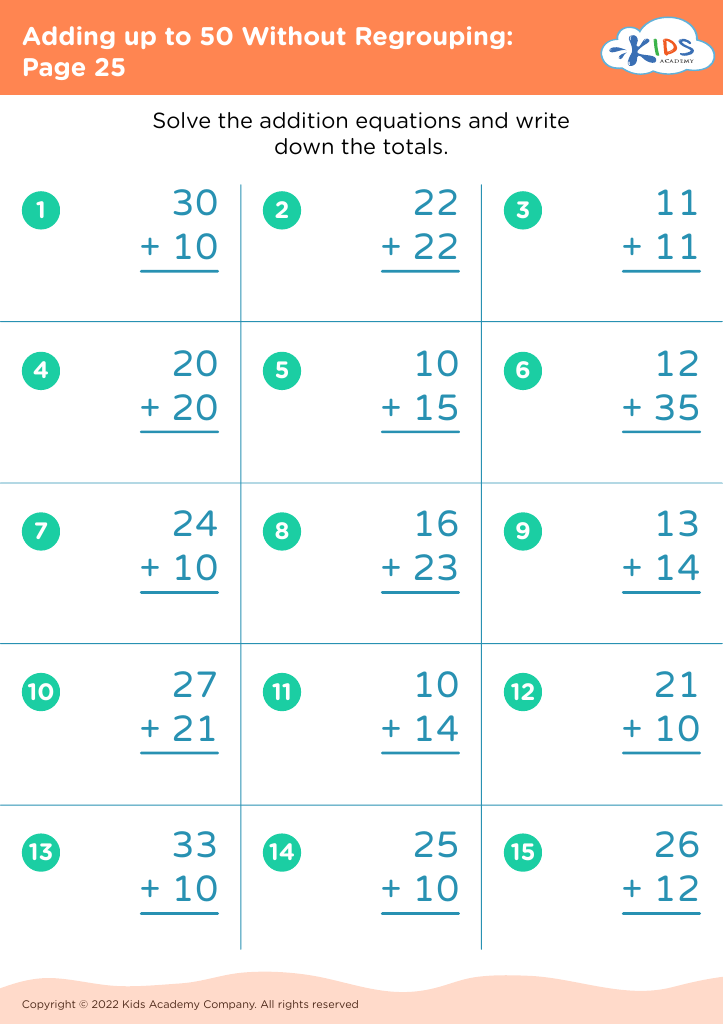
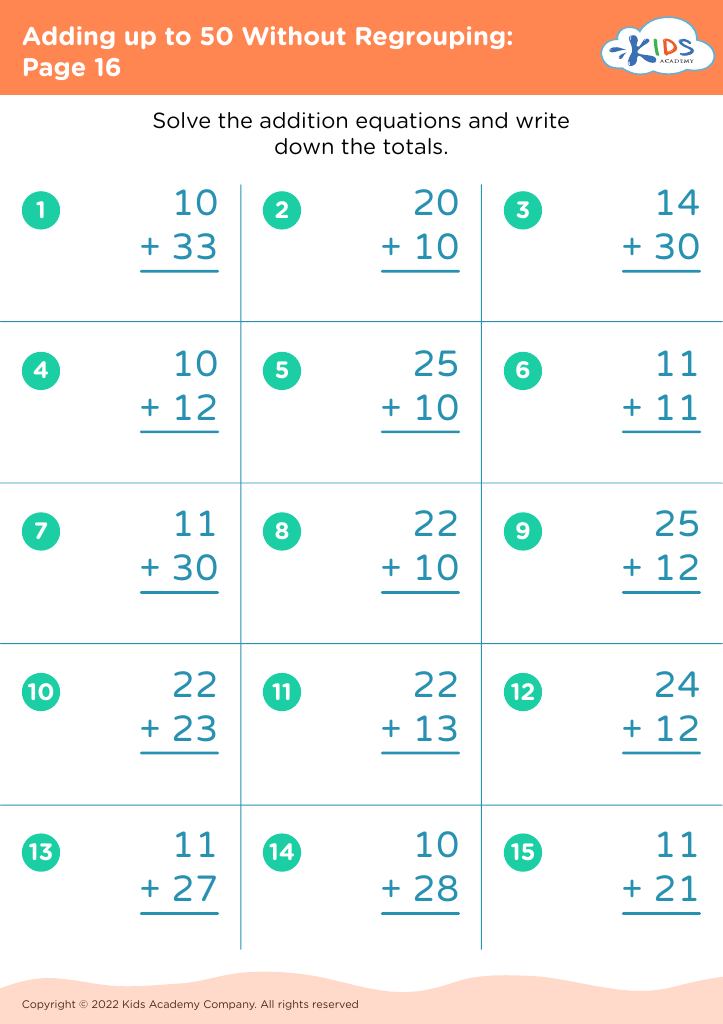
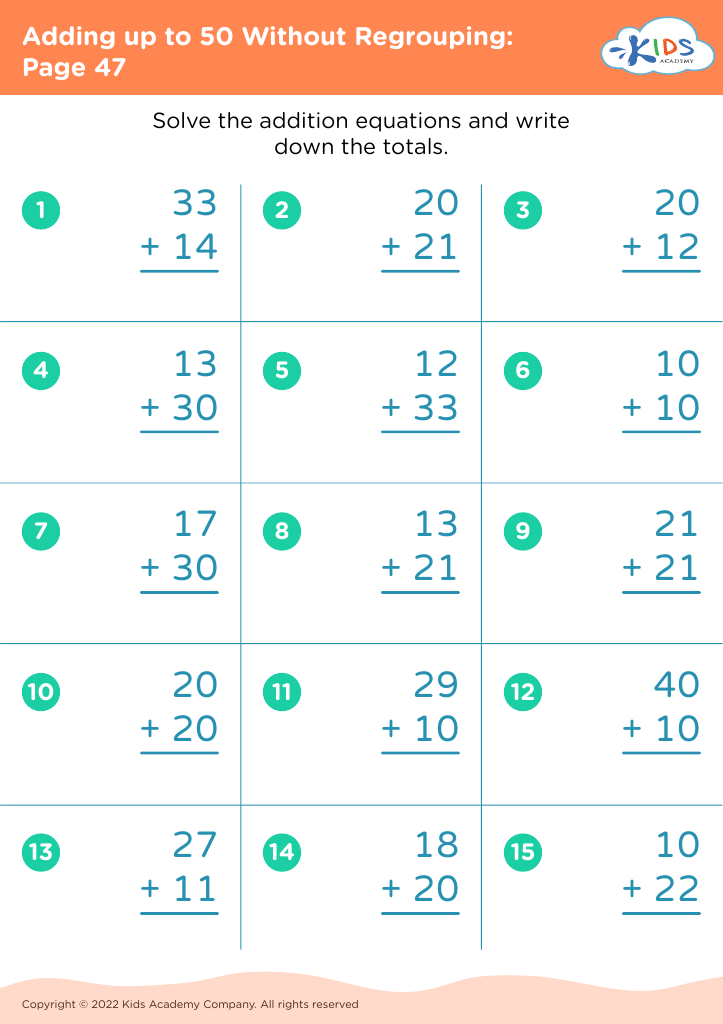
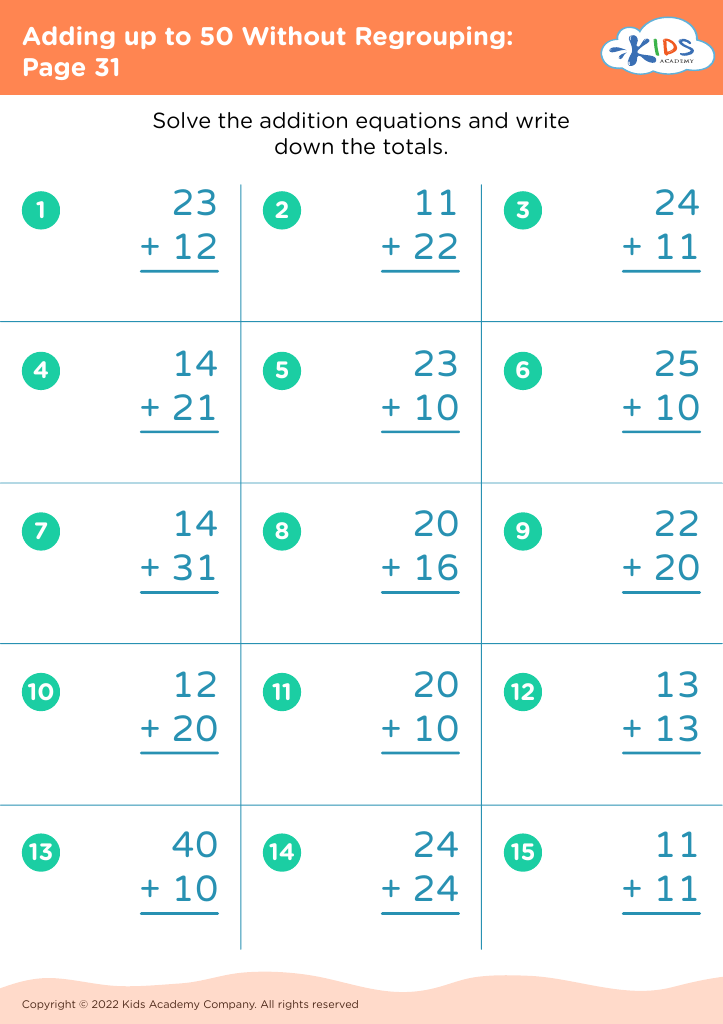


Introducing the concept of comparing fractions and performing simple addition without regrouping at an early age sets foundational skills that are crucial for mathematical development in children ages 3-7. Comparing fractions helps children understand the relationship between different numbers and quantities, fostering basic number sense which is essential for advanced math concepts later on. For younger children, using familiar items like toys or pieces of fruit to illustrate fractions makes learning tangible and engaging.
Adding up to 50 without regrouping strengthens mental math skills and ensures that children become comfortable with addition before moving on to more complex operations. This also lets kids build confidence in their abilities, laying a positive groundwork for lifelong learning. Avoiding regrouping keeps the focus clear and manageable for young minds, preventing frustration and promoting a solid understanding of place value and addition principles.
For both parents and teachers, ensuring that children grasp these early math concepts can accelerate cognitive development and create a smoother educational progression. Activities for comparing fractions and simple addition turn abstract concepts into fun, hands-on learning experiences that both support and challenge growing minds in meaningful ways. This crucial step is vital not only for academic success but also for real-world problem-solving abilities that children will need throughout life.