Identifying shapes Adding up to 50 Without Regrouping Worksheets for Ages 3-7
6 filtered results
-
From - To
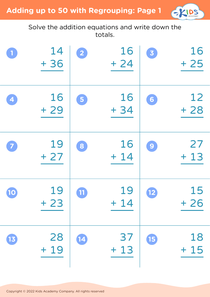
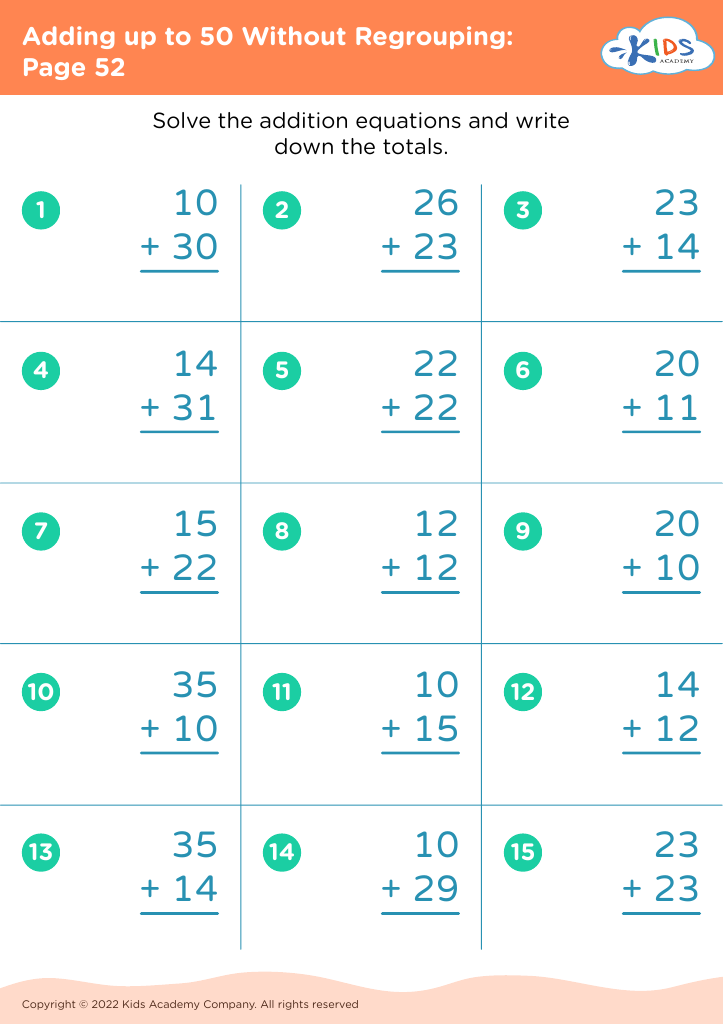
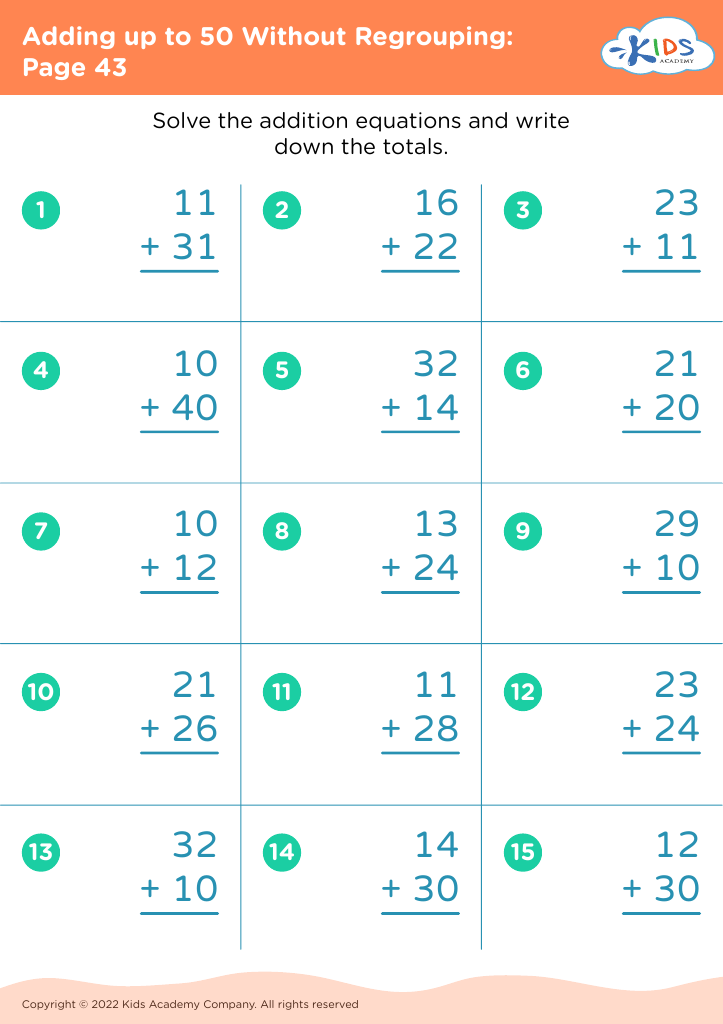
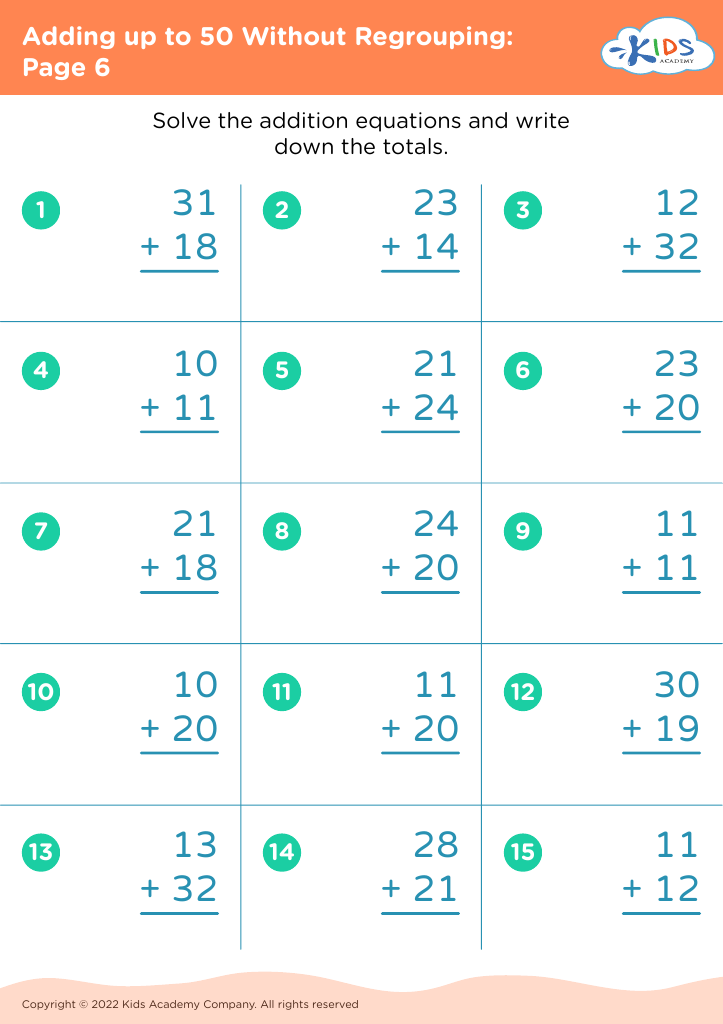
Discover our "Identifying Shapes Adding Up to 50 Without Regrouping Worksheets" designed for children aged 3-7. These engaging worksheets help young learners build essential math skills while recognizing shapes. Simple and fun, they provide activities that challenge children to add numbers up to 50 without needing to regroup. By integrating shape identification, we make learning math enjoyable and visually stimulating. Ideal for both classroom and home use, these worksheets aim to enhance critical thinking and problem-solving abilities in early learners. Perfect for enhancing foundational skills, they ensure a well-rounded educational experience. Start your child's math journey with us today!
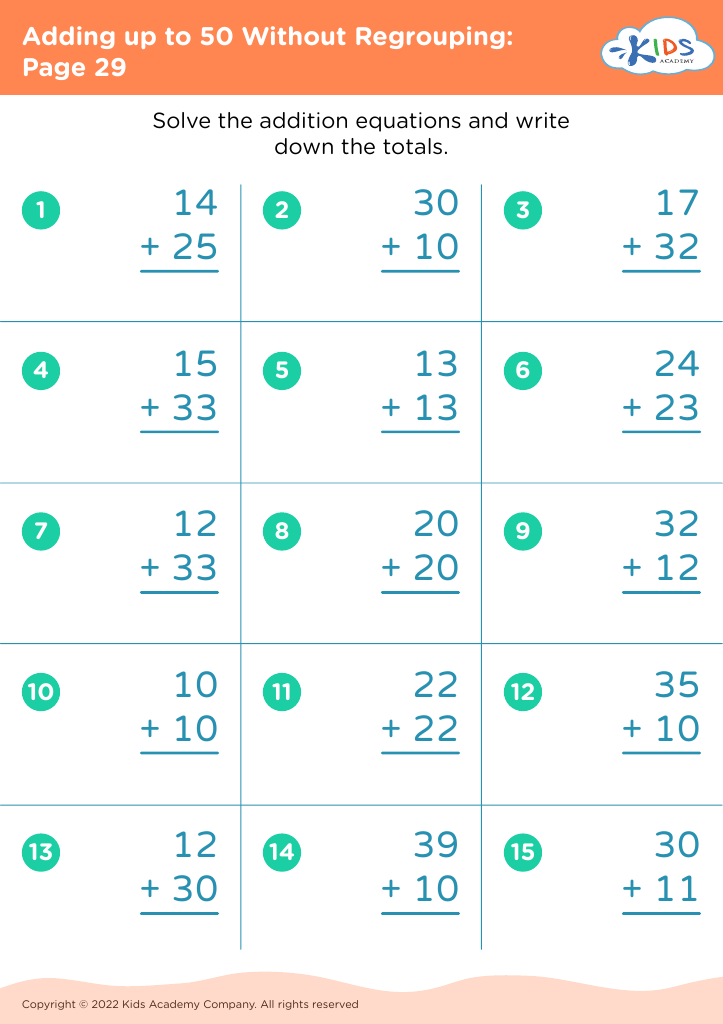
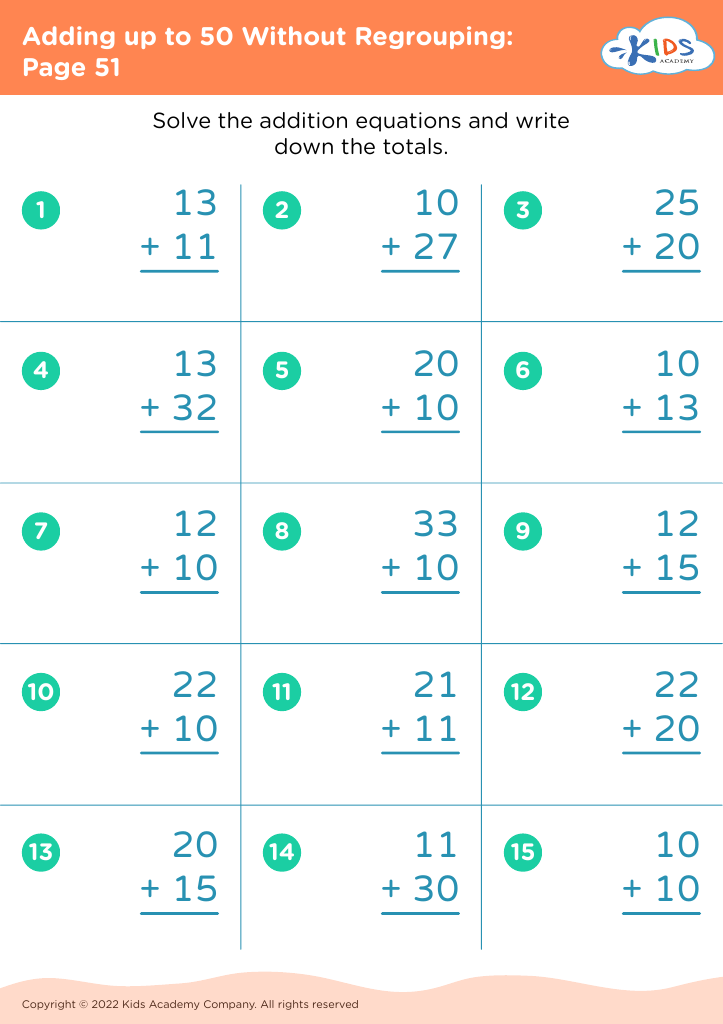
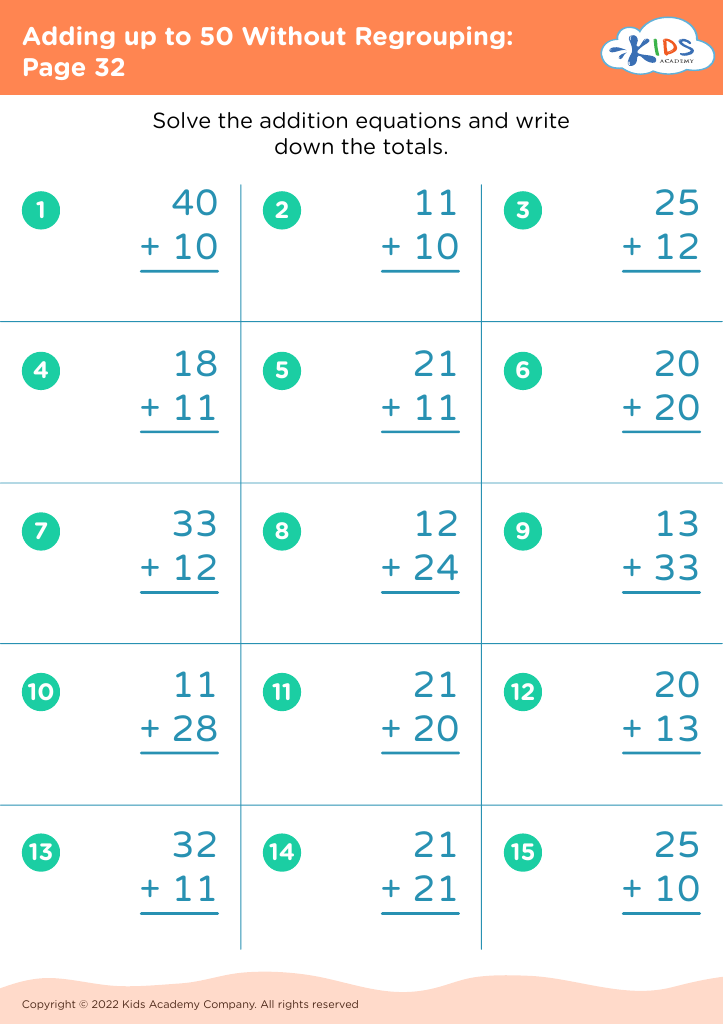


Identifying shapes and performing basic addition without regrouping are foundational skills critical for young learners aged 3-7. Understanding shapes lays the groundwork for spatial awareness, problem-solving, and critical thinking. When children recognize and name shapes, they develop cognitive skills that support early geometry concepts, essential for future math learning.
Adding numbers up to 50 without regrouping introduces basic arithmetic, helping young learners grasp the concepts of quantity and value. This skill is crucial as it sets the stage for more complex mathematics later on. When children can confidently add numbers without regrouping, they build a sense of competence and reduce math anxiety, promoting a lifelong positive attitude towards the subject.
Moreover, engaging in these activities fosters an environment of exploration and curiosity. It encourages collaborative learning, where parents and teachers can guide children through interactive games and real-life applications, making learning fun and relevant. By emphasizing these skills, caregivers are equipping children with the tools needed for academic success and everyday practical tasks. Ultimately, supporting children in mastering shapes and basic addition cultivates their ability to navigate the world around them effectively and prepares them for future learning adventures.