Improve counting skills Adding up to 50 Without Regrouping Worksheets for Ages 3-7
6 filtered results
-
From - To
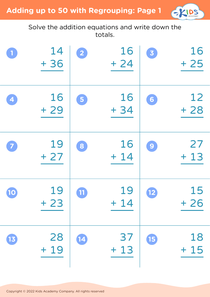
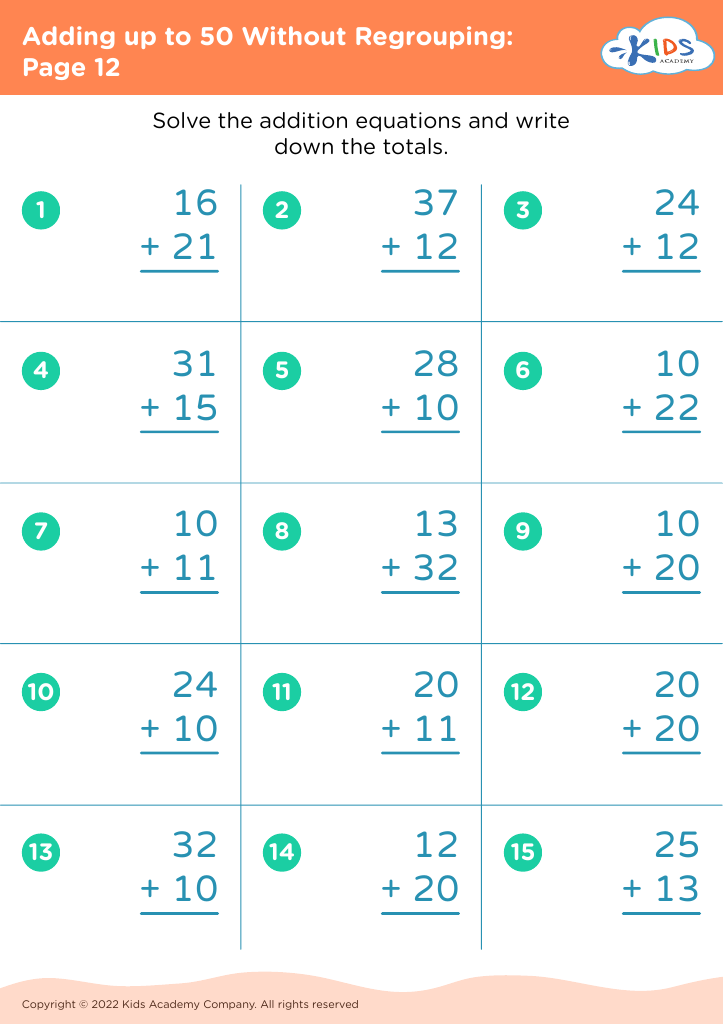
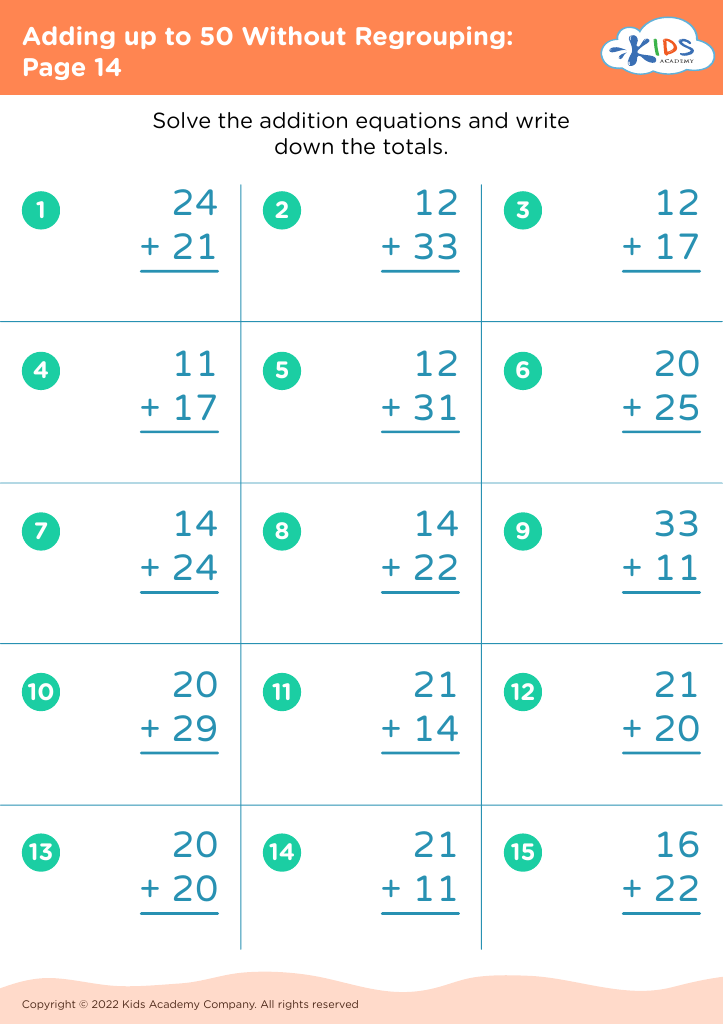
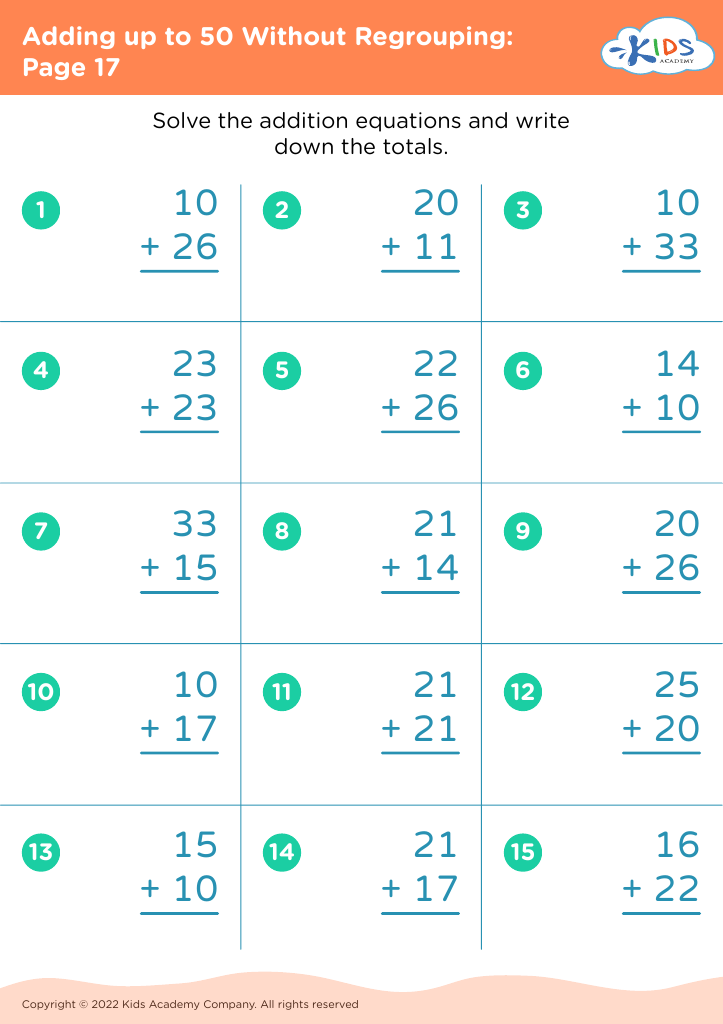
Enhance your child's counting skills with our engaging worksheets designed for ages 3-7! Focusing on adding up to 50 without regrouping, these resources provide a fun and effective way to practice basic addition. Our worksheets feature colorful visuals and simple exercises to capture your child's interest and boost their confidence. Children will build foundational math skills as they tackle various counting challenges, paving the way for more complex concepts later on. Perfect for classroom or at-home learning, these worksheets make math enjoyable and accessible. Download now to embark on a journey of numbers and learning success!
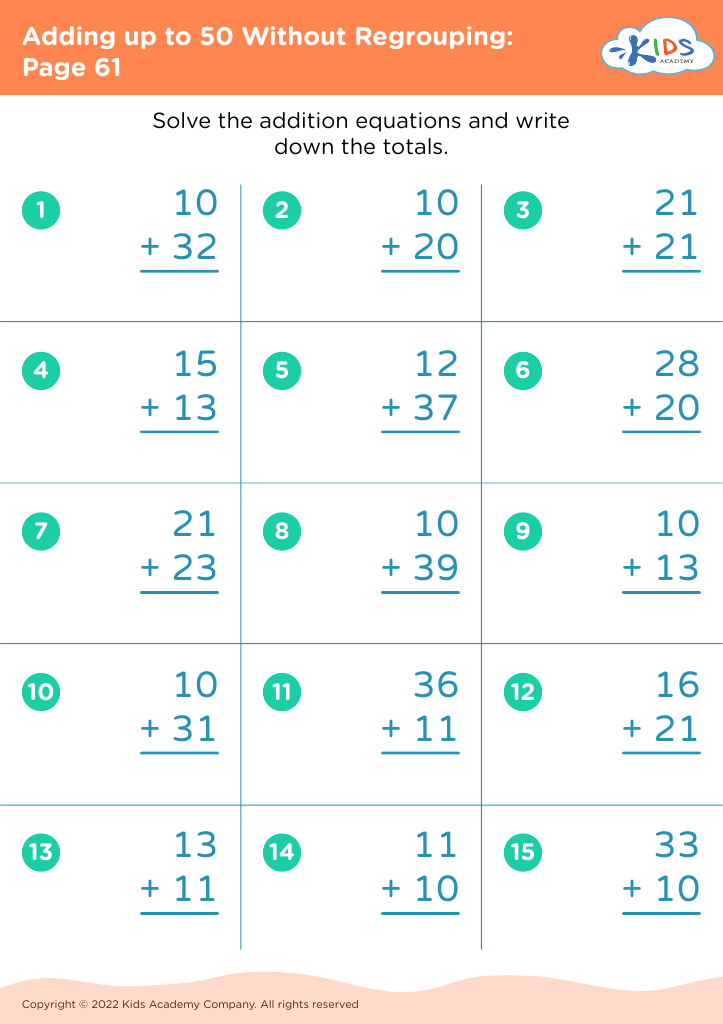
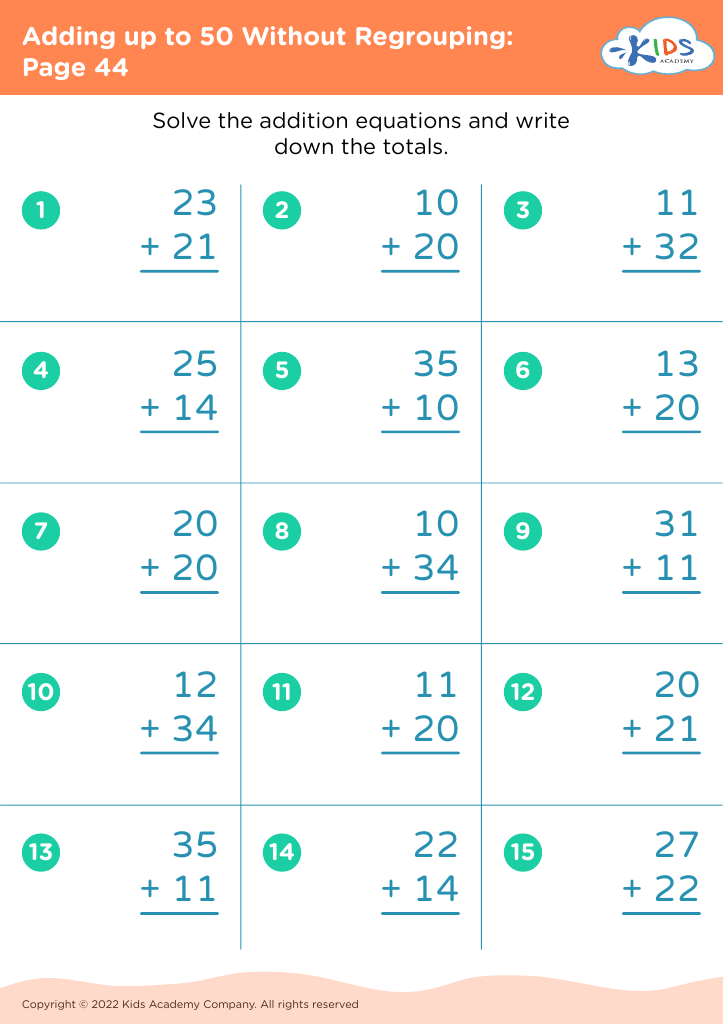
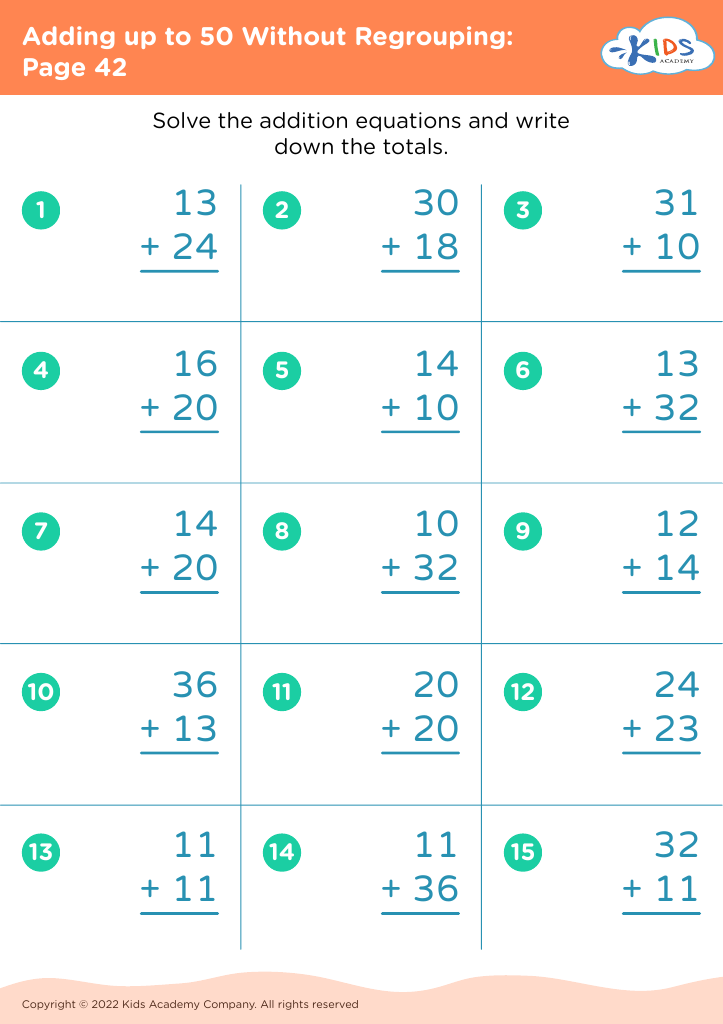


Improving counting skills and the ability to add up to 50 without regrouping is essential for children aged 3-7, as it lays the foundation for their future math competence. During these crucial developmental years, young learners are preparing to grasp fundamental mathematical concepts, which are integral to problem-solving and critical thinking.
Counting and mastering basic addition enhances children's cognitive development, helping them understand number relationships and patterns. These skills are not only vital for academic success in mathematics but also encourage essential life skills, subtly integrating mathematical thinking into everyday activities, such as shopping or cooking.
By emphasizing these skills early on, parents and teachers can foster a positive attitude toward math, alleviating anxiety related to the subject as students advance. Engaging children in fun and practical math activities cultivates their confidence and helps them develop perseverance when faced with challenging tasks.
Furthermore, improving counting and addition skills encourages early numeracy, supporting language development as they verbalize numbers and operations. This holistic approach benefits children's learning journeys while preparing them for future educational challenges, making it imperative for caregivers and educators to prioritize these foundational skills in their teaching efforts.