Understanding fractions Adding up to 50 Without Regrouping Worksheets for Ages 3-7
13 filtered results
-
From - To
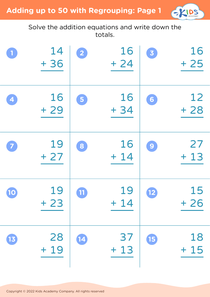
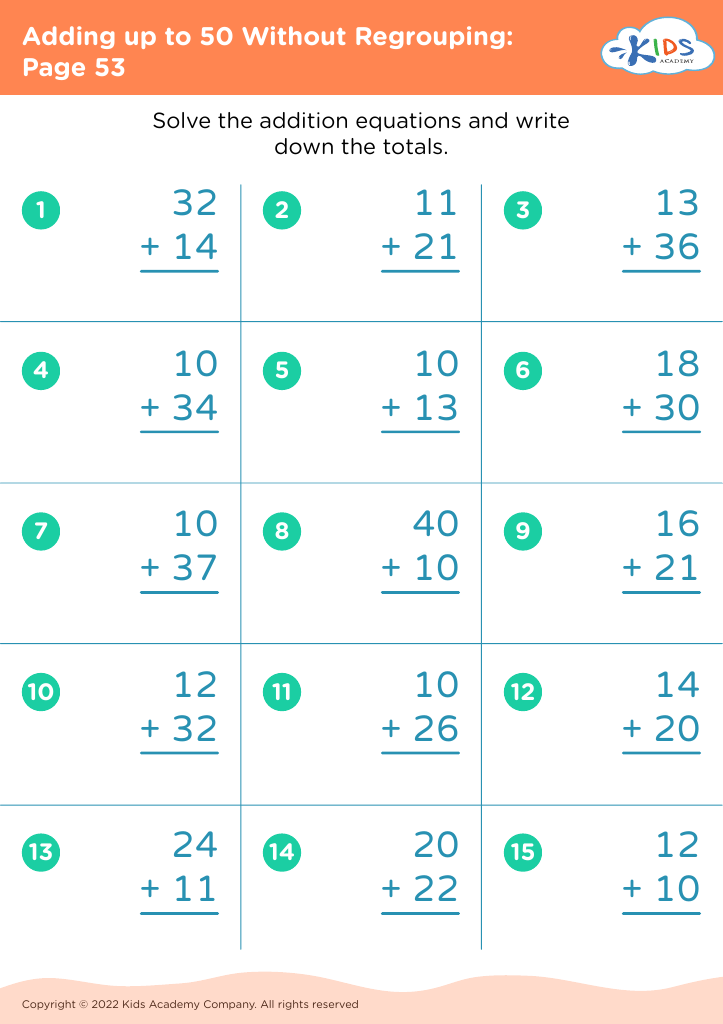
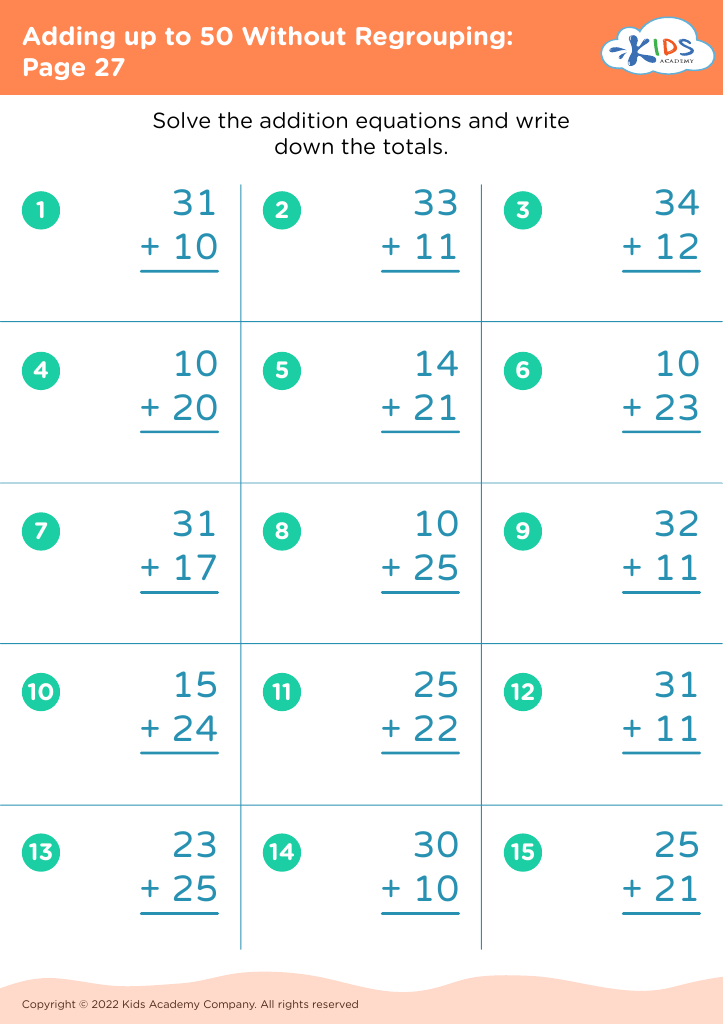
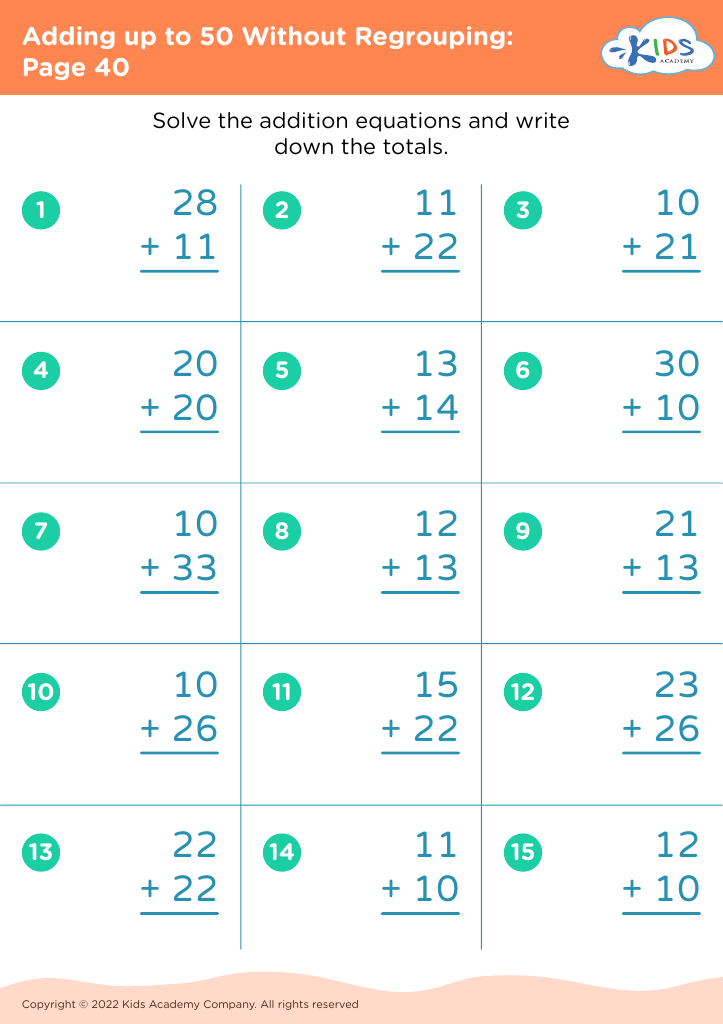
Introduce your child to the fascinating world of fractions with our "Understanding Fractions: Adding up to 50 Without Regrouping" worksheets designed for ages 3-7. These engaging worksheets provide a gentle yet effective approach to teaching fractions and basic addition. Without the complexity of regrouping, children can focus on mastering the concepts of fractions and addition up to 50 with ease. Perfect for young learners, these worksheets help build a strong mathematical foundation while keeping learning enjoyable and interactive. Increase your child’s confidence in math with these expertly crafted printable resources, suited for early grade development. Get started today!
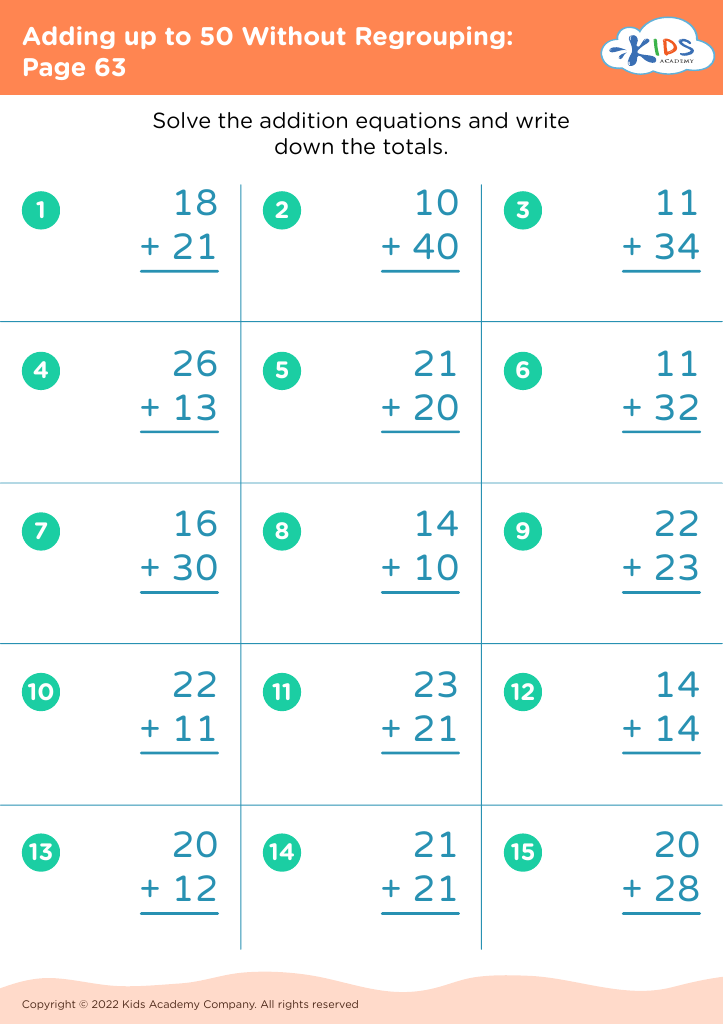
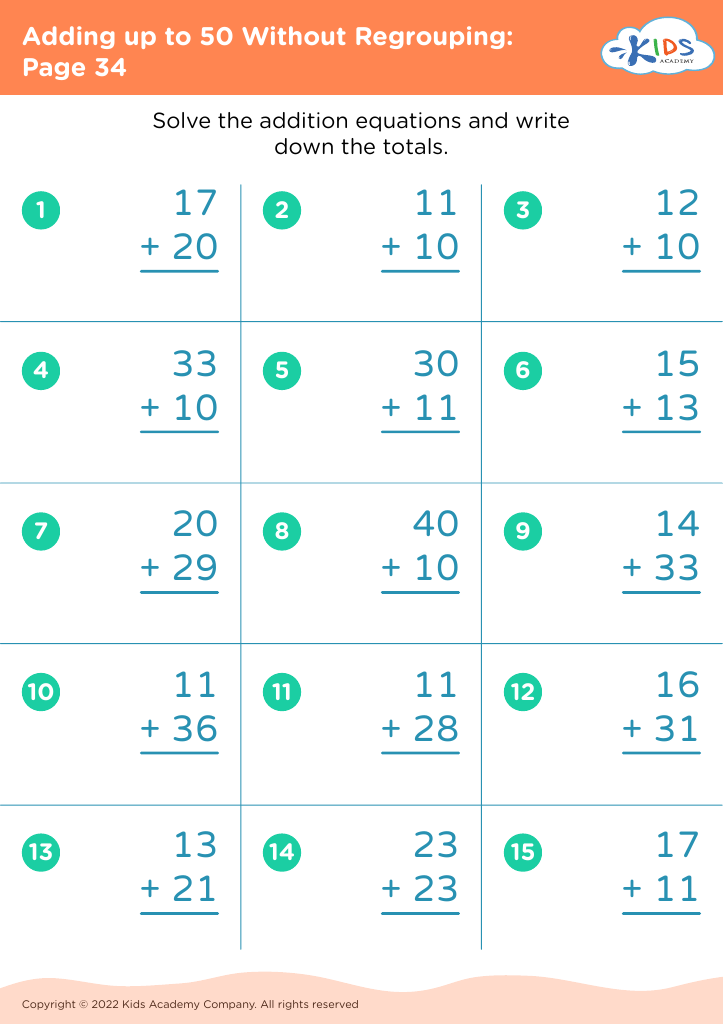
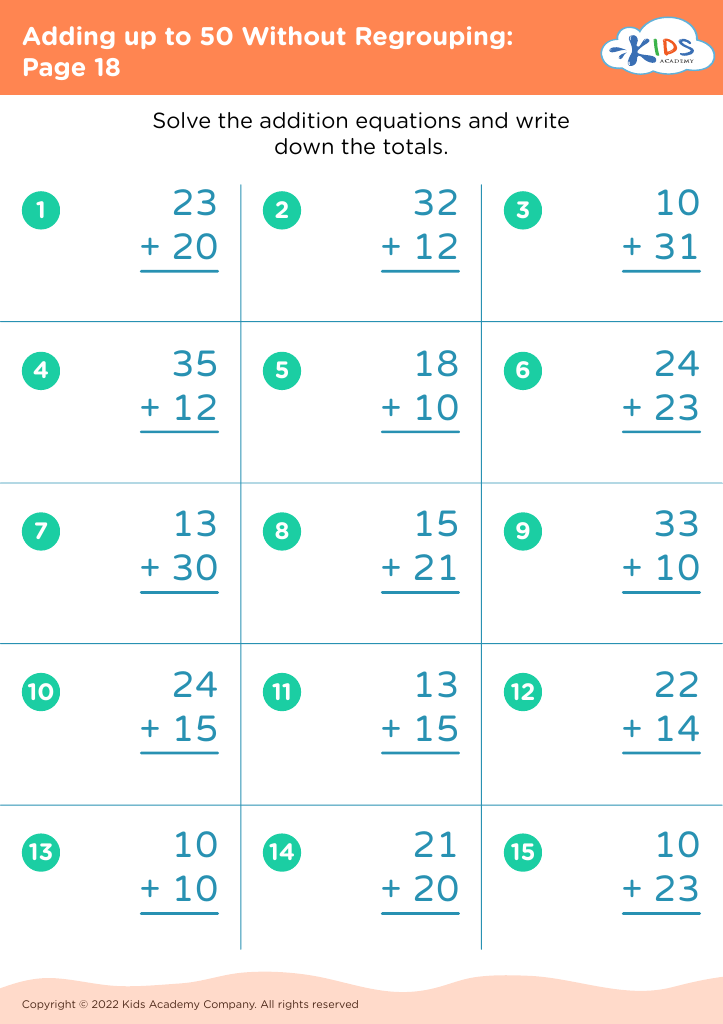
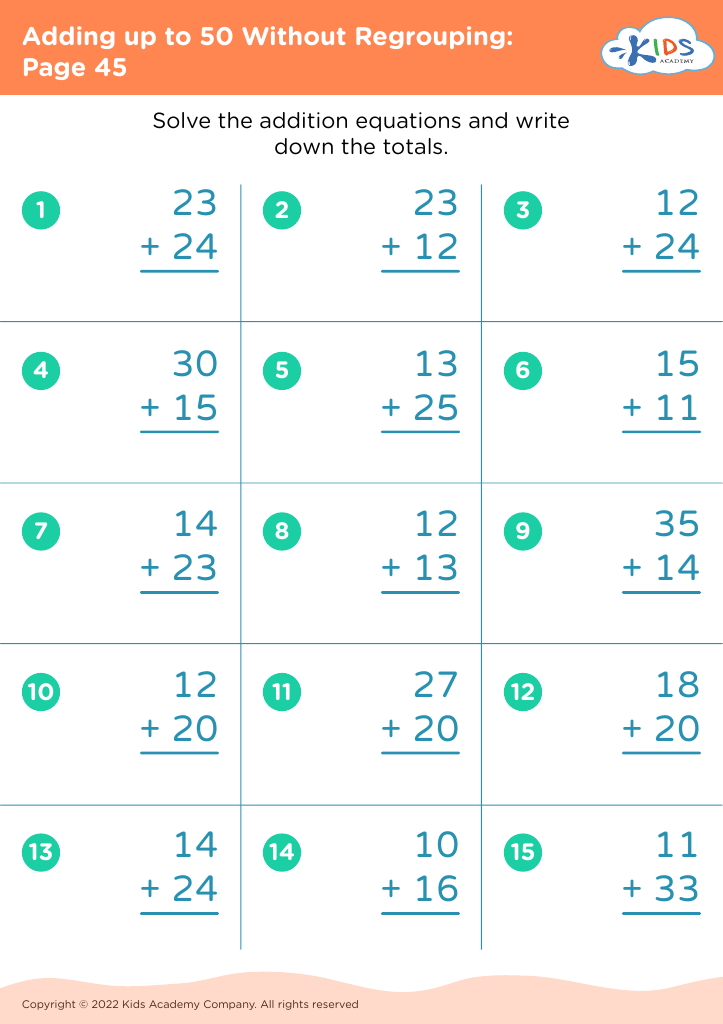
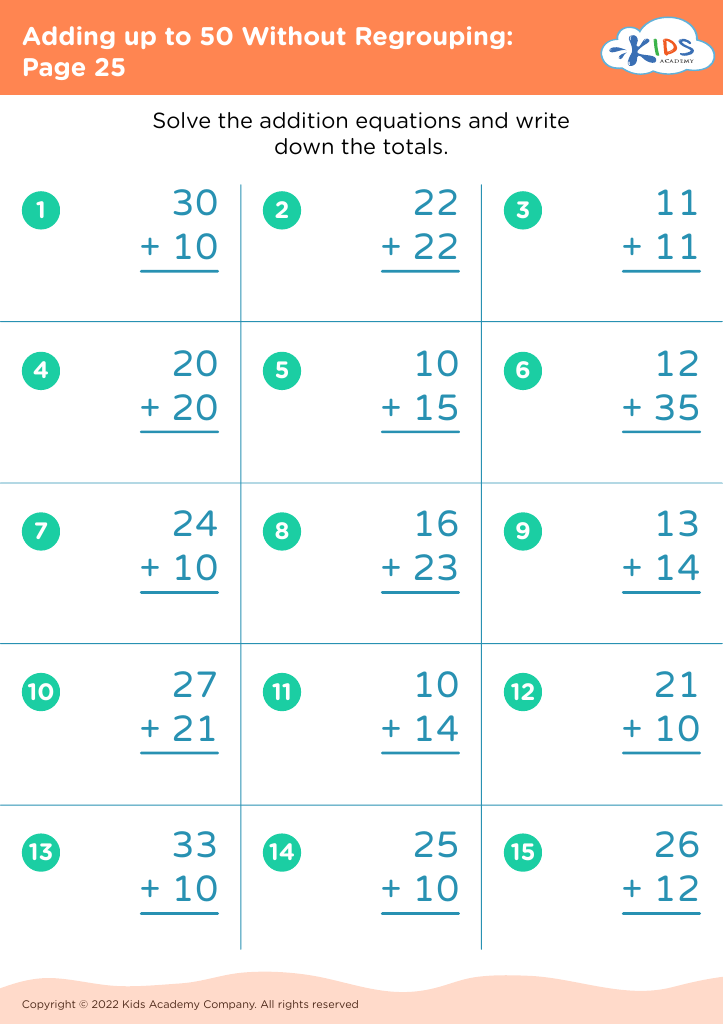
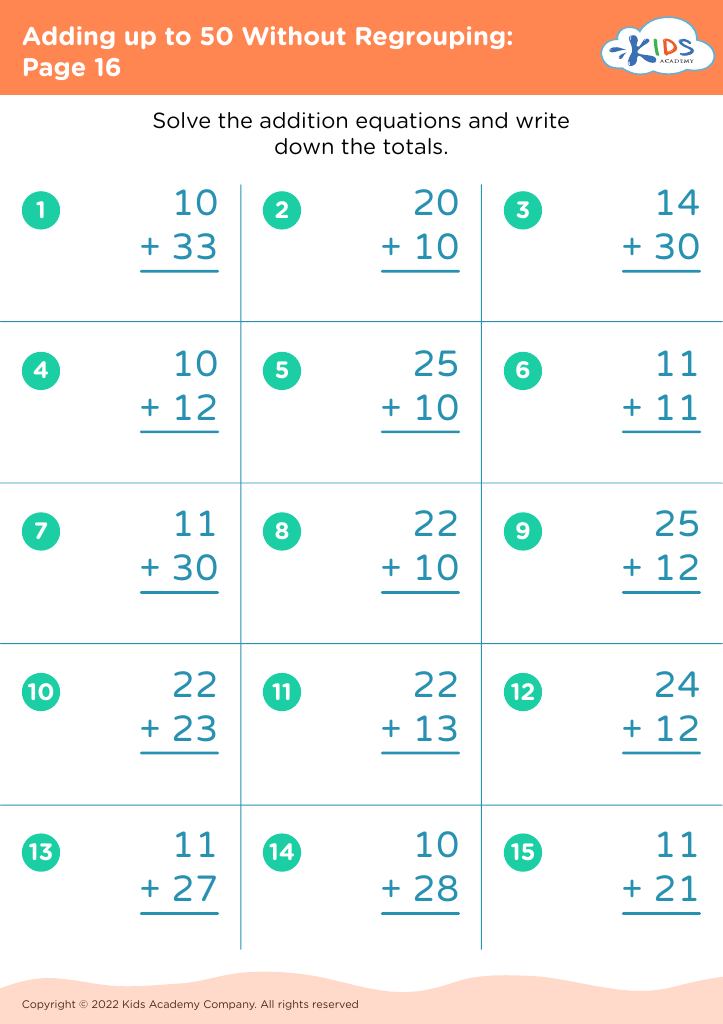
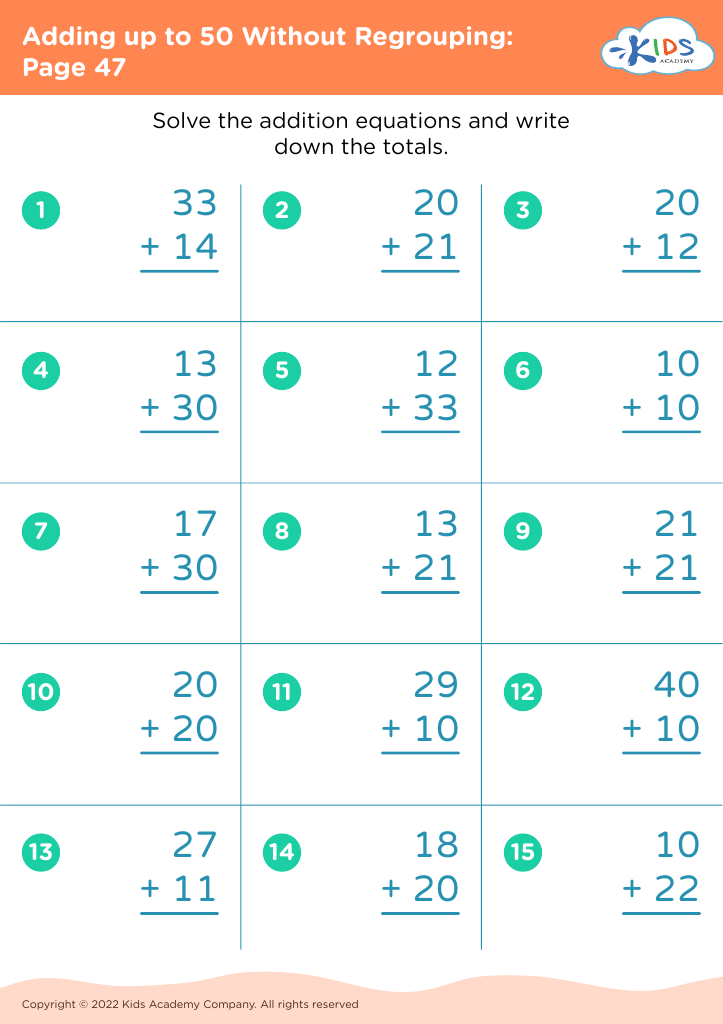
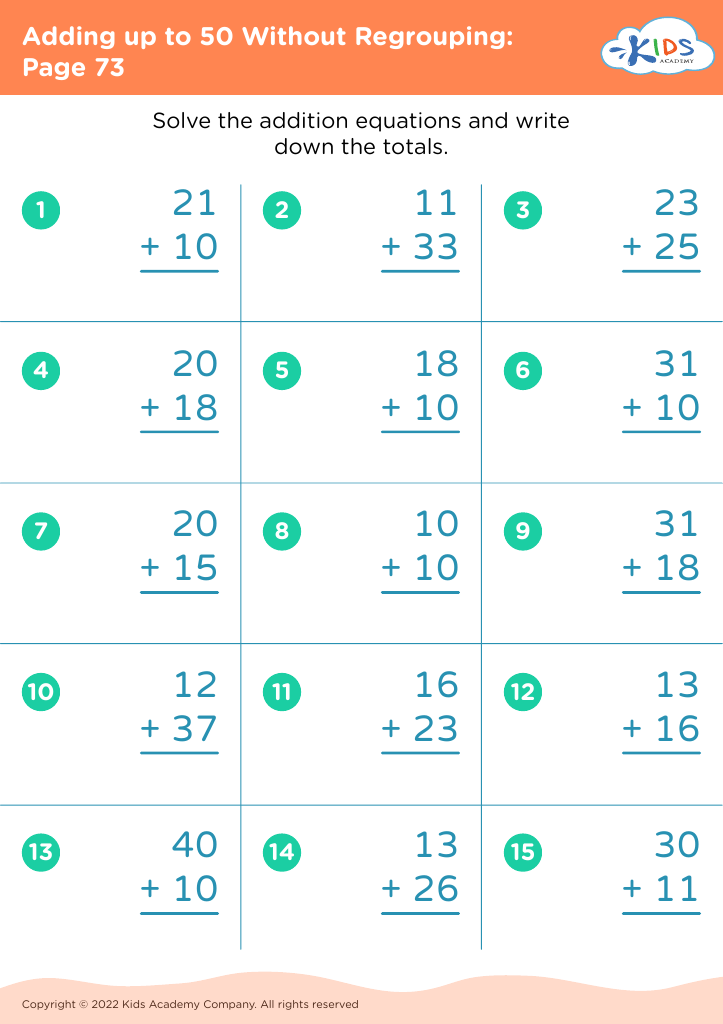
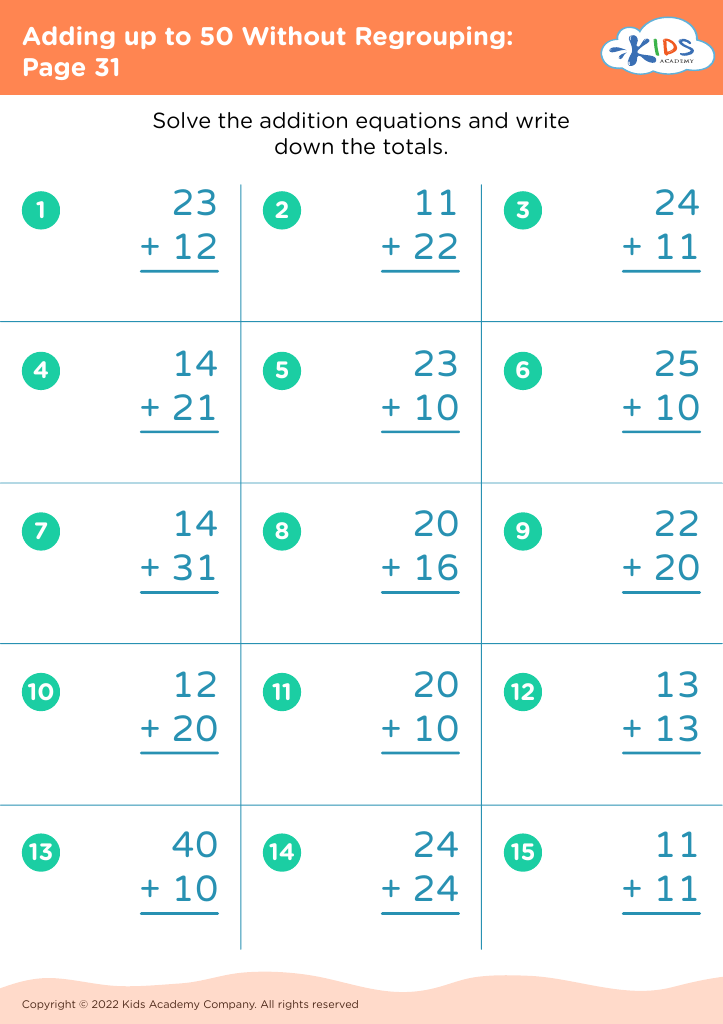
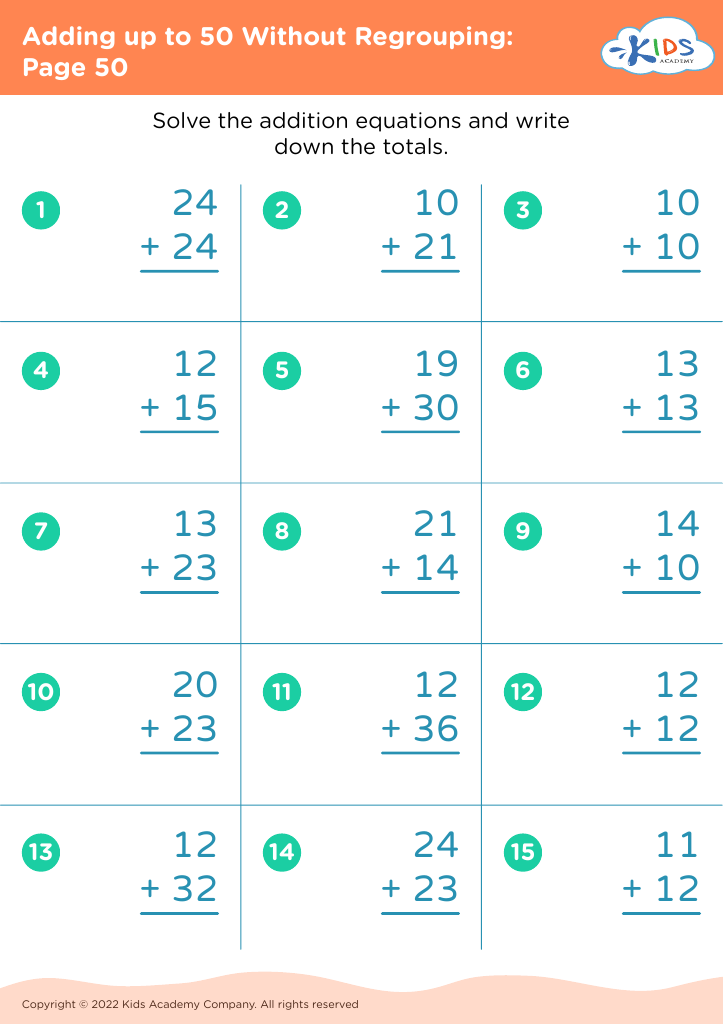


Understanding fractions and simple addition are foundational math skills that open the door to more complex mathematical concepts in the future. For children aged 3-7, grasping these concepts not only enhances their cognitive abilities but sets the stage for academic success.
Firstly, fractions introduce young learners to the idea of parts and wholes, an essential concept in mathematics and real-life situations. For example, understanding how a pizza can be divided into equal parts and shared helps children relate math to everyday life. When children are comfortable with fractions, they develop early problem-solving skills and logical thinking.
Adding up to 50 without regrouping is another critical skill. Mastering addition within this range allows kids to confidently perform more complex arithmetic as they advance in their schooling. It builds a strong numerical foundation and aids in developing mental math strategies. Children who practice and understand addition tend to excel in more challenging math areas because they have the basics down pat.
Moreover, these early math experiences build self-confidence. When learners successfully tackle fractions and addition, they develop a positive attitude towards math. This self-assurance not only boosts their math performance but also encourages a growth mindset essential for lifelong learning. Parents and teachers should prioritize these skills to foster a solid mathematical foundation and a positive learning attitude.