Understanding patterns Adding up to 50 Without Regrouping Worksheets for Ages 3-7
5 filtered results
-
From - To
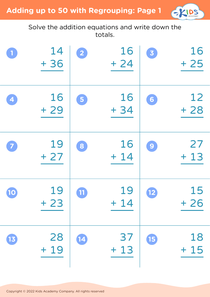
Discover our engaging "Understanding Patterns: Adding Up to 50 Without Regrouping" worksheets designed specifically for children aged 3-7. These worksheets focus on helping young learners recognize and apply patterns in addition, promoting foundational math skills. With colorful layouts and a variety of exercises, kids will enjoy easy-to-understand tasks that reinforce their ability to add numbers up to 50 without regrouping. Perfect for both classroom use and home education, these resources cultivate early numeracy skills and boost confidence in budding mathematicians. Equip your child with the tools for math success and watch them thrive while learning through patterns!
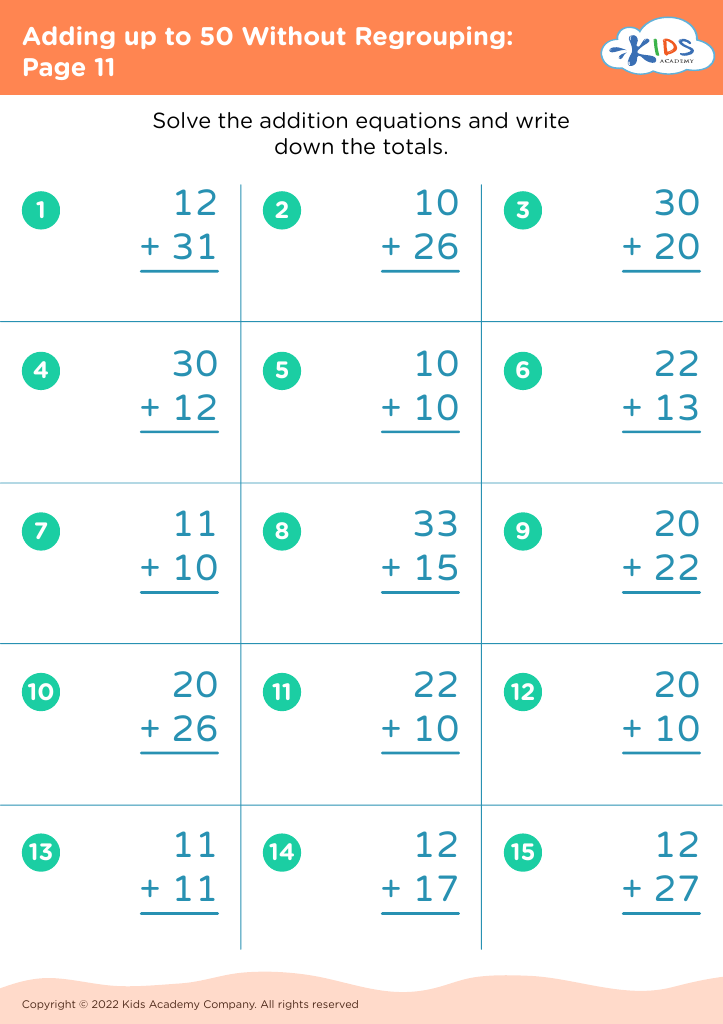
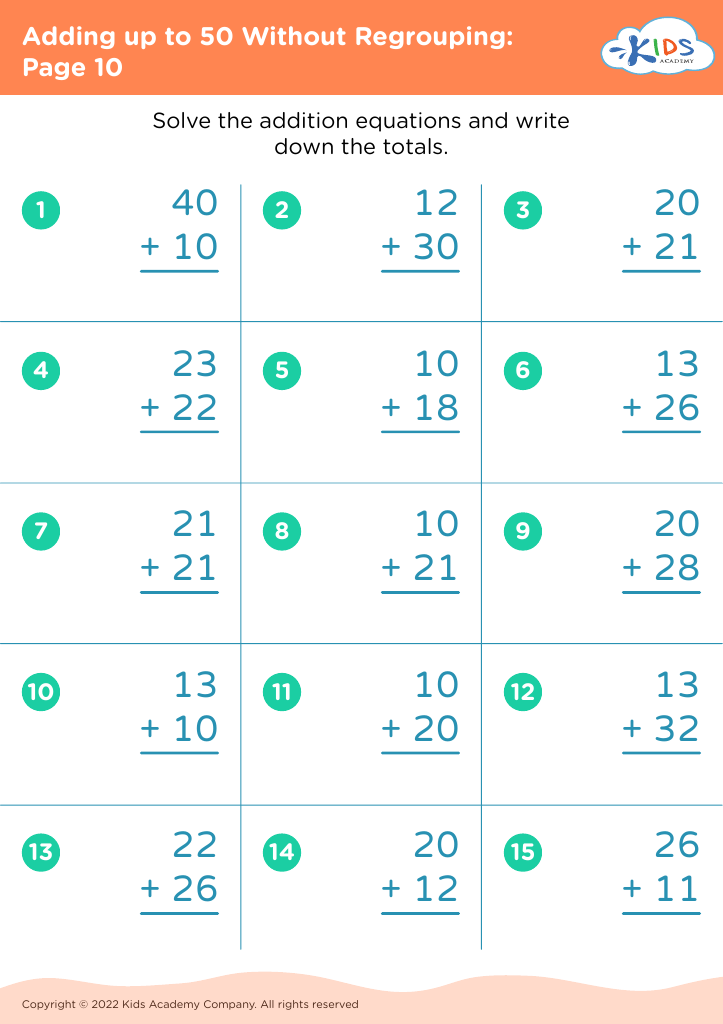
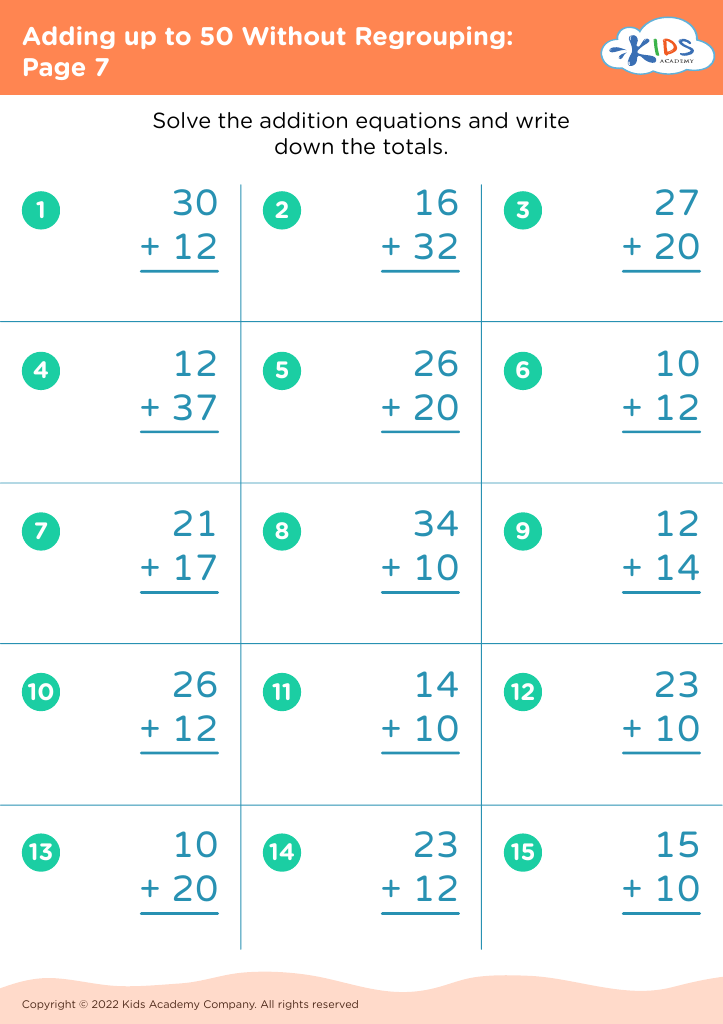
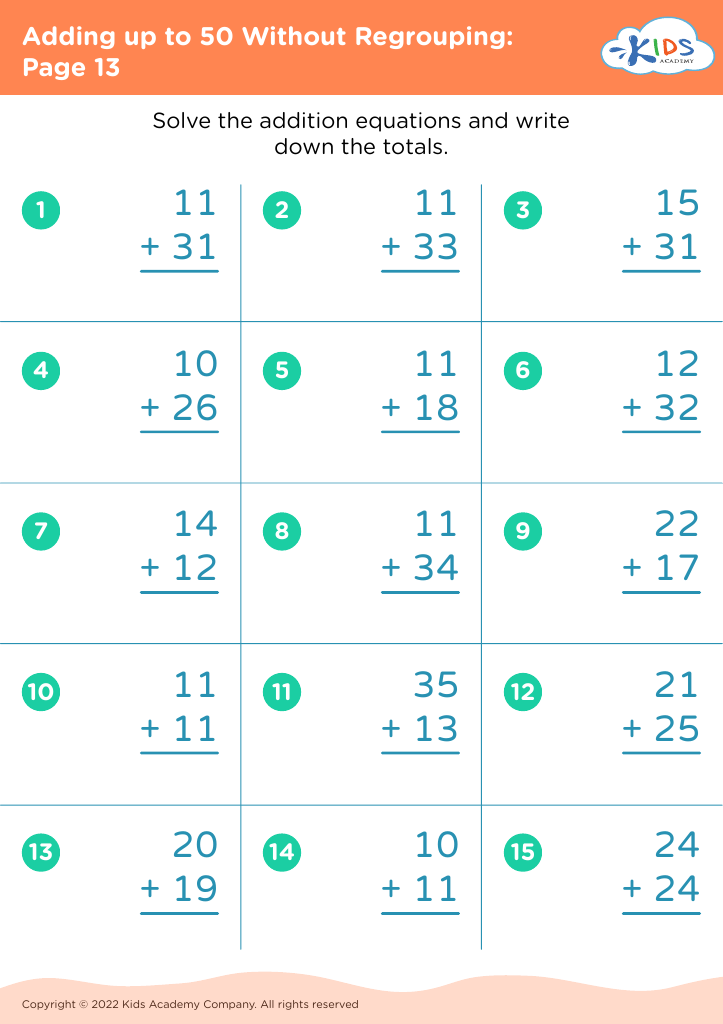
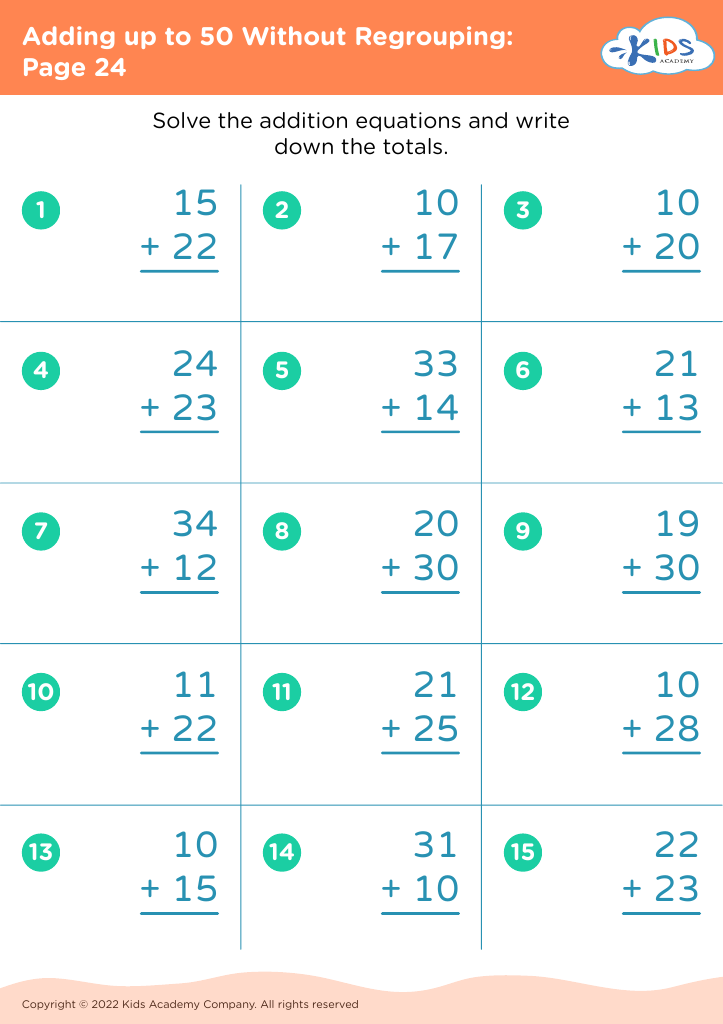


Understanding patterns and basic addition, particularly adding up to 50 without regrouping, is vital for children ages 3-7 as it lays the groundwork for future mathematical skills. This foundation not only enhances their cognitive development but also fosters critical thinking and problem-solving abilities. Recognizing patterns helps children make connections between numbers and build number sense, which are essential skills for mastering more complex operations later on.
Moreover, being able to add without regrouping helps refine their computational skills, enabling them to perform calculations efficiently. This sets the stage for confidence in math as they progress in their education. For parents and teachers, nurturing these skills early on aids in identifying children's learning styles and areas that may require additional support.
Additionally, understanding these concepts can support children’s endeavors in other subjects, as math is intertwined with science, engineering, and even the arts. Promoting a strong mathematical foundation encourages a positive attitude towards learning, which can last a lifetime. Thus, active engagement with children in learning patterns and addition can create an enriching educational environment that fosters curiosity and enthusiasm, bridging the gap between basic concepts and real-world applications.