Animal identification Addition & Subtraction Worksheets for Ages 3-7 - Page 2
28 filtered results
-
From - To
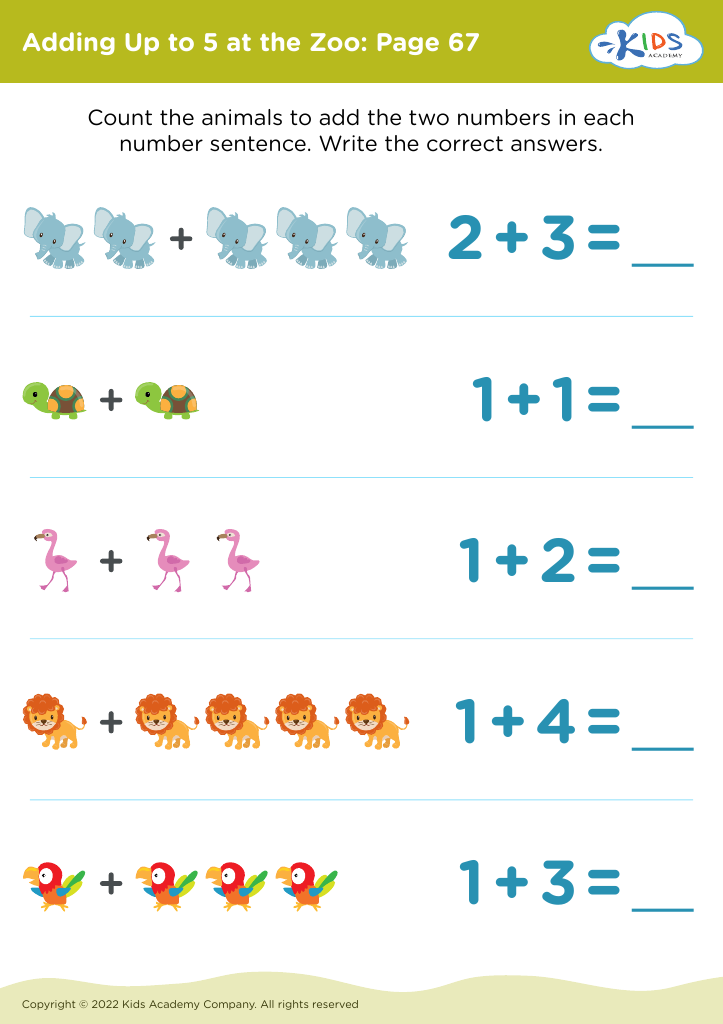
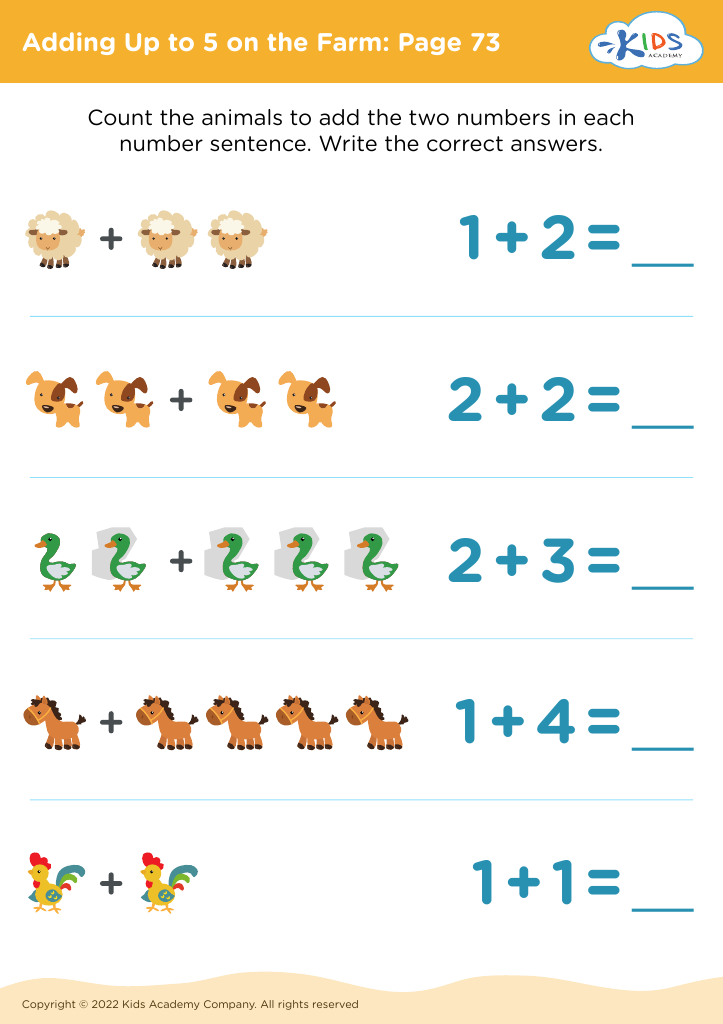
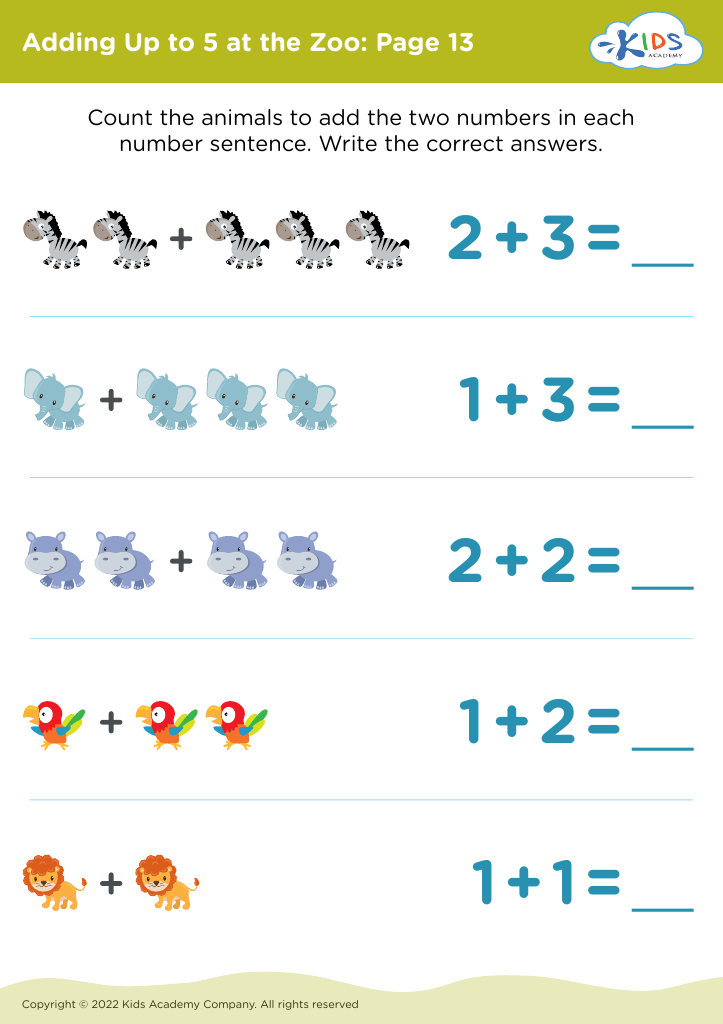
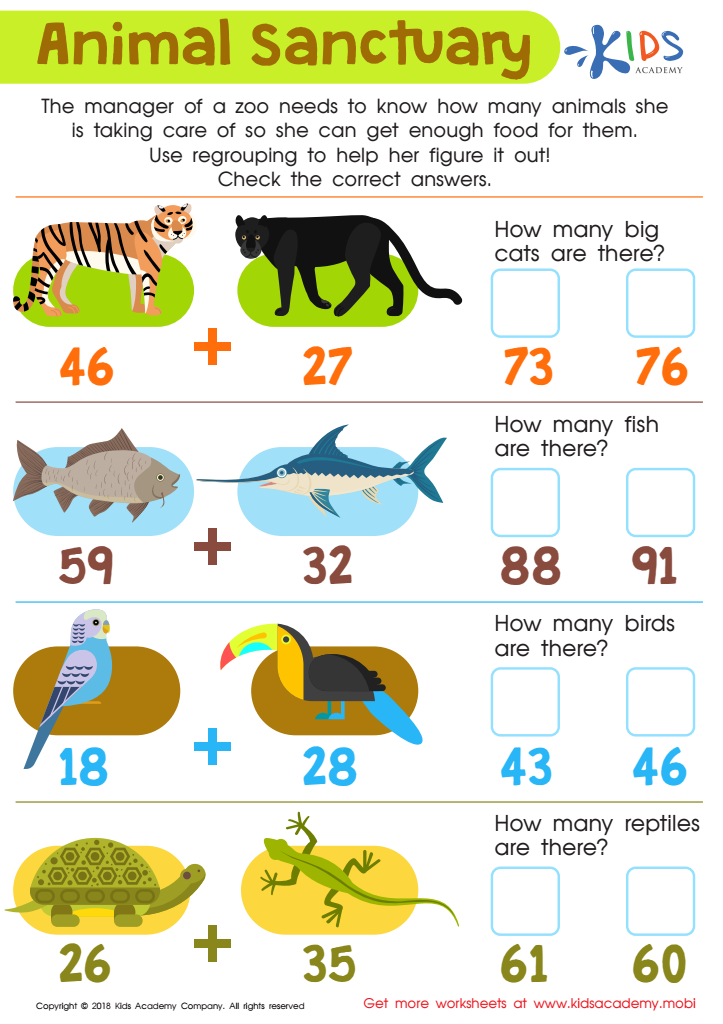
Animal Sanctuary Worksheet
 Assign to My Students







Animal identification addition and subtraction is a vital educational tool for children ages 3-7. First and foremost, it combines foundational math skills with engaging, relatable content that captures young learners' attention. By utilizing animals, children are more likely to stay interested and invested in their learning, fostering a positive attitude toward mathematics.
This method also encourages critical thinking and problem-solving skills. As children identify animals and relate them to mathematical concepts, they learn to associate quantities with real-world objects. This connection helps solidify their understanding of addition and subtraction as they begin to see practical applications of these skills.
Moreover, this type of learning supports cognitive development and language acquisition. It introduces new vocabulary related to both math and animals, enriching their language skills and enabling better communication.
Parents and teachers should recognize that early math literacy is crucial for long-term academic success. By fostering curiosity and an understanding of basic mathematics through fun and relatable methods like animal identification, we lay the groundwork for future learning. Ultimately, integrating play and education enhances cognitive skills, making math enjoyable while preparing children for more complex mathematical concepts in higher grades.








