Developing fine motor skills Addition & Subtraction Worksheets for Ages 3-7
4 filtered results
-
From - To
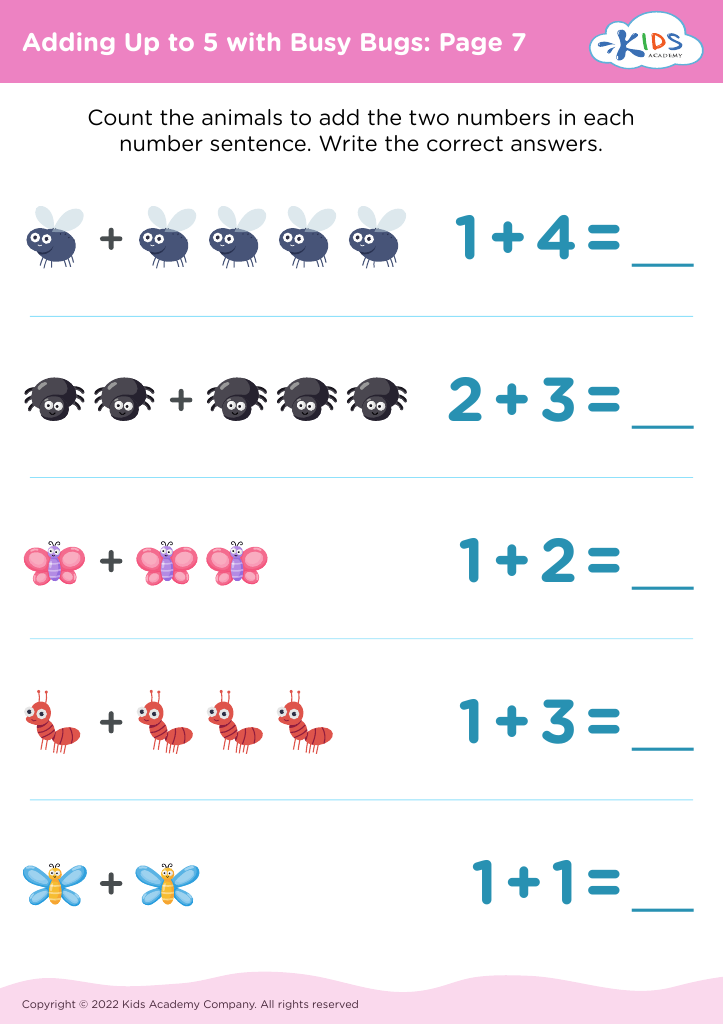
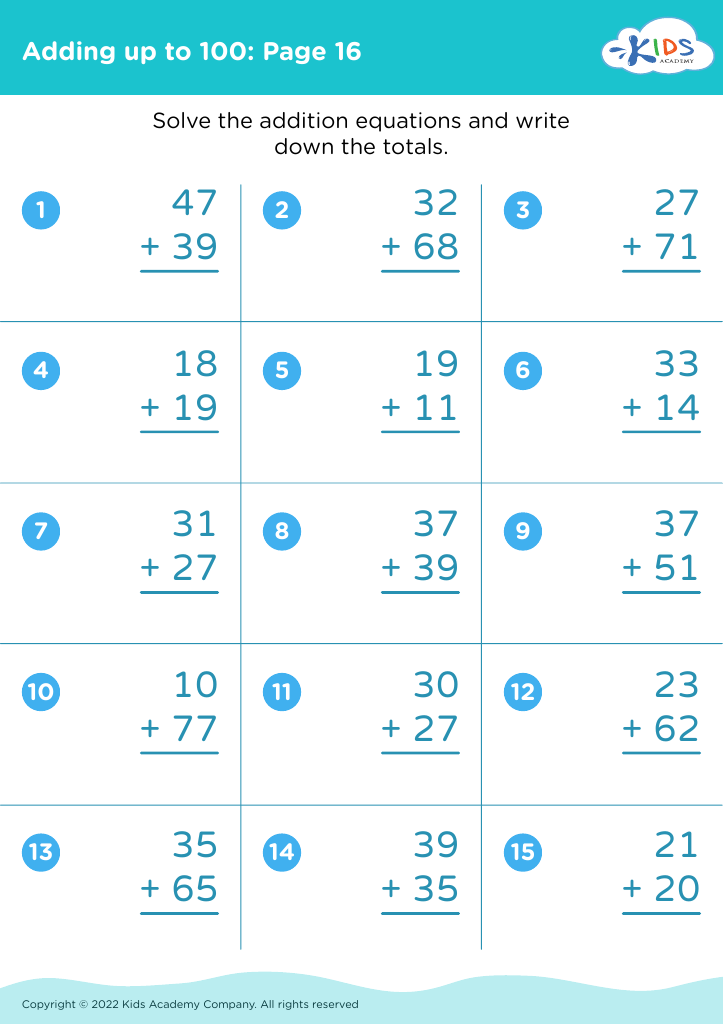
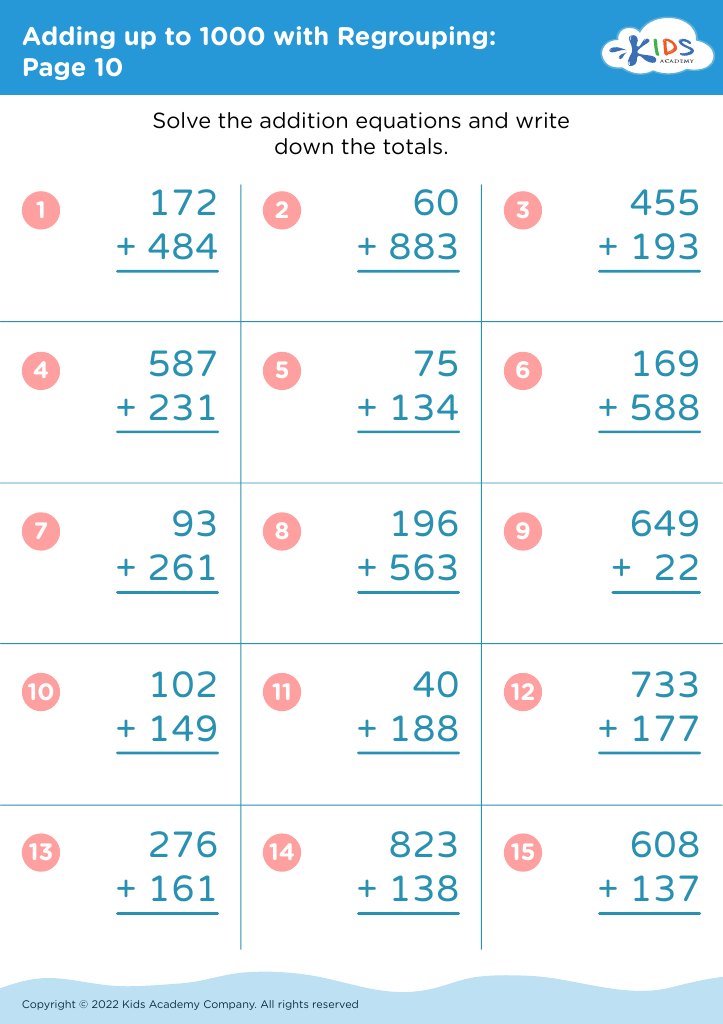
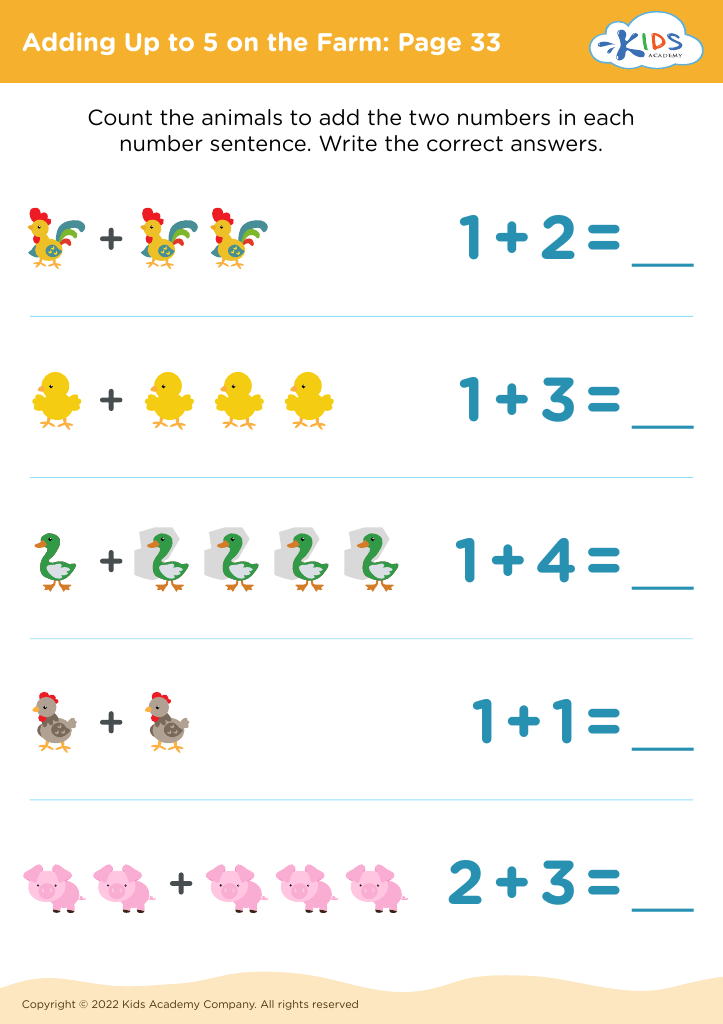
Our "Developing Fine Motor Skills: Addition & Subtraction Worksheets for Ages 3-7" are designed to blend math learning with activities that enhance your child's fine motor skills. These specialized worksheets assist in the development of hand-eye coordination, dexterity, and precision while teaching foundational math concepts. Created specifically for young learners, the engaging exercises include drawing, tracing, and simple calculations, making math fun and interactive. Perfect for home or classroom use, our worksheets foster a love for learning and build essential skills necessary for your child's academic growth. Visit Kid's Academy today to download and start practicing!








Developing fine motor skills and understanding addition and subtraction are crucial aspects of early childhood education, particularly for children aged 3 to 7. Fine motor skills involve the coordination of small muscles, particularly in the hands and fingers, which are essential for daily tasks like writing, buttoning a shirt, and using scissors. Cultivating these skills early enables children to perform tasks independently, builds their confidence, and improves their cognitive development. Activities like drawing, stacking blocks, and playing with clay can greatly enhance fine motor skills, setting the foundation for handwriting and other advanced tasks later in life.
At the same time, learning addition and subtraction is foundational for developing numerical literacy and problem-solving skills. These basic mathematical operations are the building blocks for understanding more complex math concepts. Early proficiency in addition and subtraction not only aids future academic success but also enhances critical thinking abilities, logical reasoning, and mental agility. It prepares children for real-world scenarios where basic math is necessary, such as handling money and measuring ingredients in cooking. Engaging children in simple, fun mathematical activities can make the learning process enjoyable, fostering a positive attitude towards mathematics and learning in general. Therefore, parents and teachers should prioritize these areas of development to support overall growth and future academic achievement.








