Developing logical thinking Addition & Subtraction Worksheets for Ages 3-7
4 filtered results
-
From - To
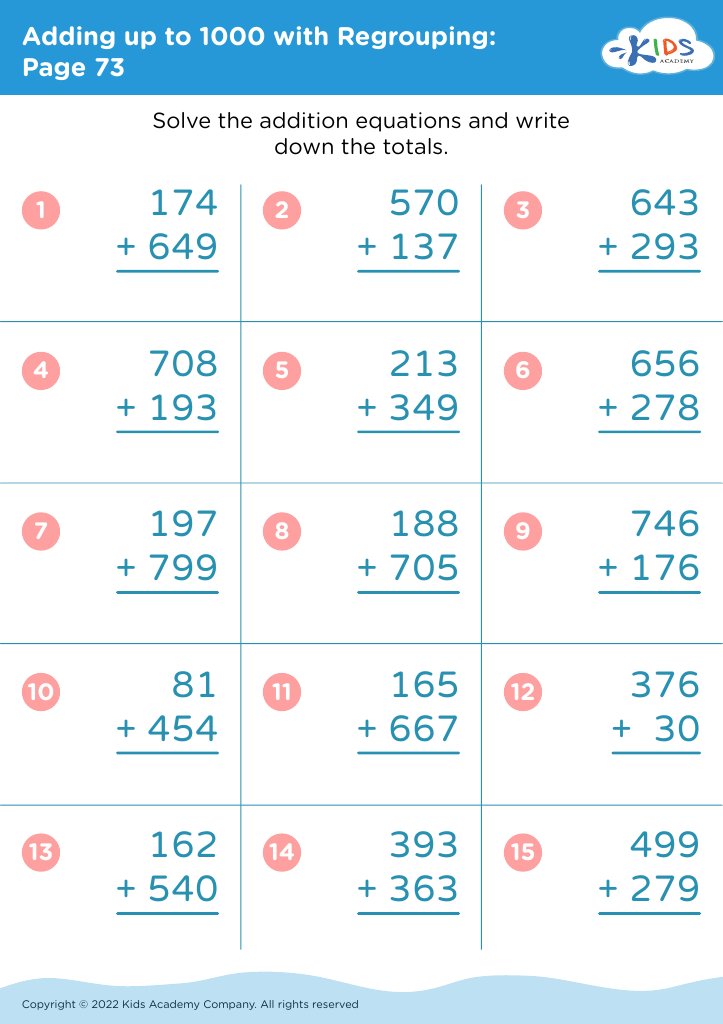
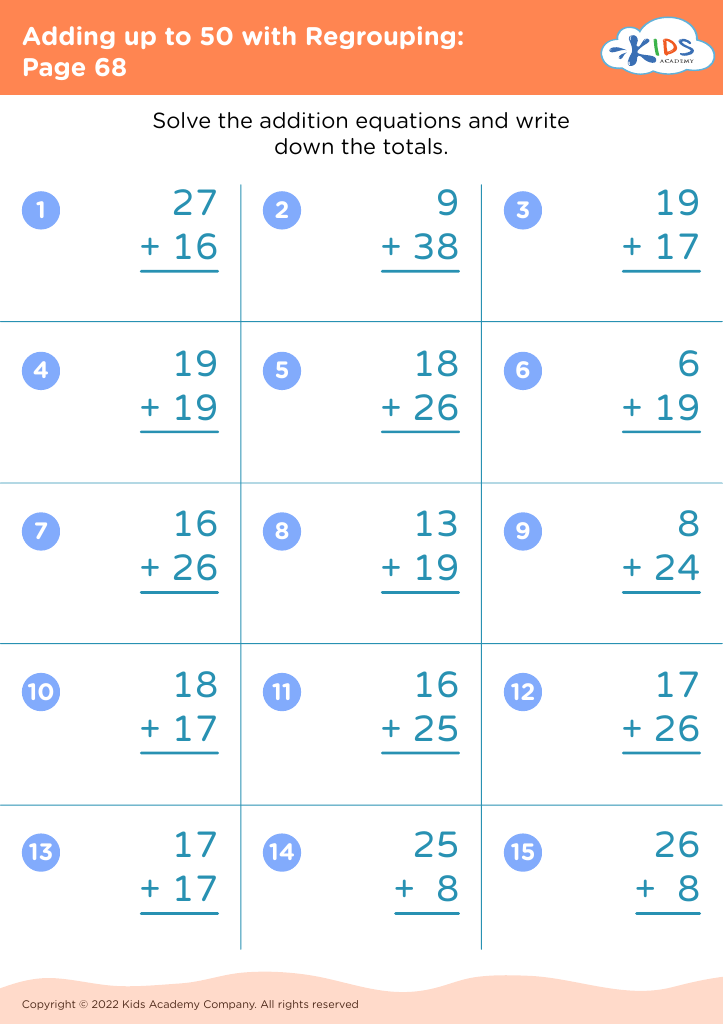
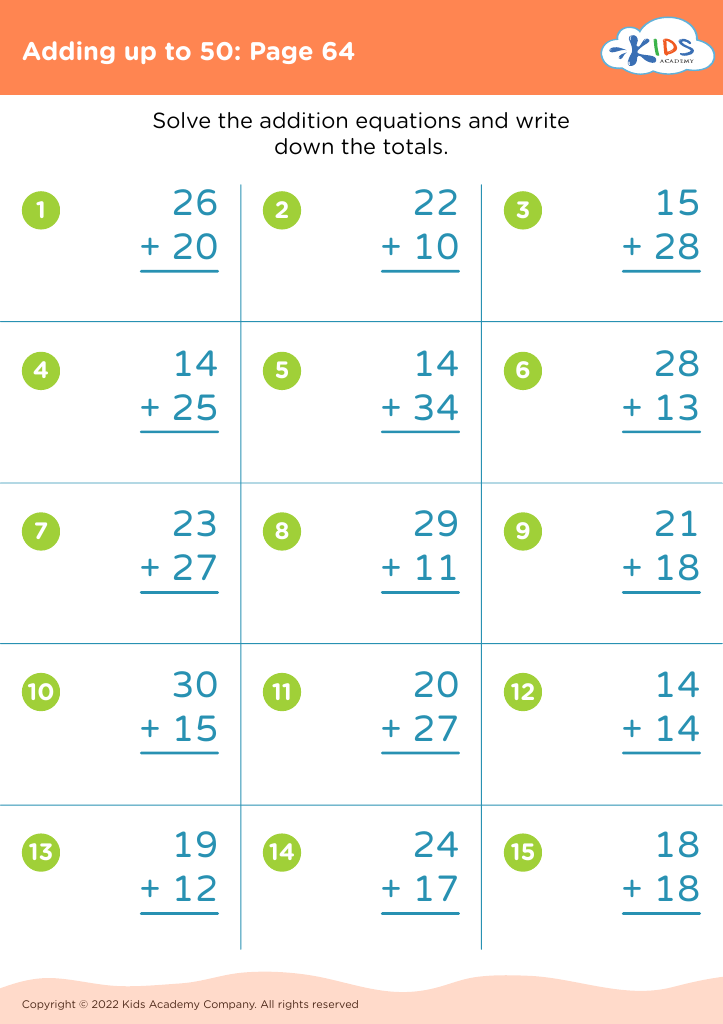
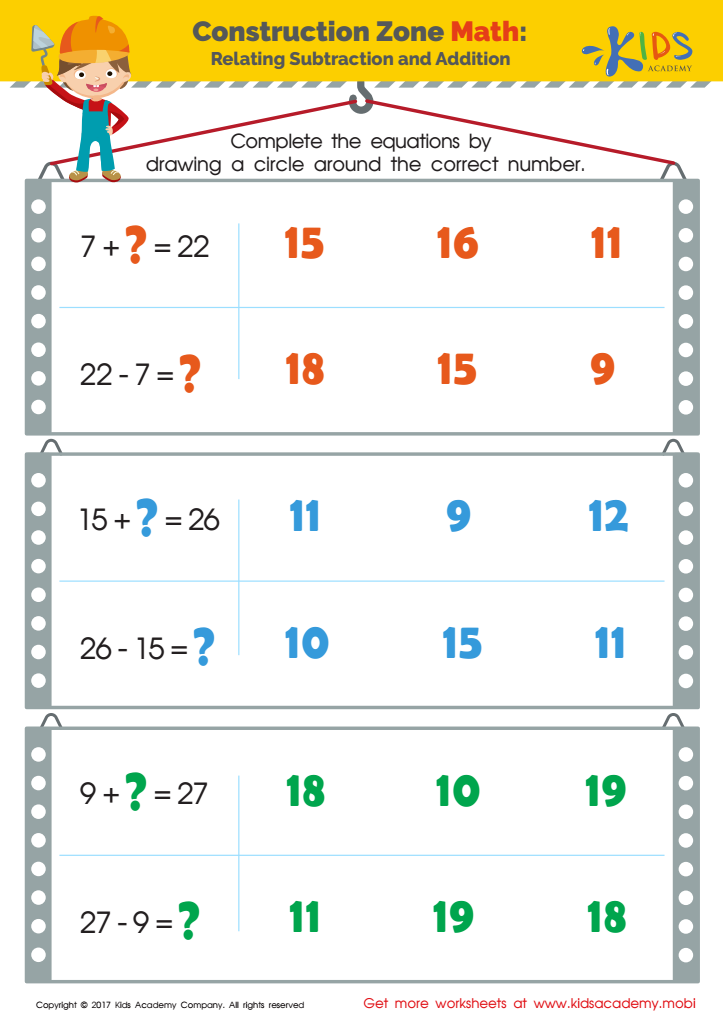
Discover our engaging "Developing Logical Thinking Addition & Subtraction Worksheets" designed specifically for children ages 3-7. These worksheets combine fun and learning, helping young learners enhance their logical reasoning skills through addition and subtraction exercises. Tailored to nurture critical thinking, the activities include visual aids, puzzles, and interactive challenges that make math enjoyable. As kids solve problems, they will not only master basic arithmetic but also develop essential cognitive skills needed for advancement. Perfect for home or classroom use, our worksheets support a solid math foundation while fostering a love for learning. Empower your child’s mathematical journey today!
Related Addition and Subtraction Facts Worksheet
 Assign to My Students








Developing logical thinking skills in young children, especially in the context of addition and subtraction, is crucial for several reasons. First, logical thinking serves as the foundation for mathematics, helping children make sense of numbers and relationships among them. By engaging in age-appropriate activities that focus on addition and subtraction, parents and teachers can enhance children's problem-solving skills, critical thinking, and cognitive development.
At ages 3 to 7, children are particularly receptive to learning. During this period, they are building their understanding of the world around them, and mathematical concepts like addition and subtraction help them to categorize, compare, and quantify their experiences. This not only supports mathematical knowledge but also nurtures their ability to think logically and make reasoned decisions.
Moreover, fostering these skills promotes confidence and lays the groundwork for future academic success across numerous subjects. Children who struggle with basic math might feel frustration, potentially leading to aversions to learning. Engaging in fun and meaningful activities that promote logical thinking can help cultivate a positive attitude towards math and learning in general. Ultimately, strengthening addition and subtraction skills ensures children are better equipped for future challenges in mathematics and everyday life.








