Enhance vocabulary skills Addition & Subtraction Worksheets for Ages 3-7
4 filtered results
-
From - To
Boost your child's vocabulary alongside their math skills with our engaging Addition & Subtraction Worksheets for Ages 3-7. These specially designed worksheets provide an entertaining way for young learners to practice their addition and subtraction while enhancing their language abilities. Each activity incorporates math concepts into fun stories and illustrations, encouraging children to explore new words and their meanings. As they navigate through colorful exercises, they'll build confidence in both math and vocabulary. Perfect for home or classroom use, our worksheets offer a balanced approach to early learning, setting a foundation for academic success. Download now and make learning enjoyable!
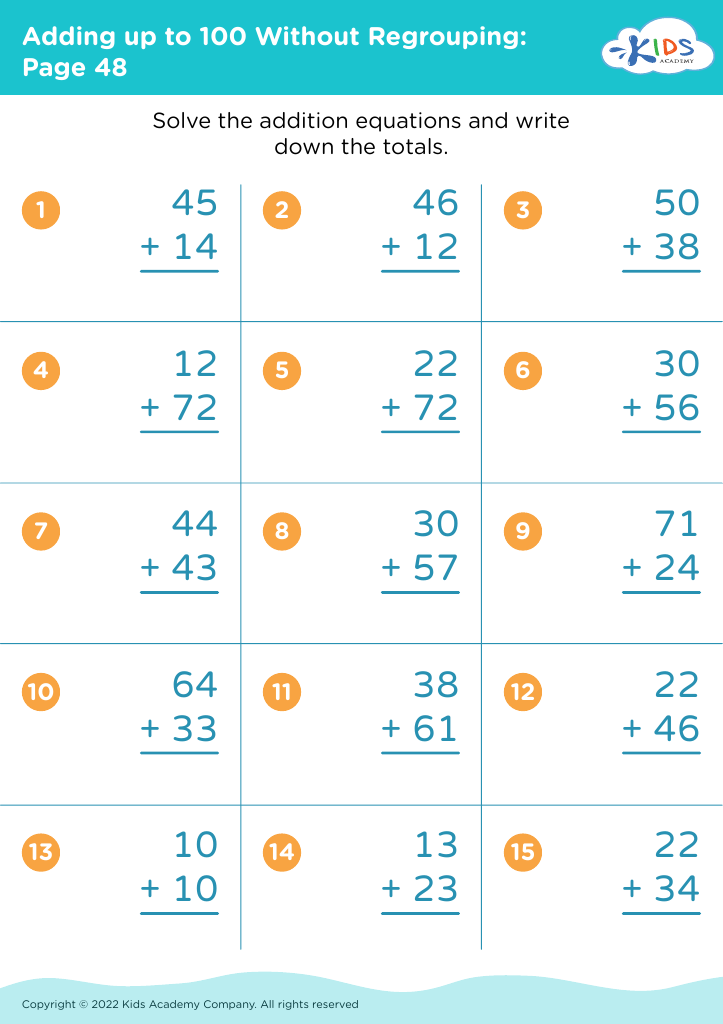
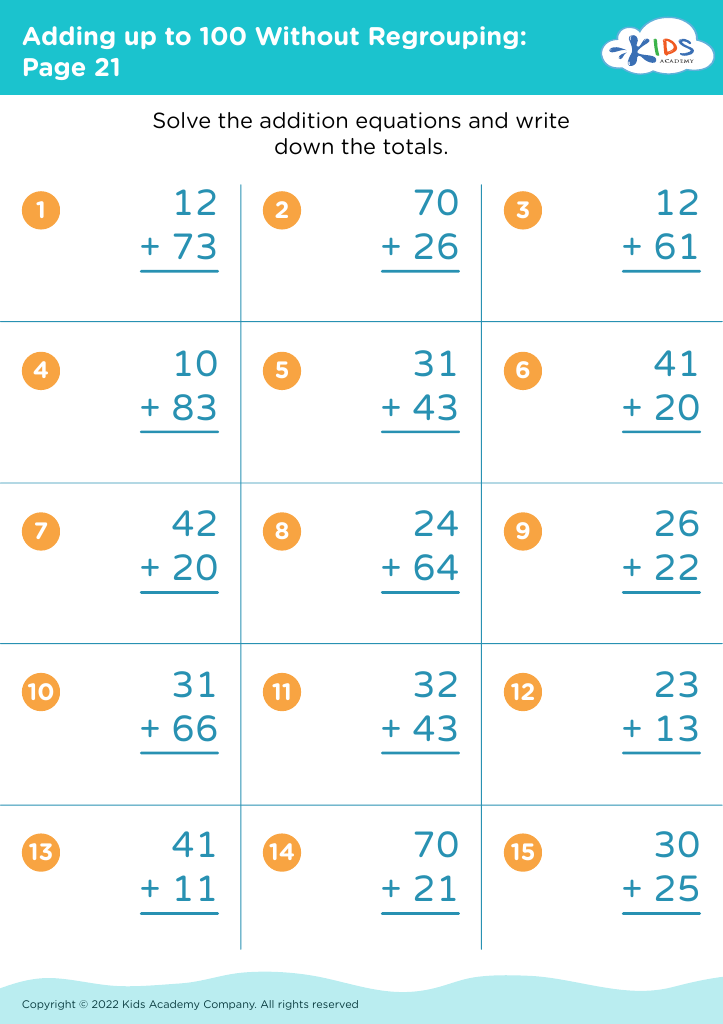
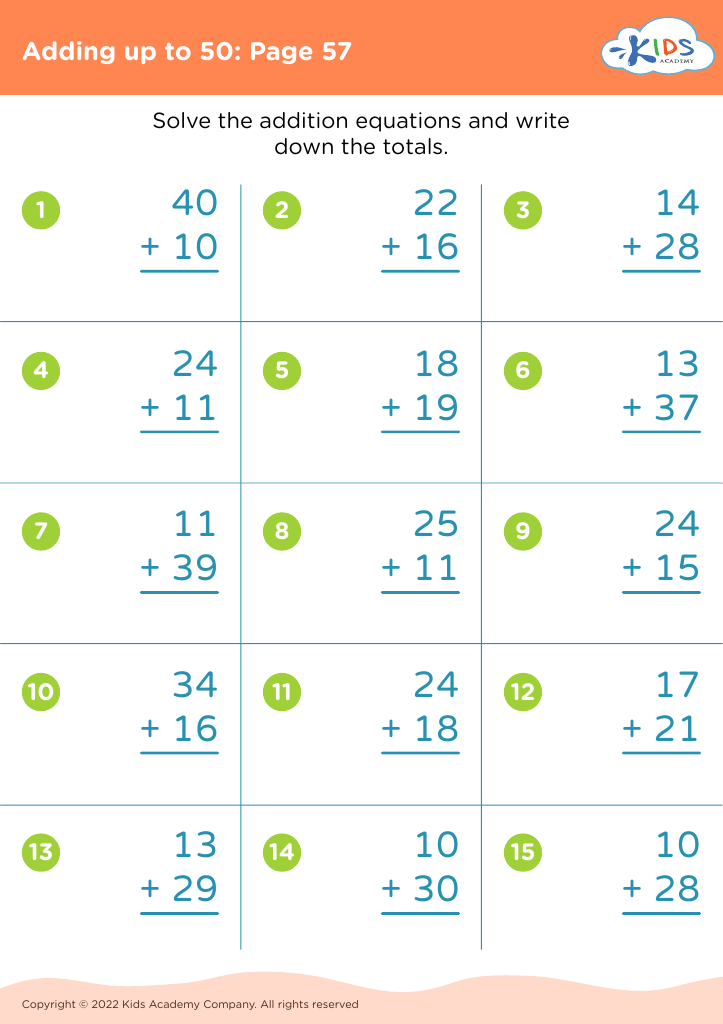
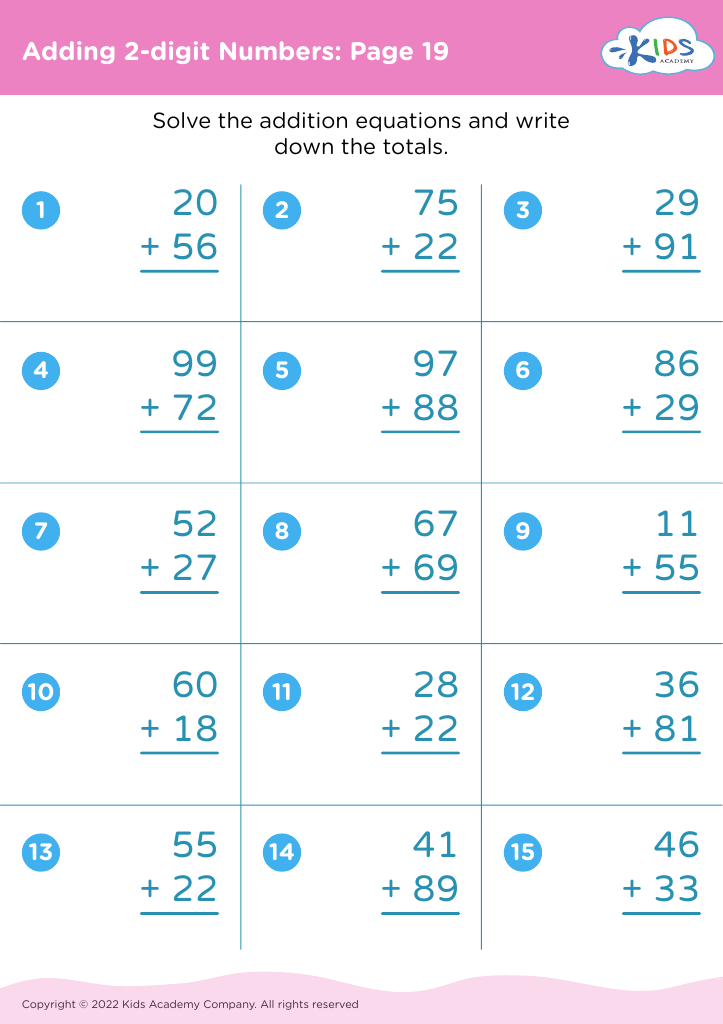








Enhancing vocabulary skills alongside foundational math concepts like addition and subtraction is crucial for children aged 3-7. Language proficiency during these formative years significantly influences cognitive development and lays the groundwork for mathematical understanding.
Firstly, a rich vocabulary helps children articulate their thoughts and questions about numbers and operations. When children can verbalize their reasoning, they enhance critical thinking skills, making it easier to grasp mathematical concepts. Words like larger, smaller, total, and difference not only enrich their language but also provide a framework for understanding mathematical relationships.
Additionally, teaching mathematical vocabulary facilitates effective communication between parents, teachers, and students. Engaging children in discussions about math operations allows adults to assess their understanding while forging stronger connections. It helps children in everyday situations too, such as counting objects, comparing quantities, and solving simple problems they encounter.
Moreover, when vocabulary skills and math concepts are intertwined, children can build confidence and engage with math positively, reducing math anxiety as they grow. Therefore, parents and teachers play a vital role in integrating these elements, ensuring that children develop both linguistic and numerical fluency, enabling them to thrive academically and socially. Investing in this dual-focus approach reaps long-term educational benefits.








