Environmental awareness Addition & Subtraction Worksheets for Ages 3-7
3 filtered results
-
From - To
Encourage environmental consciousness in young minds while strengthening their addition and subtraction skills with our engaging worksheets for ages 3-7! Designed to seamlessly blend math practice with eco-friendly themes, these printables foster both academic growth and a love for our planet. Each worksheet presents fun, relatable scenarios that promote sustainable living, helping children understand the importance of protecting the environment and conserving resources. As kids count, add, and subtract, they'll also be planting seeds of environmental stewardship, making each activity meaningful and enriching. Perfect for classrooms or at-home learning, inspire little learners to be math-savvy and eco-aware!
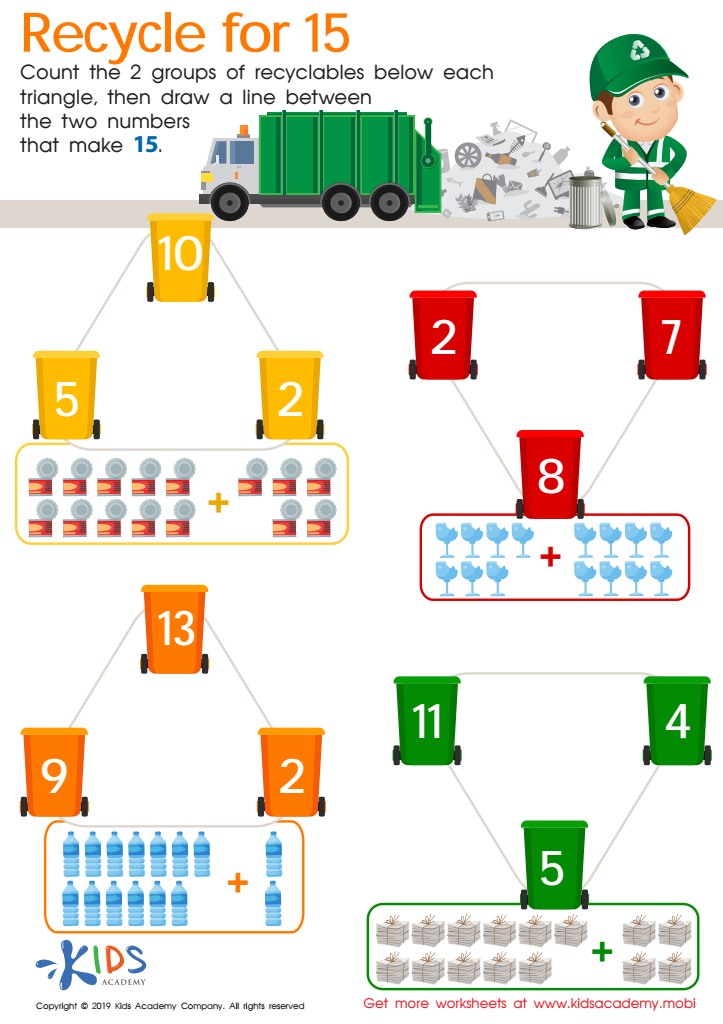
Recycle for 15 Worksheet
 Assign to My Students
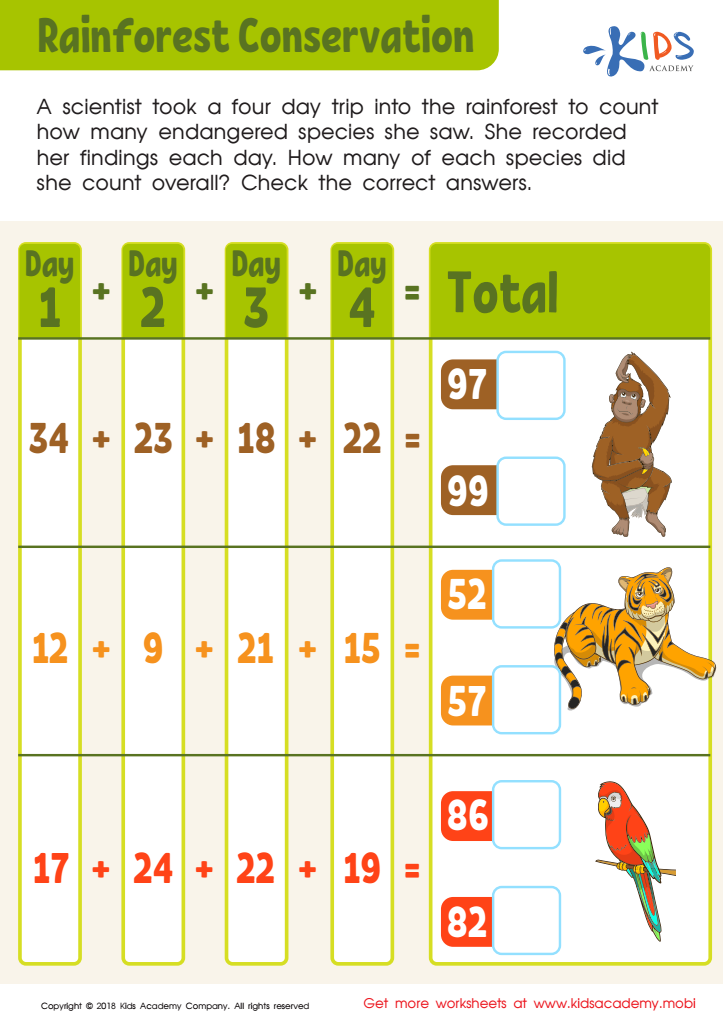
Rainforest Conservation Worksheet
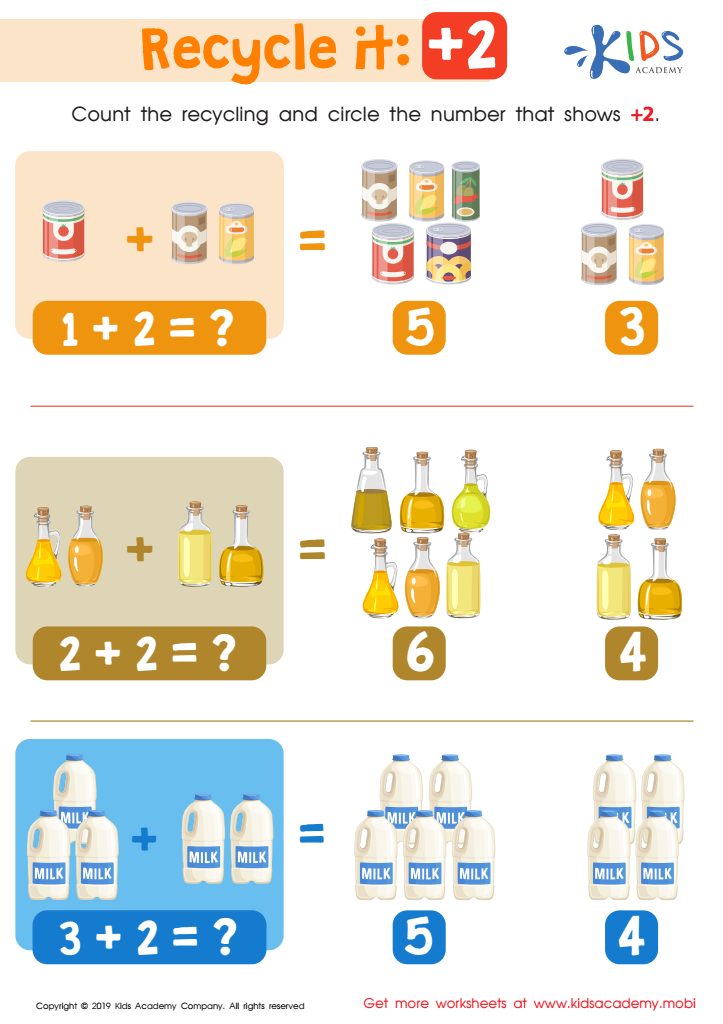
Recycle It: +2 Worksheet








Teaching environmental awareness along with addition and subtraction to children ages 3 to 7 is crucial for their holistic development. Early education shapes lifelong attitudes and skills, so integrating environmental concepts with basic math helps foster a sense of responsibility and critical thinking from a young age. This dual focus not only makes learning more relevant and exciting but also helps children understand the practical application of math in solving real-world problems.
When parents and teachers emphasize environmental awareness, children develop an appreciation for nature and learn the importance of sustainable practices. This early exposure can lead to lifelong habits that are beneficial for the planet. Combining these lessons with math skills, such as counting trees, measuring water usage, or tracking recycling efforts, makes abstract concepts more tangible and relatable.
Moreover, this integrative approach can improve engagement and retention. Math becomes a tool for exploration rather than a rote task, and environmental awareness gains a practical dimension. This not only enhances cognitive skills like problem-solving and comprehension but also nurtures social and emotional development by teaching empathy towards the Earth and other living beings.
In summary, combining environmental awareness with basic arithmetic skills equips young children with essential tools for both academic success and responsible citizenship.








