Handwriting improvement Addition & Subtraction Worksheets for Ages 3-7
4 filtered results
-
From - To
Enhance your child's math and writing skills with our Handwriting Improvement Addition & Subtraction Worksheets designed for ages 3-7. These engaging worksheets are perfect for young learners, combining essential math concepts with handwriting practice. Kids will enjoy tracing numbers, solving simple addition and subtraction problems, and developing their fine motor skills. Each worksheet is thoughtfully crafted to make learning fun and effective, helping children build confidence in both their mathematical abilities and handwriting. Download these printable worksheets to support your child's educational journey while reinforcing essential skills in a playful and interactive way! Start fostering a love for learning today!
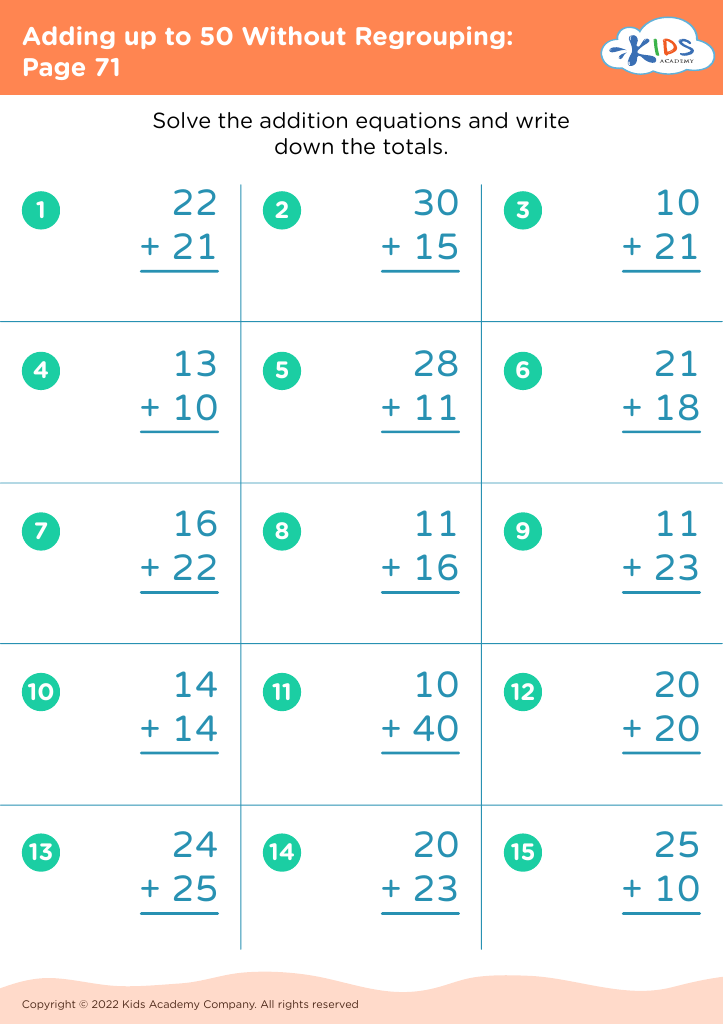
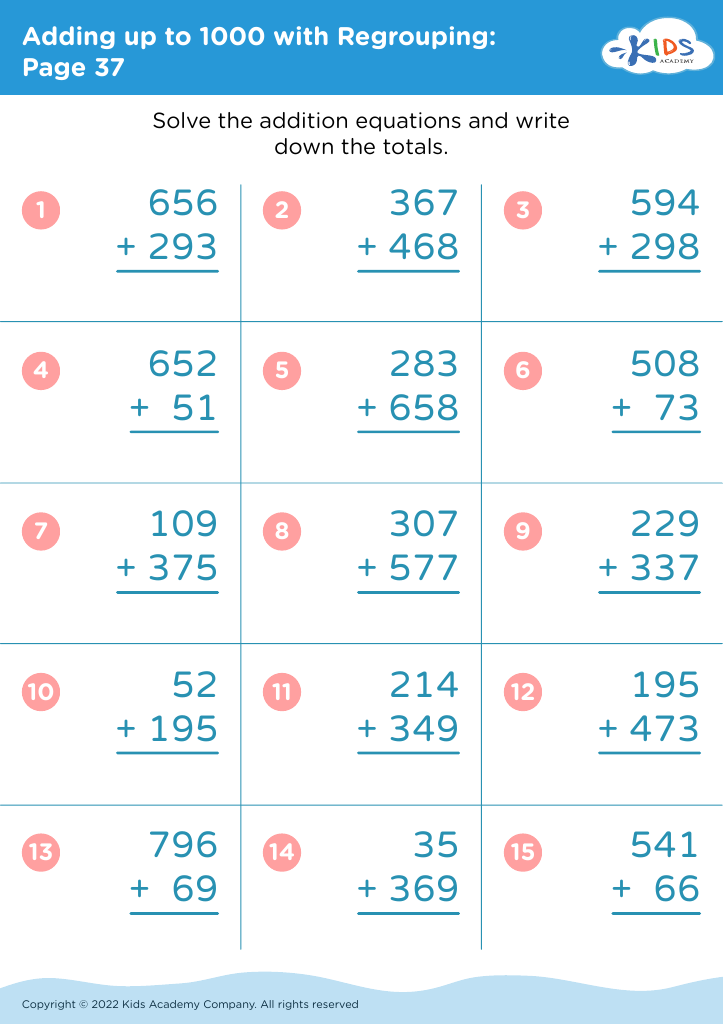
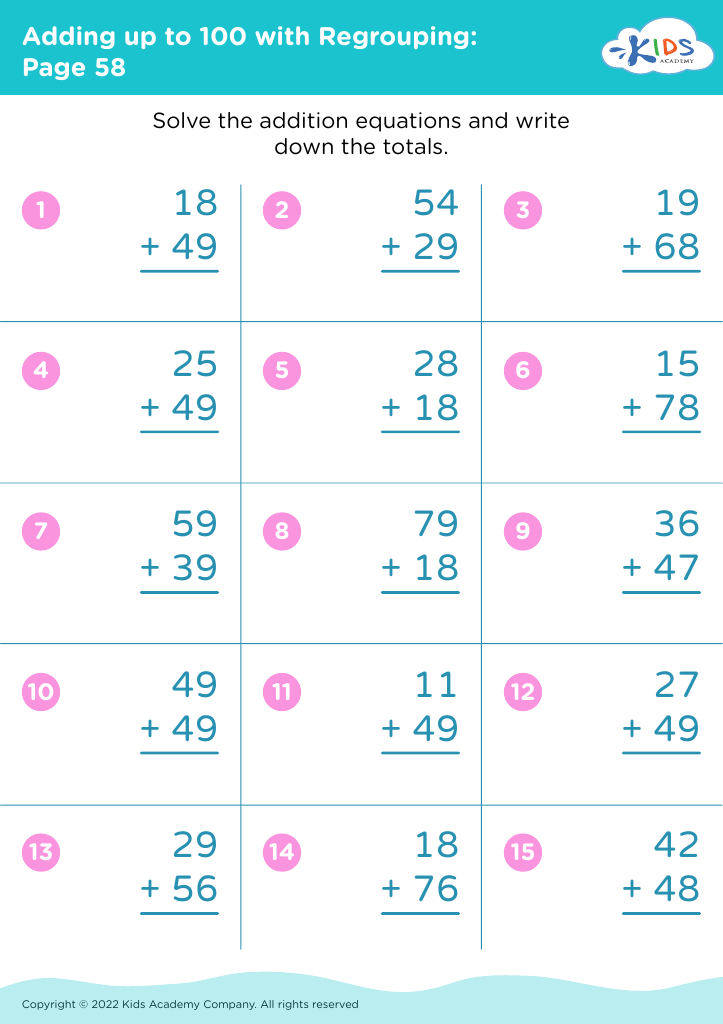
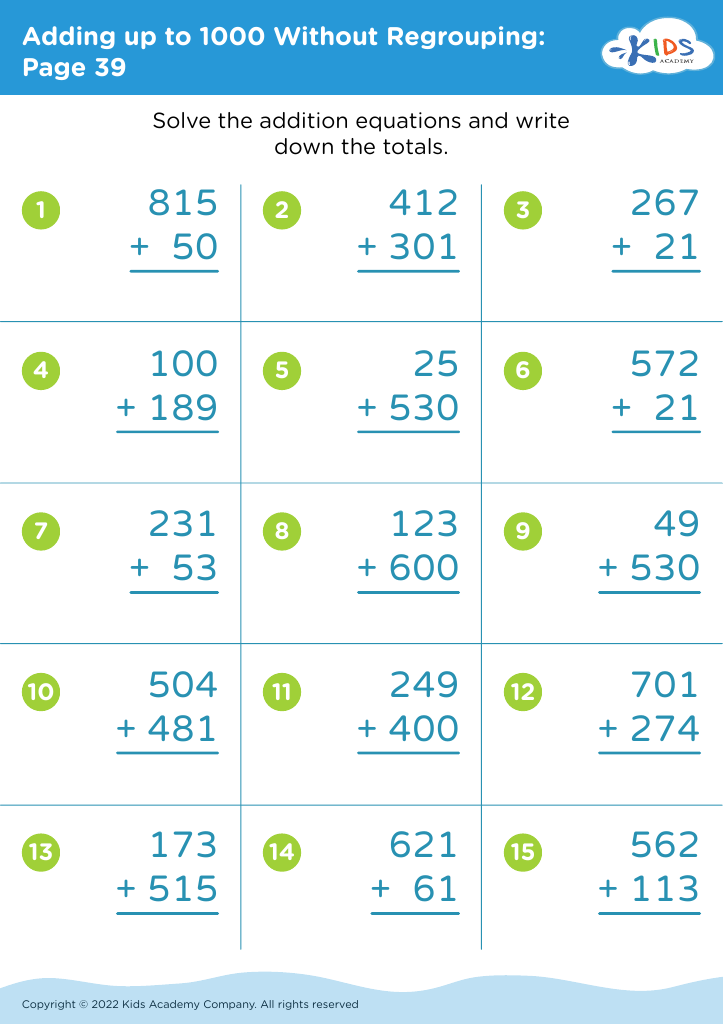








Parents and teachers play a crucial role in the early developmental stages of children, particularly in foundational skills such as handwriting and basic mathematics like addition and subtraction. For children aged 3-7, improving handwriting enhances fine motor skills, hand-eye coordination, and cognitive abilities. These skills are critical not only for writing but also for numerous daily activities and subsequent learning tasks.
Additionally, the introduction of addition and subtraction during these formative years sets the stage for future math proficiency. By integrating handwriting improvement with math practice, children can develop confidence in their abilities to communicate and solve problems. A well-formed numeral or letter makes it easier for them to express their thoughts and understand mathematical concepts more clearly.
Moreover, children who struggle with handwriting may also find it challenging to focus on math, as excessive effort goes into forming letters or numbers rather than comprehending the underlying concepts. Fostering an environment that prioritizes both handwriting and math skills engages students, making learning enjoyable and effective. Supporting these areas not only prepares them for academic success but also helps build foundational skills that will aid them in all future endeavors in school and beyond.








