Identifying shapes Addition & Subtraction Worksheets for Ages 3-7 - Page 2
25 filtered results
-
From - To
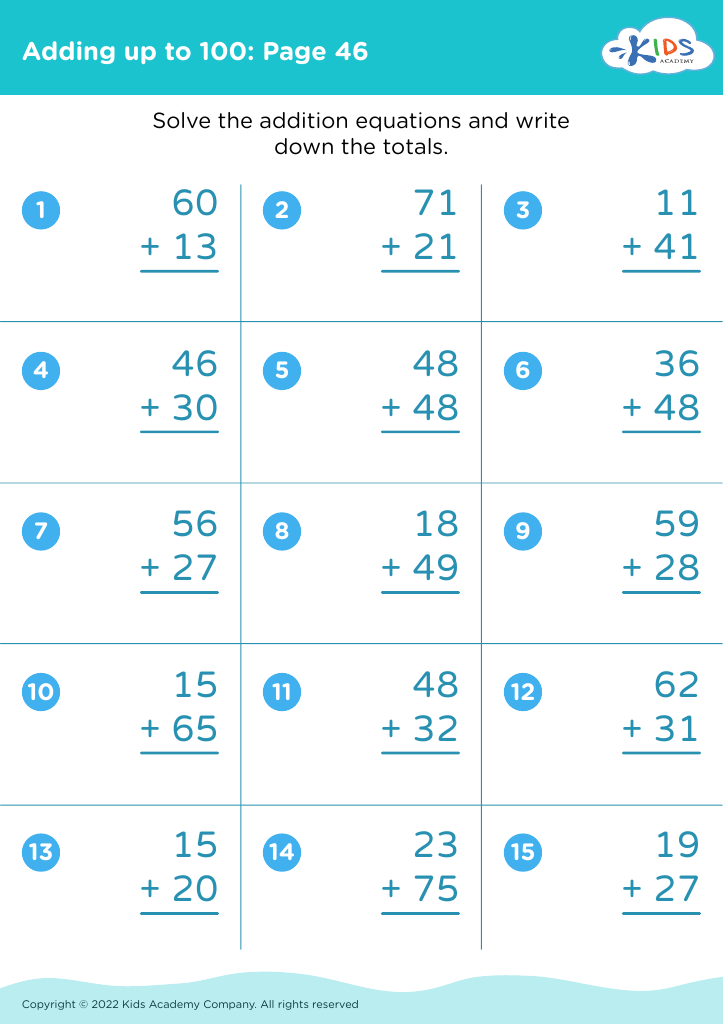








Identifying shapes and mastering basic addition and subtraction are fundamental skills for young children, particularly those aged 3-7. These early math concepts play a crucial role in the development of cognitive and motor skills and form the groundwork for more advanced mathematics and critical thinking abilities.
Identifying shapes helps children recognize and categorize the world around them, boosting their spatial awareness. This, in turn, enhances their abilities to understand geometry, organize visual information, and develop problem-solving strategies. Young learners who can distinguish between different shapes are better equipped to understand the structure of objects, patterns, and their place in their environment.
Basic addition and subtraction are equally vital as they introduce children to the concept of numbers and mathematical operations. These skills teach the principles of combining and separating quantities, which are essential for solving everyday problems and making sense of numerical information.”Creating“ such a foundation at an early age promotes confidence in math and a positive attitude toward learning. Additionally, practicing these skills improves memory and cognitive development, paving the way for academic success in various subjects, not just math.
In summary, investing time and effort in helping young children master shapes, addition, and subtraction pays off significantly by fostering essential cognitive skills, encouraging logical thinking, and building a strong base for future academic achievement.








