Mathematical problem-solving Addition & Subtraction Worksheets for Ages 3-7
4 filtered results
-
From - To
Discover our engaging "Mathematical Problem-Solving Addition & Subtraction Worksheets" designed specifically for children ages 3-7! These carefully curated worksheets aim to enhance early mathematical skills through fun and interactive problem-solving activities. Your child will explore addition and subtraction concepts in a variety of playful scenarios, helping to build their confidence and understanding of numbers. Perfect for home or classroom use, our resources support young learners in developing critical thinking, spatial awareness, and arithmetic proficiency. With vibrant illustrations and age-appropriate challenges, these worksheets make learning math a memorable experience. Start your child’s mathematical journey today!
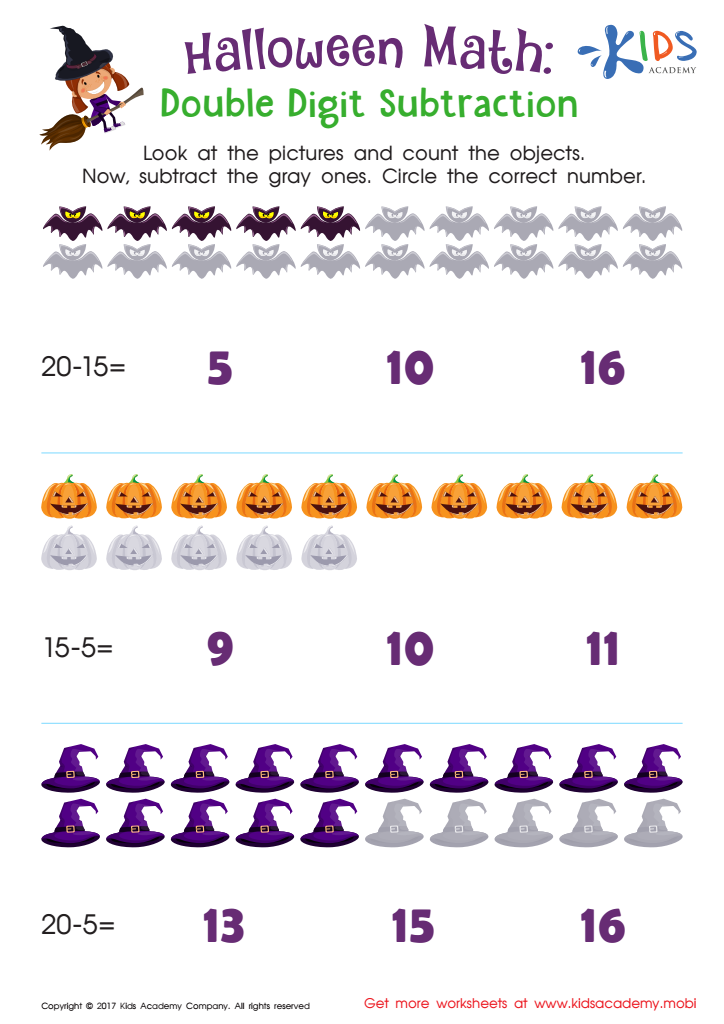
Halloween Math Subtraction Worksheet
 Assign to My Students
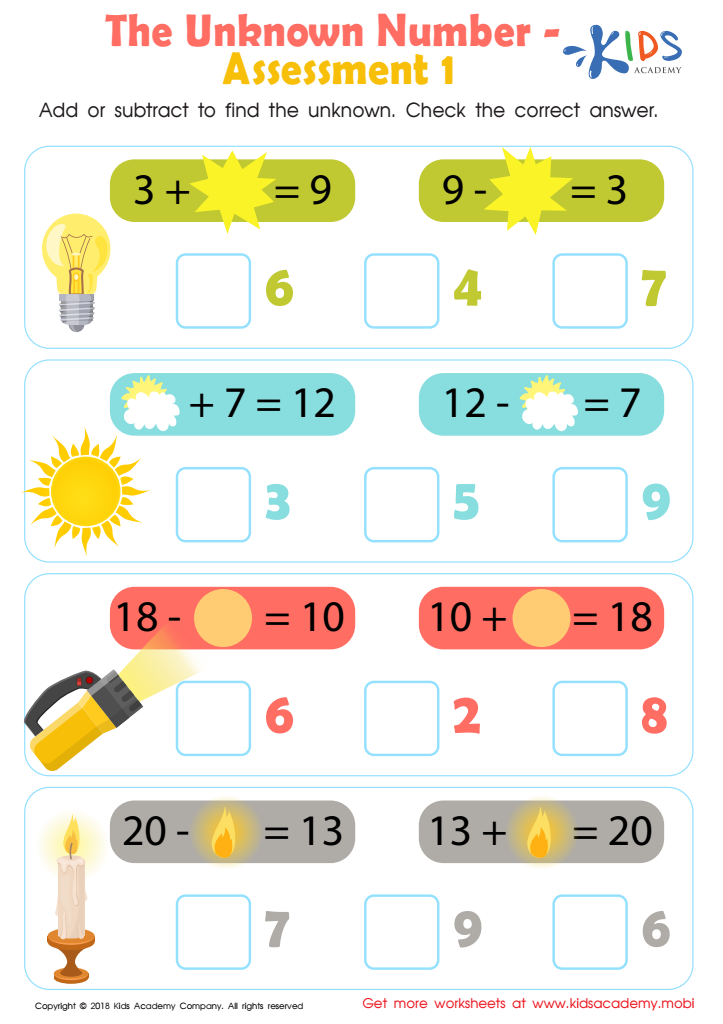
The Unknown Number: Assessment 1 Worksheet
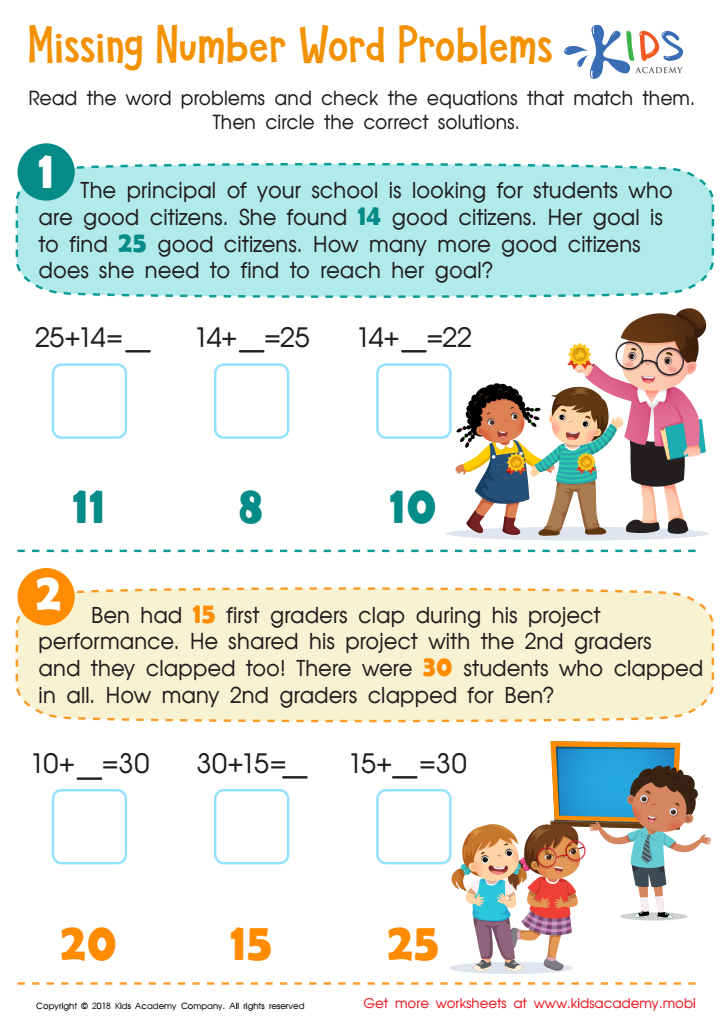
Missing Number Word Problems Worksheet
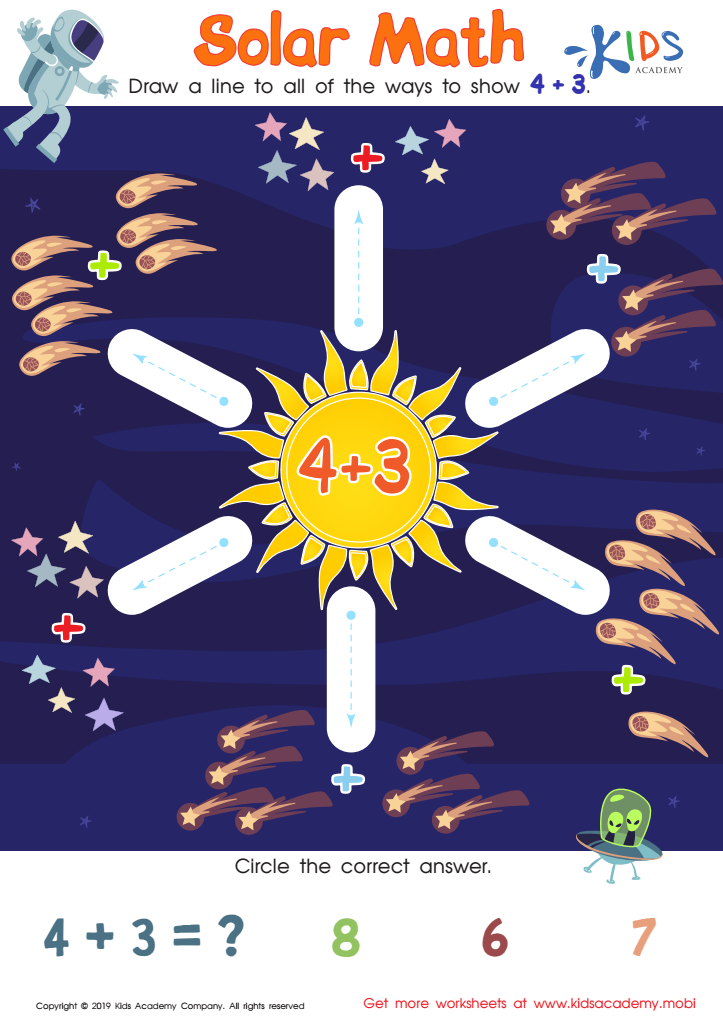
Solar Math Worksheet








Mathematical problem-solving, particularly addition and subtraction, is a foundational skill crucial for children aged 3 to 7. During these formative years, children's cognitive, social, and emotional development is at its peak. Engaging them in positive mathematical experiences fosters critical thinking, resilience, and a love for learning.
First, addition and subtraction help children develop their understanding of numbers and numerical relationships. These basic operations form the building blocks for more complex math concepts they will encounter in later grades. Parents and teachers who engage children in these skills can enhance their cognitive development and improve problem-solving abilities.
Moreover, working on addition and subtraction in playful, real-world contexts can promote cooperative learning and social skills. Activities like counting snacks or sharing toys illustrate how math applies to daily life, helping children understand its relevance and importance.
Additionally, early proficiency in math contributes to their overall academic success. Children who struggle with these basic concepts may experience difficulties in school, leading to a negative self-image regarding their math abilities.
By prioritizing these skills through engaging and enjoyable methods, parents and teachers can foster not only mathematical competence but also build a strong foundation for lifelong learning.








