
Pattern identification Addition & Subtraction Worksheets for Ages 3-7
4 filtered results
Difficulty Level
Grade
Age
-
From - To
Subject
Activity
Standards
Explore our engaging "Pattern Identification Addition & Subtraction Worksheets for Ages 3-7" designed to enhance early math skills. These educational worksheets offer fun and interactive activities that combine pattern identification with fundamental addition and subtraction concepts. Ideal for young learners, they help in building critical thinking, problem-solving abilities, and a solid math foundation in an enjoyable way. Perfect for parents and teachers looking to boost their children's or students' learning progress, these printables make math practice exciting and effective. Encourage your little ones to discover the joy of numbers and patterns today!
Favorites
With answer key
Interactive
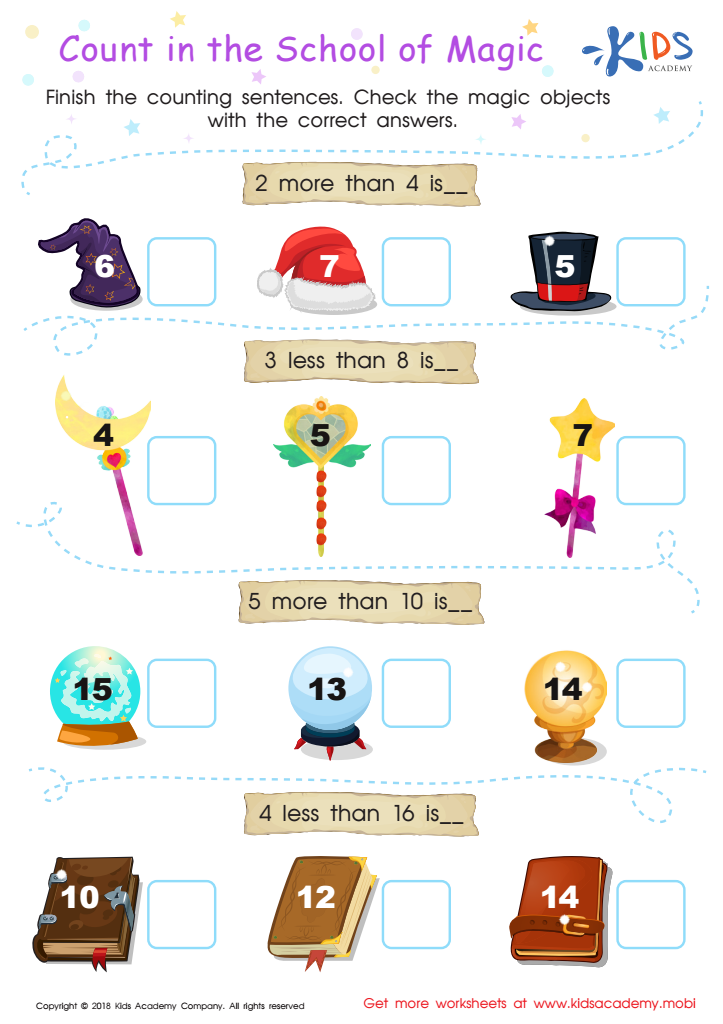
Count in the School of Magic Worksheet
Your math learners can explore the School of Magic with this worksheet. They'll read equations with addition and subtraction numbers under 20, count back and forth to find the answer, then complete the counting sentences. Fun pictures and easy accuracy make it an enjoyable and successful learning experience.
 Assign to My Students
Count in the School of Magic Worksheet
Worksheet
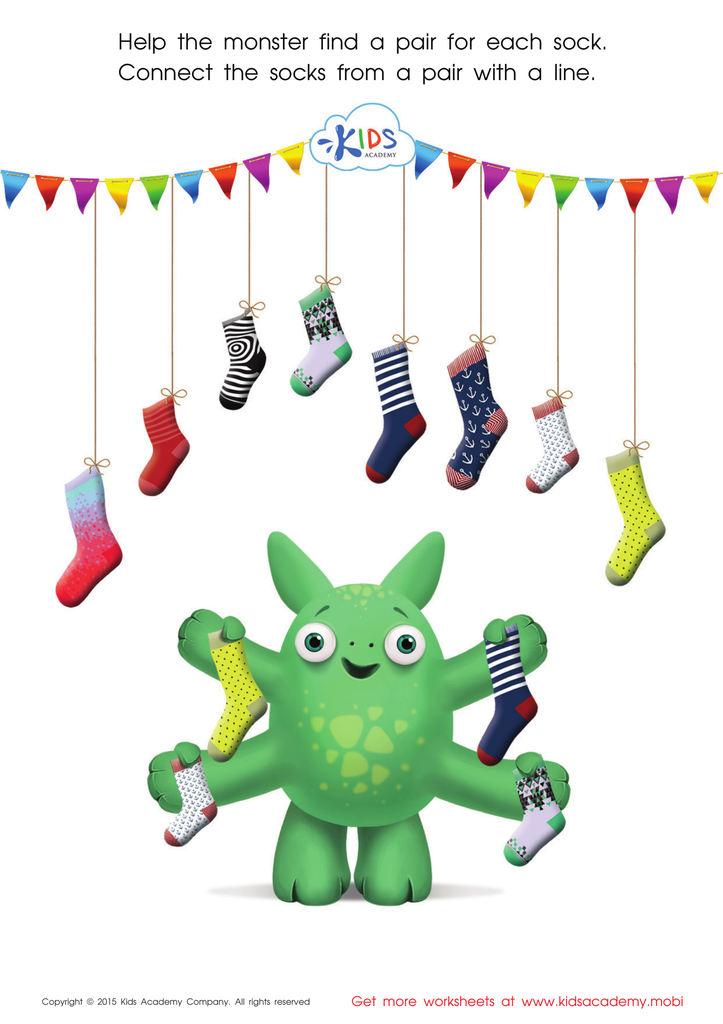
Math Matching Pairs Game: Monsterв's Socks Worksheet
Let your child learn, concentrate and practice sorting skills with this fun kindergarten worksheet. Matching polka dots, anchors, geo shapes and stripes on Monster's socks will help improve fine motor skills. Download and print this free worksheet and several others on different topics.
Math Matching Pairs Game: Monsterв's Socks Worksheet
Worksheet
Join Kids Academy for Free
Who is primarily going to use this learning content?








Pattern identification and early mathematical skills such as addition and subtraction are crucial in the developmental stages for children aged 3-7 for multiple reasons. For one, recognizing patterns helps improve cognitive skills like logical reasoning, which lays a foundation for more advanced problem-solving abilities. Patterns enhance observational skills, enabling children to make predictions, understand relationships, and develop an appreciation for order and consistency in their environment.
Addition and subtraction introduce basic arithmetic concepts that are fundamental building blocks for future math learning. These skills promote numerical literacy and help children become more comfortable with numbers, easing their transition to formal schooling. Practicing these operations can improve attention span, memory, and processing speed, key components for success in a variety of subjects.
Furthermore, early mastery of these concepts can positively impact their confidence and academic self-esteem. When children successfully identify patterns and solve basic math problems, they experience a sense of achievement and motivation to tackle more complex challenges.
Therefore, parents and teachers should emphasize pattern identification and basic arithmetic during these formative years to foster an engaging and rigorous educational experience, ensuring their child's developmental trajectory is aligned with academic success and emotional well-being.








