Recognizing equivalent fractions Addition & Subtraction Worksheets for Ages 3-7
5 filtered results
-
From - To
Welcome to our "Recognizing Equivalent Fractions Addition & Subtraction Worksheets" tailored for children ages 3-7! These engaging worksheets are designed to help young learners understand the concept of equivalent fractions while developing their addition and subtraction skills. Each worksheet provides colorful, interactive activities that make learning fun and memorable. With a variety of exercises, children will visualize fractions, practice problem-solving, and build essential math skills. Ideal for home or classroom use, our worksheets encourage critical thinking and boost confidence in young mathematicians. Explore our resources today and watch your child thrive in their journey to mastering fractions!
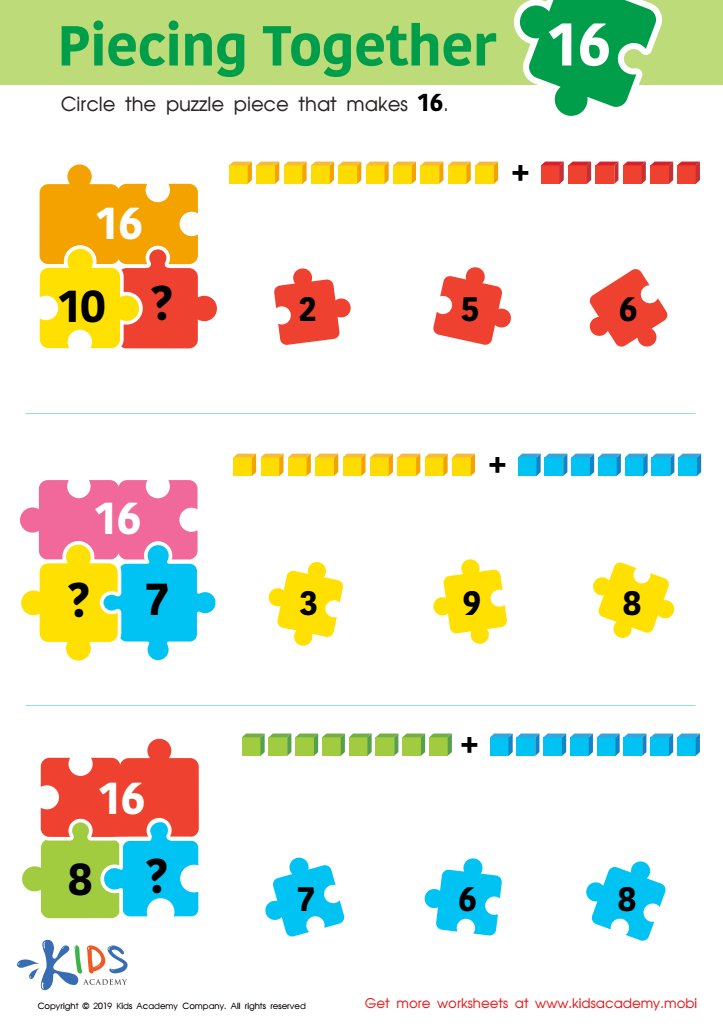
Piecing Together 16 Worksheet
 Assign to My Students
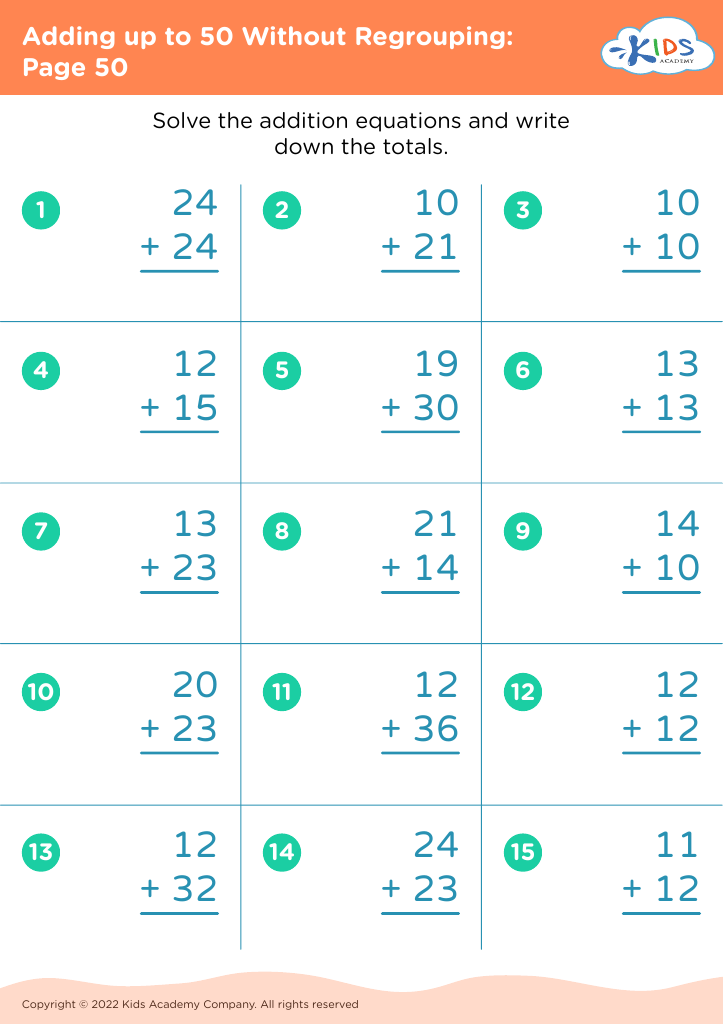








Recognizing equivalent fractions is a foundational mathematical concept that can significantly impact a child's learning in the early years. For ages 3-7, this understanding is essential as it lays the groundwork for advanced math skills later in life. Parents and teachers should prioritize teaching equivalent fractions because they help develop critical thinking and problem-solving abilities.
When children learn to recognize that different fractions can represent the same value, they hone their ability to compare, analyze, and reason through various mathematical scenarios. This skill becomes particularly important when it comes to addition and subtraction of fractions, as it enables children to find common denominators more easily and comprehend how to combine or separate quantities accurately.
Moreover, understanding equivalent fractions fosters a deeper grasp of fractions as part of daily life, such as cooking, sharing, or measuring. This relevance to real-world contexts makes math more relatable and enjoyable for young learners. By encouraging this knowledge in early education, parents and teachers can promote greater confidence in math, reduce anxiety around the subject, and support the development of a lifelong love for learning in children. Establishing a strong foundation in this area ultimately shapes their future academic success.








