Filters

33 filtered results

Clear all filters
Favorites
With answer key
Interactive

33 filtered results

Difficulty Level

Grade


Check out this FREE Trial Lesson on Addition & Subtraction for age 3-7!

A

Favorites
With answer key
Interactive
  • 3-7
  • Shape Recognition
  • Addition & Subtraction
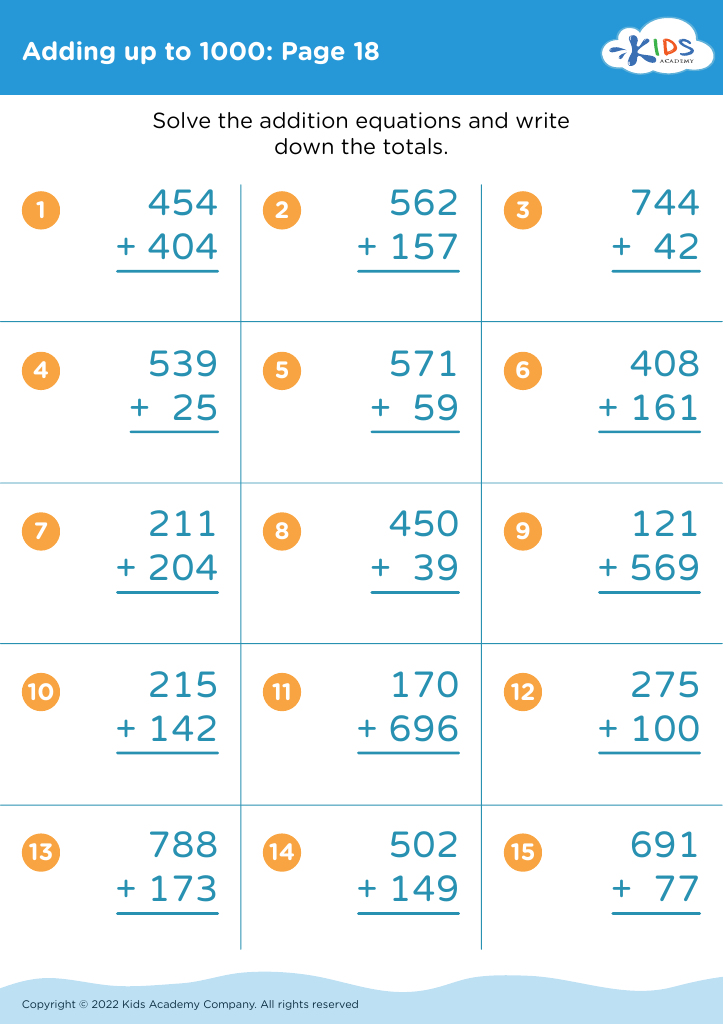
Adding up to 1000: Page 18

Adding up to 1000: Page 18

Adding up to 1000: Page 18
Worksheet
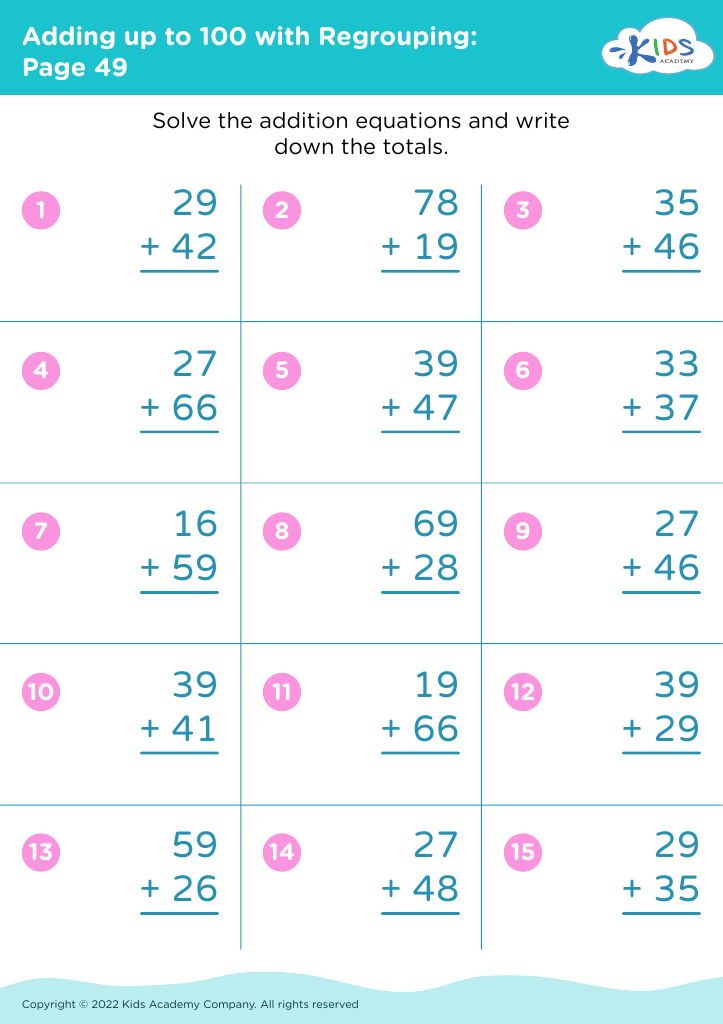
Adding up to 100 with Regrouping: Page 49
Worksheet
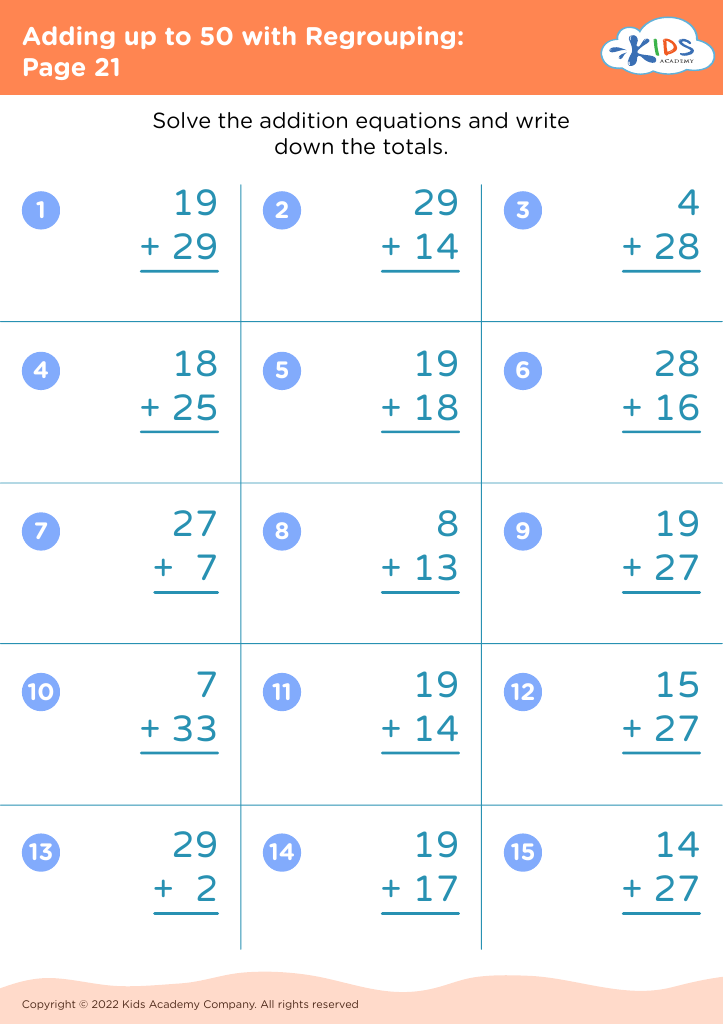
Adding up to 50 with Regrouping: Page 21
Worksheet
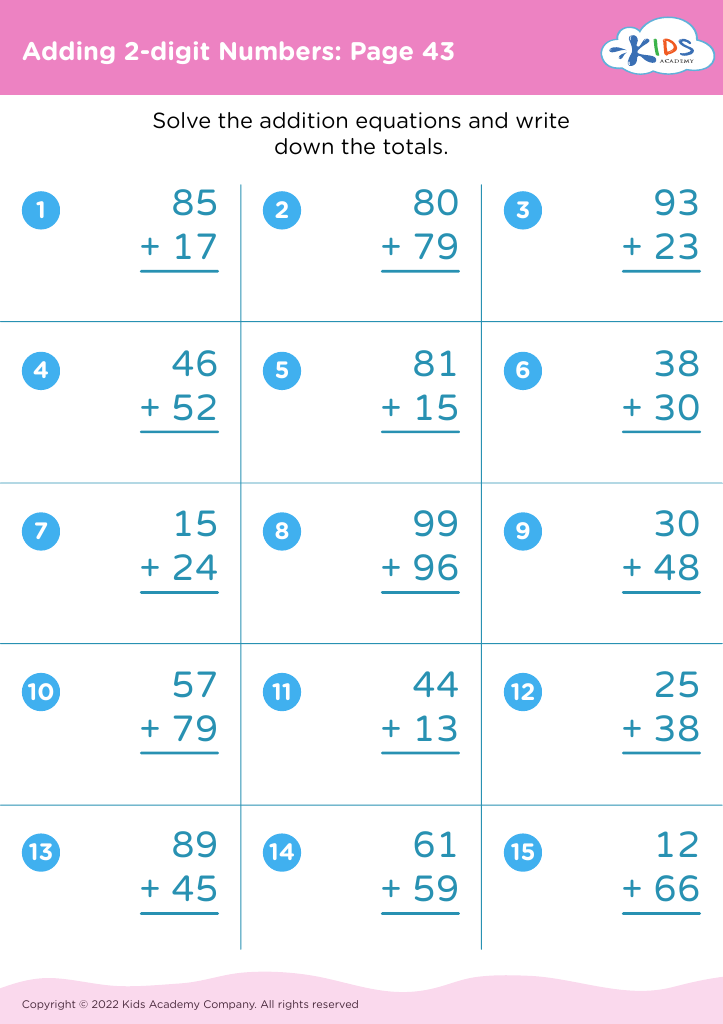
Adding 2-digit Numbers: Page 43

Adding 2-digit Numbers: Page 43

Adding 2-digit Numbers: Page 43
Worksheet
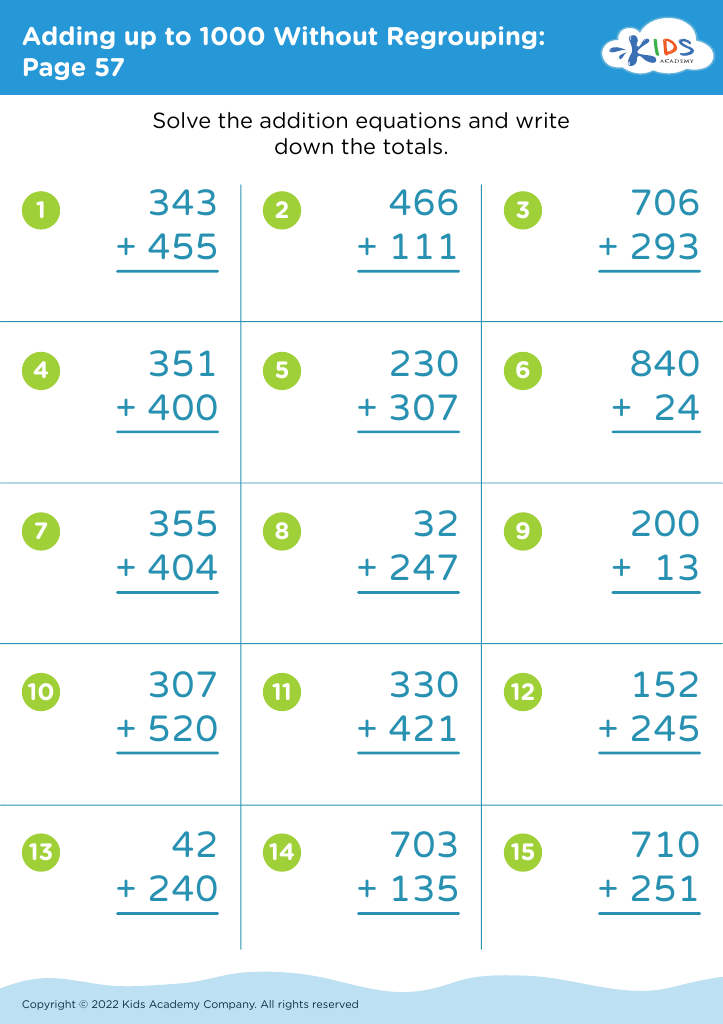
Adding up to 1000 Without Regrouping: Page 57
Worksheet
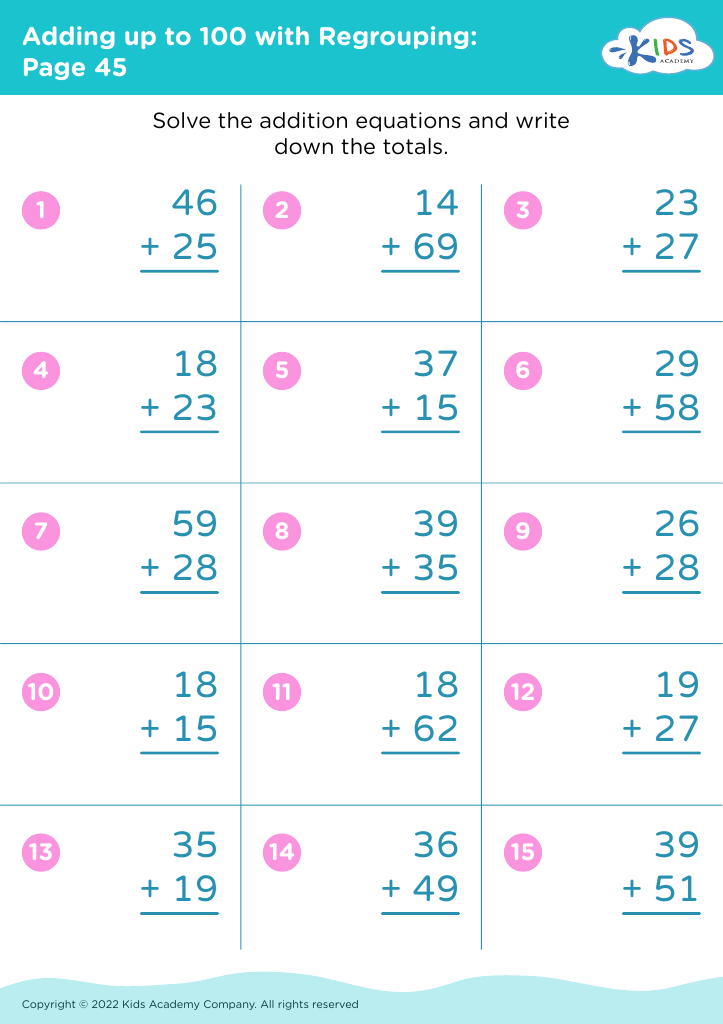
Adding up to 100 with Regrouping: Page 45
Worksheet
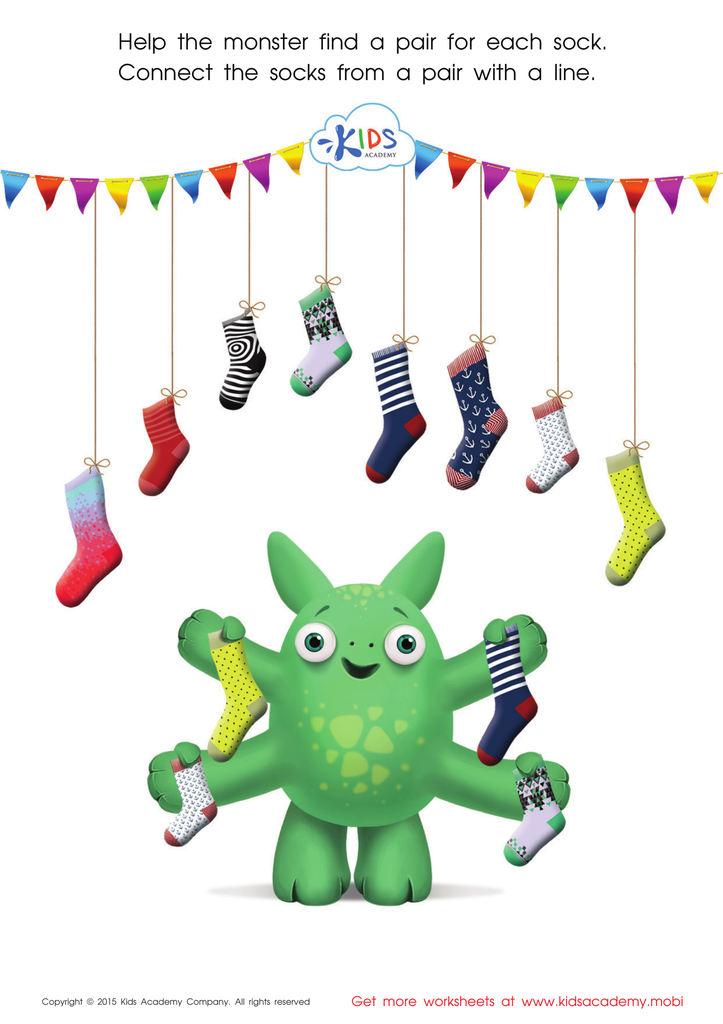
Math Matching Pairs Game: Monster’s Socks

Math Matching Pairs Game: Monsterв's Socks Worksheet
Let your child learn, concentrate and practice sorting skills with this fun kindergarten worksheet. Matching polka dots, anchors, geo shapes and stripes on Monster's socks will help improve fine motor skills. Download and print this free worksheet and several others on different topics.
Math Matching Pairs Game: Monsterв's Socks Worksheet
Worksheet
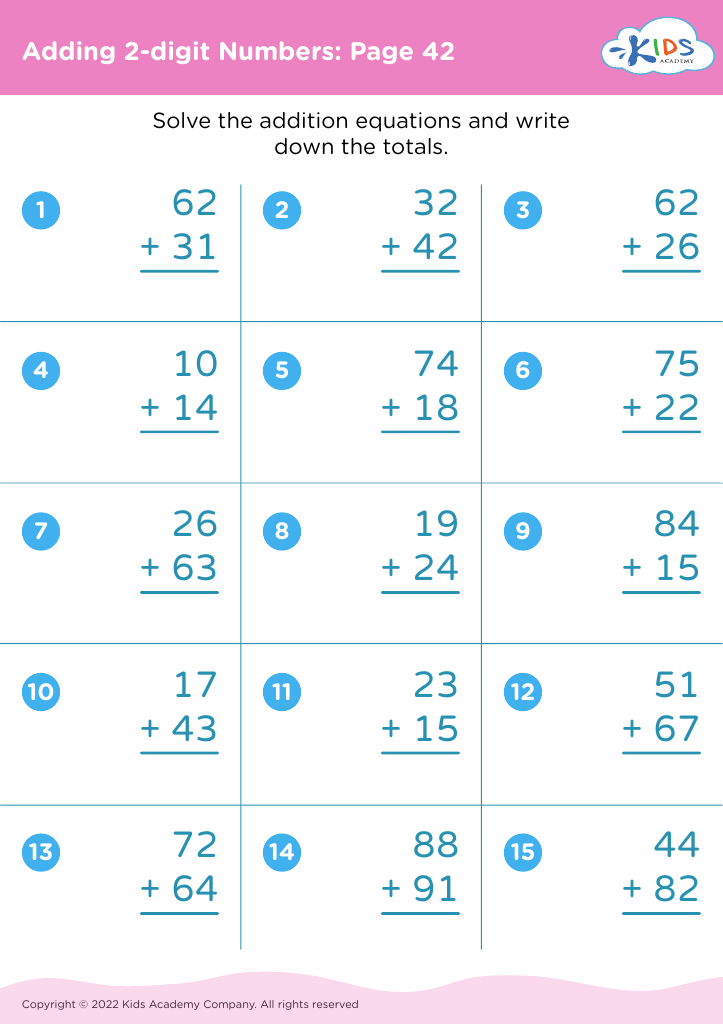
Adding 2-digit Numbers: Page 42

Adding 2-digit Numbers: Page 42

Adding 2-digit Numbers: Page 42
Worksheet
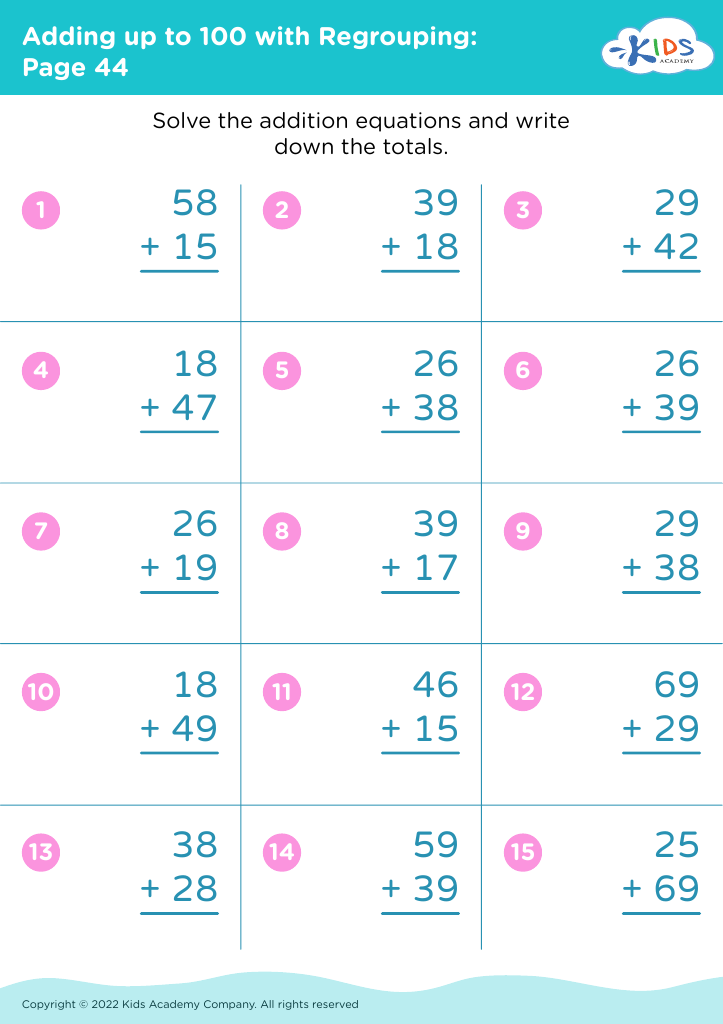
Adding up to 100 with Regrouping: Page 44
Worksheet


Shape recognition and basic addition and subtraction are foundational skills for children ages 3-7, crucial for their cognitive development and future learning. Engaging young learners in shape recognition helps enhance their visual-spatial skills, critical for problem-solving and understanding the world around them. Recognizing shapes aids in developing geometry skills later in life.

Combining shape recognition with addition and subtraction introduces children to math in a fun, intuitive way. It encourages them to visualize problems, making numerical concepts more comprehensible. For example, using shapes—like circles or triangles—in addition problems fosters early mathematical reasoning as children count, compare, and combine.

Moreover, integrating these concepts into daily activities enhances children's attention spans and improves focus, making learning enjoyable and progressive. Early exposure to math and shapes builds a solid foundation, promoting confidence and enthusiasm for future academic challenges.

Parents and teachers play a crucial role in nurturing these skills by incorporating shape-related games, activities, and discussions in daily routines. This not only supports cognitive growth but also helps children develop essential life skills such as critical thinking, creativity, and teamwork. Ultimately, fostering shape recognition and basic math skills sets the stage for lifelong learning and academic success.