
Underwater animal identification Addition & Subtraction Worksheets for Ages 3-7
3 filtered results
Difficulty Level
Grade
Age
-
From - To
Subject
Activity
Standards
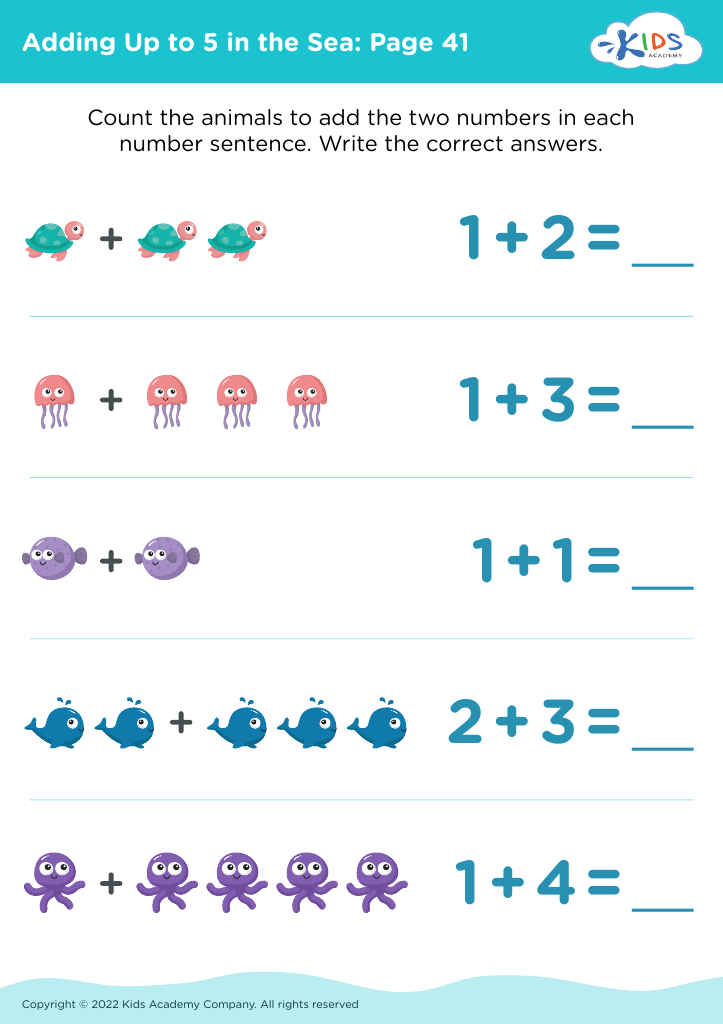
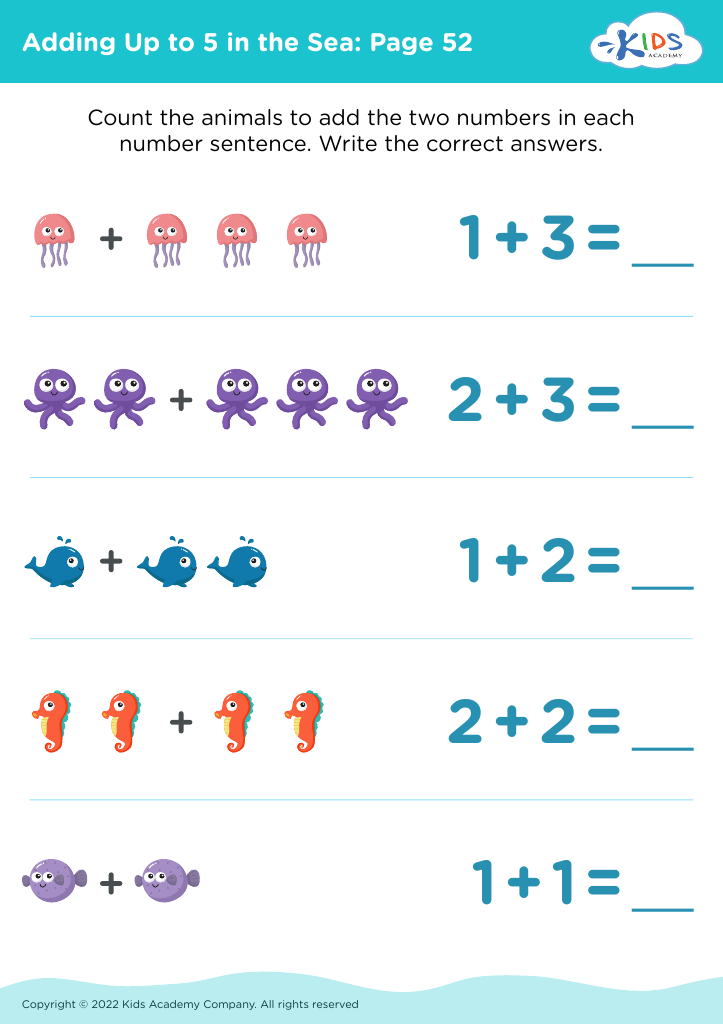
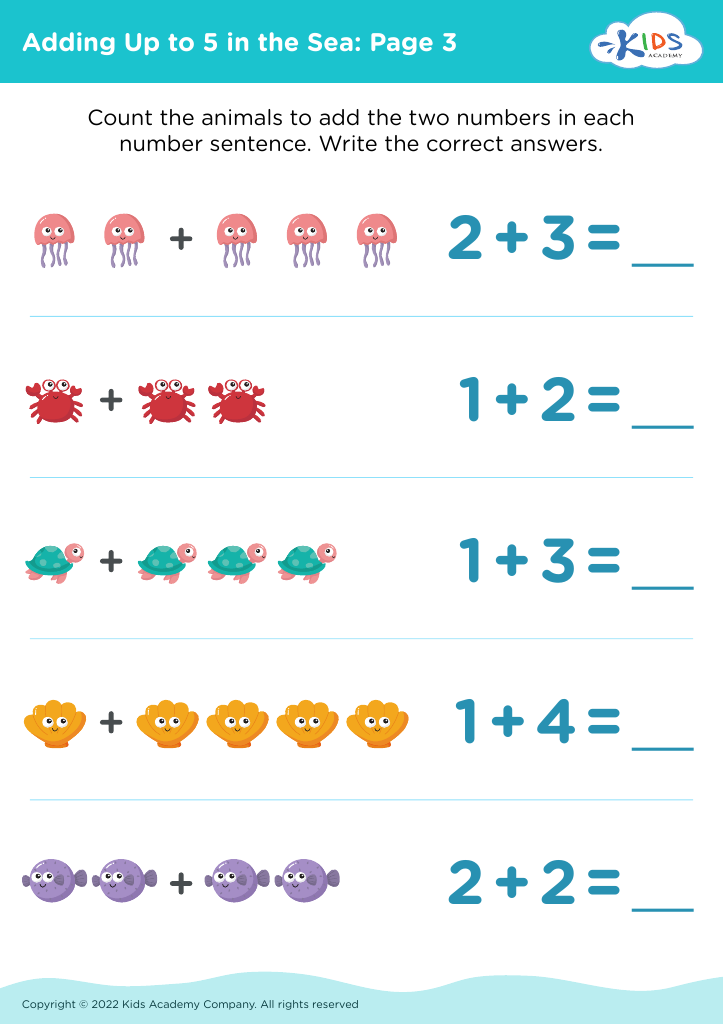
Dive into learning with our "Underwater Animal Identification Addition & Subtraction Worksheets" designed for children ages 3-7! These captivating worksheets blend math skills with marine adventure, helping young explorers practice essential math operations while discovering fascinating aquatic creatures. Each page offers vibrant illustrations and simple arithmetic problems tailored to engage little minds and make learning enjoyable. Perfect for both classroom and home use, our worksheets develop foundational math skills and curiosity about underwater life. Encourage your child to splash into a sea of numbers and ocean animals! Start an exciting educational journey today with our fun, educational printables!
Favorites
With answer key
Interactive
Join Kids Academy for Free
Who is primarily going to use this learning content?








Parents and teachers should care about Underwater Animal Identification Addition & Subtraction for ages 3-7 because it provides a captivating and educational framework designed to enhance essential early childhood skills. First, incorporating colorful and intriguing underwater animals captures children’s attention and fuels their curiosity about marine biology, fostering a love for science and nature early on.
Additionally, embedding math activities like addition and subtraction within this marine context makes learning engaging and accessible. Children are naturally curious and playful; using familiar and fascinating themes helps demystify mathematical concepts, transforming abstract numbers into relatable and understandable ideas. Engaging with these activities helps develop foundational math skills crucial for future academic success.
Furthermore, this multi-faceted approach promotes cognitive development. It stimulates critical thinking, problem-solving, and memory while engaging various modes of learning, including visual, auditory, and kinesthetic. It also aids in the development of fine motor skills through interactive, hands-on activities.
Lastly, the social and emotional aspects of learning are equally important. Identifying with adorable sea creatures not only makes learning enjoyable but also encourages a positive attitude towards education and instills self-confidence as children successfully navigate their tasks. Overall, integrating fun with fundamental learning paves the way for a well-rounded, enthusiastic approach to education.








