Visual representation comprehension Addition & Subtraction Worksheets for Ages 3-7
5 filtered results
-
From - To
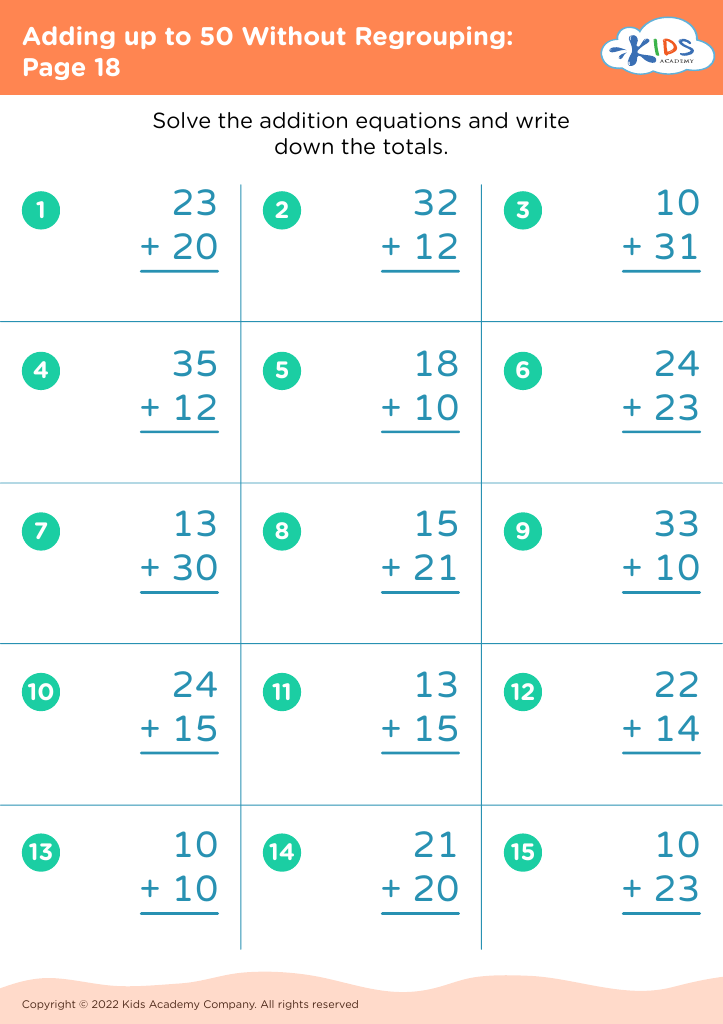
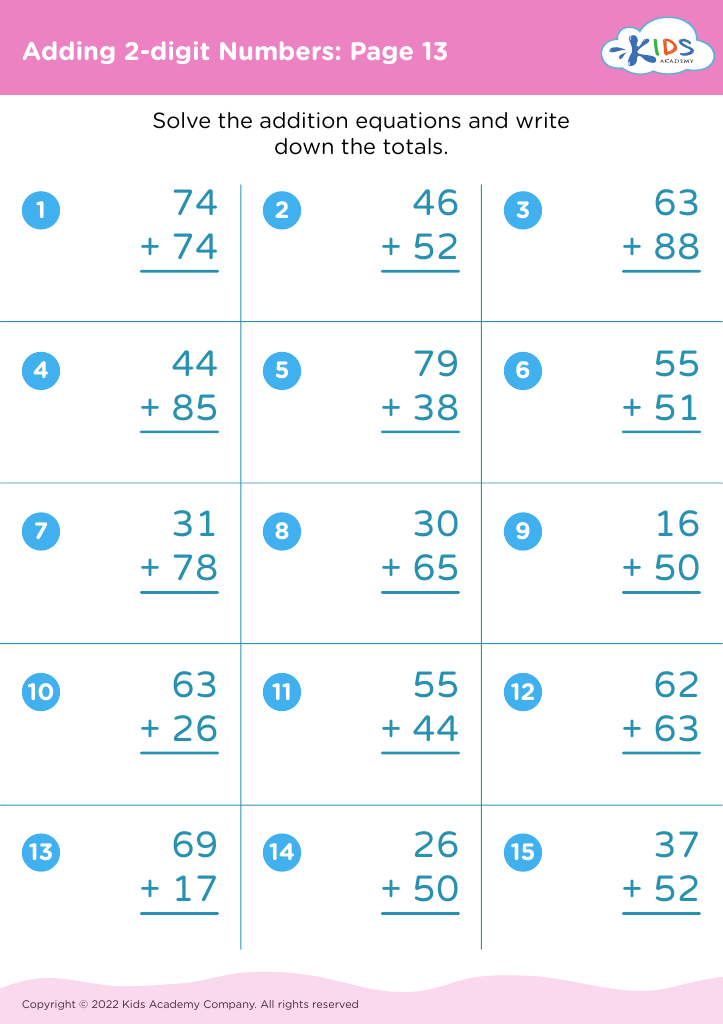
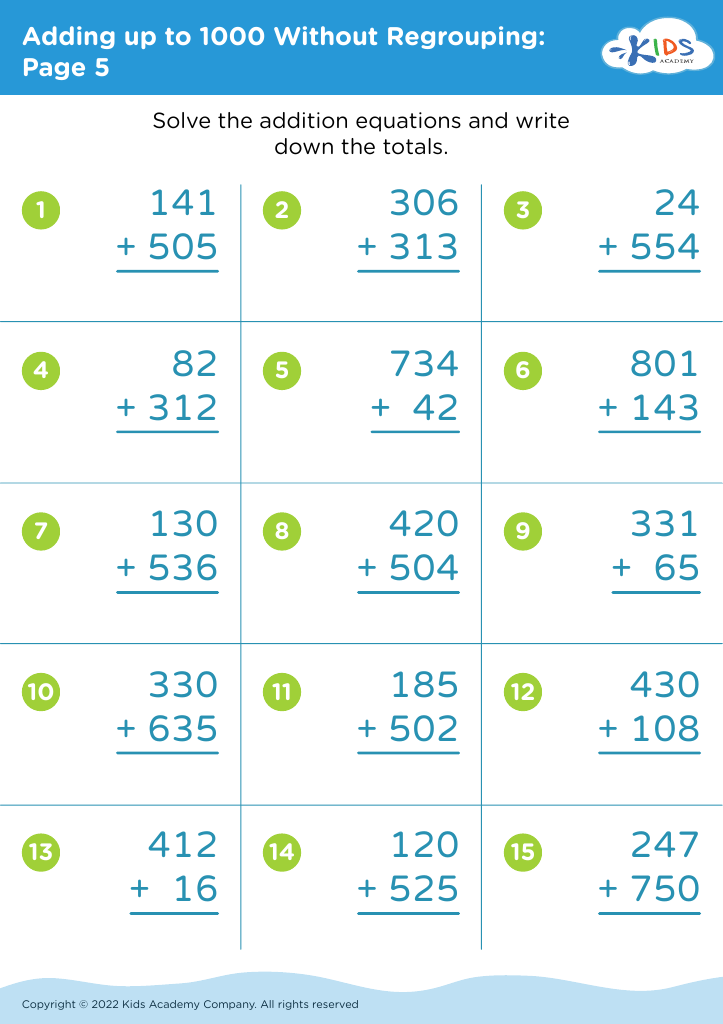
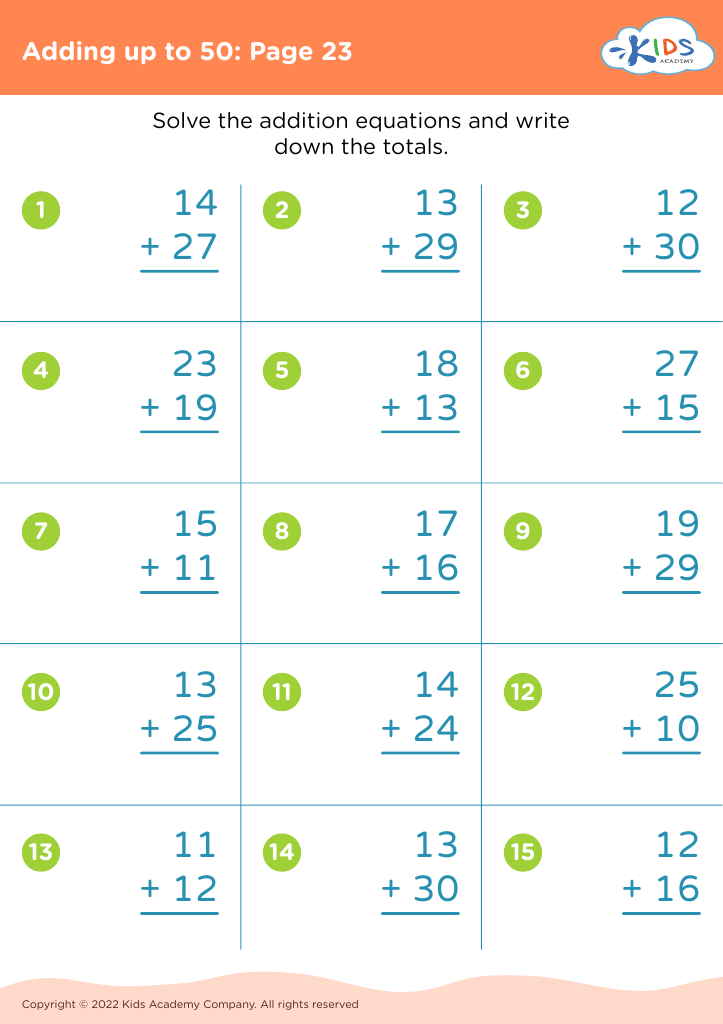
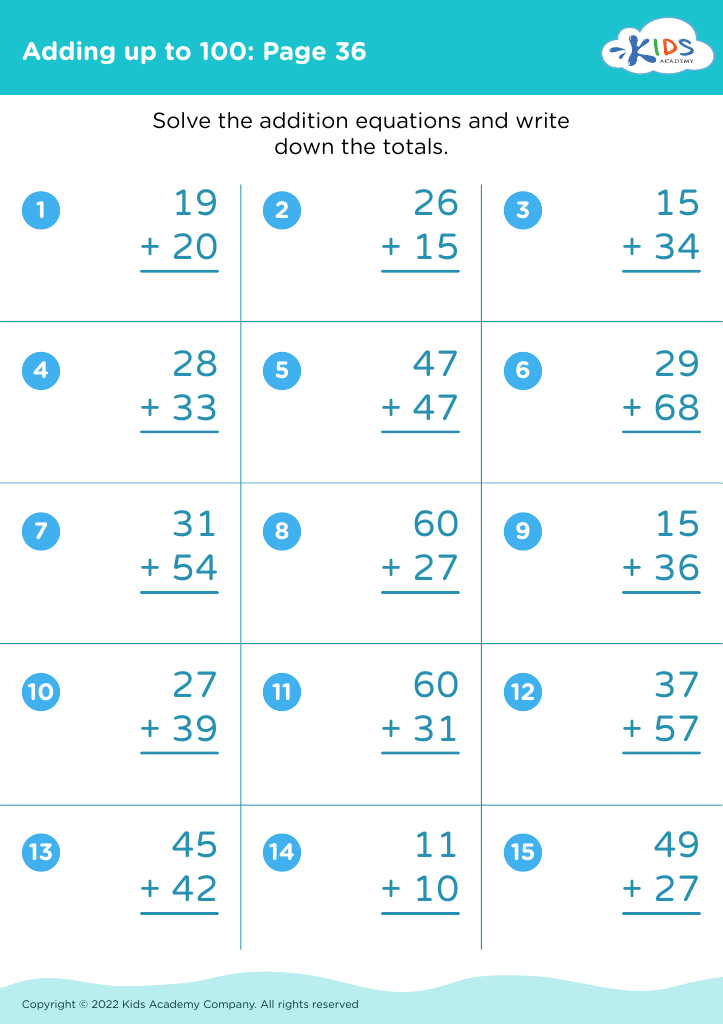
Our "Visual Representation Comprehension Addition & Subtraction Worksheets" are designed specifically for children ages 3-7, fostering foundational math skills in a fun and engaging manner. These worksheets integrate colorful visuals and intuitive graphics to help young learners grasp essential addition and subtraction concepts effortlessly. Each exercise promotes critical thinking and problem-solving abilities using interactive pictures and scenarios. Catering to various learning styles, these printables ensure that every child can achieve math fluency while enjoying the process. Equip your child with the necessary math skills and pave the way for academic success by exploring our expertly crafted worksheets today!








Parents and teachers should prioritize fostering visual representation comprehension in addition and subtraction for children aged 3-7 because it forms the bedrock of mathematical understanding, which is pivotal in early childhood education. Visual tools like counting blocks, bead strings, or number lines can make abstract concepts tangible. When young children can see the quantities they’re working with, it significantly enhances their ability to grasp the operations of adding and subtracting.
For example, visual aids help children move beyond rote memorization of arithmetic facts; they begin to understand the 'why' behind the math. This foundational comprehension promotes critical thinking and problem-solving skills. A child who understands that adding means combining sets of objects and subtracting involves removing some can navigate more complex mathematical problems later with confidence.
Equipping kids with these skills early on also fosters a positive attitude toward math, reducing anxiety and building self-confidence. Moreover, visual learning caters to diverse learning styles and can make math more inclusive, helping children with different learning needs catch up or excel. Invested teaching in this crucial stage can lead to long-term academic success and nurtures a lifelong appreciation for learning and numeracy.








