Visualization skills Addition & Subtraction Worksheets for Ages 3-7
4 filtered results
-
From - To
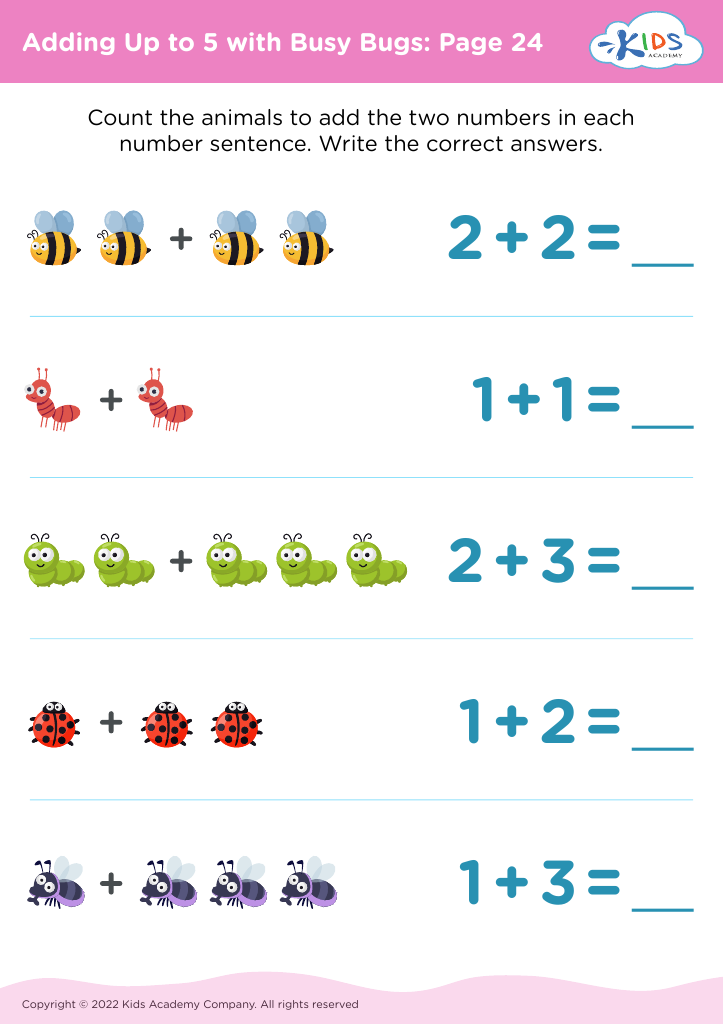
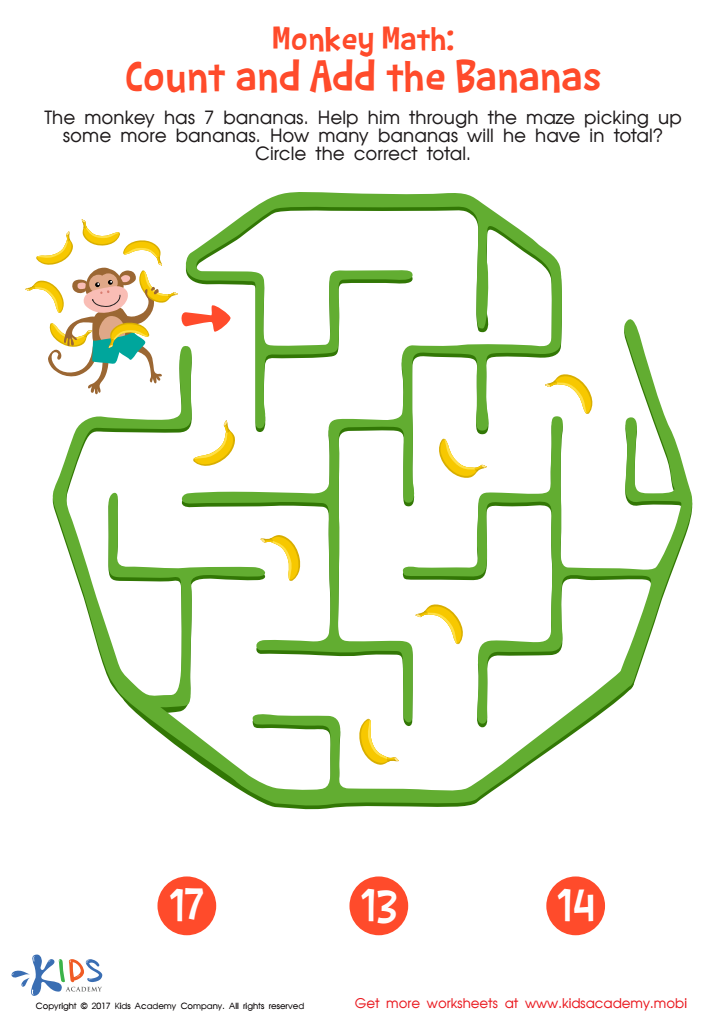
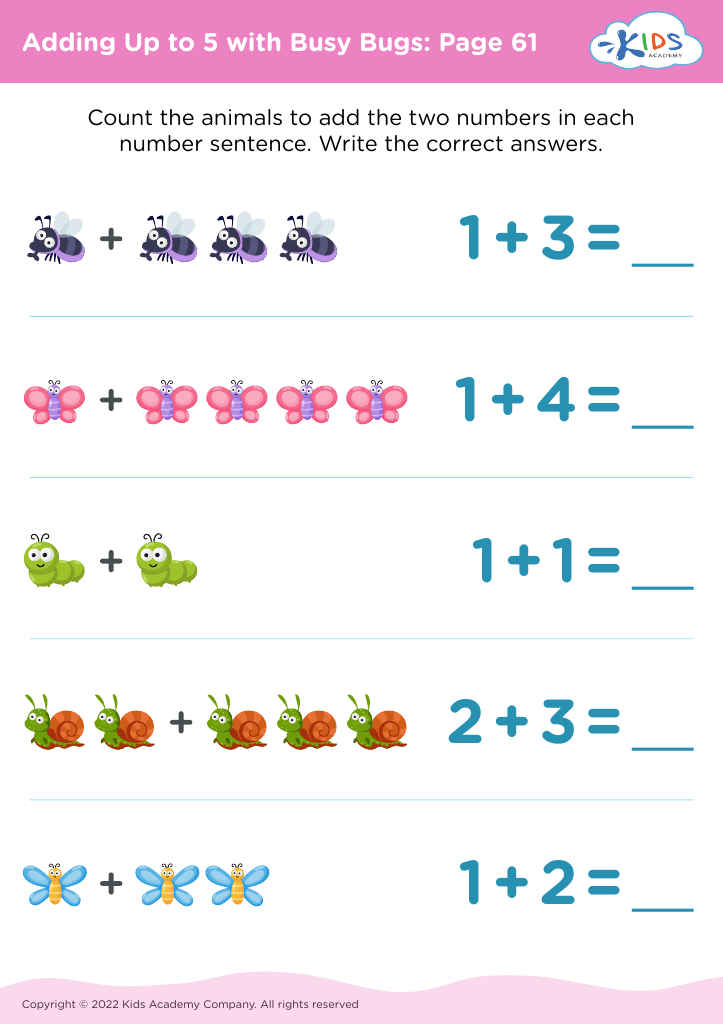
Enhance your child's math abilities with our "Visualization Skills Addition & Subtraction Worksheets" designed for ages 3-7! These engaging and carefully crafted worksheets help young learners visually comprehend fundamental arithmetic concepts through interactive and colorful activities. By incorporating visual aids and step-by-step guidance, our worksheets support the development of crucial skills that build a strong mathematical foundation. Perfect for early learners, these resources make learning addition and subtraction fun and effective. Boost your child’s confidence and interest in math with Kid’s Academy's expertly designed visualization worksheets that promote active engagement and understanding.
 Assign to My Students
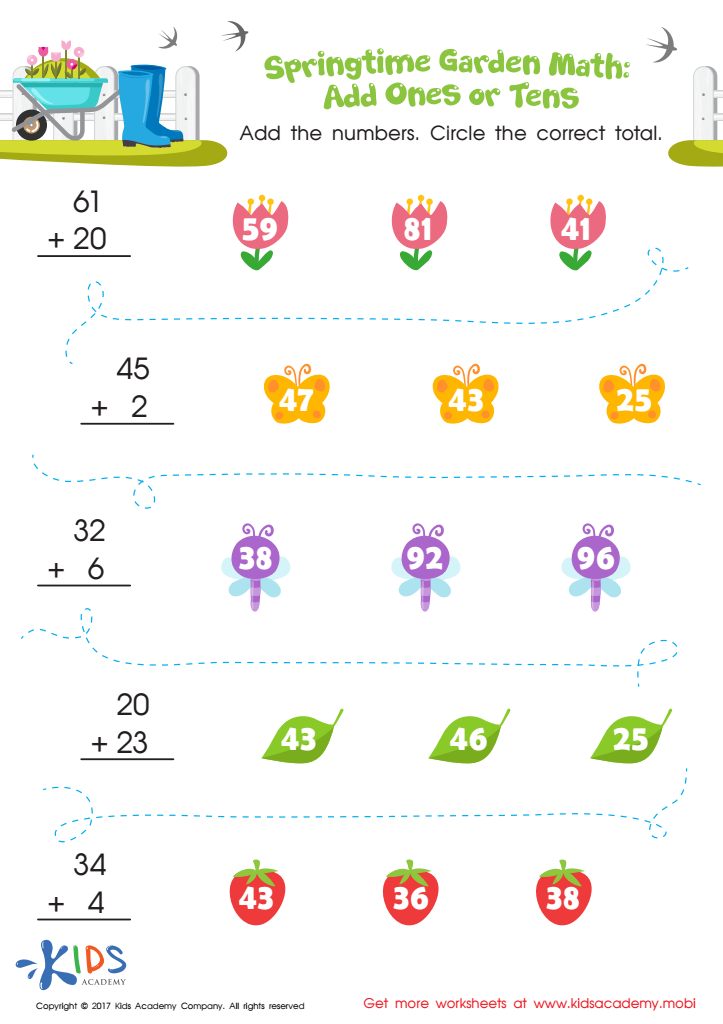
Springtime Garden Math Worksheet








Fostering visualization skills in addition and subtraction for children ages 3-7 is crucial for developing their foundational math abilities. Visualization helps children understand numerical relationships and operations in a more intuitive and concrete manner. When kids can visualize math problems, they are better able to grasp abstract concepts, making the learning process more engaging and effective.
For young learners, who are often concrete thinkers, learning through visualization can transform abstract numbers and symbols into tangible and comprehensible entities. For example, using physical objects or visual aids like drawings and manipulatives can make addition and subtraction more relatable. These methods allow children to see the actual process of grouping or separating items, significantly improving their problem-solving skills.
Both parents and teachers benefit when children develop strong visualization skills. Students become more confident and autonomous learners, reducing the struggles commonly associated with early math education. This confidence often leads to a stronger interest and better performance in mathematics as they progress through their education.
By prioritizing visualization skills in addition and subtraction, parents and teachers help build a solid mathematical foundation. This proactive approach not only bolsters cognitive development but also inspires a long-term appreciation for math, equipping children with essential skills for future academic and life success.








