Compare fractions Addition Worksheets for Ages 3-7
5 filtered results
-
From - To
Introduce young learners to the world of fractions with our "Compare Fractions Addition Worksheets for Ages 3-7." These engaging and educational worksheets are carefully designed to help children understand the basics of comparing and adding fractions through fun and interactive activities. Ideal for early grade levels, these printable worksheets foster essential math skills while keeping kids enthused about learning. With colorful visuals and simple problems, children will enjoy practicing fraction comparison and addition. Download now to offer your students a solid foundation in fractions, paving the way for future mathematical success.
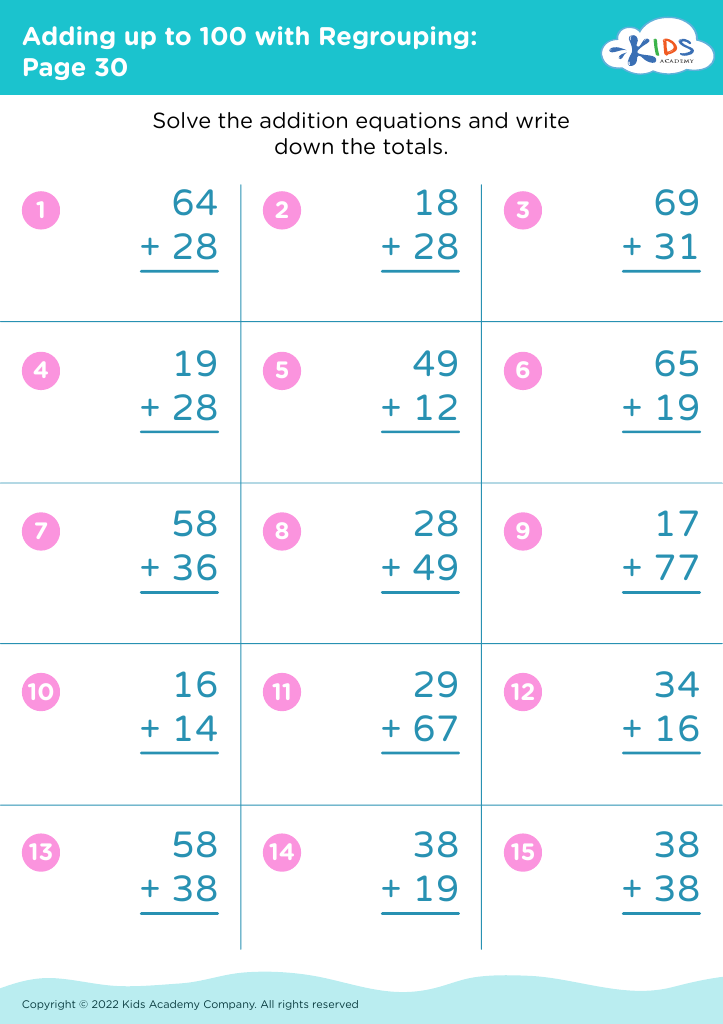
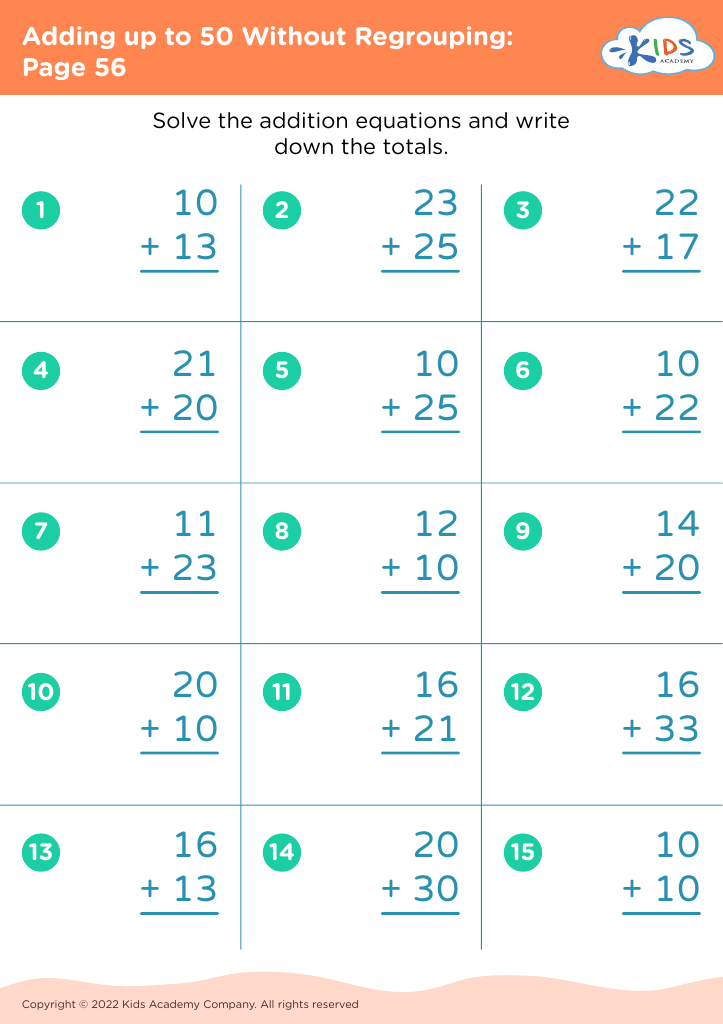
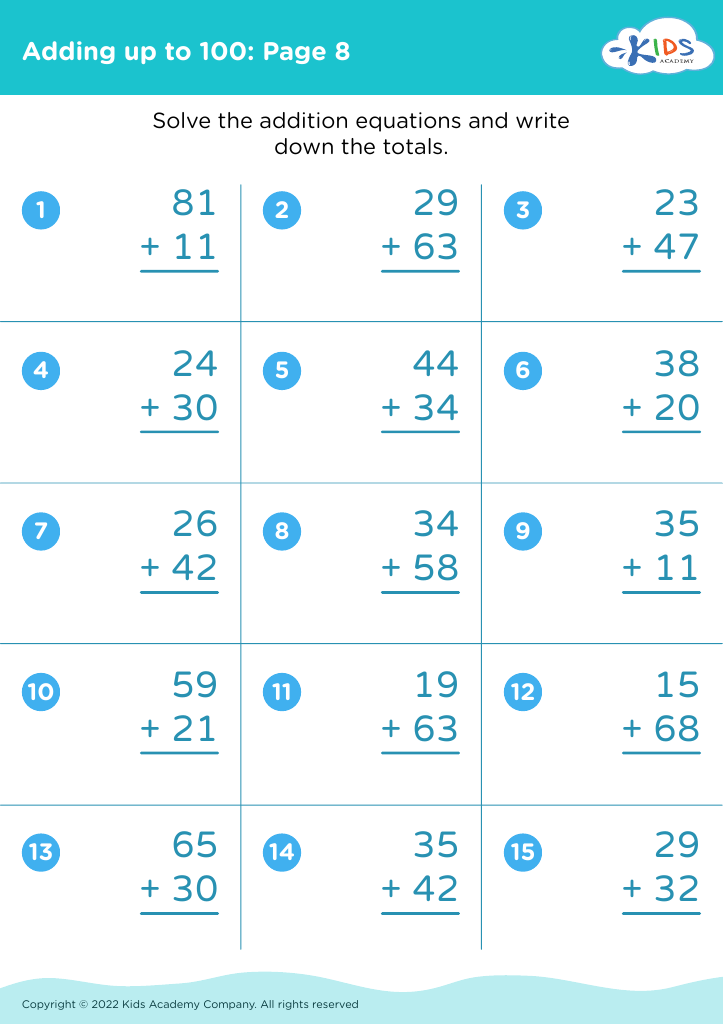
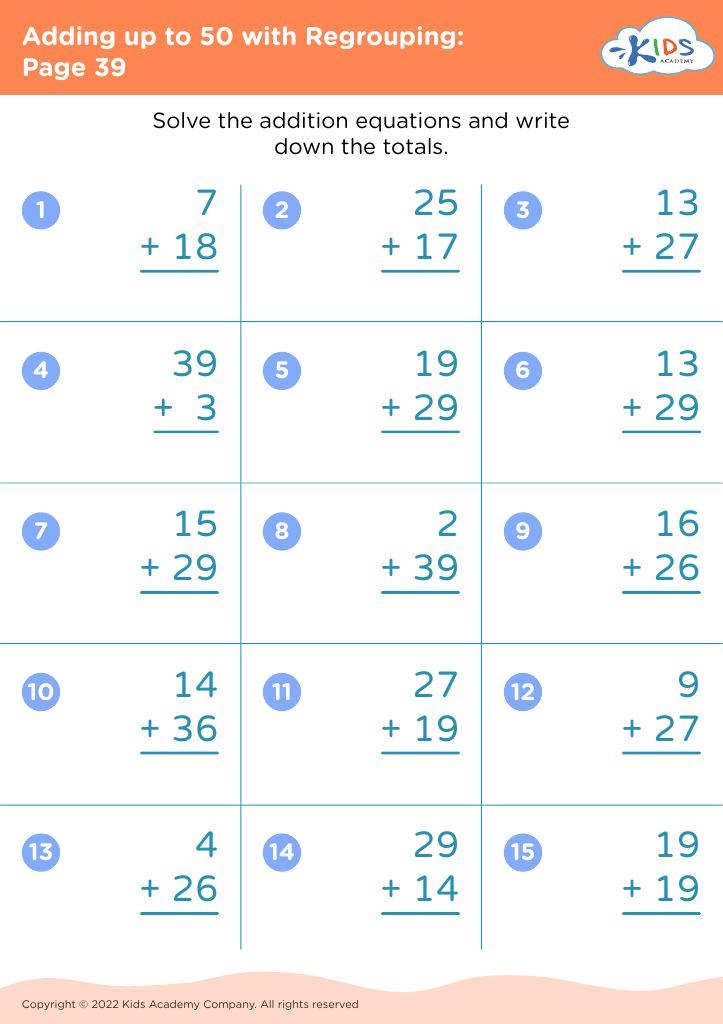
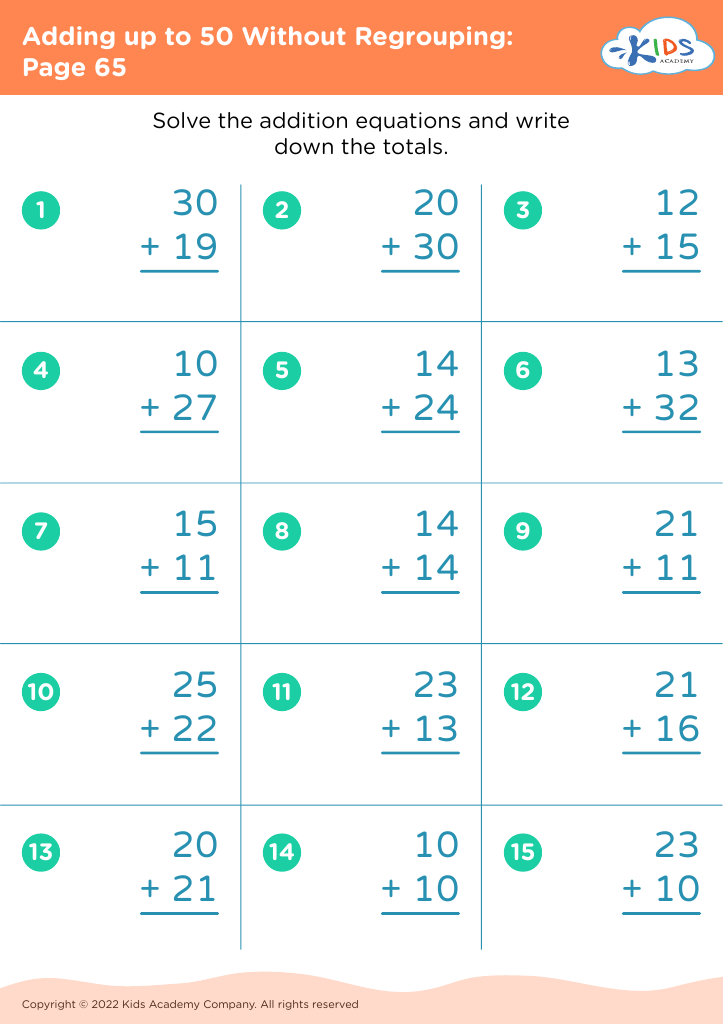








Understanding fractions and addition at a young age is crucial for early cognitive development and lays a strong foundation for future mathematical success. Children aged 3-7 are in a critical period for brain development, making it an optimal time to introduce basic mathematical concepts.
First, learning to compare fractions helps children grasp the idea of parts of a whole, which is a stepping stone to more advanced math topics. For instance, knowing that 1/2 is larger than 1/4 helps in everyday decision-making like sharing, and introduces number sense—understanding that numbers have values and relationships with one another.
Second, addition is fundamental for arithmetic proficiency. When young children learn to add, they improve their problem-solving skills, logical thinking, and memory. Coupling addition with fraction comparison not only makes the subject of fractions less intimidating but also builds on the child's pre-existing knowledge of simple arithmetic.
Moreover, early exposure to these concepts aids in developing a positive attitude towards math, reducing anxiety and building confidence. Interactive and hands-on methods, like using toys, food pieces, or visual aids, make learning enjoyable and more effective.
In conclusion, giving attention to comparing fractions and simple addition for ages 3-7 equips children with essential life skills and builds a robust mathematical foundation, benefiting their overall academic journey.








