Develop analytical thinking Addition Worksheets for Ages 3-7
3 filtered results
-
From - To
Welcome to our comprehensive collection of "Develop Analytical Thinking Addition Worksheets" designed specifically for children aged 3-7. These engaging, age-appropriate sheets not only introduce basic addition concepts but also nurture critical analytical skills. Each worksheet is crafted to stimulate young minds, encouraging problem-solving and logical reasoning through fun visuals and interactive activities. As children work through addition problems in various contexts, they enhance their understanding of numbers while building their ability to analyze and think critically. Perfect for at-home learning or classroom use, our worksheets provide a solid foundation for early math skills and lifelong learning. Explore creative and effective ways to boost your child's analytical thinking today!
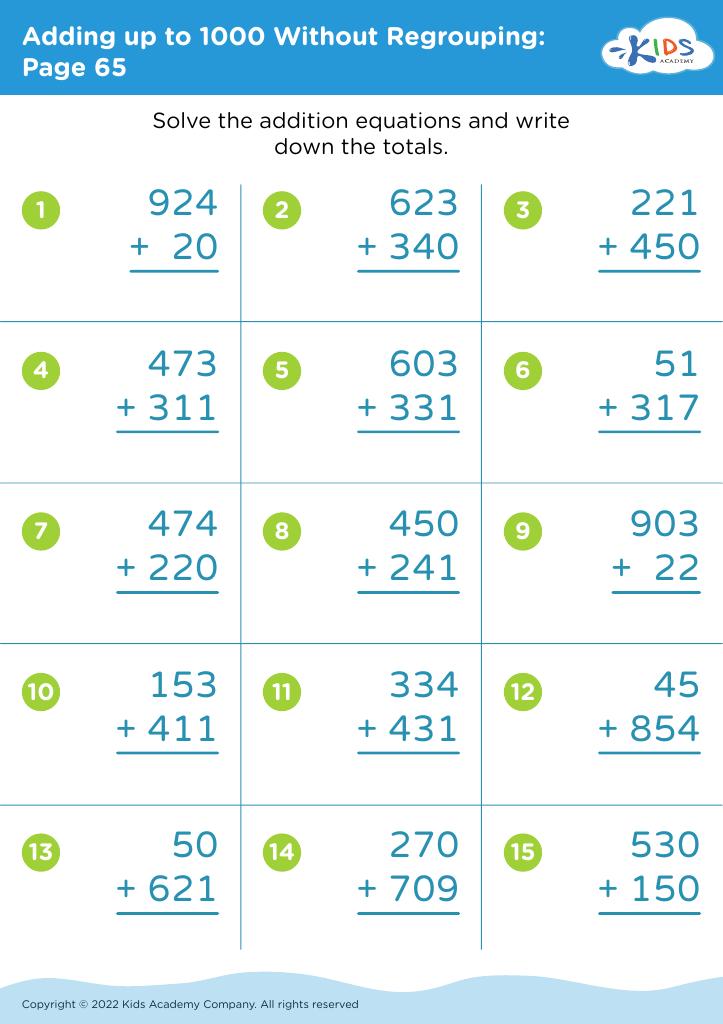
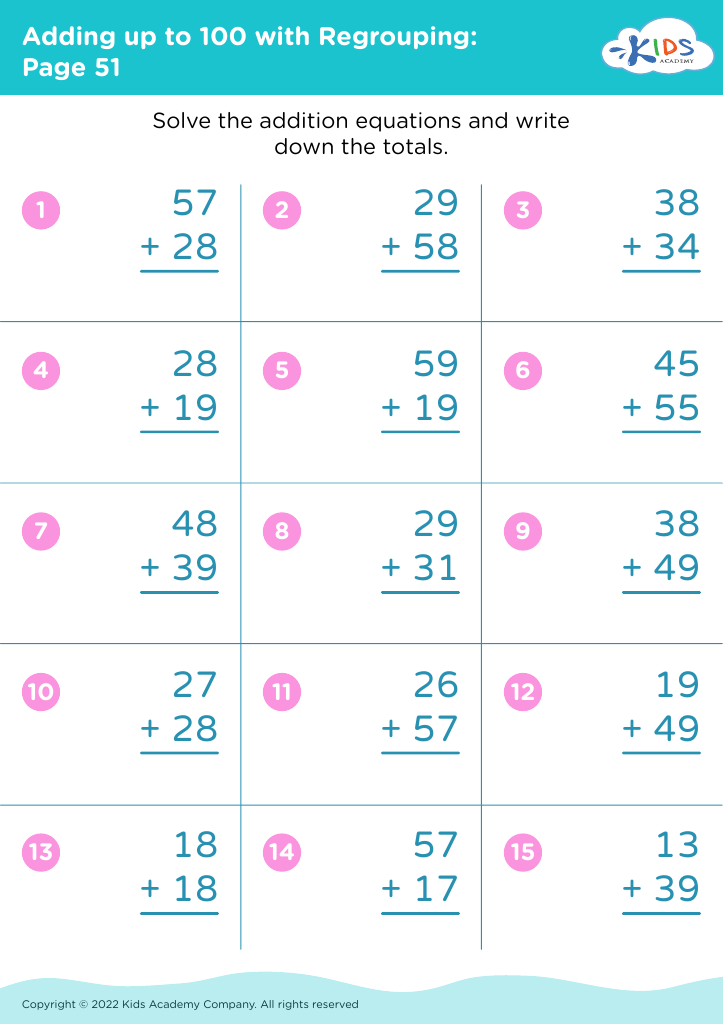
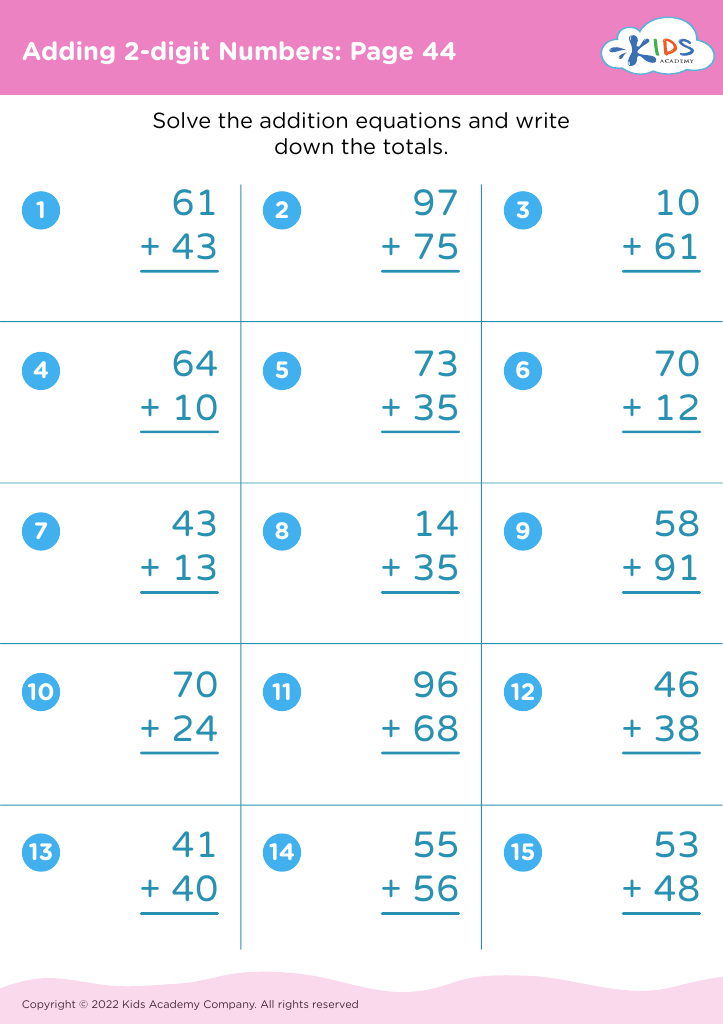








Developing analytical thinking in young children, particularly in relation to addition skills for ages 3-7, is crucial for several reasons. First, analytical thinking promotes problem-solving abilities, allowing children to understand and tackle challenges in a structured manner. At this age, introducing concepts of addition through engaging activities helps children recognize patterns, relationships, and logic—fundamental skills that extend beyond mathematics into other subjects and real-life situations.
Moreover, as children learn to analyze numbers, they also strengthen their cognitive development. This not only enhances their mathematical acuity but also fosters critical thinking and reasoning capabilities, which are essential for academic success later on. Encouraging analytical thinking in early learners can also build a strong foundation for future competencies such as data interpretation and scientific reasoning.
Additionally, mastering analytical thinking and addition at an early age boosts children’s confidence in their abilities. Confidence is key in nurturing a love for learning, which can have a long-lasting impact on their educational journey. By fostering these skills, parents and teachers help build resilient learners who are ready to face academic challenges, approach problems logically, and apply their knowledge effectively as they grow.








