Developing counting skills Addition Worksheets for Ages 3-7
3 filtered results
-
From - To
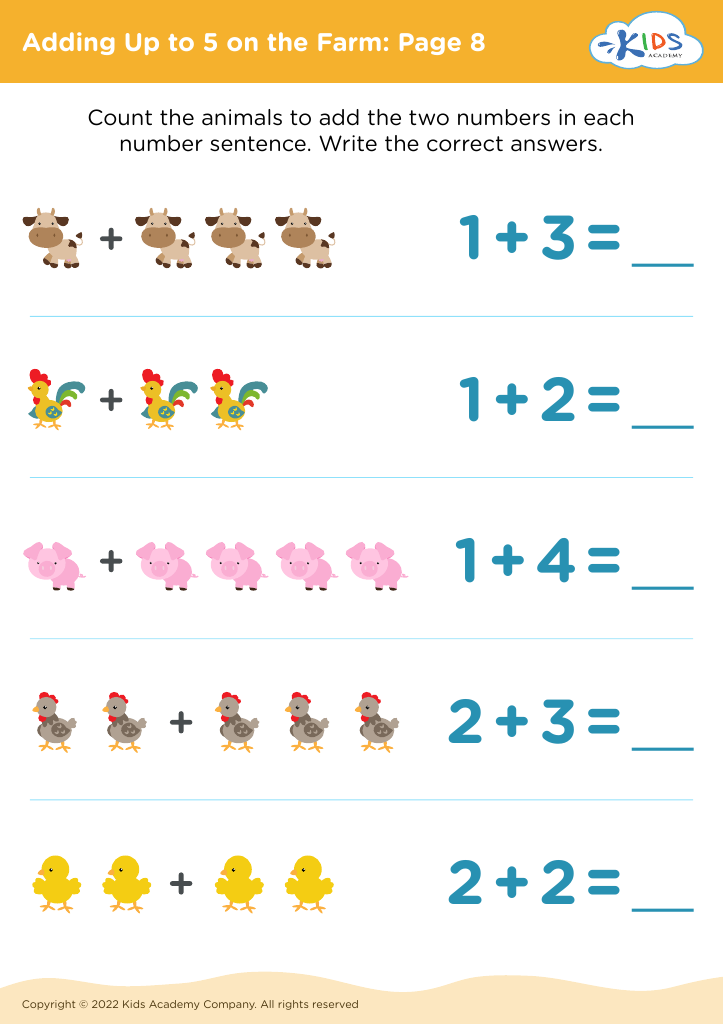
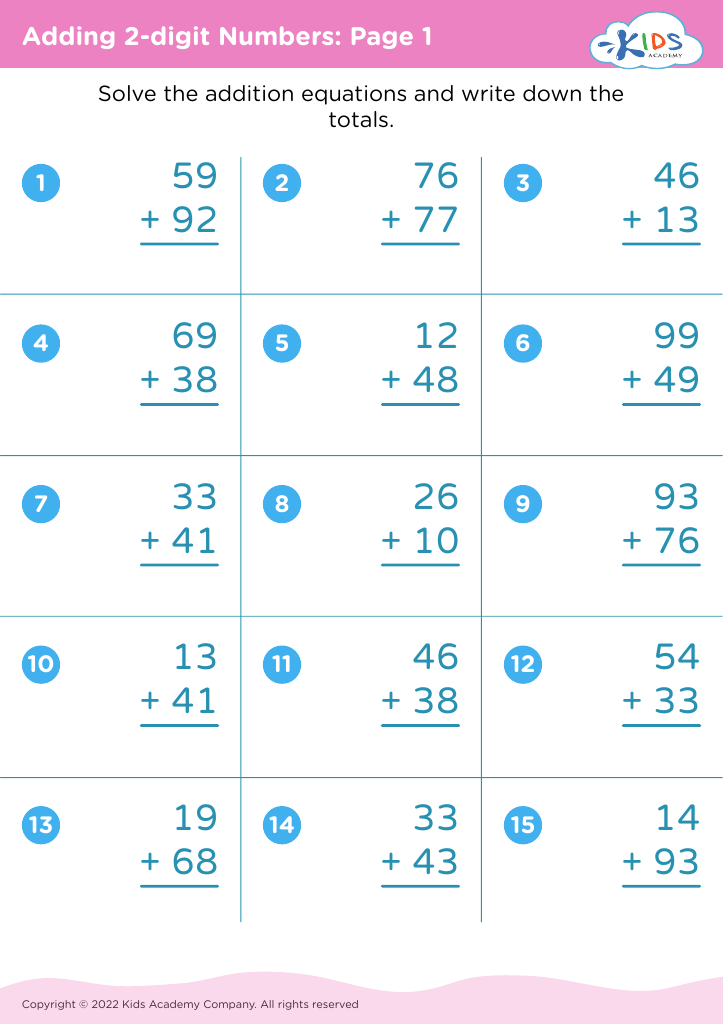
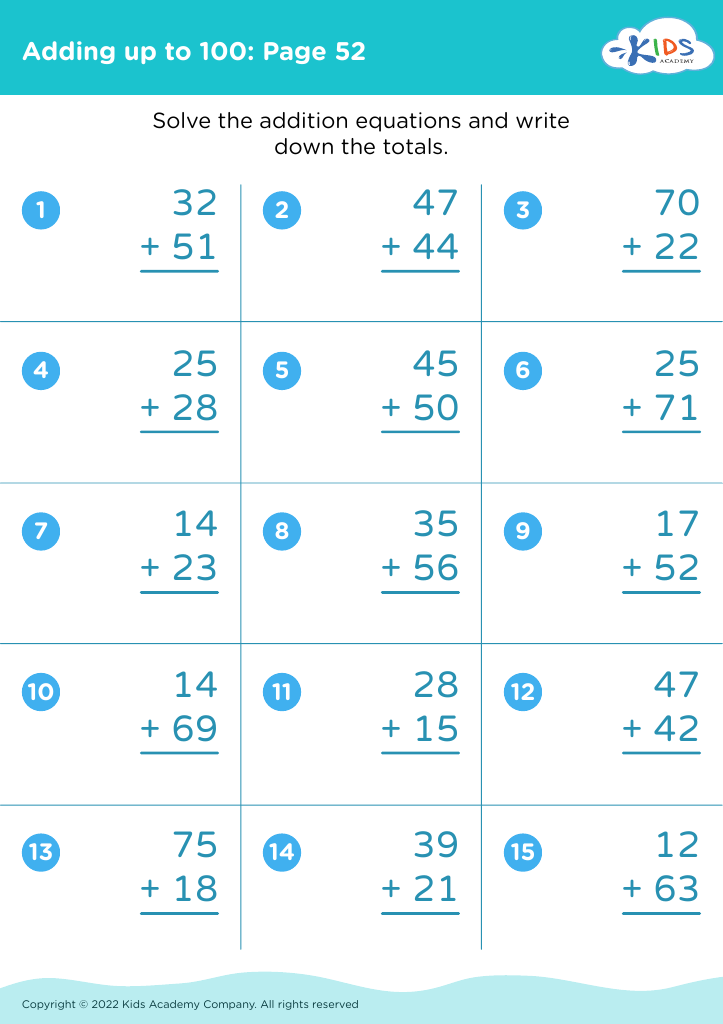
Unlock your child’s mathematical potential with our "Developing Counting Skills Addition Worksheets" tailored for ages 3-7! Designed to engage young learners, these activities focus on enhancing essential counting and addition skills through vibrant visuals and interactive exercises. Our worksheets offer a variety of fun challenges that nurture young minds, helping them grasp foundational concepts in a playful manner. From counting objects to simple addition scenarios, children will build confidence in their abilities. These worksheets are perfect for homeschooling, classroom use, or supplementary practice. Start your child’s mathematical journey today and watch their skills flourish with each engaging worksheet!



.jpg)




Developing counting skills and foundational addition for children ages 3-7 is crucial for several reasons. First, these skills serve as the building blocks for all future mathematical concepts. Early mastery of counting helps children understand number relationships, which is essential as they progress into more complex operations like subtraction, multiplication, and division.
Additionally, counting and addition are integral to critical thinking and problem-solving. When children engage in counting activities, they learn to analyze, predict, and draw conclusions, enhancing their cognitive abilities. Moreover, these skills significantly boost confidence and independence, as children gain the ability to tackle tasks that involve measurements, sharing, and budgeting, fundamentally equipping them for real-life situations.
Furthermore, counting and addition serve as engaging tools for developing fine motor skills and language. Incorporating hands-on activities, such as counting with blocks or using counting songs, facilitates active learning, helping children to connect words and numbers.
Lastly, parents and teachers play a vital role by fostering a positive learning environment. Promoting a love for numbers initiates lifelong learning attitudes and ties closely to academic success. Prioritizing counting and addition allows educators and parents to build a strong foundation for children's mathematical journeys.








