Developing logical thinking Addition Worksheets for Ages 3-7
4 filtered results
-
From - To
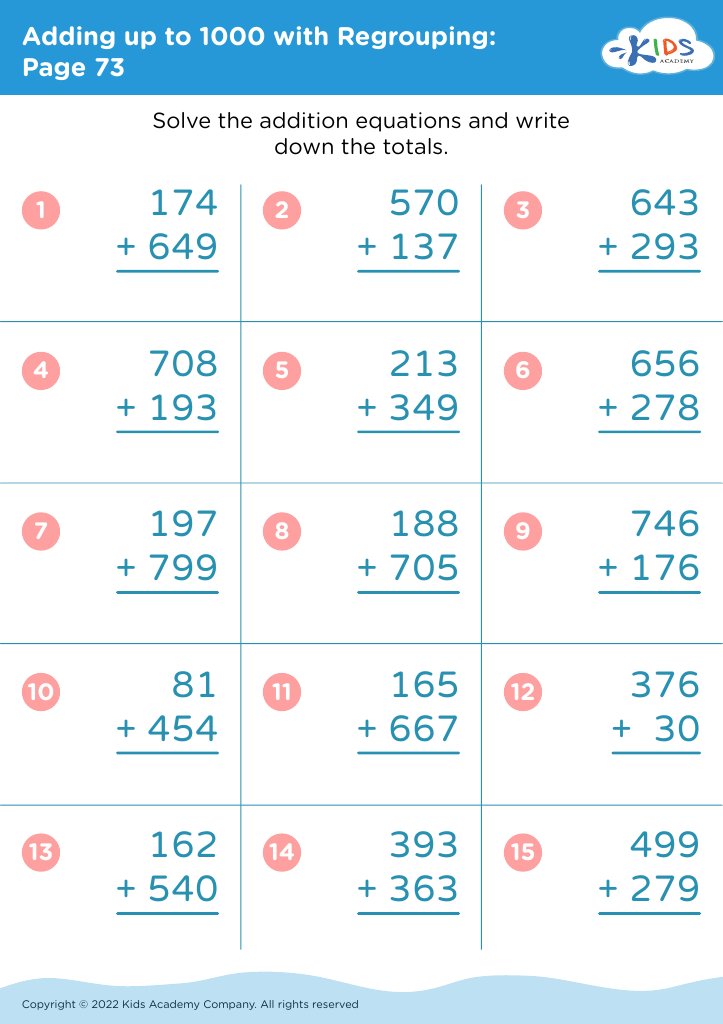
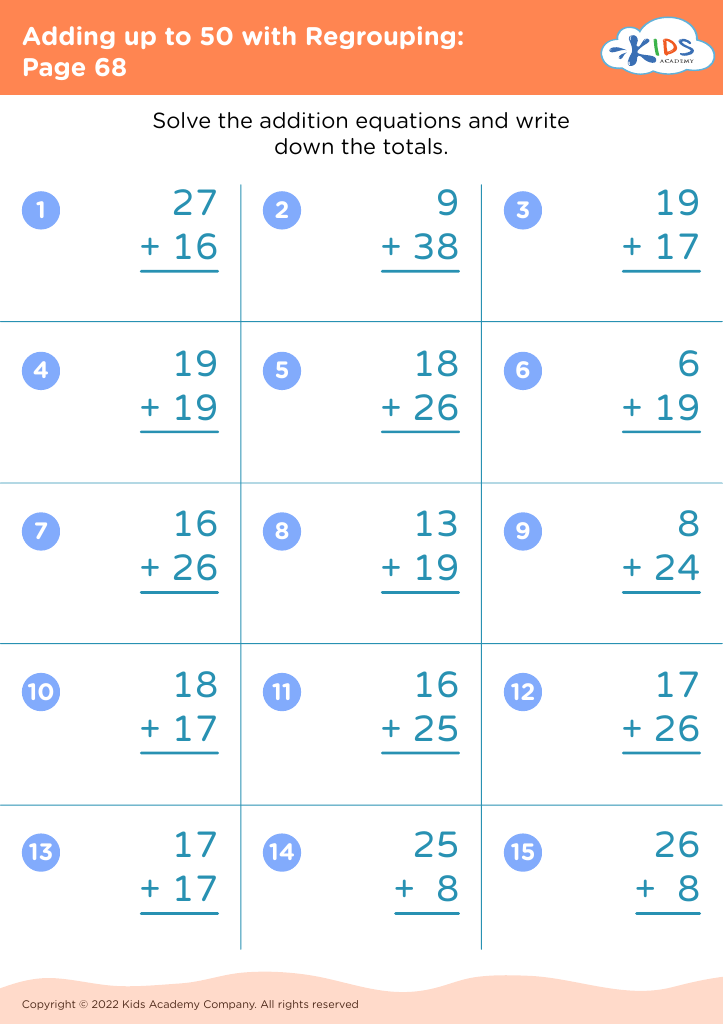
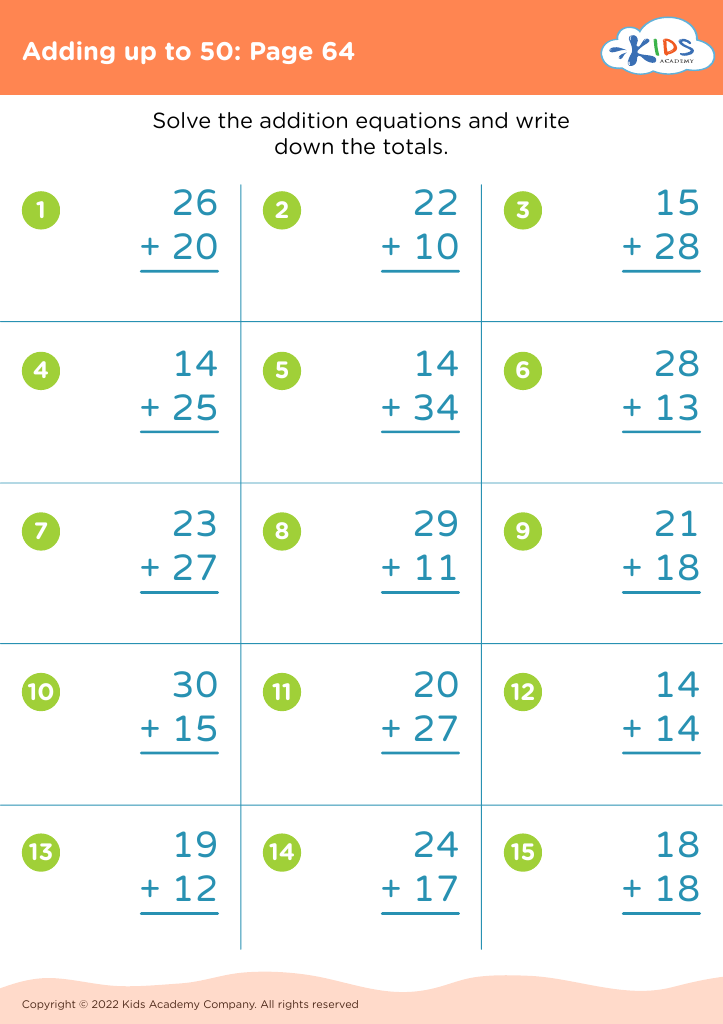
Our "Developing Logical Thinking Addition Worksheets for Ages 3-7" offer engaging and fun math exercises tailored for young learners. These expertly crafted worksheets focus on enhancing logical thinking and problem-solving skills through simple addition problems. Carefully designed to cater to preschoolers and early elementary students, these worksheets help build a strong foundation in math concepts while encouraging critical thinking. Colorful visuals, interactive activities, and age-appropriate challenges make learning enjoyable. Ideal for parents and educators seeking effective, educational resources to support children's mathematical growth. Visit Kids Academy and unlock your child's potential with our comprehensive selection of addition worksheets.
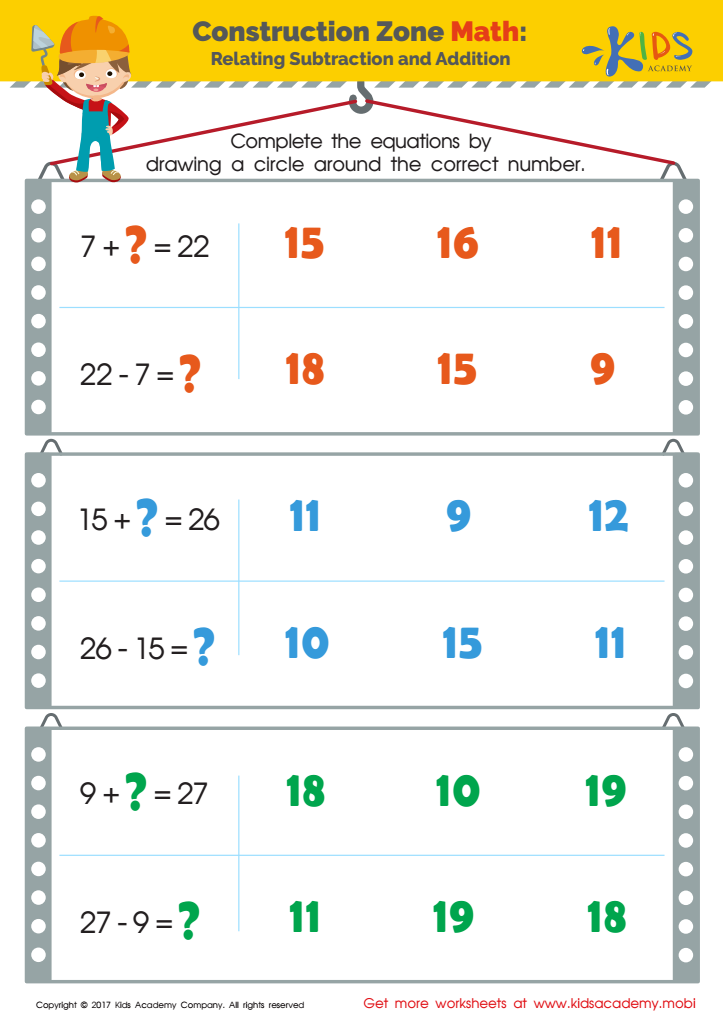
Related Addition and Subtraction Facts Worksheet
 Assign to My Students








Developing logical thinking and addition skills in children aged 3-7 is critically important for their overall cognitive growth and academic success. At this early stage, a child's brain is incredibly adaptable and rapidly developing. Introducing logical thinking helps enhance their problem-solving abilities, encourages creative solutions, and fosters a strong foundation for future learning. Engaging in activities that require logical reasoning and understanding patterns can stimulate cognitive processes essential for subjects like mathematics, science, and even literacy.
Addition, specifically, is a fundamental mathematical skill that not only applies to everyday tasks but also serves as a building block for more complex mathematical concepts. By learning to add, children start to understand numerical relationships and the concept of quantity, which are essential for advanced math topics taught later.
Moreover, developing these skills promotes self-confidence and independence in children. When kids understand that they can solve problems and find correct answers, they are more likely to approach new challenges with a positive attitude and a willingness to persevere. This sets a psychological precedent for lifelong learning and adaptability.
Parents and teachers play a crucial role in fostering these skills by providing supportive and engaging environments. Using games, hands-on activities, and real-world examples can make learning logical thinking and addition a fun and integral part of a child's daily routine.








