Developing problem-solving skills Addition Worksheets for Ages 3-7
6 filtered results
-
From - To
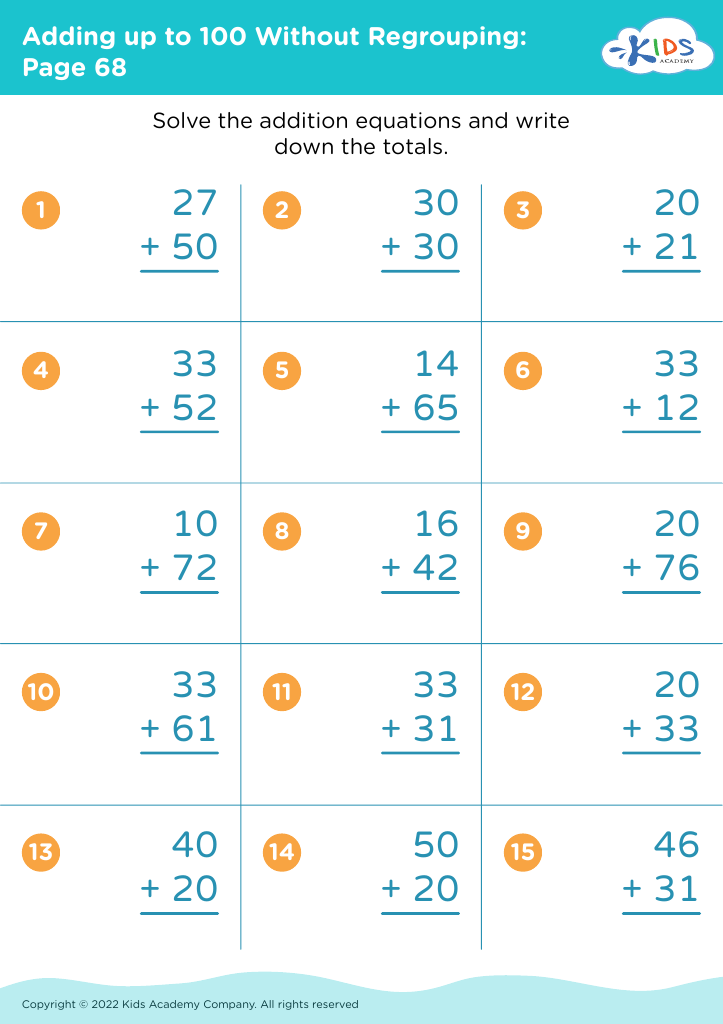
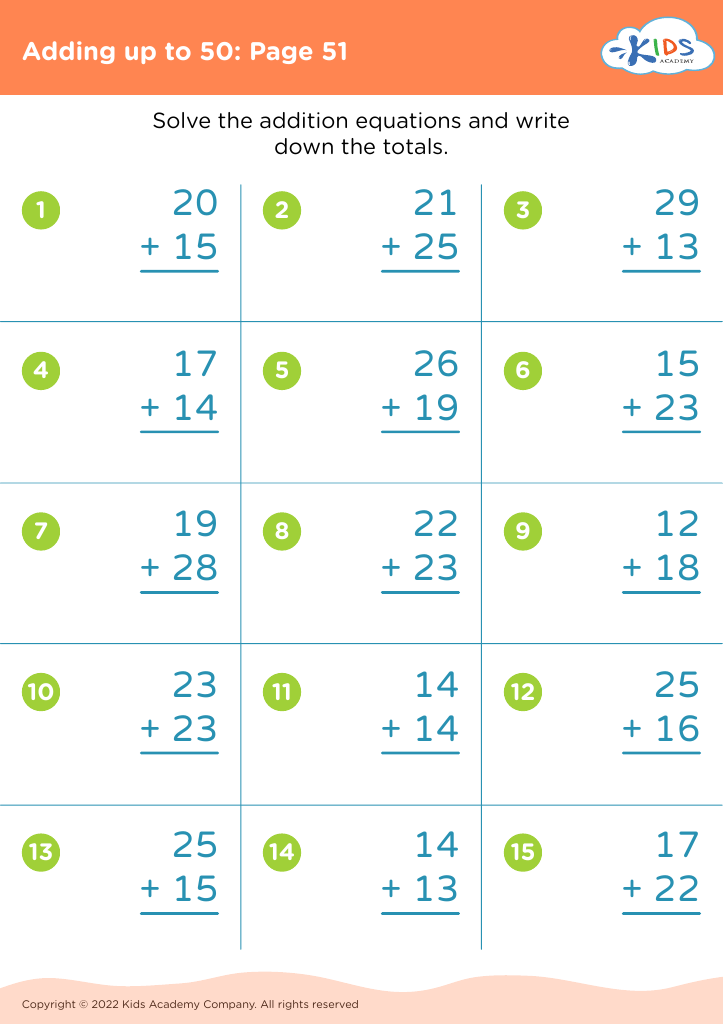
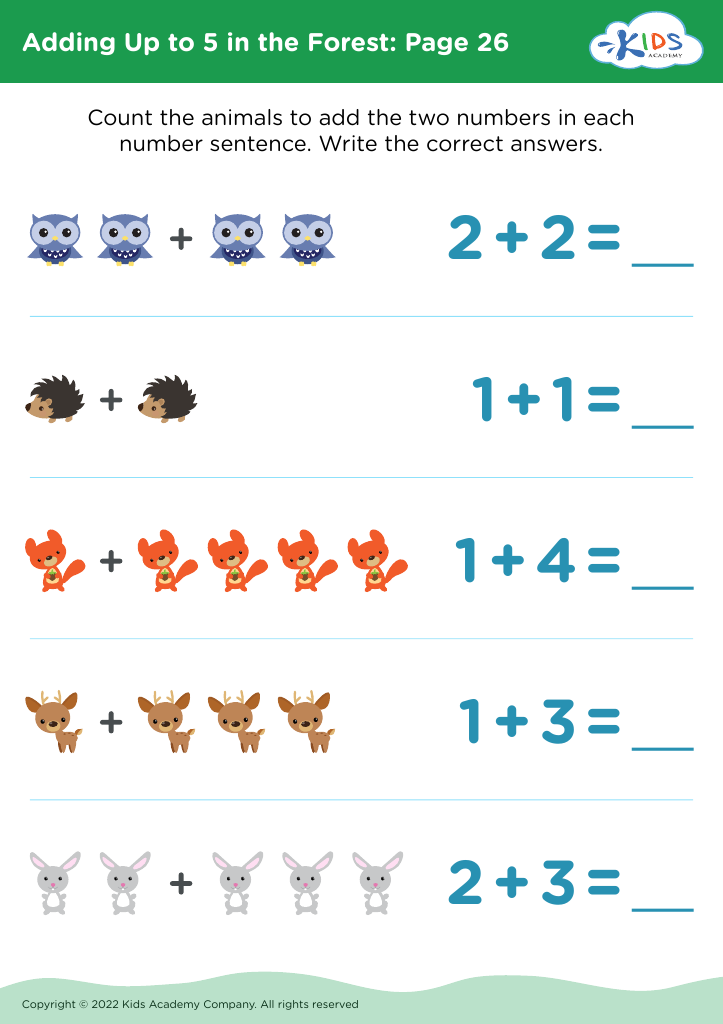
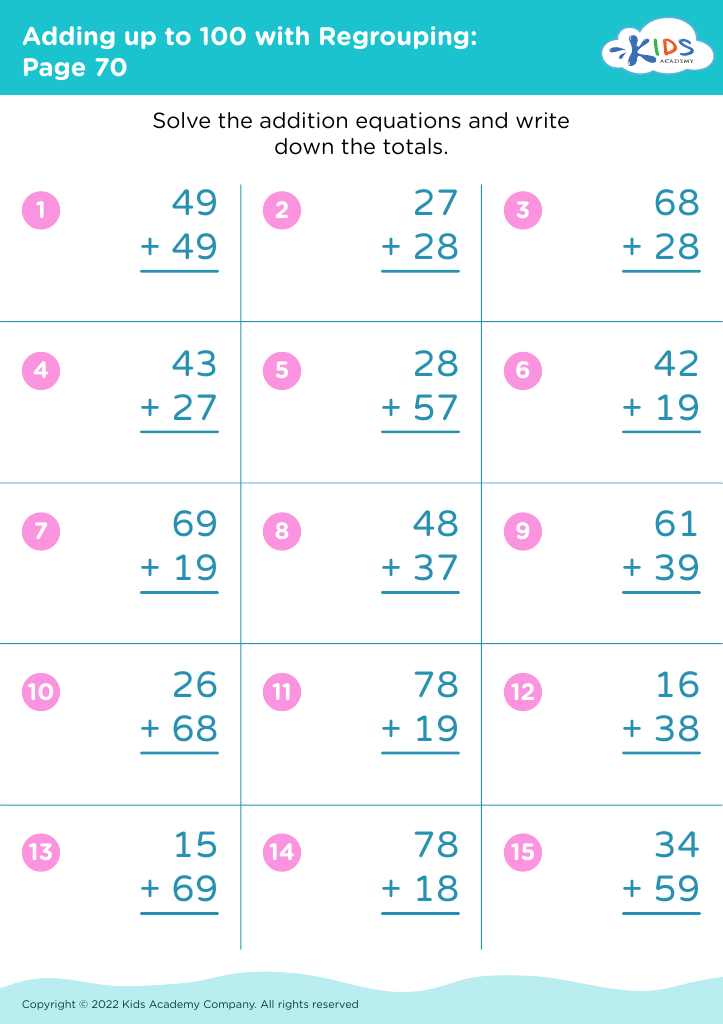
Enhance your child’s problem-solving abilities with our expertly designed Addition Worksheets for ages 3-7. Kids Academy offers engaging and age-appropriate activities, fostering mathematical skills through playful learning. Our worksheets are crafted to improve basic addition, critical thinking, and analytical skills. Each sheet brings fun, visual elements to captivate young minds, ensuring an educational and enjoyable experience. Perfect for both classroom and home use, these resources support foundational math mastery, setting the stage for future academic success. Equip your child with essential addition skills and watch their confidence soar as they navigate through our dynamic problem-solving adventures!
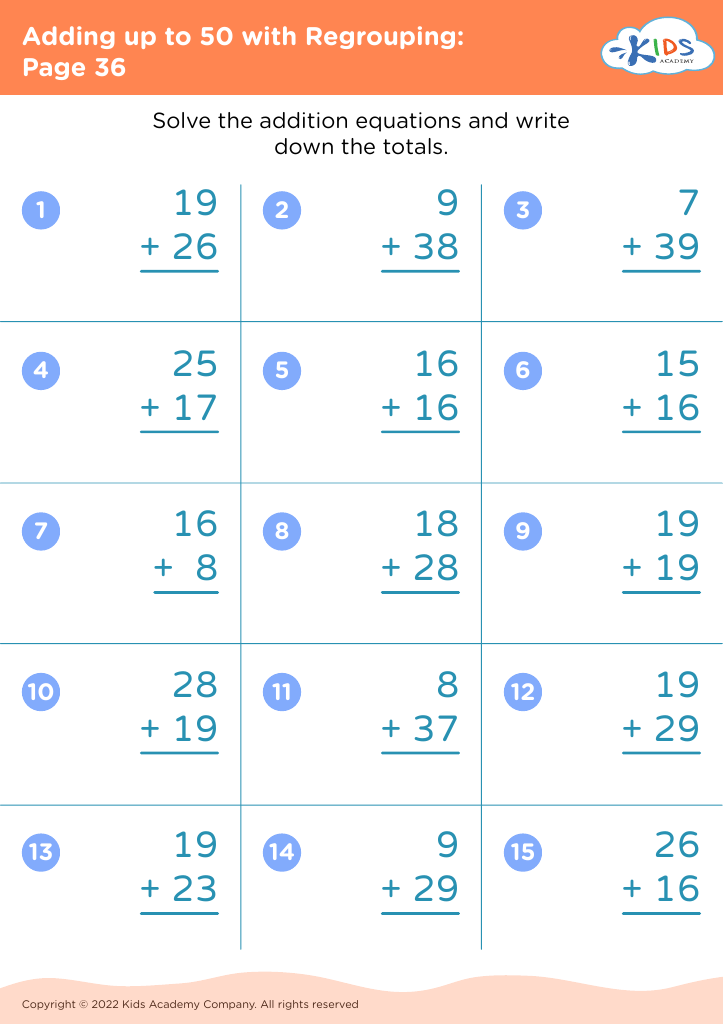
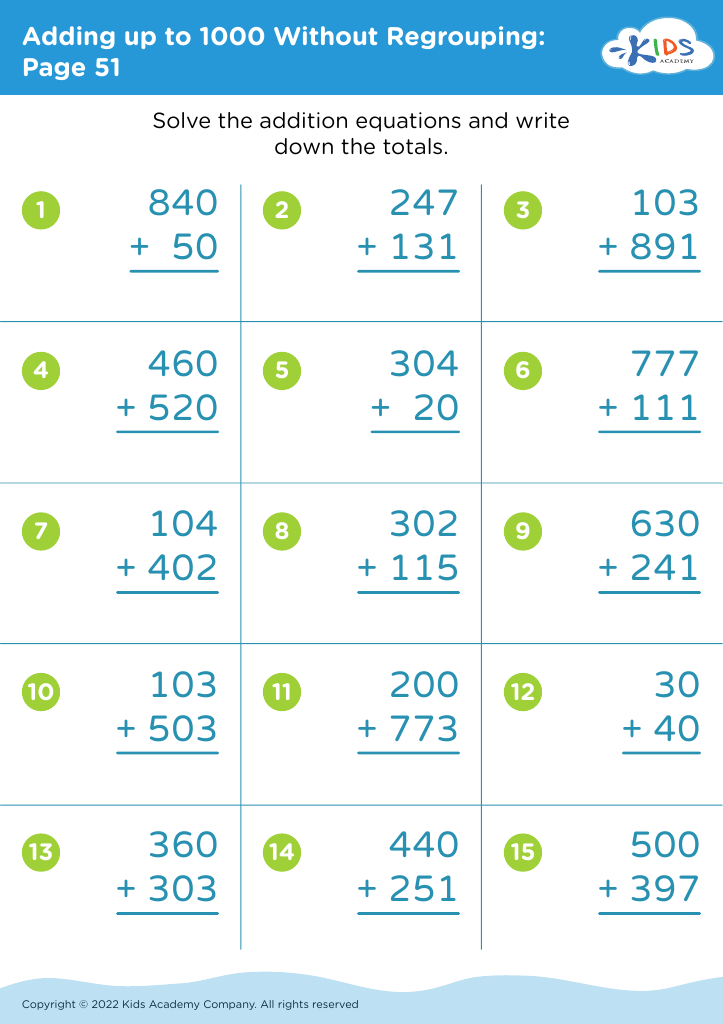








Developing problem-solving skills in addition for children aged 3-7 is crucial for several reasons. At this early stage, foundational cognitive skills and a positive attitude toward math can significantly influence a child's academic trajectory and everyday life.
First, strong problem-solving abilities can boost a child's confidence. When children learn to tackle addition problems, they build self-assurance, which encourages a growth mindset. This mindset can make them more resilient learners, eager to embrace challenges, not just in math, but across all subjects.
Second, early exposure to problem-solving in addition helps establish critical thinking and analytical skills. These competencies are fundamental for academics and general decision-making. Kids learn to break down problems, recognize patterns, and develop strategies, which are essential life-long skills.
Teachers and parents who focus on developing these abilities also foster a deeper understanding of math concepts, rather than rote memorization. This can make learning more engaging and enjoyable, igniting a child's passion for knowledge.
Additionally, integrating problem-solving activities into everyday routines creates practical connections between math and real-world situations, making learning relevant and meaningful. Early interventions can prevent math anxiety, empowering children to approach math with curiosity and creativity. Supporting these skills in young kids sets a critical foundation for their future educational success and well-rounded personal development.








