Fine motor skills development Addition Worksheets for Ages 3-7
3 filtered results
-
From - To
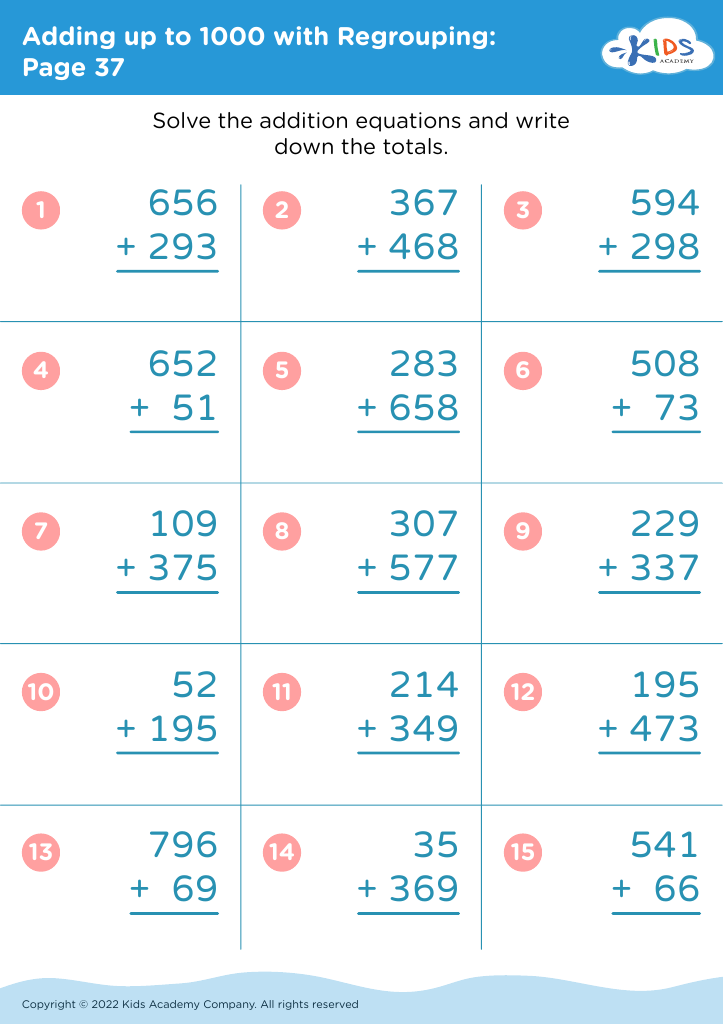
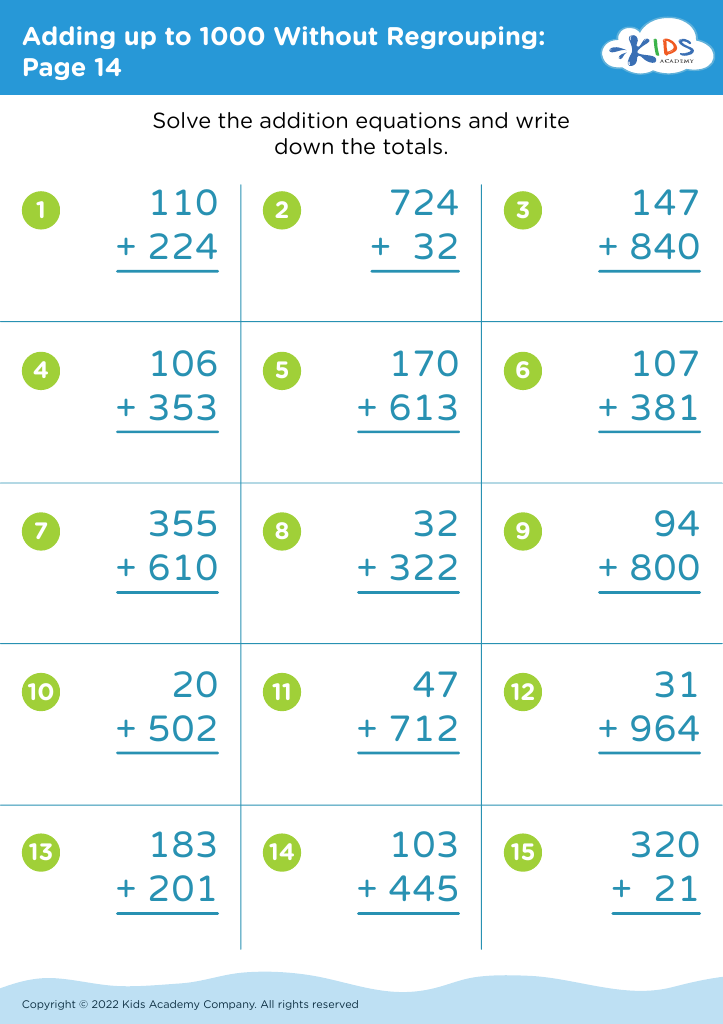
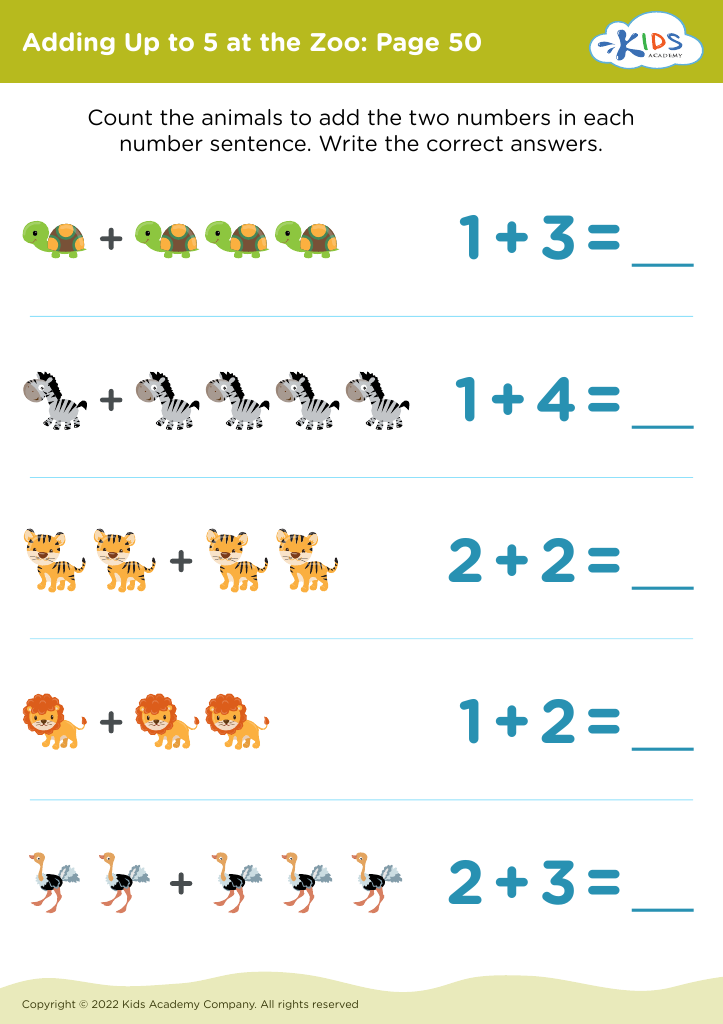
Enhance your child's fine motor skills while introducing essential addition concepts with our specialized worksheets for ages 3-7. These engaging and interactive activities are designed to improve hand-eye coordination, dexterity, and overall motor control, providing a solid foundation for future learning. Each worksheet focuses on fun, age-appropriate addition exercises that encourage children to practice counting, number recognition, and simple calculations. As children color, trace, and connect dots, they'll develop the fine motor skills necessary for writing and everyday tasks while mastering early math concepts. Discover the perfect blend of learning and play, ensuring your preschooler gains confidence in both math and motor skills!








Fine motor skills are crucial for children's development, particularly from ages 3 to 7, as they lay the foundation for a range of everyday tasks and academic skills. These abilities include the precise movements of hands and fingers that enable children to manipulate tools, complete tasks such as writing, drawing, and even self-care activities like buttoning clothes or using utensils.
Parents and teachers should prioritize fine motor skill development because these skills directly contribute to a child's confidence, independence, and ability to engage effectively in classroom activities. Strong fine motor skills enhance a child's proficiency in handwriting, crafting, and problem-solving tasks, which are essential for academic success.
Additionally, fine motor skill development fosters cognitive growth. Activities that strengthen these skills often require planning, concentration, and critical thinking, which aids in overall brain development.
Socially, children who possess well-developed fine motor skills tend to participate more actively in group activities, leading to improved collaboration and interpersonal skills. By nurturing fine motor skills, caregivers and educators can provide children with essential tools for both learning and life, giving them a head start on their educational journey and promoting holistic development.








