Learn addition Addition Worksheets for Ages 3-7
3 filtered results
-
From - To
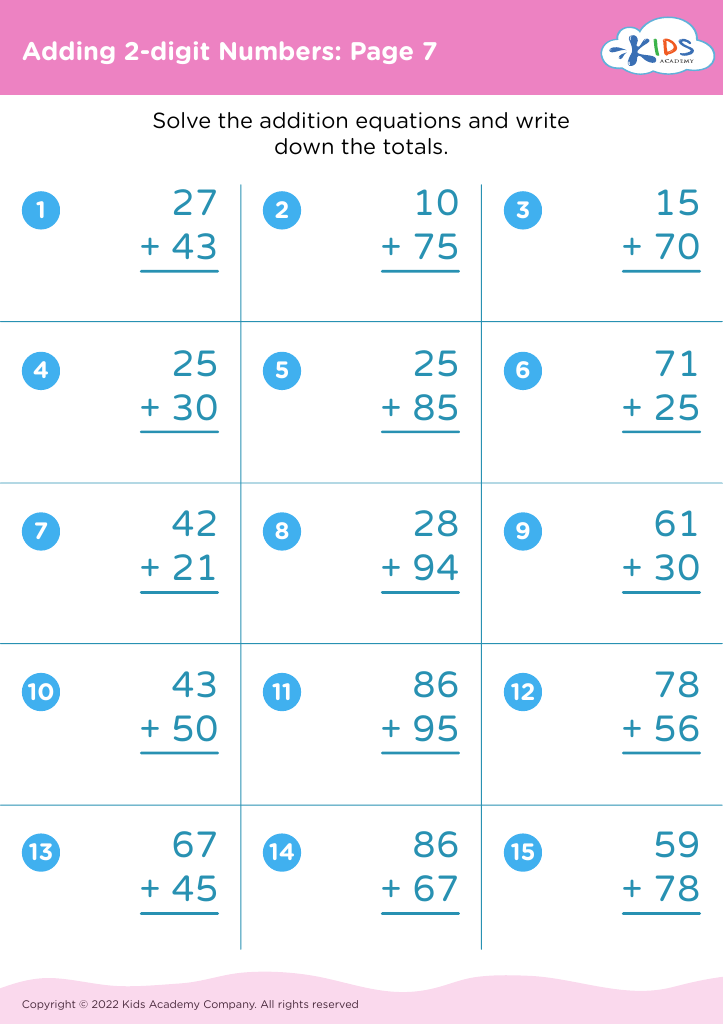
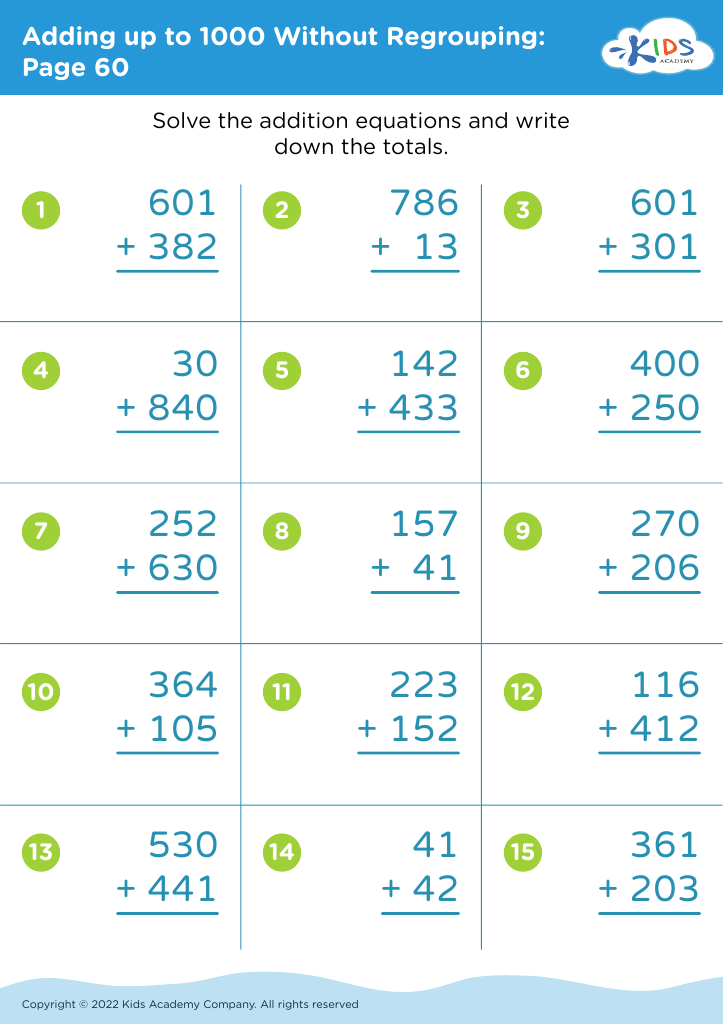
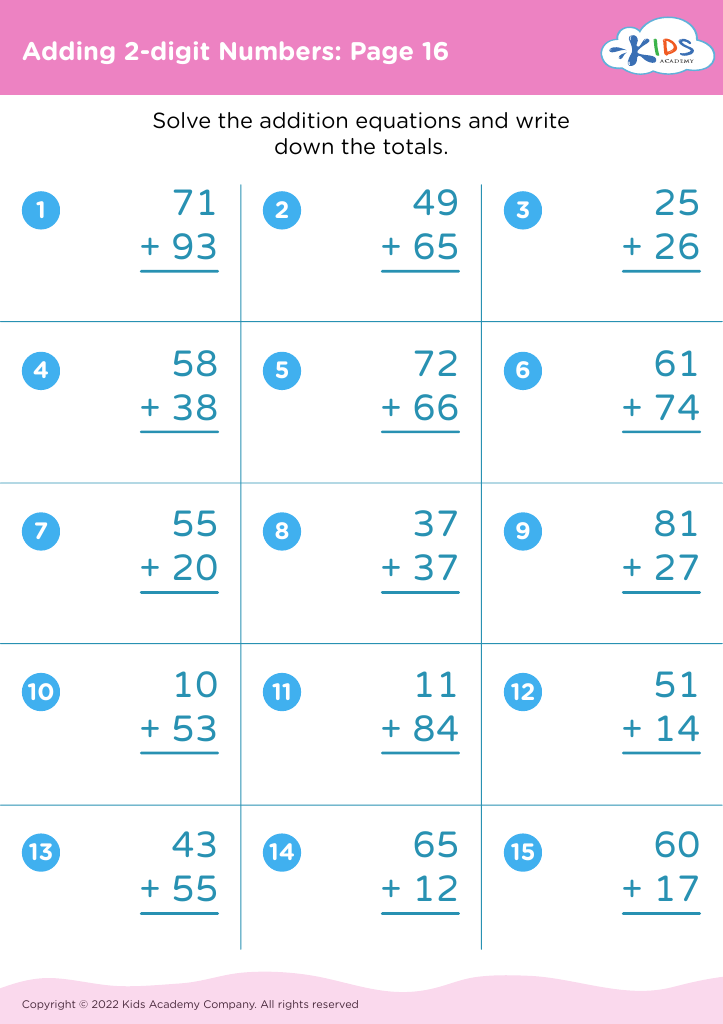
Welcome to our “Learn Addition Worksheets” designed specifically for children aged 3-7! These engaging and fun worksheets introduce the fundamental concepts of addition through interactive exercises and colorful graphics. Perfect for parents and educators, our resources help young learners master basic addition skills in a playful environment. Each worksheet is crafted to reinforce understanding and enhance problem-solving abilities, catering to a variety of learning styles. Whether at home or in the classroom, these worksheets provide an excellent foundation in math, making learning addition enjoyable and effective. Explore our collection today and watch your child develop a love for math!








Parents and teachers should prioritize learning addition for children aged 3-7 as it lays the foundational skills necessary for mathematical understanding and overall cognitive development. Early math skills are crucial for future academic success, as they foster problem-solving abilities, critical thinking, and analytical skills.
At this age, children are naturally curious and eager to explore new concepts. Introducing addition through engaging activities—like counting toys or using everyday objects—makes learning enjoyable and relatable. This hands-on approach not only helps children internalize the concept of quantities and numbers but also enhances their fine motor skills as they manipulate objects.
Moreover, learning addition builds confidence. Mastering basic math skills empowers young learners, encouraging a positive attitude toward mathematics. It fosters essential skills such as perseverance and logical reasoning.
Additionally, early addition skills enhance literacy development as children begin recognizing patterns and relationships, which are vital in understanding language and communication. By investing time and resources into teaching addition, parents and teachers lay the groundwork for a child's lifelong mathematical and cognitive skills, ultimately supporting their overall educational journey, fostering a love for learning, and preparing them for more complex concepts in the future.








