Problem-solving abilities Addition Worksheets for Ages 3-7 - Page 2
29 filtered results
-
From - To
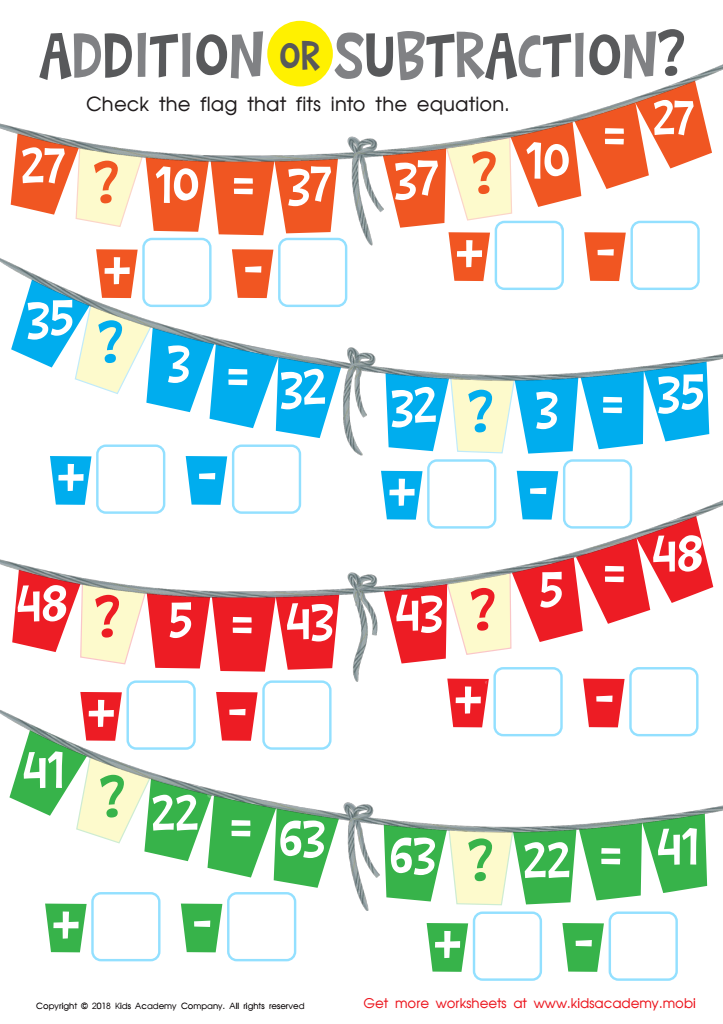
Addition or Subtraction? Worksheet
 Assign to My Students
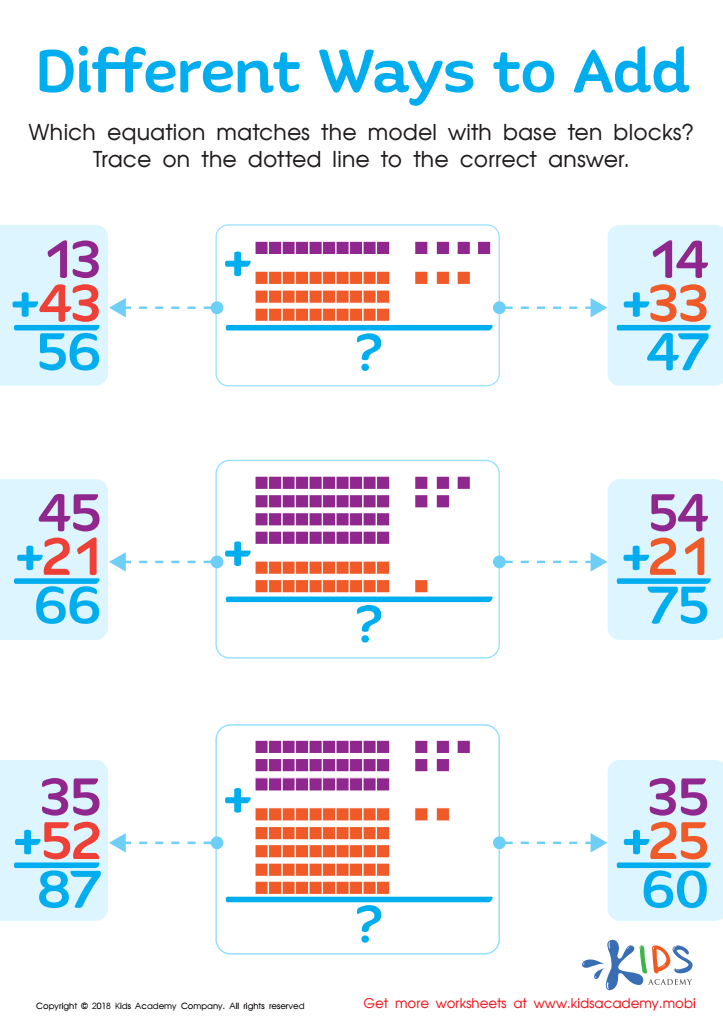
Different Ways to Add Worksheet
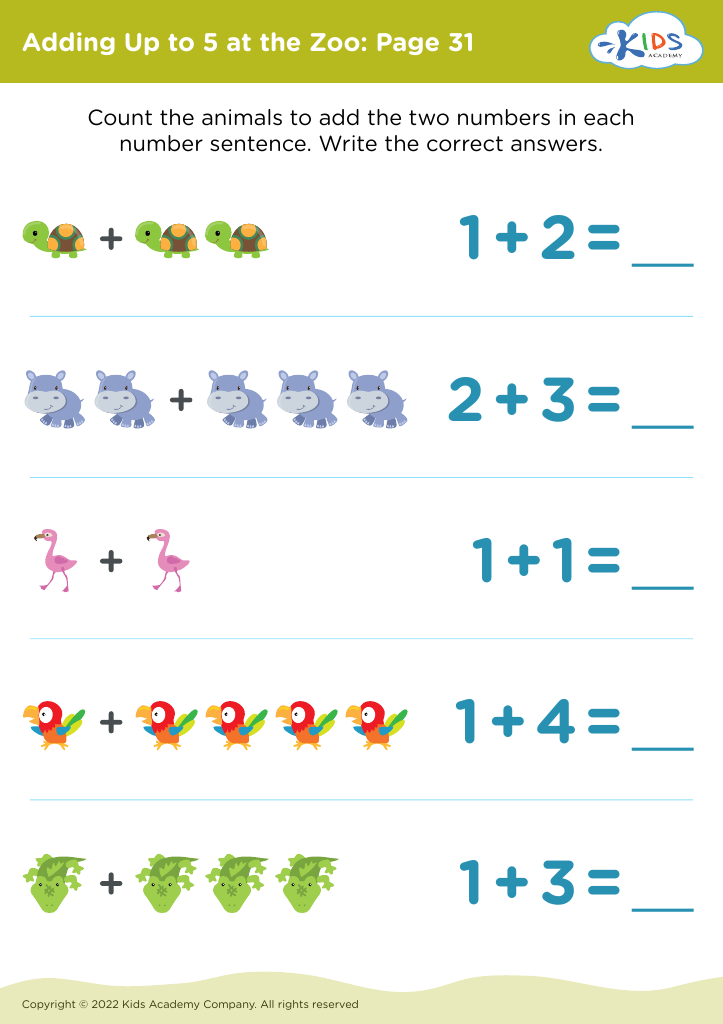
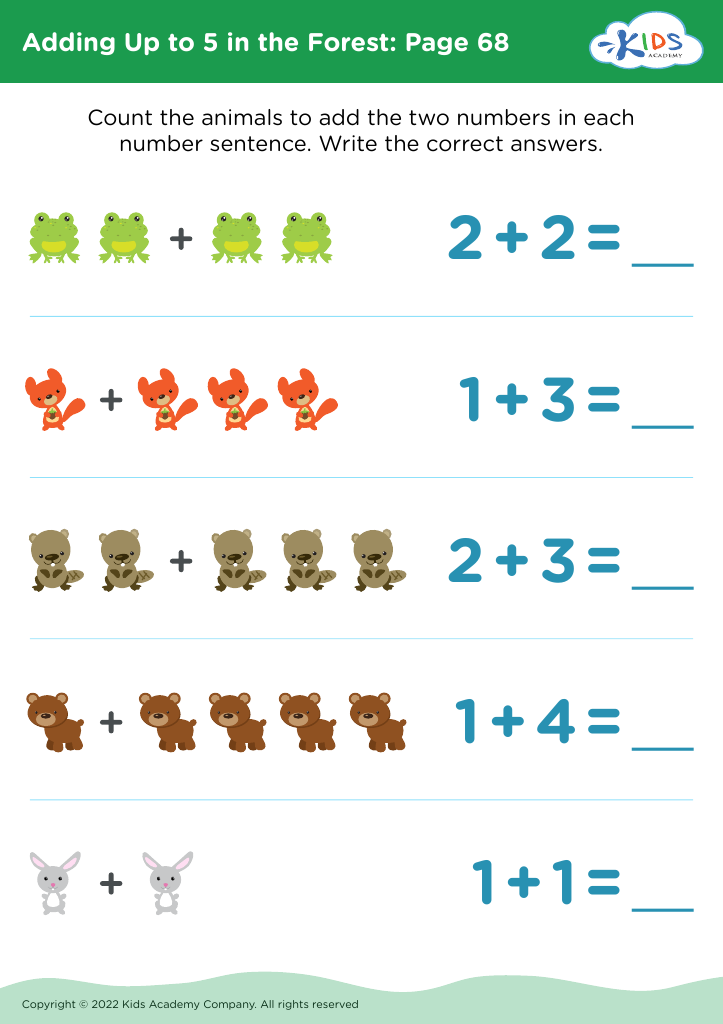
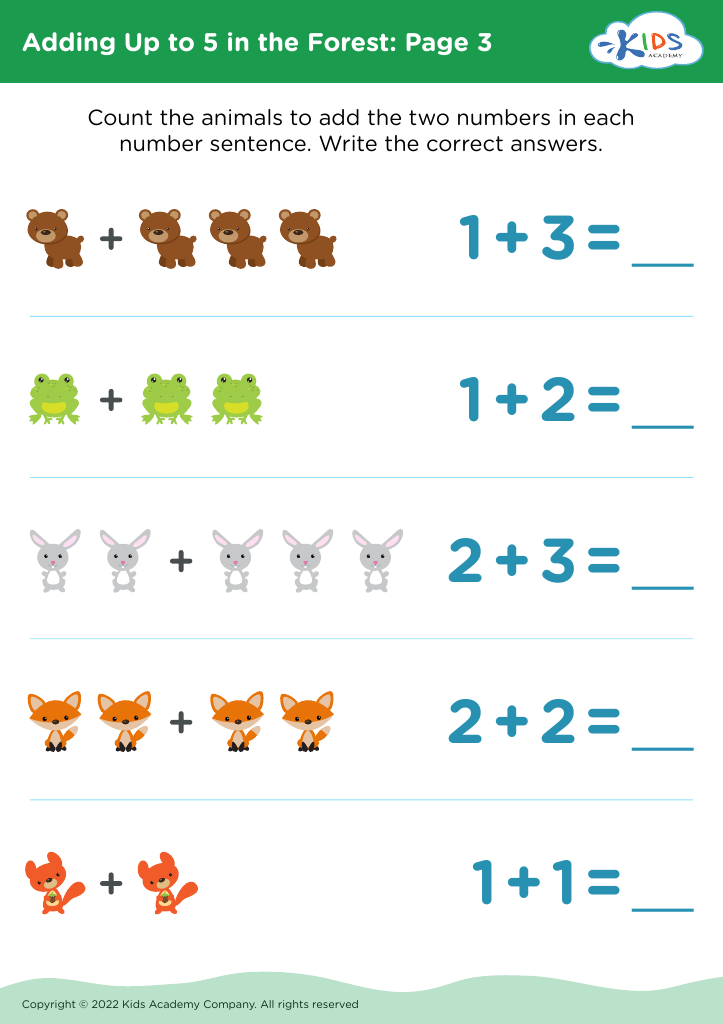








Problem-solving abilities, particularly in addition, are crucial for children aged 3-7, as they form the foundation for critical thinking, numeracy skills, and overall cognitive development. In these formative years, engaging in addition-related problem-solving allows children to grasp abstract concepts, enhance their logical reasoning, and develop persistence when faced with challenges. By cultivating these skills early on, parents and teachers can promote a love for mathematics, fostering a positive attitude towards learning that can last a lifetime.
Additionally, mastering addition sets the stage for more complex mathematical concepts in later years, as it strengthens their understanding of patterns, relationships, and quantitative reasoning. Incorporating engaging activities, games, and hands-on learning into problem-solving fosters collaboration and communication among peers, enhancing social skills.
Moreover, children equipped with strong problem-solving abilities in addition can apply these skills beyond mathematics, aiding in everyday situations, such as budgeting and decision-making. Parents and teachers play a vital role by encouraging exploratory learning and offering support, ultimately empowering children to take initiative in their education. Recognizing the significance of early problem-solving in addition can lead to improved academic performance and increased self-confidence, laying a robust foundation for lifelong learning.








