Recognizing equivalent fractions Addition Worksheets for Ages 3-7
5 filtered results
-
From - To
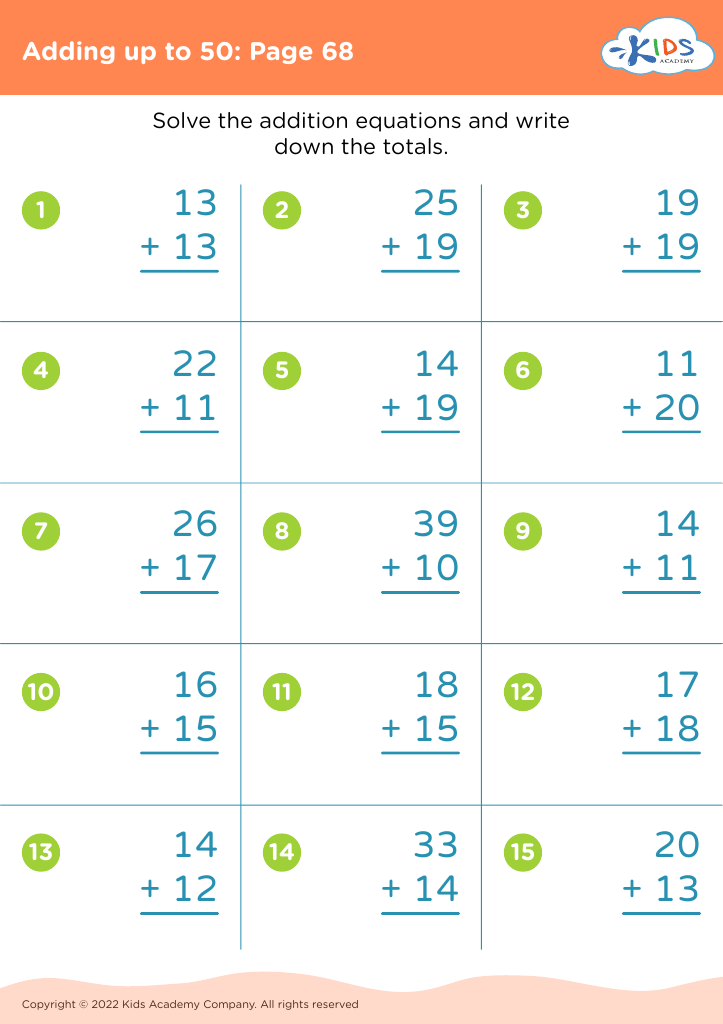
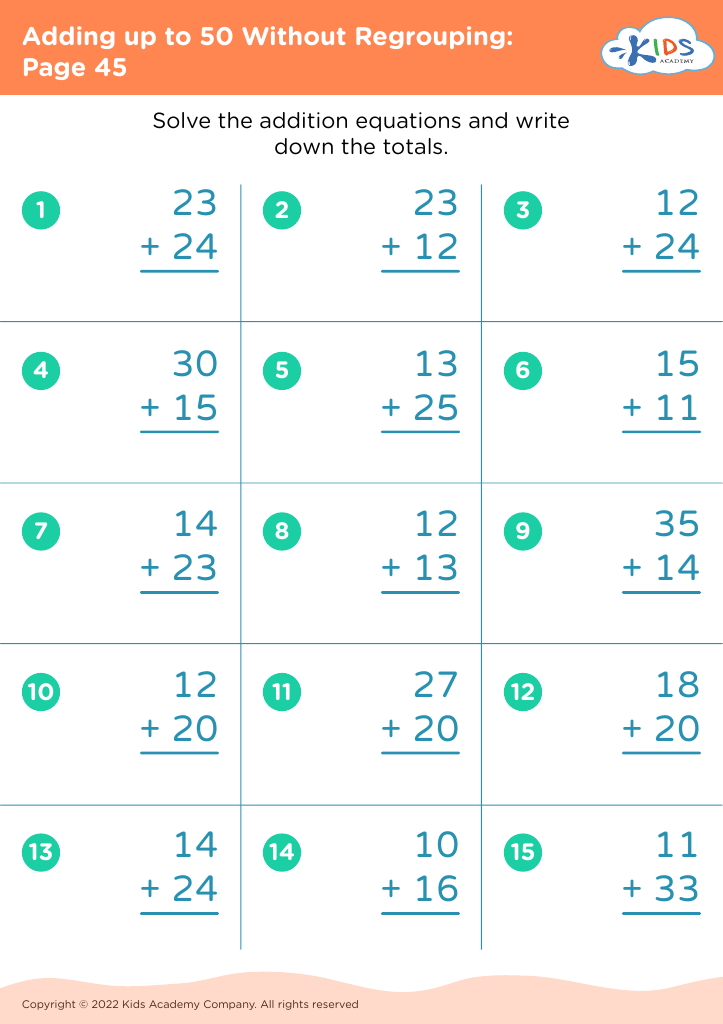
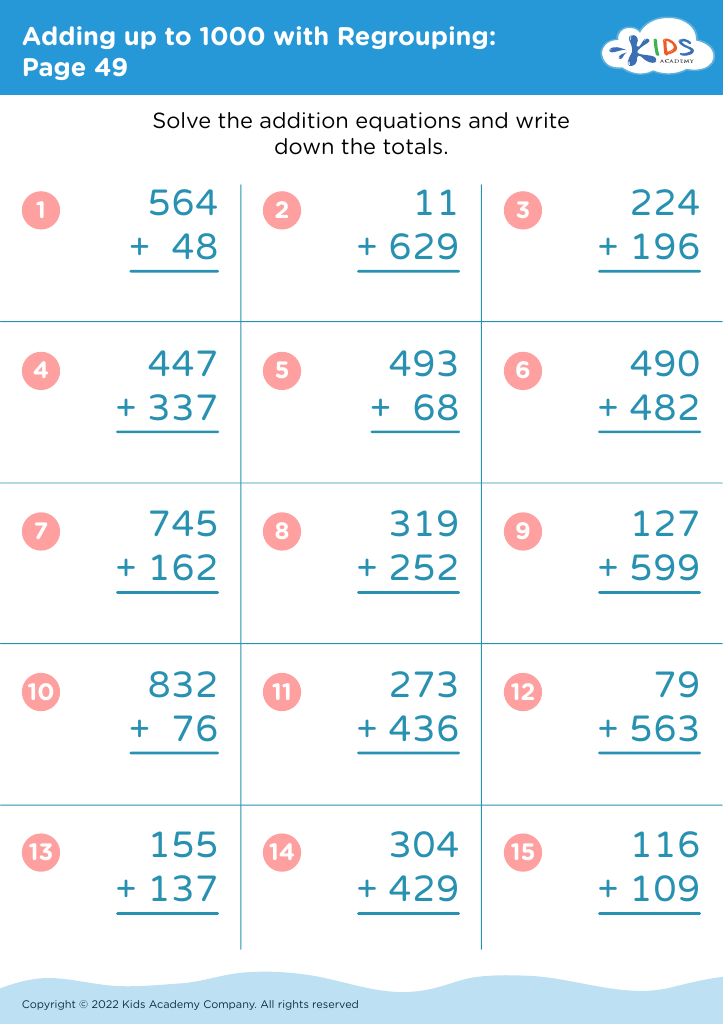
Help young learners master the concept of equivalent fractions with our engaging Addition Worksheets designed specifically for ages 3-7. These colorful and interactive worksheets make learning fun, offering kids the opportunity to explore and recognize equivalent fractions through hands-on activities. By incorporating visual aids and simple addition exercises, children will strengthen their mathematical skills while developing a solid understanding of fractions in various forms. Perfect for both classroom use and at-home learning, these worksheets promote creative learning and critical thinking. Equip your little ones with the tools they need to succeed in math with our thoughtfully crafted equivalent fractions addition resources!
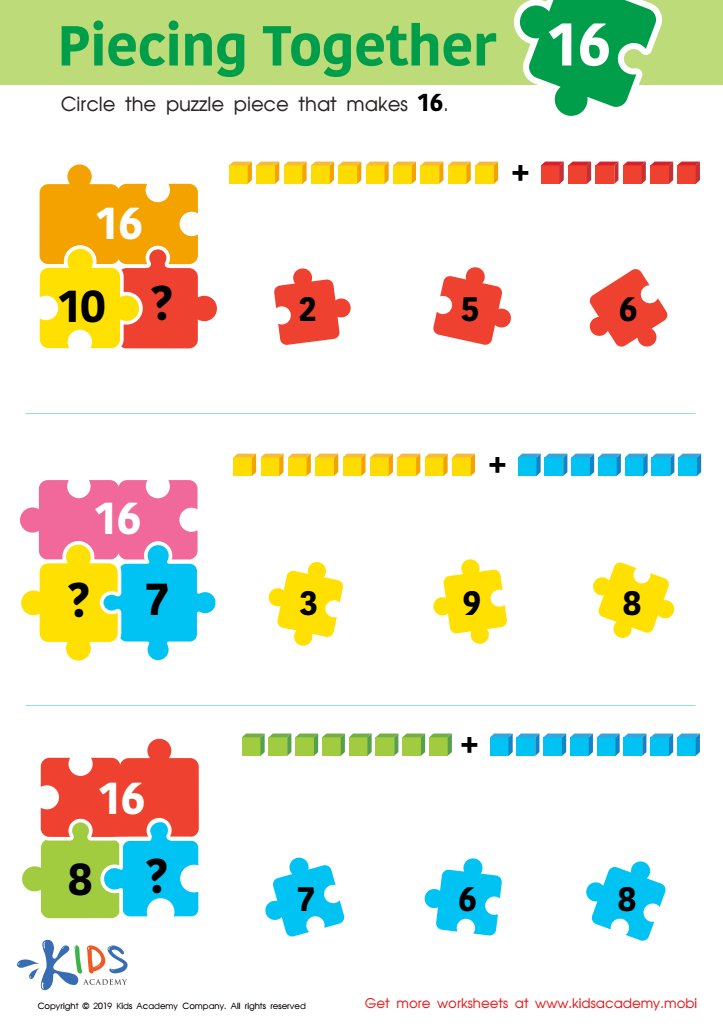
Piecing Together 16 Worksheet
 Assign to My Students
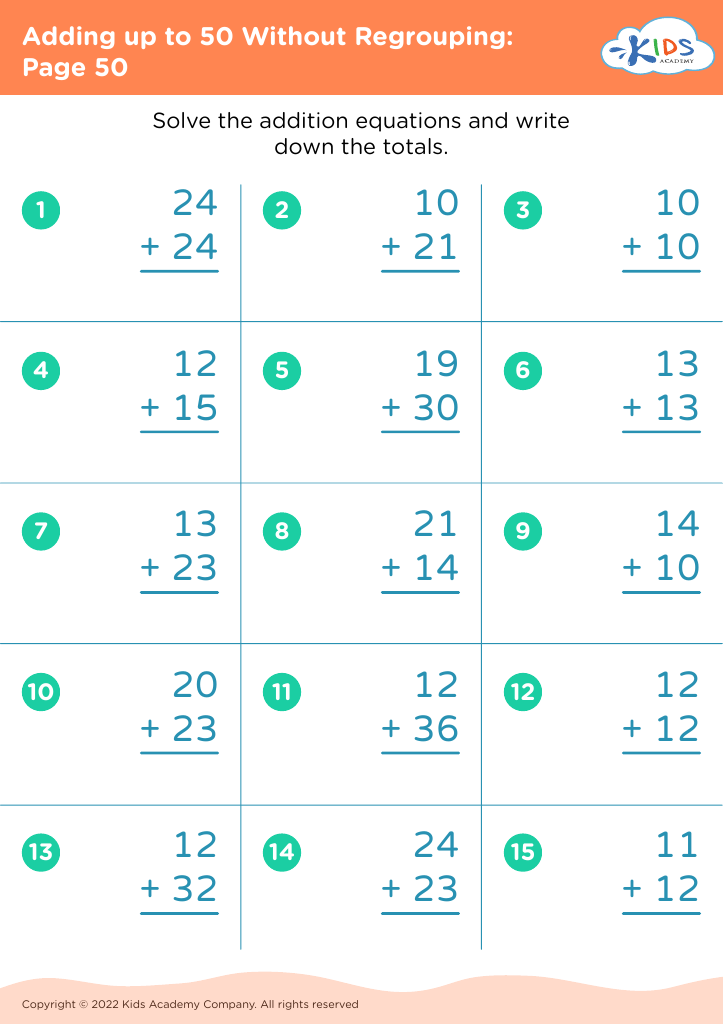








Recognizing equivalent fractions is a foundational skill that lays the groundwork for more advanced mathematical concepts in early childhood education. For children aged 3-7, understanding these concepts fosters their number sense and promotes critical thinking.
Parents and teachers should care about this skill because it enhances children's ability to recognize patterns and relationships in numbers. Accurate recognition of equivalent fractions allows young learners to grasp the idea that different fractions can represent the same quantity, paving the way for effective strategies in addition and comparison of fractions later on.
Early engagement with equivalent fractions encourages a hands-on learning approach, making math tangible through everyday examples, such as sharing snacks or dividing objects. This concrete experience builds mathematical fluency, confidence, and encourages a positive attitude toward math.
Furthermore, recognizing equivalent fractions supports the development of problem-solving skills essential for future success in mathematics. By fostering an understanding of this concept early on, parents and teachers equip children with essential tools for their academic journeys and demonstrate the real-world applications of math, encouraging lifelong learning. This emphasis on foundational knowledge ultimately enhances children’s overall academic performance and fosters a love for mathematics.








