Understand patterns Addition Worksheets for Ages 3-7
6 filtered results
-
From - To
Explore our "Understand Patterns Addition Worksheets" designed for children ages 3-7! These engaging worksheets help young learners recognize and create patterns while developing their addition skills. By incorporating colorful visuals and fun activities, kids will enhance their mathematical understanding and critical thinking abilities. Our worksheets encourage interactive learning, making it easier for children to grasp the fundamentals of addition through pattern recognition. Ideal for homeschooling, supplementary learning, or classroom activities, these resources promote creativity and make math enjoyable! Download now to support your child’s early math journey and lay a strong foundation for future learning success.
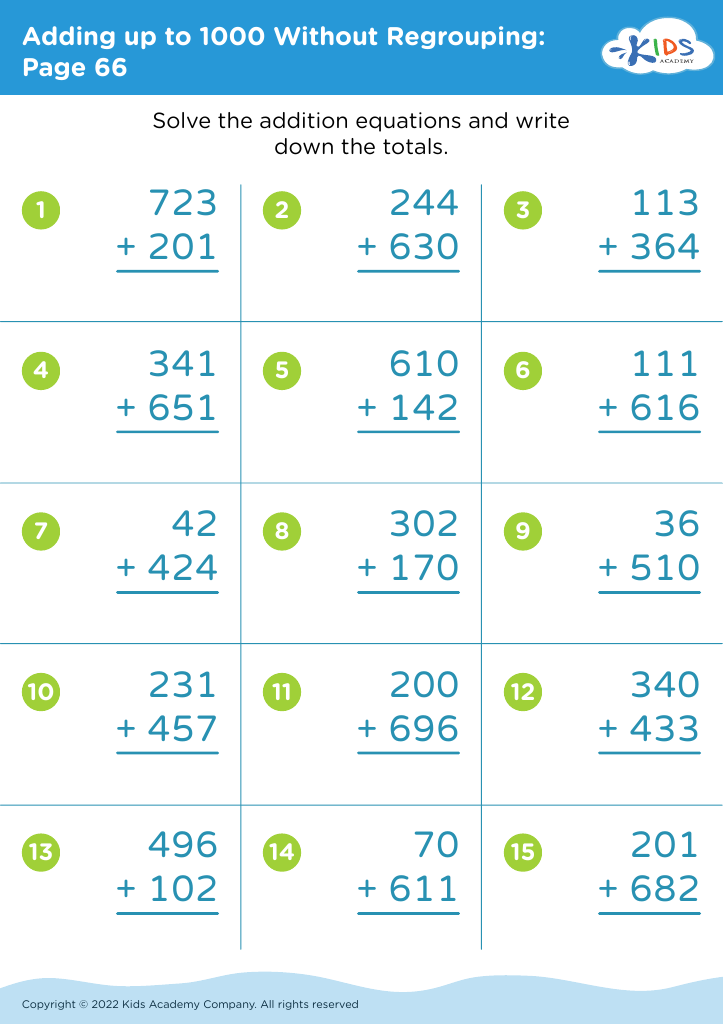
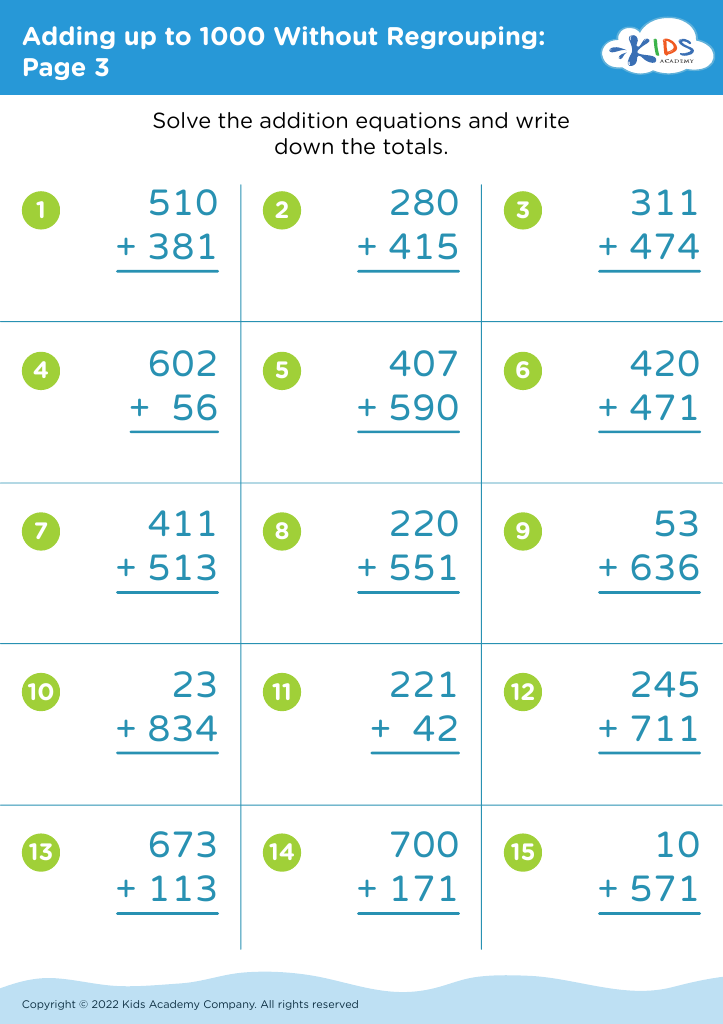
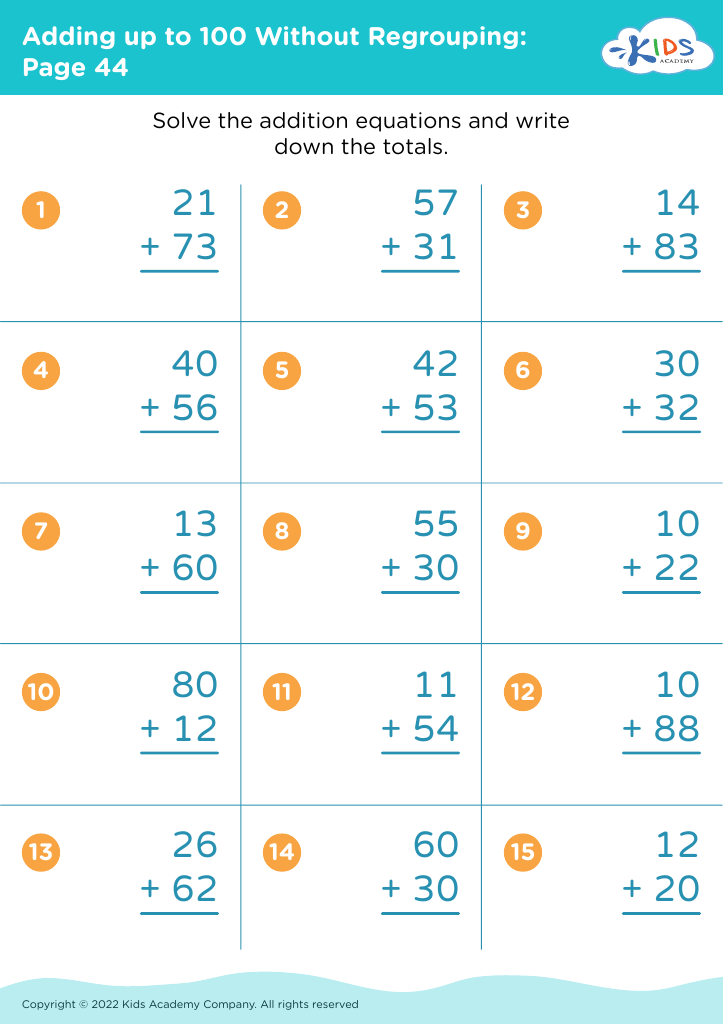
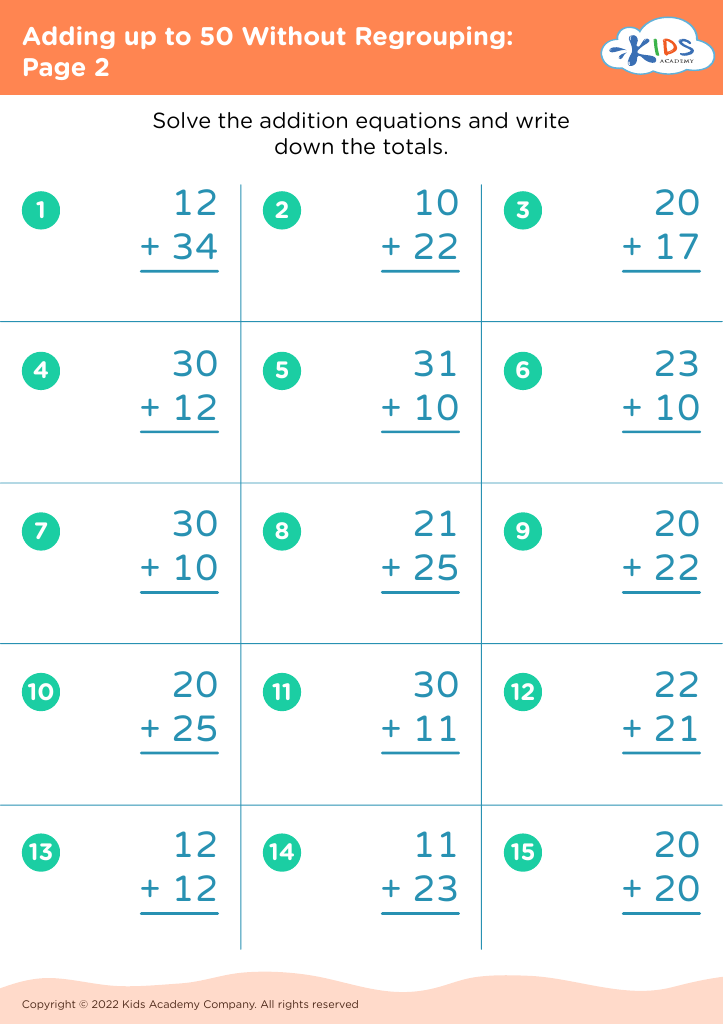
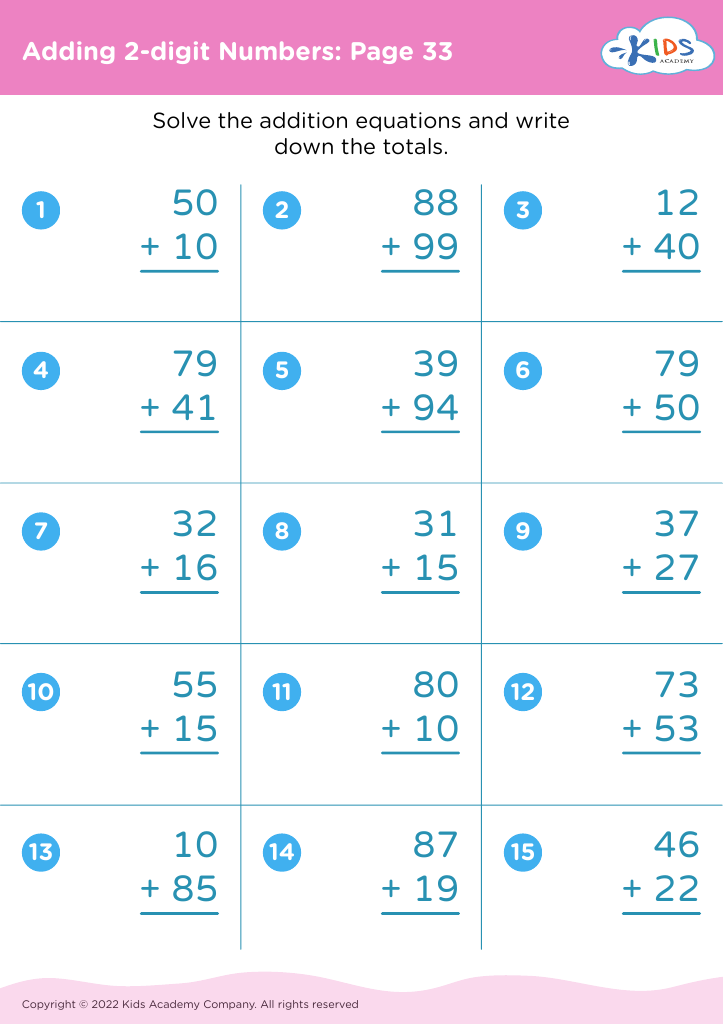
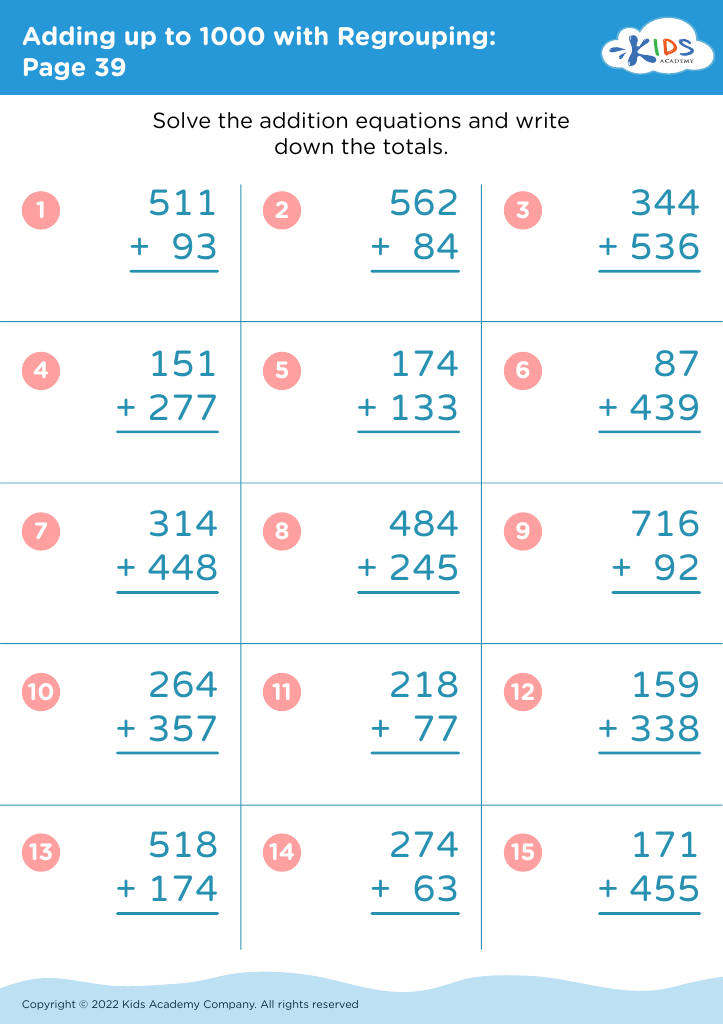








Understanding patterns, especially in the context of addition, is crucial for children aged 3-7 because it lays the foundation for their future mathematical skills. Early childhood is a prime time for cognitive development, and recognizing patterns helps children make sense of the world around them. When children learn to identify and create patterns—whether through numbers, shapes, or objects—they develop critical thinking and problem-solving skills that are essential for more complex math concepts later on.
For addition specifically, recognizing patterns can enhance number sense. For instance, understanding that adding the same number repeatedly creates a pattern can lead to insights about multiplication in the future. Patterns also engage children in mathematical reasoning, as they learn to predict the continuation of sequences or solve problems through visualization.
Moreover, teachers and parents play a vital role in fostering this understanding by integrating playful activities, such as using everyday objects for hands-on learning. This approach not only makes learning enjoyable but also strengthens the child’s intrinsic motivation towards math. By nurturing pattern recognition and addition skills during these formative years, adults set children up for long-term academic success, helping them to feel confident and competent in their mathematical abilities.








