Understanding number relationships Addition Worksheets for Ages 3-7
5 filtered results
-
From - To
Explore our "Understanding Number Relationships Addition Worksheets" designed for children aged 3-7. These engaging resources help young learners grasp essential math concepts through fun and interactive exercises. Each worksheet focuses on building a solid foundation in addition by linking numbers, recognizing patterns, and understanding quantities. Our expertly crafted worksheets encourage independent practice while fostering a love for math. They are perfect for home or classroom use, providing children with the essential skills they need to excel in addition and beyond. Download our worksheets today and watch your child's confidence and understanding of numbers grow!
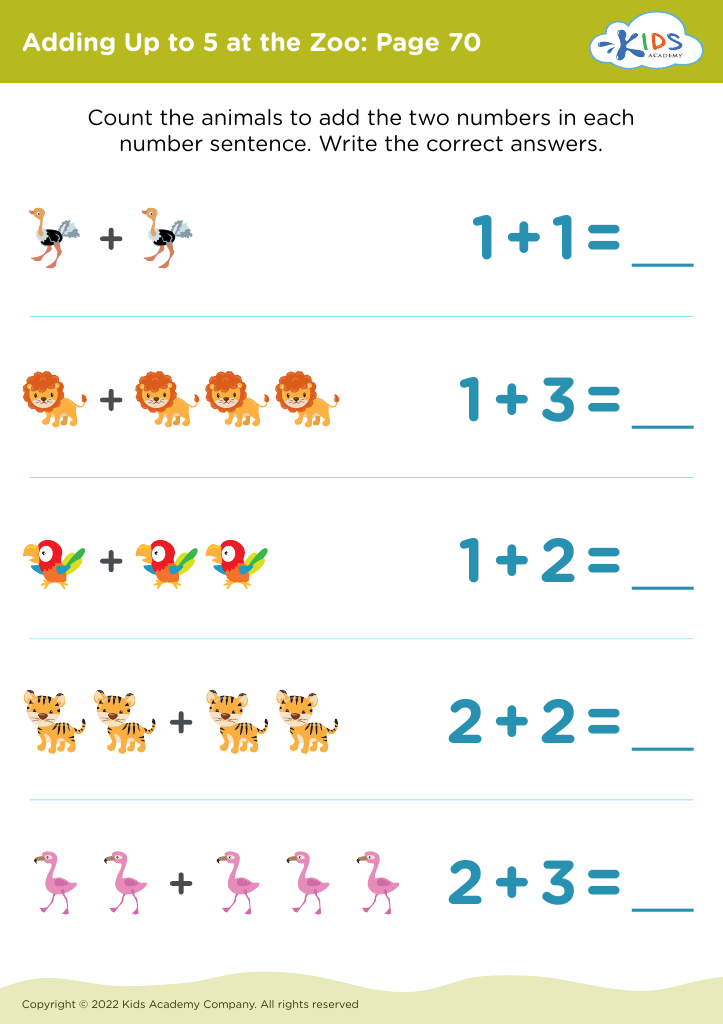
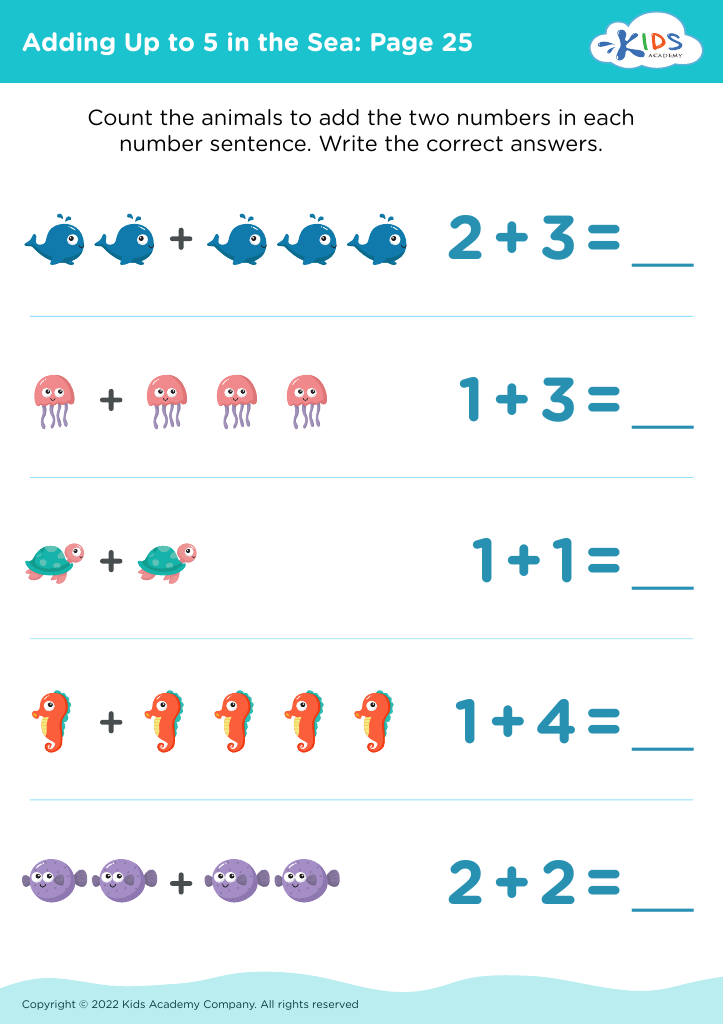
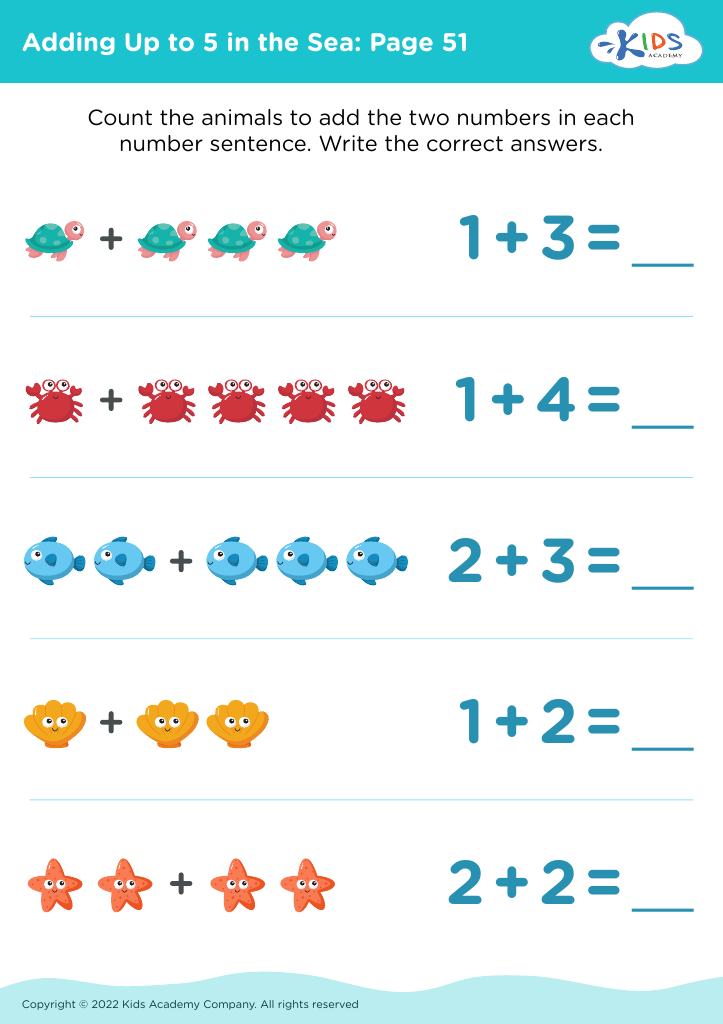
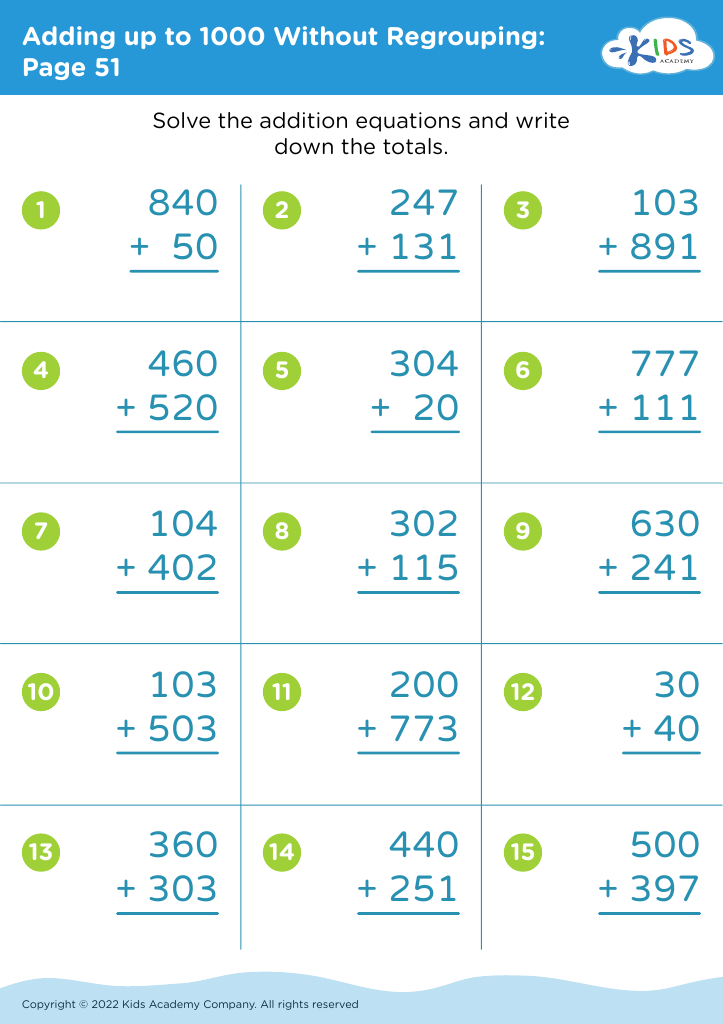
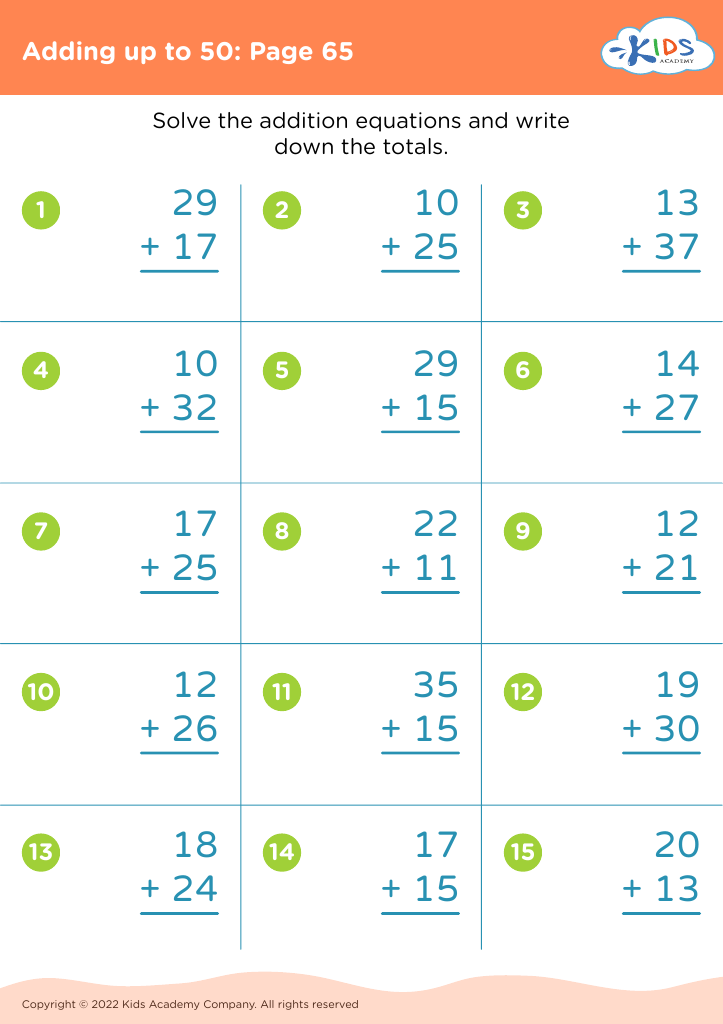








Understanding number relationships, particularly in addition, is crucial for children aged 3-7 as it lays the foundation for their overall mathematical development. During this early stage, children start to grasp fundamental concepts concerning quantities, operations, and relationships between numbers. Helping young learners understand addition not only enhances their arithmetic skills but also fosters critical thinking and problem-solving abilities.
When children recognize the relationships between numbers, such as the idea that adding two objects to three gives five, they build a mental framework that approximates the idea of “parts and whole.” This understanding enables them to engage in more complex mathematical tasks, ultimately leading to better performance in school.
Parents and teachers should actively participate in nurturing number relationship skills by incorporating fun, hands-on activities, such as counting objects, playing addition games, or reading books with counting themes. This engagement makes learning enjoyable, builds confidence, and strengthens the bond between caregiver and child. Furthermore, early mastery of these concepts can significantly influence a child’s attitude toward math as they grow, equipping them with a positive mindset that can lead to academic success. Collectively, investing time in understanding addition shapes both cognitive development and future learning opportunities.








