Understanding time Addition Worksheets for Ages 3-7
6 filtered results
-
From - To
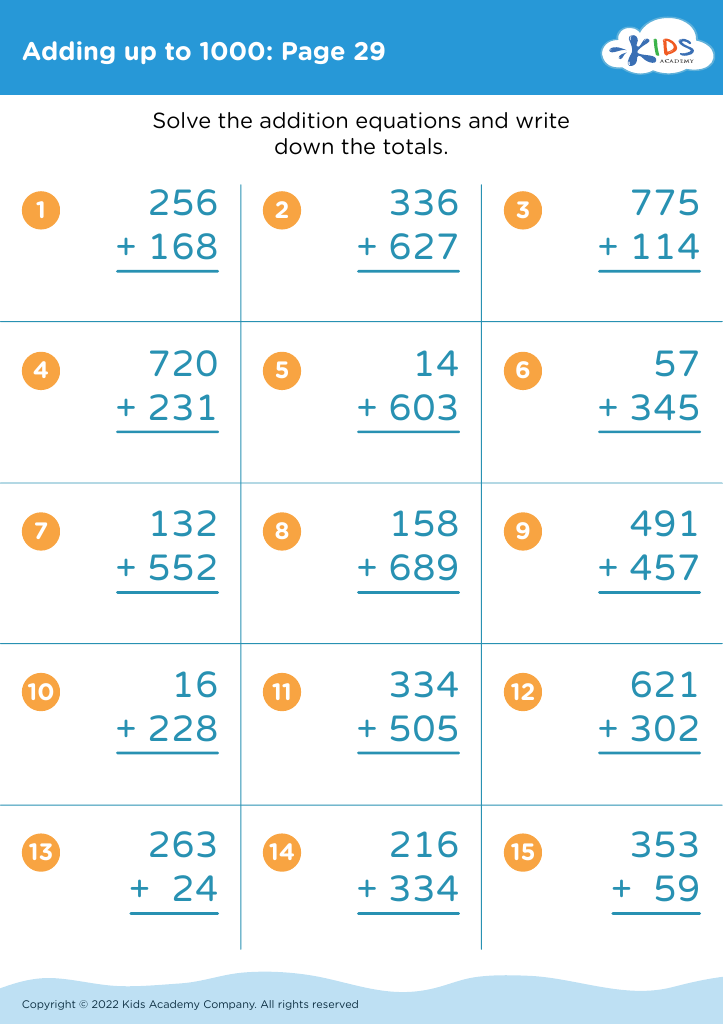
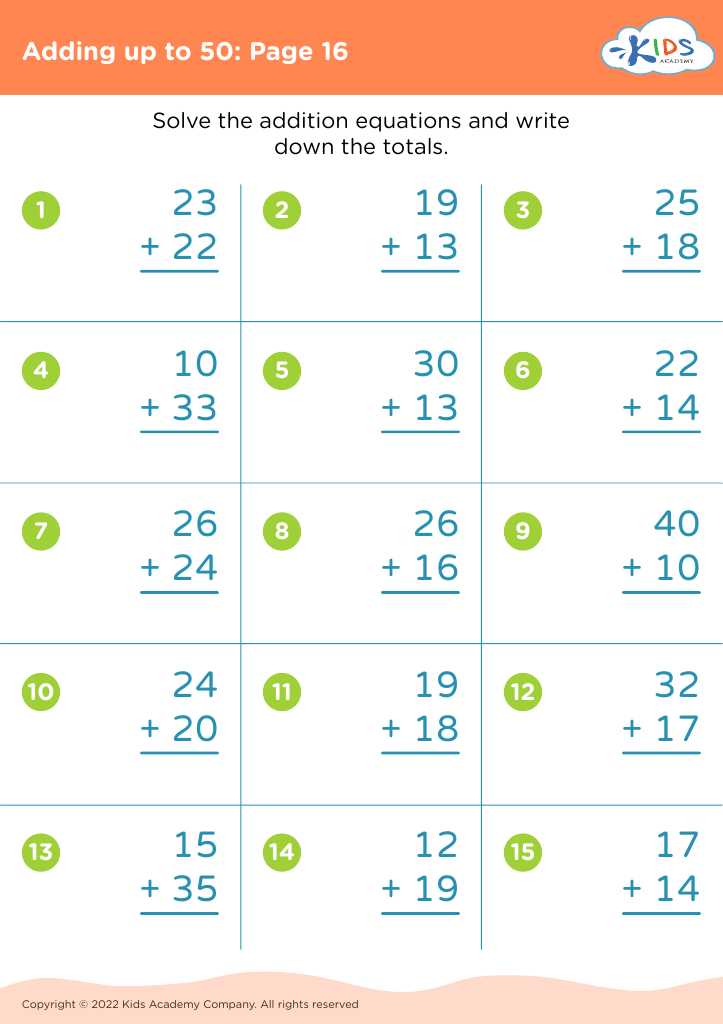
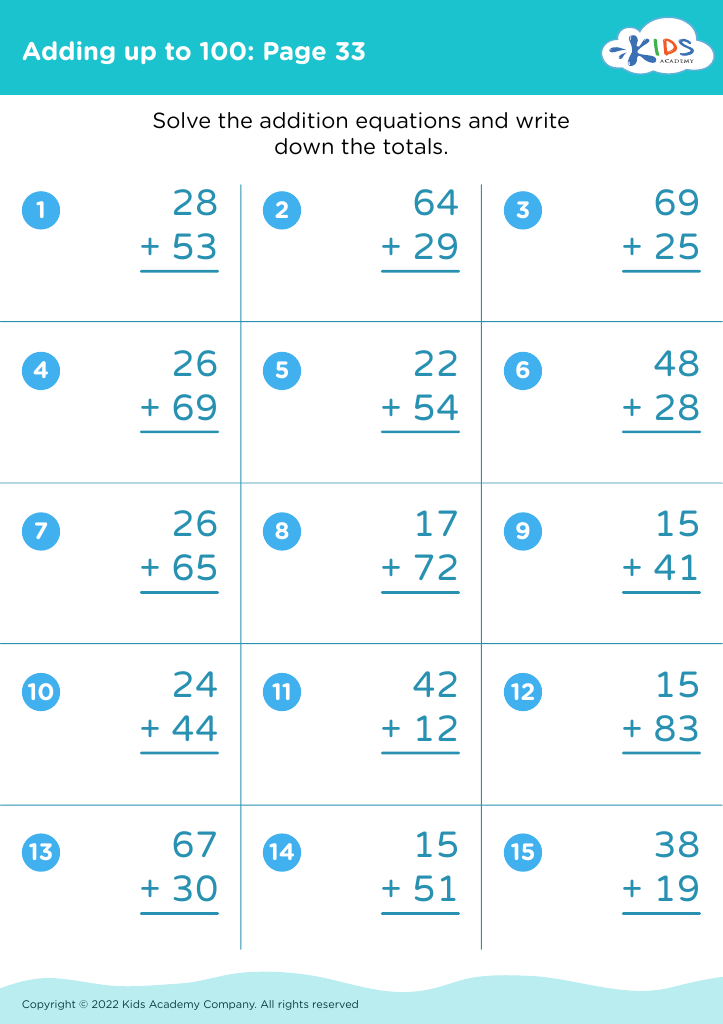
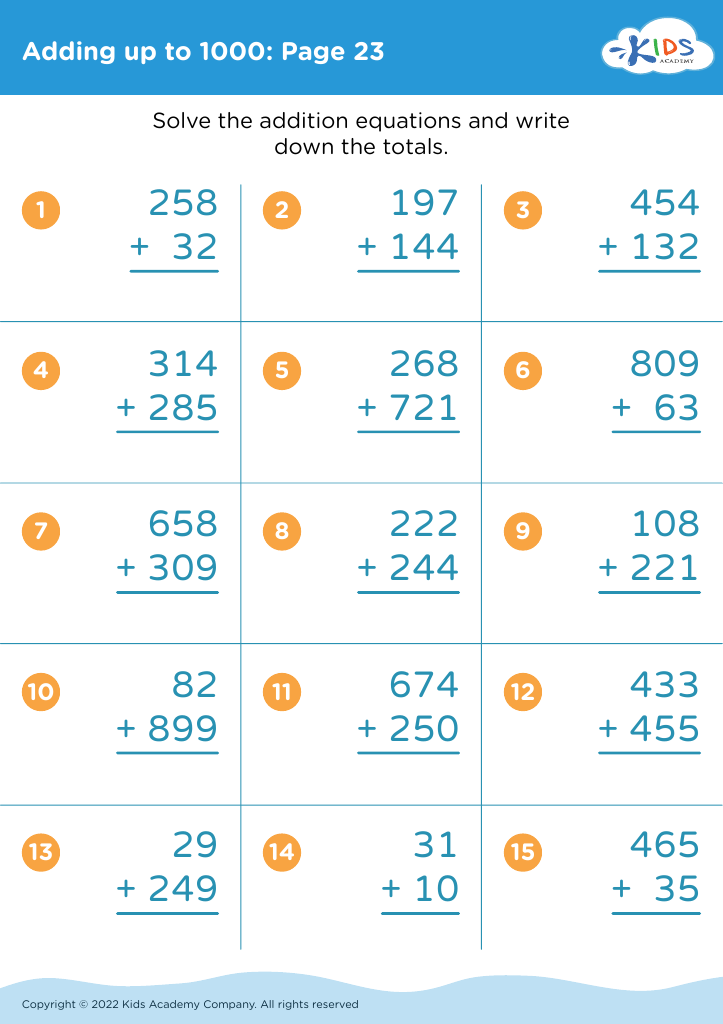
Welcome to our "Understanding Time Addition Worksheets" designed for young learners aged 3-7. These engaging worksheets blend the concept of time with addition skills, helping children develop essential math abilities while learning to read clocks and understand time differences. Each sheet features colorful visuals and fun activities that make learning enjoyable and effective. From simple addition problems to real-life scenarios involving time, our resources are tailored to meet the developmental needs of early learners. Empower your child to grasp these fundamental concepts with our easy-to-use worksheets, perfect for both classroom settings and home learning environments. Start their learning journey today!








Understanding time addition is crucial for children aged 3-7, as it lays the foundation for essential cognitive skills and daily living. At this age, children are naturally curious, making it an optimal time to introduce concepts like hours, minutes, and schedules. Grasping time addition not only aids in mathematical proficiency but also fosters critical life skills such as planning and time management.
Parents and teachers should care about this concept because it promotes a child’s ability to navigate their environment effectively. For instance, understanding how to add time helps children manage their daily routines, allowing them to grasp the importance of punctuality and responsibility.
Moreover, mastering time addition can enhance a child’s self-confidence, enabling them to independently handle timelines and understand sequences in daily activities. Engaging with time addition through playful methods—like using visual aids or real-life scenarios—can make learning enjoyable and relatable.
Ultimately, nurturing this foundational skill empowers children to better understand the world around them, navigate social interactions, and develop a sense of organization, all of which are vital for success in school and beyond.








