Visual interpretation Addition Worksheets for Ages 3-7
5 filtered results
-
From - To
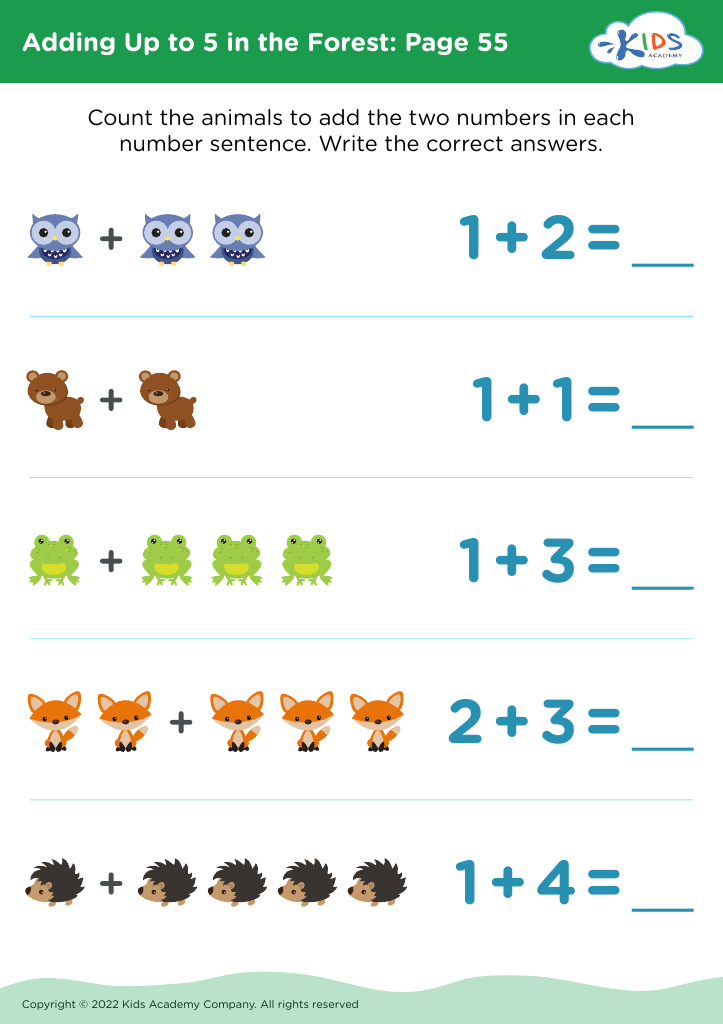
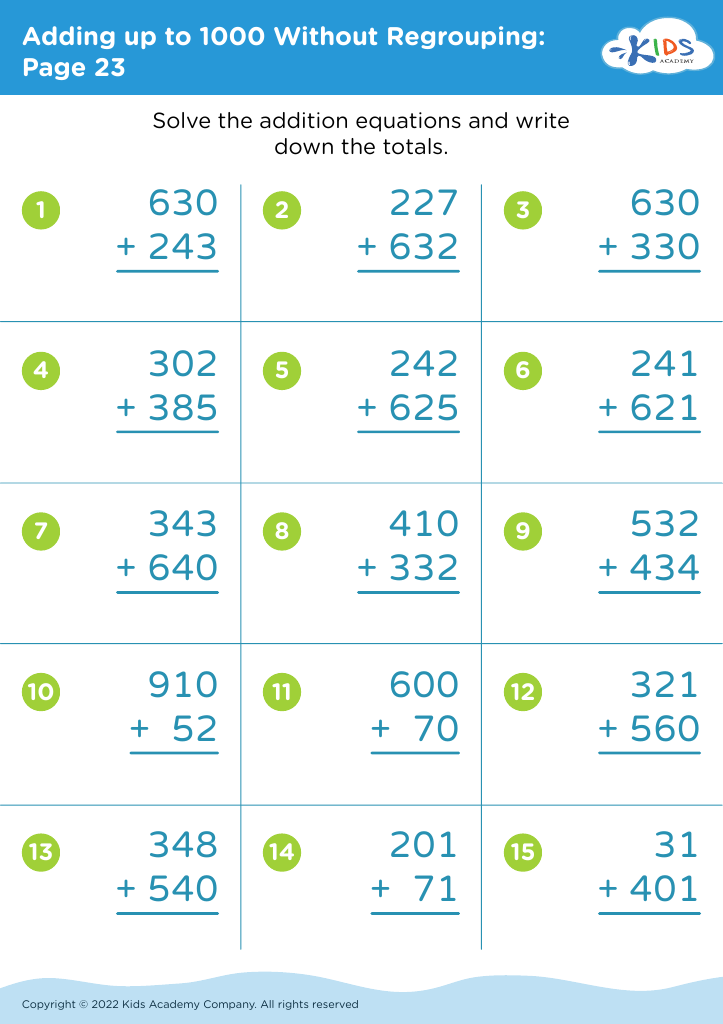
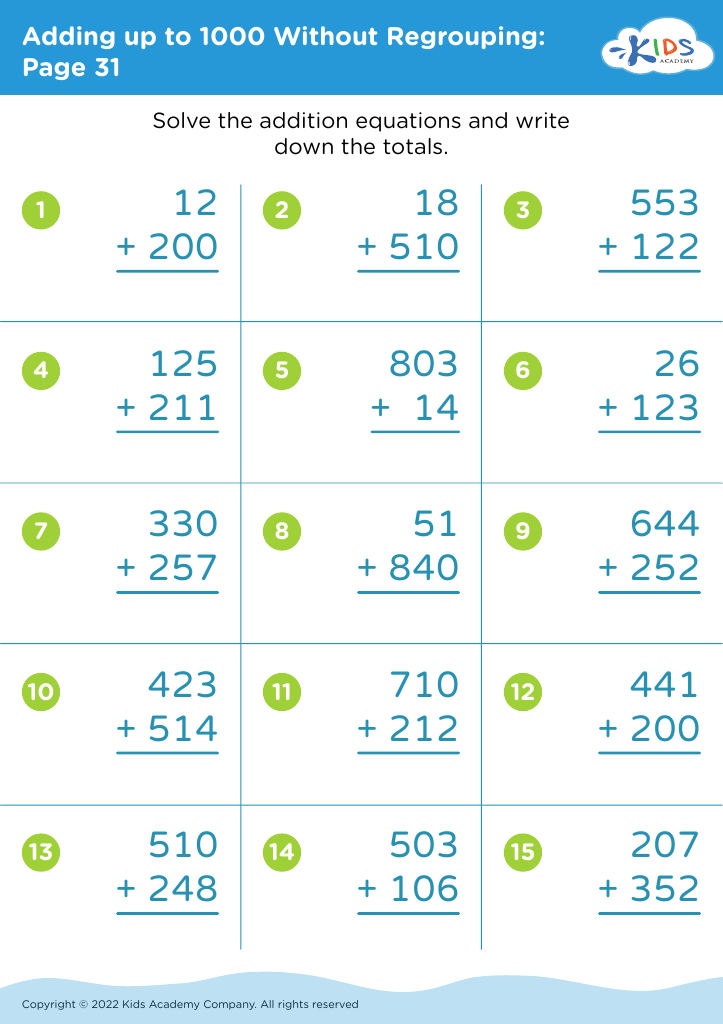
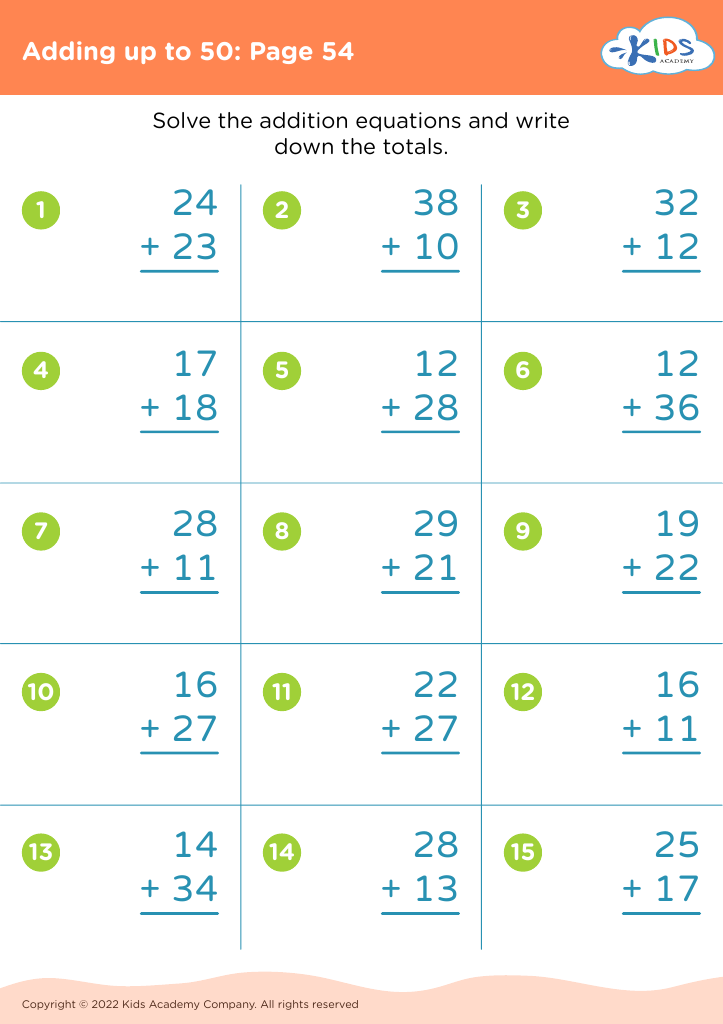
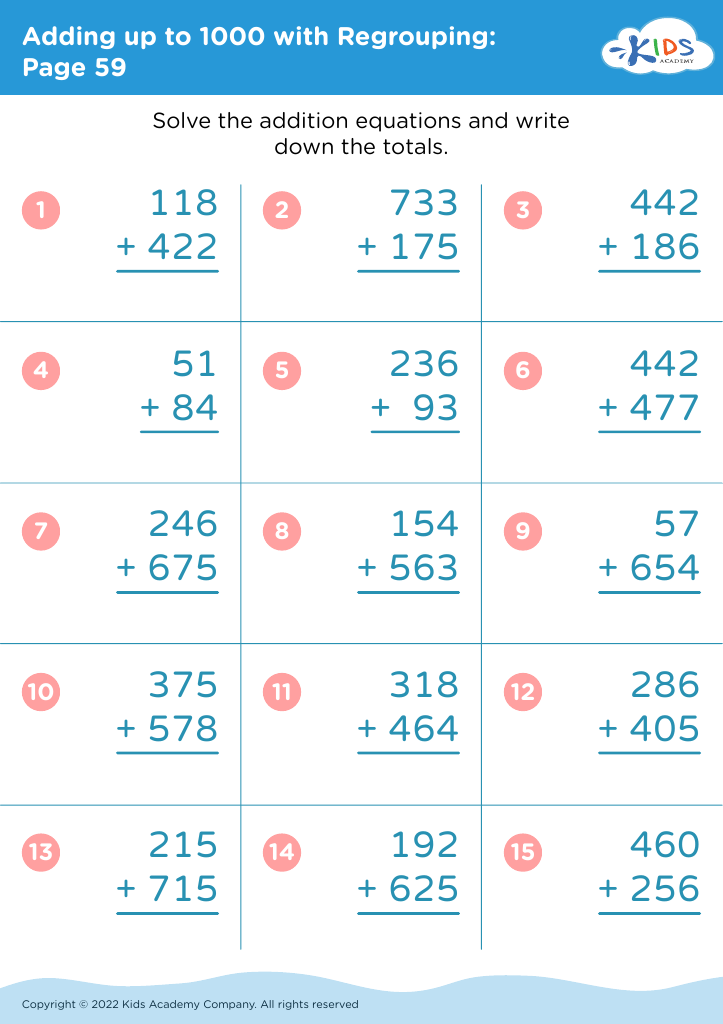
Boost your child’s math skills with our engaging "Visual Interpretation Addition Worksheets for Ages 3-7". These worksheets combine colorful illustrations and simple addition problems to make learning enjoyable and interactive. Designed to enhance visual interpretation and reinforce foundational math skills, kids match images with numbers and solve addition problems in a playful way. Perfect for preschoolers to first graders, these worksheets support cognitive development and numerical understanding. Tailored for young learners, each activity is fun and straightforward, ensuring your child builds confidence in math from an early age. Download now to kick-start your child’s math journey!






.jpg)

Visual interpretation of addition for children ages 3-7 is essential because it lays the foundation for fundamental math skills in a way that is both engaging and understandable. This age group is naturally inclined toward visual learning; they grasp concepts more effectively when they see things. Through visual tools like pictures, counters, and animations, abstract numerical ideas become concrete.
For young children, comprehending that adding means increasing quantity can be challenging when explained verbally. However, by visually representing addition—like showing three apples, then adding two more—children can easily see that the total is five. This reduces cognitive load and helps them focus on understanding the operation rather than getting lost in abstract numbers.
Moreover, visual interpretation caters to diverse learners, including those who might struggle with traditional methods. It strengthens cognitive skills such as counting, number recognition, and spatial reasoning. Visual aids also enhance memory retention, making it likely that children will recall and correctly apply addition strategies in future learning.
For teachers and parents, using visual interpretations means fostering a positive learning environment where children can explore and enjoy math. This encouragement can lead to a lifelong love for the subject, laying a cornerstone for future academic success in more complex mathematical concepts. Thus, investing time in visual methods at an early stage shouldn't be overlooked.








