Visual Perception Skills Addition Worksheets for Ages 3-7
5 filtered results
-
From - To
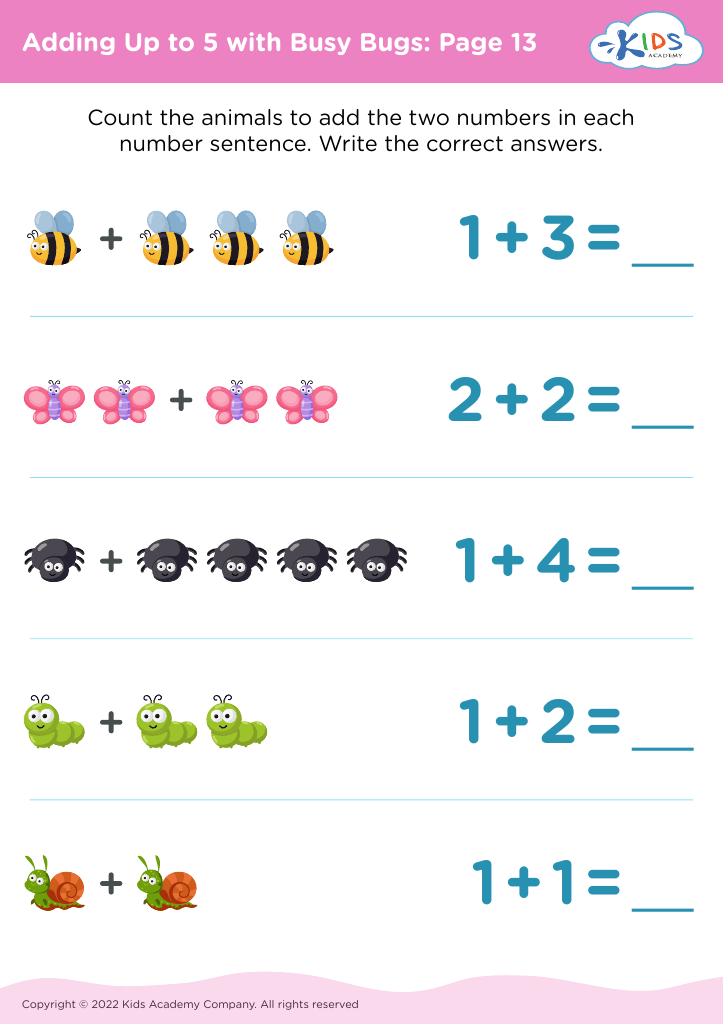
Enhance your child's learning experience with our Visual Perception Skills Addition Worksheets designed specifically for ages 3-7! These engaging worksheets help young learners develop essential visual perception skills while mastering basic addition concepts. By incorporating fun images and interactive activities, children refine their ability to understand and interpret visual information, laying a strong foundation for future math success. Ideal for parents and educators, our worksheets ensure a comprehensive approach to learning, mixing play with education. Download now and watch your child’s mathematical confidence and visual acuity blossom as they embark on an exciting journey through addition! Perfect for home or classroom use.
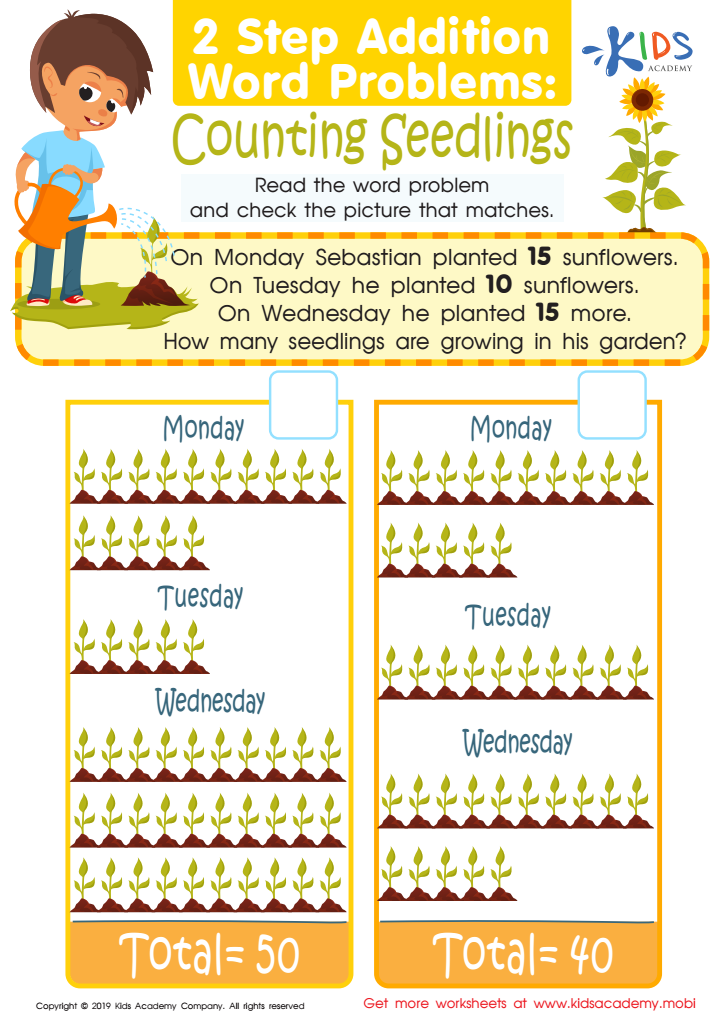
Counting Seedlings Worksheet
 Assign to My Students
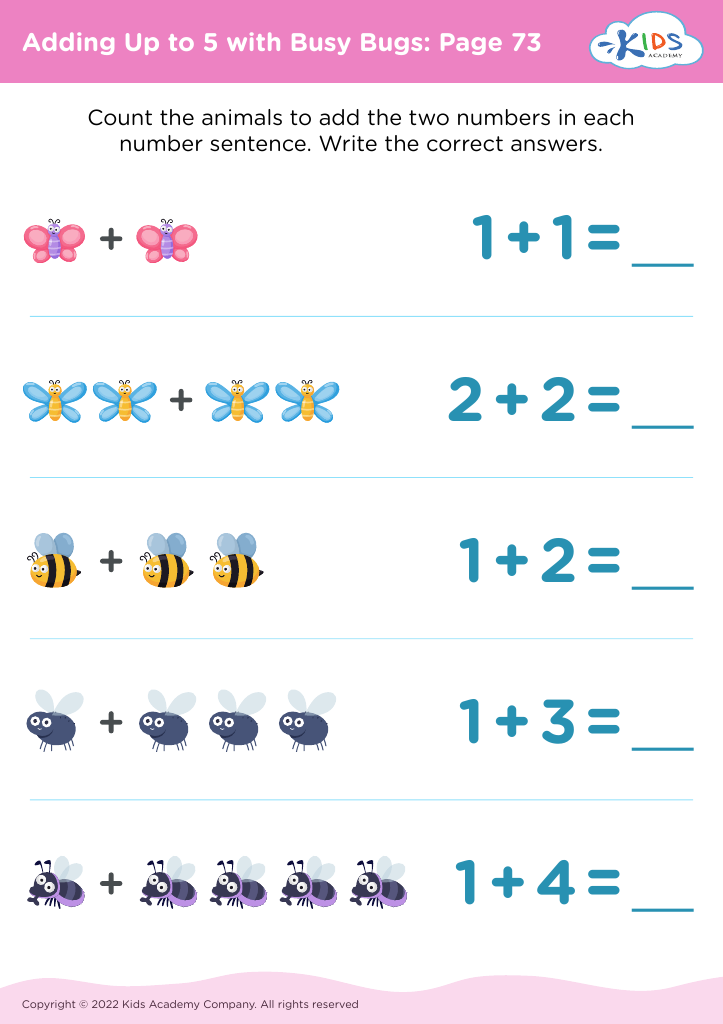
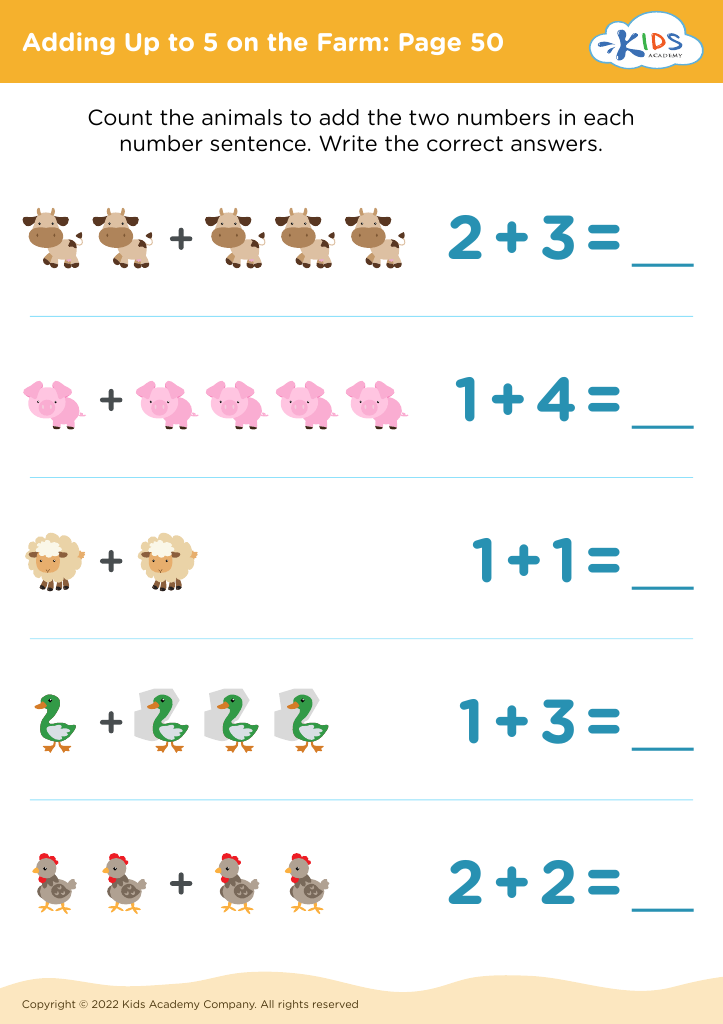
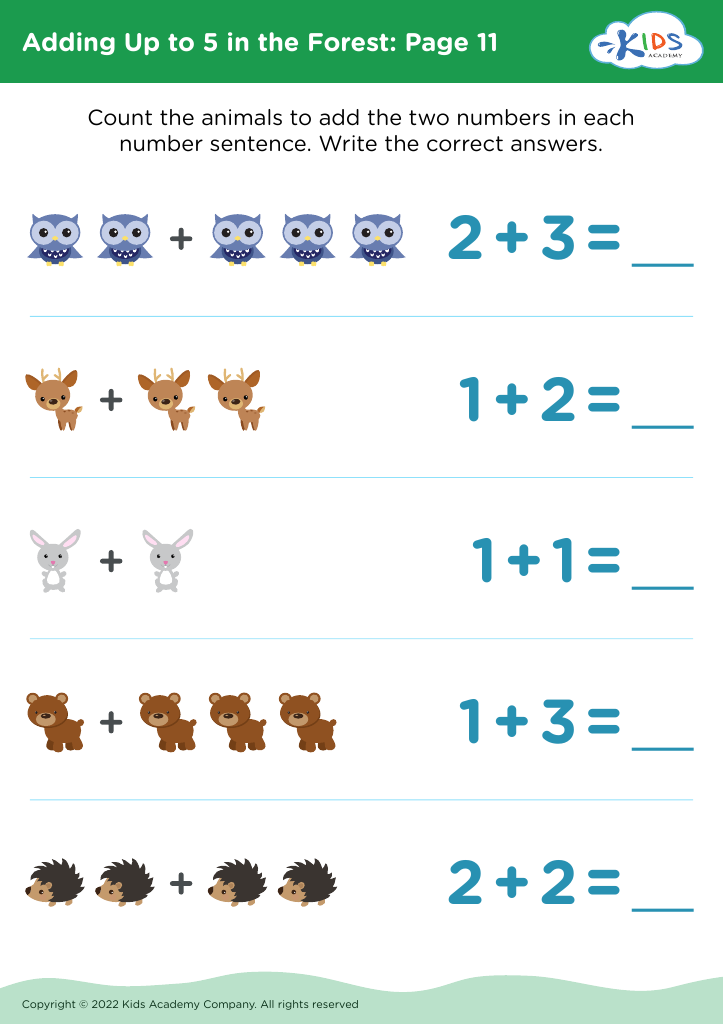




.jpg)



Visual perception skills are crucial for children aged 3 to 7 as they form the foundation for effective learning and development. During these formative years, children enhance their ability to interpret what they see, recognize shapes, colors, and patterns, and improve coordination with fine motor skills. This skill set is essential for activities such as reading, writing, and solving puzzles.
Parents and teachers should care about fostering visual perception because strong visual skills are linked to academic success. For instance, children who can identify letters and numbers visually are better equipped to excel in reading and math. Moreover, visual perception skills contribute to children's ability to engage and participate in social activities, reinforcing their confidence and self-esteem.
Investing in visual perception activities— such as sorting games, coloring, and pattern recognition exercises— not only enhances cognitive abilities but also encourages strategic thinking. Additionally, supporting visual perception helps in identifying learning challenges early on, allowing educators and parents to intervene and provide necessary assistance.
Ultimately, emphasizing visual perception skills during these critical early years lays the groundwork for lifelong learning and success, making it a vital focus for parents and educators alike.








